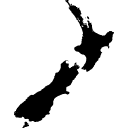
Country's codes
International phone code for New Zealand: +64
3 letters: NZL
2 letters (internet domain): .NZ
Digital country code: 554
Standard EAN-13 (country barcode): 940-949
 Olympic country code: NZL

New Zealand Travel Guide: Top Attractions & Best Time to Visit
From glacier‑carved fjords and emerald hills to Māori culture and world‑class road trips, New Zealand delivers big nature with easy access. Use this guide to pick the right highlights and the perfect season for your itinerary.
Top Attractions in New Zealand
Fiordland & Milford Sound / Piopiotahi
Sail beneath sheer granite walls and plummeting waterfalls in Milford or Doubtful Sound. Base in Te Anau for day trips or multi‑day hikes on iconic tracks like the Routeburn and Kepler.
Queenstown & Wānaka
Adventure capital with jet boating, bungy, and alpine hikes, balanced by vineyards and lakefront strolls. Nearby Wānaka offers gentler vibes with stunning trails like Roy’s Peak (season/weather permitting).
Aoraki/Mt Cook National Park
Glacier landscapes and sky‑piercing peaks. Walk the Hooker Valley Track for swing bridges and epic views of Aoraki. On clear nights, stargaze within the Aoraki Mackenzie International Dark Sky Reserve.
West Coast Glaciers (Fox & Franz Josef)
Rare glaciers descending into temperate rainforest. Scenic heli‑hikes offer crevasse exploration with guides. Short valley walks provide easy viewpoints when conditions limit glacier access.
Abel Tasman National Park
Golden beaches, turquoise coves, and coastal forest linked by the Abel Tasman Coast Track. Mix day hikes with water taxis or sea kayaking between sheltered bays.
Rotorua & Wai-O-Tapu (North Island)
Geothermal terraces, geysers, and bubbling mud pools alongside immersive Māori cultural experiences. Add a soak at a geothermal spa after your day exploring.
Tongariro National Park
Hike the famed Tongariro Alpine Crossing past volcanic craters and emerald lakes (seasonally). On clear days, views reach across the Central Plateau’s stark beauty.
Bay of Islands & Northland
Subtropical bays, island‑hopping, and historic sites. Great for sailing, dolphin spotting, and relaxed coastal towns. Drive Ninety Mile Beach and visit Cape Reinga where the Tasman Sea meets the Pacific.
Coromandel Peninsula
White‑sand beaches and native forest. Visit Cathedral Cove and Hot Water Beach (check tide times). The Peninsula pairs well with a scenic loop from Auckland.
Wellington & Te Whanganui-a-Tara
Compact capital with a creative scene, waterfront walks, and hillside viewpoints. Take the cable car to the Botanic Garden and explore harborside dining.
Best Time to Visit New Zealand
Seasons are reversed in the Southern Hemisphere. Summer (Dec–Feb) is warmest and busiest; winter (Jun–Aug) brings snow sports. Shoulder months offer balance and beautiful light for photography.
Summer (December–February)
- Why go: Long days, beach time, alpine access, festivals.
- Ideal for: Great Walks, road trips, Abel Tasman kayaking, Bay of Islands sailing.
- Watch for: Higher prices and limited availability—book early.
Autumn (March–May)
- Why go: Mellow temperatures, golden foliage (Central Otago, Arrowtown).
- Ideal for: Photography, winery touring, settled hiking conditions.
- Consider: Shoulder season brings better deals and fewer crowds.
Winter (June–August)
- Why go: Skiing/boarding in Queenstown, Wānaka, Mt Hutt; crisp mountain vistas.
- Ideal for: Fewer crowds at non‑ski hotspots, hot springs, stargazing.
- Watch for: Alpine road closures/ice—carry chains where required.
Spring (September–November)
- Why go: Wildflowers, newborn wildlife, waterfalls in full flow.
- Ideal for: Shoulder‑season road trips, lighter crowds, mild temps.
- Consider: Weather can swing—pack a rain layer and warm mid‑layer.
Practical Planning Tips
Road Trips & Distances
Self‑drive is the best way to see NZ. Distances look short but roads are winding—allow extra time and add scenic stops. Book inter‑island ferries (Wellington–Picton) in advance during peak season.
Hiking & Great Walks
For popular tracks (Milford, Routeburn, Tongariro), reserve huts/campsites well ahead in summer. Day hikes abound near every major town if multi‑day tramps are booked out.
What to Pack
Four‑season layering: waterproof shell, insulating mid‑layer, sturdy footwear, sun hat/sunscreen, insect repellent (sandflies in the South Island), and a reusable water bottle.
Culture & Nature Etiquette
Respect rāhui and local guidance at natural sites. Stay on marked tracks, dispose of waste properly, and support conservation‑minded operators. Learn basic te reo Māori greetings to enrich encounters.
Suggested Itineraries
7 Days – South Island Sampler
- Day 1: Christchurch arrival → Lake Tekapo (stargazing)
- Day 2: Aoraki/Mt Cook (Hooker Valley Track)
- Day 3–4: Queenstown adventure + Arrowtown
- Day 5: Milford Sound cruise (via Te Anau)
- Day 6: Wānaka hikes
- Day 7: Return via Cromwell & Lindis Pass
10 Days – North Island Highlights
- Day 1–2: Auckland & Coromandel (Cathedral Cove/Hot Water Beach)
- Day 3–4: Rotorua geothermal & Māori culture
- Day 5: Hobbiton or Waitomo caves (add on)
- Day 6–7: Taupō & Tongariro Crossing (seasonal)
- Day 8–10: Wellington food & waterfront, day trips to vineyards
14 Days – Two‑Island Road Trip
- Auckland → Coromandel → Rotorua → Taupō → Wellington
- Ferry to Picton → Abel Tasman → West Coast glaciers
- Wānaka/Queenstown → Te Anau → Milford Sound → Aoraki → Christchurch
Useful Country Information
| Land Area | 268,671 km² (103,734 sq mi) | Total area: 268,680 km² |
| Population | 5.1 million (2022 est.) |
| Capital City | Wellington — pop. 417,000 (2022) |
| Largest City | Auckland — pop. 1.452 million; New Zealand's commercial hub and main international gateway |
| Currency | New Zealand dollar (NZD / NZ$) |
| Languages | English (de facto official, 89.8%) | Māori (de jure official, 3.5%) | New Zealand Sign Language (de jure official) | Samoan 2% | Hindi 1.6% | French 1.2% | Northern Chinese 1.2% | Yue 1% |
| Ethnicity | European 71.2% | Māori 14.1% | Asian 11.3% | Pacific peoples 7.6% | Middle Eastern / Latin American / African 1.1% |
| Religions | Christian 44.3% (Catholic 11.6%, Anglican 10.8%, Presbyterian 7.8%, Methodist 2.4%, Pentecostal 1.8%, other 9.9%) | No religion 38.5% | Hindu 2.1% | Buddhist 1.4% | Māori Christian 1.3% | Islam 1.1% |
| National Holiday | Waitangi Day — February 6 (commemorating the signing of the Treaty of Waitangi, 1840) |
| Government | Parliamentary constitutional monarchy | Head of State: King Charles III | Current government officials |
| Electricity | 230V / 50Hz — Type I plugs (angled flat pins, same as Australia) |
| Time Zone | NZST UTC+12 (summer NZDT UTC+13) — one of the first countries to greet each new day |
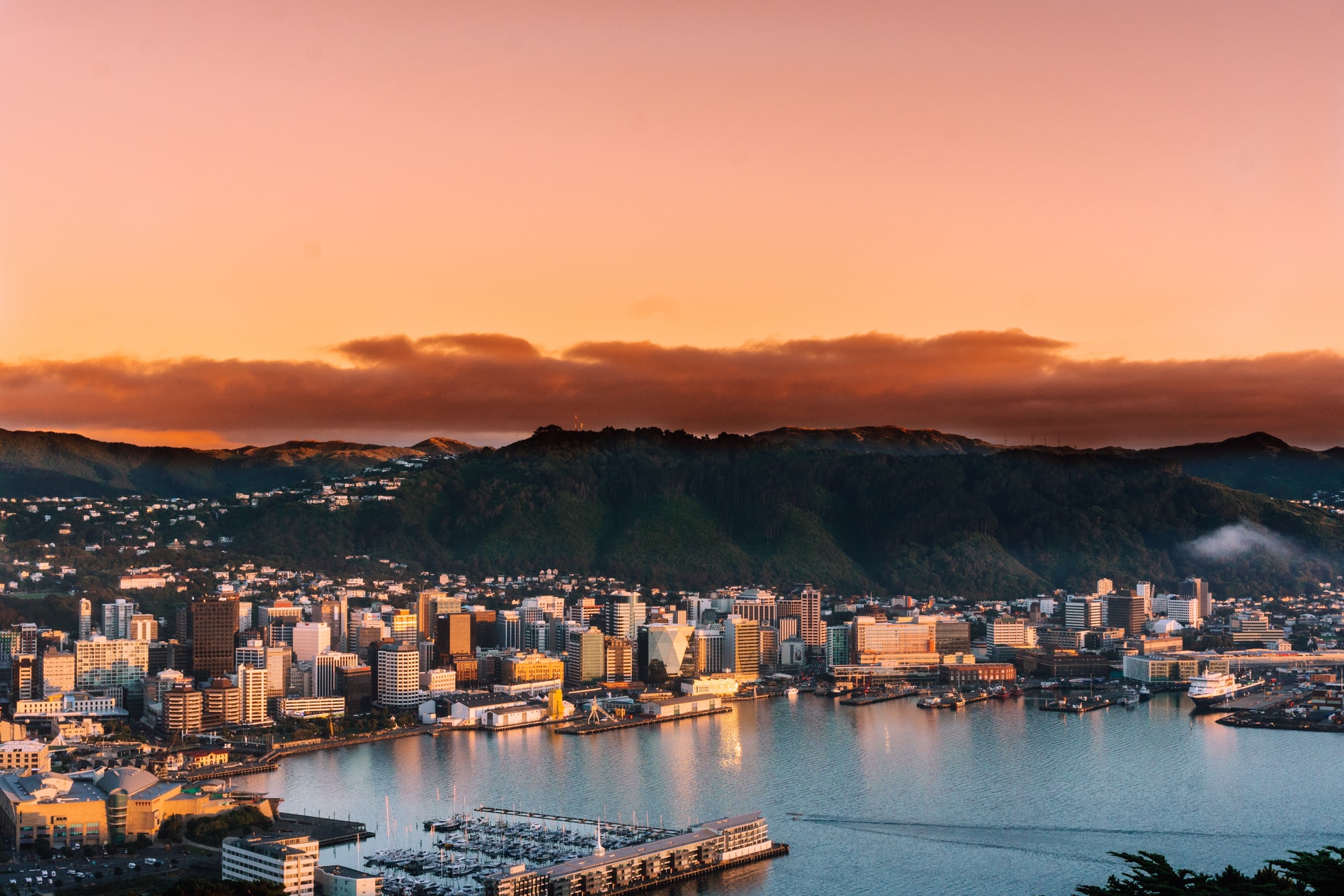 Wellington: Capital City Profile
Background
The Polynesian Māori reached New Zealand by canoe around AD 1280–1350, settling across the islands and developing a rich and complex culture over the following centuries. Dutch explorer Abel Tasman became the first European to sight the islands in 1642 — though hostile encounters with Māori prevented him from landing. British explorer Captain James Cook made the first systematic mapping of the islands during his 1769–1770 voyage, opening the door to sustained European contact.
In the early 19th century, missionaries arrived and trade expanded rapidly, with the islands becoming a hub for whalers, traders, and settlers. In 1840, Māori chiefs entered into a compact with Britain — the Treaty of Waitangi — in which sovereignty was ceded to the Crown in exchange for the protection of Māori land rights and taonga (treasures). The Treaty remains New Zealand's founding constitutional document and continues to shape politics, law, and culture to this day.
A series of New Zealand Wars (1843–1872) — rooted in disputes over land and sovereignty — ended with significant Māori land losses and the suppression of armed resistance. Despite this, Māori culture endured and has experienced a powerful revival in language, art, and political representation over the past five decades.
The Colony of New Zealand became an independent Dominion in 1907 and supported Britain in both World Wars — including the legendary ANZAC campaigns of World War I. New Zealand achieved full legislative independence with the passage of the Constitution Act 1986. In recent decades, successive governments have worked to address longstanding Treaty grievances through the Waitangi Tribunal process, returning land and resources to iwi (tribes).