

Jeddah vs. Riyadh — Which Saudi Arabian Hotspot Should Be on Your 2026 Travel List?
Saudi Arabia Is Open — But Which City Should You Choose First?
Saudi Arabia has emerged as one of the fastest-growing tourism destinations on Earth. Since the launch of the tourist eVisa in 2019, millions of travellers have discovered a country that delivers far more than its reputation suggested — ancient history, extraordinary landscapes, world-class food, and a pace of cultural change that feels genuinely electric.
But for first-time visitors, the question that comes up almost immediately is this: Jeddah or Riyadh? These two cities are the Kingdom's great rivals — each a genuine metropolis of over four million people, each extraordinary in its own way, and each offering a completely different answer to what Saudi Arabia is and feels like. For most leisure travellers seeking coastal scenery, relaxed evenings, and seafood culture, Jeddah is the better pick. For visitors focused on modern Saudi institutions, museums, desert adventures, and a deep look at the Kingdom's national story, Riyadh is the stronger choice.
But that's only part of the story. This guide breaks down both cities across atmosphere, attractions, food, nightlife, best time to visit, and practical tips — so you can decide which one belongs on your 2026 itinerary, or better yet, why you should do both.
Tip: Both cities are covered by Saudi Arabia's tourist eVisa — available to nationals of 60+ countries online or on arrival. A Haramain High-Speed Railway connects Jeddah and Mecca (and is extending toward Riyadh), and the two cities are linked by frequent flights taking just 1 hour. It is entirely feasible to visit both in one trip.

Jeddah — The Red Sea Soul of Arabia
Jeddah is Saudi Arabia's second-largest city and its commercial and cosmopolitan heart. Sitting on the coast of the Red Sea — one of the world's great bodies of water for diving, sailing, and seafood — Jeddah has always been the Kingdom's most outward-facing city: the gateway for millions of pilgrims heading to Mecca, the hub for East African and South Asian traders for centuries, and the place where Saudi Arabia's most open and eclectic culture took root. With a population exceeding four million, a UNESCO-listed old quarter, 30 kilometres of Red Sea waterfront, world-class diving, a Formula 1 street circuit, and the soon-to-be tallest building on Earth, Jeddah offers more variety per square kilometre than any other Saudi city.
Al-Balad — UNESCO Old Town
Al-Balad is Jeddah's UNESCO World Heritage-listed historic district — a labyrinthine old city of coral-stone merchant houses, carved wooden Rawasheen lattice windows, and spice-scented alleyways that date back over 2,500 years. Al-Balad is a maze of coral-stone towers, carved wooden Rawasheen windows, and spice-scented alleyways that feel frozen in time. Visit in the late afternoon and evening when lantern-lit alleys, bustling street food stalls, and cooler temperatures create an atmosphere that daytime visits cannot match.
The Jeddah Corniche
The Jeddah Corniche is Saudi Arabia's most spectacular urban waterfront — a 30-kilometre stretch of promenades, beaches, public art and seaside dining that curves along the Red Sea coast. At its centrepiece, the King Fahd Fountain — the world's tallest fountain at 312 metres — shoots Red Sea water into the night sky in a dazzling illuminated display best viewed after dark. The Corniche also houses one of the world's largest open-air sculpture collections, with works by Henry Moore, Joan Miró, and leading Saudi and Arab artists.
Red Sea Diving & Water Sports
Jeddah's Red Sea coastline is a world-class diving destination — warm, clear water, spectacular coral reefs, manta rays, whale sharks, and remarkable visibility year-round. Obhur Bay, 20 minutes north of the city centre, is the hub for diving centres, snorkelling tours, boat trips, jet-skiing, and beachside dining. Entry to the Kingdom's eVisa now includes free diving for eligible visitors.
Jeddah Formula 1 Grand Prix
The Saudi Arabian Grand Prix is held annually on the Jeddah Corniche Circuit — the fastest street circuit on the Formula 1 calendar, with cars reaching over 320km/h along the Red Sea waterfront. The race typically takes place in February or March and is one of the most spectacular sporting events in the world.
Best time to visit Jeddah: October to March — cooler evenings (23–29°C), ideal for the Corniche, Al-Balad walks, and outdoor dining. Avoid June–August when temperatures and humidity are at their peak.
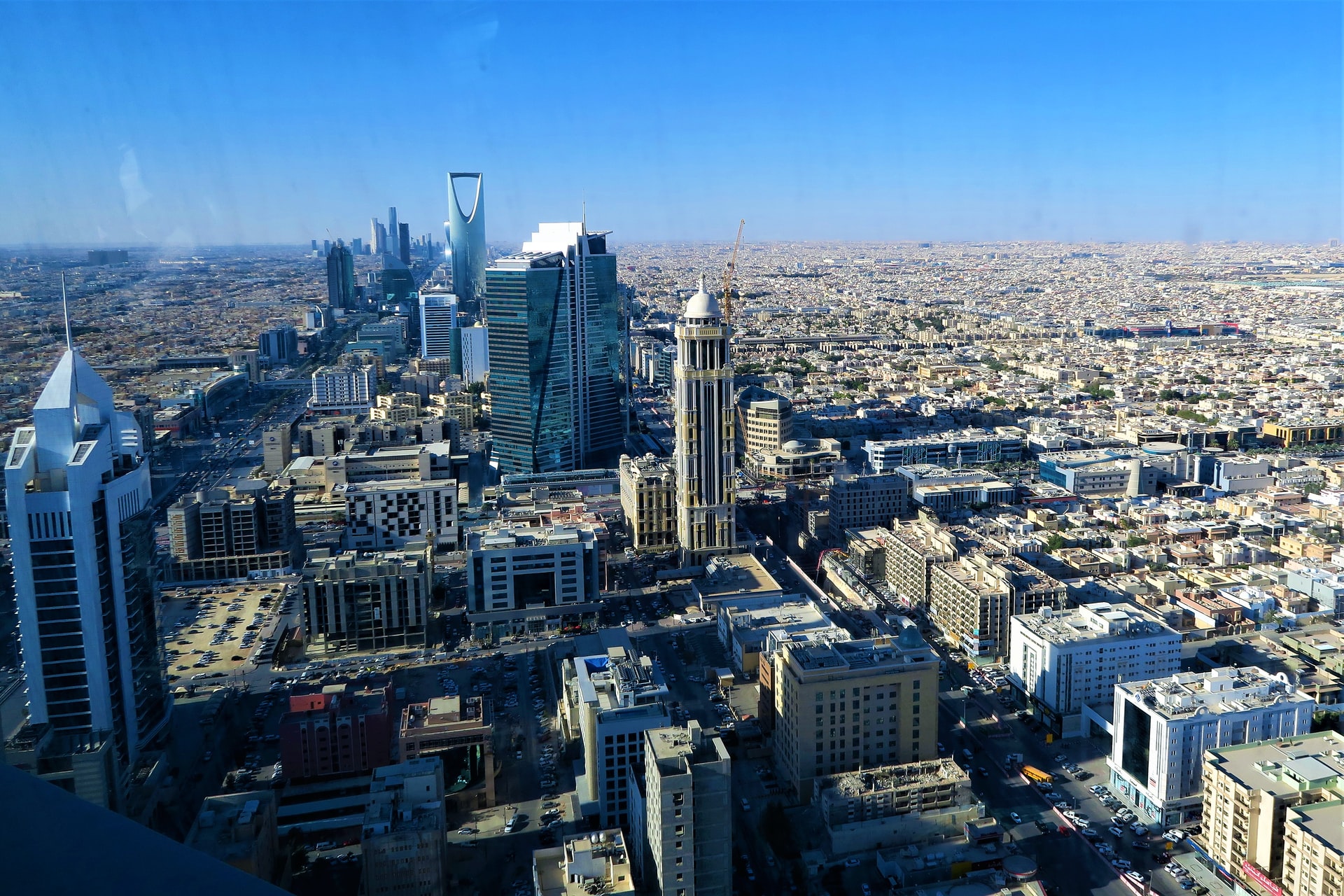
Riyadh — The Kingdom's Capital & Cultural Engine
Riyadh is the political, financial, and cultural capital of Saudi Arabia — an inland desert city that has transformed itself from a modest walled town into one of the largest and most dynamic metropolises in the Middle East, with a population approaching 8 million. If Jeddah is the soul of Arabia's coastal past, Riyadh is the embodiment of its Vision 2030 future — a city of record-breaking towers, extraordinary museums, ancient heritage, and a cultural explosion that has made it arguably the most exciting city in the Gulf region right now.
Diriyah — UNESCO World Heritage & First Saudi Capital
Diriyah's At-Turaif District is a UNESCO World Heritage Site and the original capital of the Saudi state — a remarkable mud-brick city built in the traditional Najdi architectural style, dating to the 15th century. The beautifully restored Bujairi Terrace clusters over 20 restaurants in a stunning heritage setting overlooking the Wadi Hanifah valley — the single best dining destination in Riyadh for a special evening.
National Museum & Al Masmak Fortress
The National Museum of Saudi Arabia is the finest introduction to the Kingdom's story — covering 4.6 billion years of natural history through to the founding of the modern Saudi state, with world-class digital galleries and artefact collections. Minutes away, Al Masmak Fortress — built in 1865 — is the historic mud-brick citadel where King Abdulaziz launched his famous 1902 raid that began the unification of the Arabian Peninsula, a moment foundational to Saudi nationhood.
Edge of the World (Jebel Fihrayn)
One of the most dramatic natural landscapes in the entire Arabian Peninsula — the Edge of the World is a series of immense desert escarpments rising 300 metres from the desert floor, approximately 90km northwest of Riyadh. Standing at the cliff edge and gazing across a vast, empty horizon that looks like the end of the Earth is a genuinely extraordinary experience. Best visited on a guided half-day tour departing early morning.
Riyadh Season
Riyadh Season (October–March) is the world's largest urban entertainment festival — the 2025–2026 edition features 11 entertainment zones, 15 world championships, 34 exhibitions, and more than 200 concerts. Boulevard World — its centrepiece — is an immersive cultural megapark with 24 themed zones representing 15 countries, 40 rides, 1,700 shops, and over 500 restaurants. Noor Riyadh, the world's largest light art festival, runs concurrently in November–December with 60+ installations across the city.
Best time to visit Riyadh: November to March — mild days (15–25°C), cool desert nights, peak festival season. Riyadh Season runs throughout this period, making it the most vibrant and rewarding time to visit the capital.
Food & Dining — Two Very Different Flavour Profiles
Both cities eat extraordinarily well — but the food culture in each city reflects its character and history in distinctive ways.
Jeddah — Seafood, Hijazi Spice & Red Sea Flavour
Jeddah's culinary identity is shaped by its position as a Red Sea port city and Islamic pilgrimage hub. Hijazi cuisine — spiced rice, slow-cooked lamb, fresh Red Sea fish and shellfish — is some of the most distinctive and flavourful in the Kingdom. Street food culture thrives in Al-Balad and along the Corniche. The city's diverse expatriate population has also made it the most internationally diverse food city in Saudi Arabia. Don't miss a fresh fish dinner at one of the Corniche's waterfront seafood restaurants — it's one of the finest dining experiences the Kingdom has to offer.
Riyadh — Najdi Tradition & World-Class International Dining
Riyadh's dining scene has undergone a complete transformation since 2019. Zuma Riyadh took Time Out's 2025 Restaurant of the Year award for its Japanese robata and sushi counter. Benoit, Alain Ducasse's French bistro in the King Abdullah Financial District, and Chotto Matte (Japanese-Peruvian Nikkei) both opened in 2025 to strong reviews. Traditional Najdi cuisine — whole roasted lamb (Kharouf Mahshi), slow-cooked rice dishes, and thick buttermilk drinks — is best experienced in the old city centre's traditional restaurants.
Tip: In both cities, the dining scene comes alive after 9pm — Saudis eat late and the atmosphere in restaurants and outdoor dining areas peaks around 10–11pm. Plan accordingly and book popular restaurants in advance, especially Thursday–Saturday.
Atmosphere & Vibe — How the Two Cities Feel
The most important difference between Jeddah and Riyadh is not their attractions — it's how they feel.
Jeddah — Relaxed, Coastal, Historic
Jeddah has always been Saudi Arabia's most outward-looking and cosmopolitan city, shaped by centuries of trade and pilgrimage traffic. The Red Sea breeze, the Ottoman and Hijazi architecture of Al-Balad, the evening promenade culture of the Corniche, and the diverse mix of nationalities give it a distinctly relaxed, Mediterranean-adjacent atmosphere. It's a city that rewards slow exploration on foot — wandering through Al-Balad at dusk, stopping for karak tea and sambusa, watching the King Fahd Fountain illuminate the night sky from a waterfront cafe.
Riyadh — Energetic, Ambitious, Transforming
Riyadh moves fast. It's a city in the middle of the most dramatic urban transformation in the world, where a new tower, museum, or entertainment district seems to open every few months. The energy during Riyadh Season is genuinely electric — the city fills up with visitors from across the Gulf and beyond, concerts run nightly, and the streets around Boulevard and Diriyah are buzzing until well past midnight. It's simultaneously the most traditional and the most futuristic city in the Kingdom.
Tip: If you have only one city, choose Jeddah for a first visit — it's more walkable, more instantly rewarding, and its combination of Red Sea, UNESCO heritage, and coastal lifestyle is harder to find elsewhere. Choose Riyadh if you're returning to Saudi Arabia or if the grand scale of Vision 2030 in action is what excites you.
Practical Comparison — Getting There, Getting Around & Costs
Getting There
Jeddah: King Abdulaziz International Airport (JED) in Jeddah is Saudi Arabia's busiest airport,
handling over 53 million passengers in 2025 with 68 airlines serving more than 300 destinations.
If flying from Europe, Africa, Southeast Asia, or South Asia, Jeddah is often the easier entry point.
Riyadh: King Khalid International Airport (RUH) serves as the capital's main hub,
well connected to Europe, the Gulf, Asia, and North America via Saudi Airlines, flynas, flyadeal, and international carriers.
Getting Around
Jeddah: A car or taxi/Careem is the most practical way to get around. The city is spread out,
and while the Corniche and Al-Balad are walkable individually, moving between areas requires transport.
A new metro system is under construction as part of Vision 2030.
Riyadh: The Riyadh Metro — opened in 2024 — has six lines covering much of the city.
It's clean, cheap, and efficient for getting between major attractions.
Careem and Uber are also widely available.
Budget & Costs
Both cities offer a wide range of budgets. Mid-range travellers should budget approximately SAR 400–700 per day (USD 107–187) covering accommodation, meals, transport, and entry fees. Luxury options in both cities are world-class and similarly priced. Budget options are plentiful in Al-Balad (Jeddah) and the old city centre (Riyadh). Saudi Arabia has no income tax, making imported goods and dining generally good value compared to other Gulf destinations.
Travelling Between the Two Cities
Jeddah and Riyadh are approximately 950km apart. Frequent flights take just 1 hour 15 minutes and are generally affordable (SAR 150–400 one-way booked in advance). The Haramain High-Speed Railway currently connects Jeddah to Mecca, Medina, and the King Abdullah Economic City. A direct Jeddah–Riyadh high-speed rail link is part of Saudi Arabia's infrastructure pipeline.
Tip: A practical 7-day Saudi Arabia first-timer itinerary could be: 3 nights Jeddah (Al-Balad, Corniche, Red Sea diving) → 4 nights Riyadh (Diriyah, National Museum, Edge of the World, Riyadh Season). Fly between the two on an internal budget carrier. Apply for your Saudi eVisa at visa.visitsaudi.com before you go.
The Verdict — Which City Makes Your 2026 Travel List?
Choose Jeddah If You Want...
· A UNESCO-listed historic old town you can explore on foot
· Red Sea beaches, diving, and sunsets over the water
· The most relaxed, cosmopolitan atmosphere in the Kingdom
· Hijazi seafood cuisine and a slower, more wandering pace
· To be on the Formula 1 Saudi Arabian Grand Prix circuit (February/March)
· A shorter trip — Jeddah rewards even a 2–3 day visit fully
Choose Riyadh If You Want...
· Saudi Arabia's greatest museums — National Museum, At-Turaif, SAMoCA
· The world's most dramatic entertainment festival — Riyadh Season (Oct–Mar)
· Desert adventures — Edge of the World, desert camping, dune bashing
· Fine dining and world-class restaurants at a rapidly growing level
· To see Saudi Vision 2030 in action — the most transforming city on Earth right now
· Diriyah — the UNESCO-listed birthplace of the Saudi state at golden hour
Best Answer: Do Both
Saudi Arabia is no longer a one-city destination. These two cities are complementary — Jeddah gives you the history, the coast, and the soul; Riyadh gives you the grand ambition, the desert, and the future. Together they tell the full story of a country in extraordinary transition, and visiting both in a single trip is entirely feasible, genuinely rewarding, and increasingly common among travellers who have discovered what Saudi Arabia really has to offer.
Useful links: Visit Saudi — Official Tourism · Apply for Saudi eVisa · Check Visa Eligibility · Laws & Etiquette Guide
