

Country's codes
International phone code for Afghanistan: +93
3 letters: AFG
2 letters (internet domain): .AF
Digital country code 004
Standard EAN-13 (country barcode): -
 Olympic country code: AFG
Afghanistan: A Healthy Travel Guide
Travel Tips for Tourists
Getting There:
Afghanistan is primarily accessed through Hamid Karzai International Airport in Kabul. Due to ongoing security concerns, flights are limited and often routed through regional hubs. Most travelers require a visa obtained in advance. It is strongly advised to check current travel advisories and register with your embassy before planning a trip.
Best Time to Visit:
The best time to visit Afghanistan is during spring (March to May) and autumn (September to November), when temperatures are moderate and conditions are suitable for outdoor activities. Summers can be very hot in lowland areas, while winters bring heavy snow to mountainous regions.
Top Attractions:
- Kabul: Explore the National Museum and vibrant local markets.
- Bamiyan Valley: Known for its stunning landscapes and the remnants of ancient Buddha statues.
- Panjshir Valley: A scenic region surrounded by mountains, popular for trekking.
- Herat: Famous for its historic citadel and Islamic architecture.
- Band-e Amir National Park: A series of beautiful blue lakes in the Hindu Kush mountains.
Healthy Travel Advice:
- Vaccinations: Ensure routine vaccines are up to date; consider Hepatitis A & B, Typhoid, and Rabies for extended stays.
- Water Safety: Drink bottled or boiled water; avoid ice and raw foods.
- Altitude Awareness: Some regions are at high elevation; acclimatize gradually.
- Security Precautions: Travel with a trusted guide, avoid high-risk areas, and follow local regulations.
- Emergency Numbers: Ambulance: 119. Carry comprehensive travel insurance.
A Glimpse into History
Afghanistan has a rich and complex history, often described as the crossroads of civilizations. It was part of the ancient Silk Road and home to powerful empires such as the Achaemenids, Mauryans, and Kushans. The region saw the spread of Buddhism and later Islam after the Arab conquest in the 7th century. In the medieval period, it was influenced by Mongol invasions and later became part of the Mughal Empire. Modern Afghanistan emerged in the 18th century under Ahmad Shah Durrani. The 19th and 20th centuries were marked by conflicts involving British and Soviet forces, and more recently, decades of war following the U.S. intervention in 2001. Today, Afghanistan continues to rebuild amid significant challenges.
Current Political Landscape
Afghanistan is currently governed by the Taliban, who regained control in 2021 after the withdrawal of international forces. The political system is based on Islamic law, and the country faces ongoing humanitarian and economic crises. International recognition of the government remains limited, and sanctions have impacted trade and development. Security concerns persist, with sporadic violence and restrictions on civil liberties, particularly for women and minorities. Despite these challenges, efforts for dialogue and regional cooperation continue, though stability remains uncertain.
Useful country information
Total area: 250,000 sq mi (647,500 sq km)
Population (2022 est.): 40,976,047
Capital and largest city (2022 est.): Kabul, 4,458,000

Kabul: Capital City Profile
Other large cities: Kandahar, 349,300; Mazar-i-Sharif, 246,900; Charikar, 202,600; Herat, 171,500
Monetary unit: Afghani
National name: Jomhuri-ye Eslami-ye Afghanestan
Languages: Dari Persian, Pashtu (both official), other Turkic and minor languages
Ethnicity/race: Pashtun 42%, Tajik 27%, Hazara 9%, Uzbek 9%, Aimak 4%, Turkmen 3%, Baloch 2%, other 4%
Religion: Sunni Muslim 80%, Shia Muslim 19%, other 1%
National Holiday: Independence Day, August 19

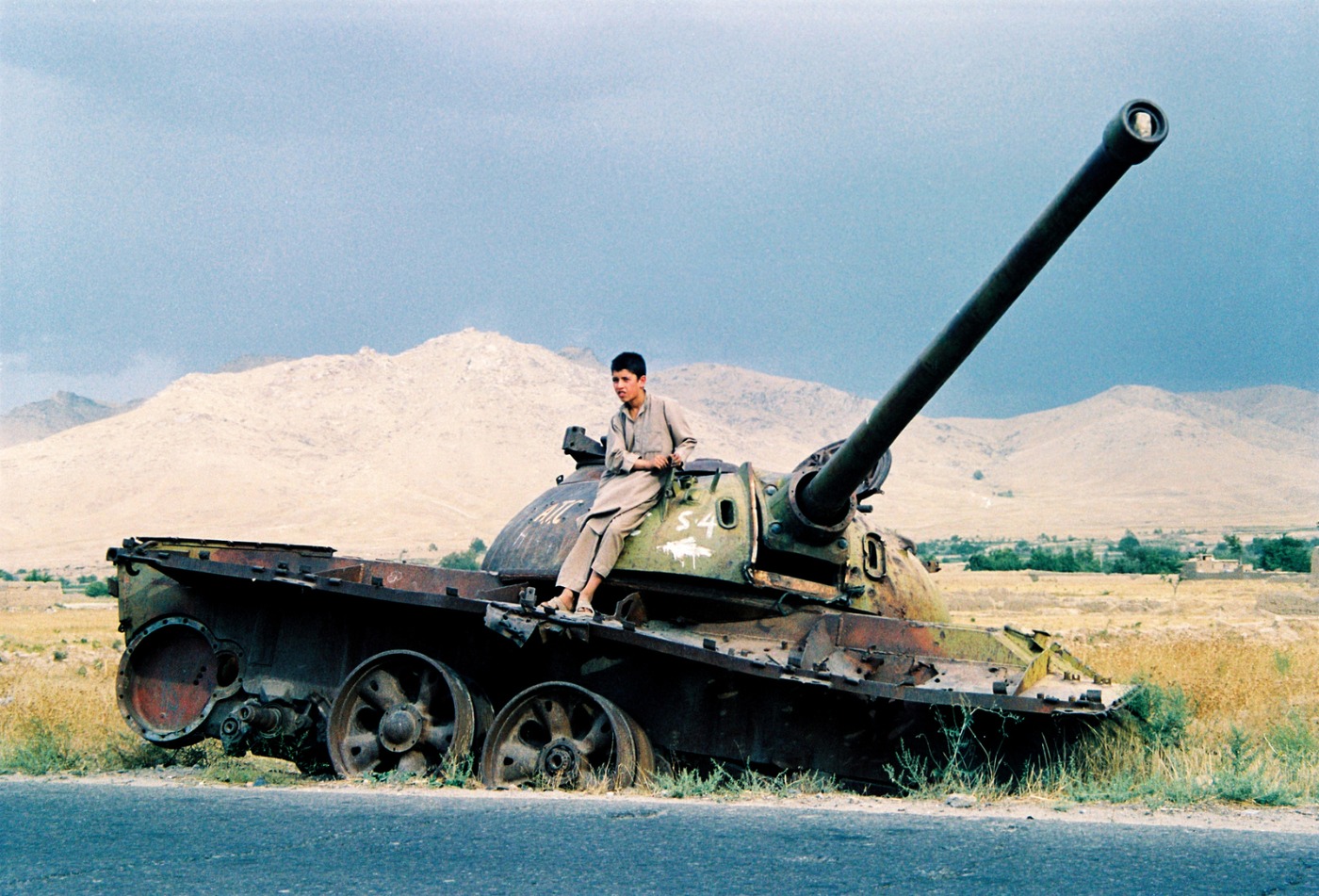
Afghanistan's recent history is characterized by war and civil unrest. The Soviet Union (Russia) invaded in 1979, but was forced to withdraw 10 years later by anti-Communist mujahidin forces supplied and trained by the US, Saudi Arabia, Pakistan, and others.
Fighting subsequently continued among the various mujahidin factions, giving rise to a state of warlordism that eventually spawned the Taliban.
Backed by foreign sponsors, the Taliban developed as a political force and eventually seized power. The Taliban were able to capture most of the country, aside from Northern Alliance strongholds primarily in the northeast, until US and allied military action in support of the opposition following the 11 September 2001 terrorist attacks forced the group's downfall. In late 2001, major leaders from the Afghan opposition groups met in Bonn, Germany, and agreed on a plan for the formulation of a new government structure that resulted in the inauguration of Hamid KARZAI as Chairman of the Afghan Interim Authority (AIA) on 22 December 2001.
The AIA held a nationwide Loya Jirga (Grand Assembly) in June 2002, and KARZAI was elected President by secret ballot of the Transitional Islamic State of Afghanistan (TISA). The Transitional Authority has an 18-month mandate to hold a nationwide Loya Jirga to adopt a constitution and a 24-month mandate to hold nationwide elections. In December 2002, the TISA marked the one-year anniversary of the fall of the Taliban.
In addition to occasionally violent political jockeying and ongoing military action to root out remaining terrorists and Taliban elements, the country suffers from enormous poverty, a crumbling infrastructure, and widespread land mines.
(Source: CIA - The World Factbook)

Source of Information:


