
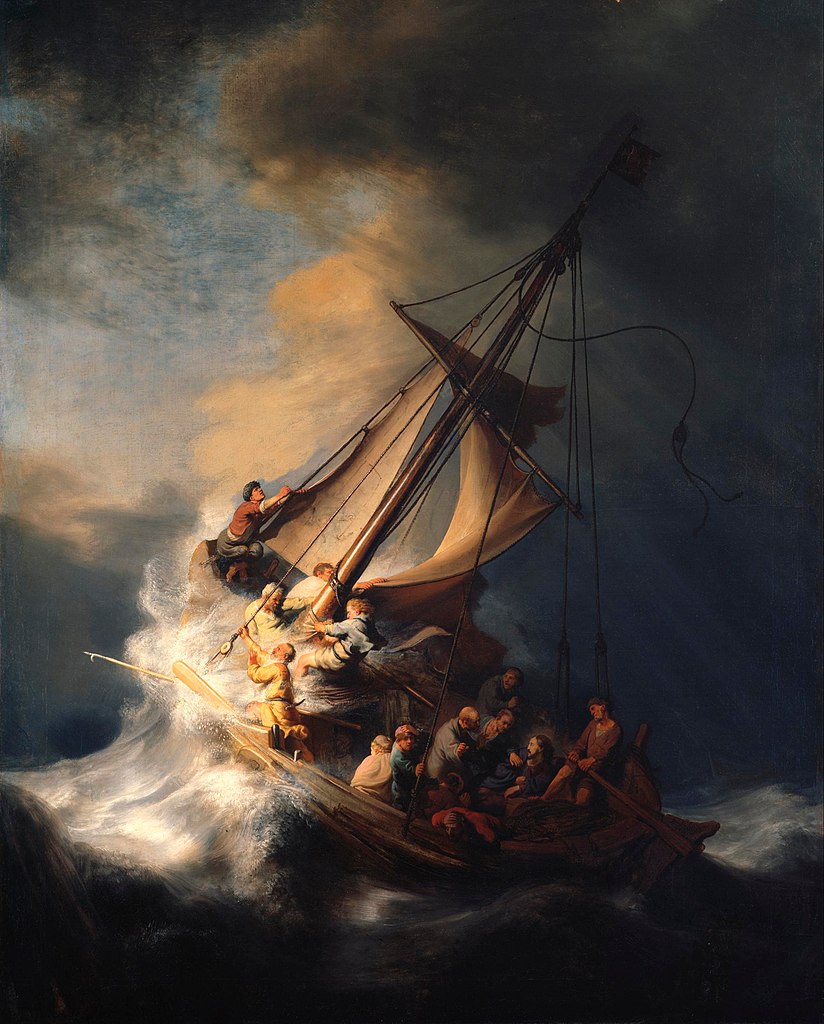
In the panorama of world-renowned art, few names conjure as much respect and admiration as that of Rembrandt Harmenszoon van Rijn, the iconic Dutch master.
One of his most notable works is 'The Storm on the Lake of Galilee', a composition of dramatic power, vibrant storytelling, and technical brilliance.
The History and Journey
Crafted in 1633, 'The Storm on the Lake of Galilee' is a unique creation in Rembrandt's oeuvre as it represents his only seascape. The painting depicts the biblical account of Jesus calming the storm on the Sea of Galilee, as narrated in the Gospel of Mark. In it, Rembrandt’s gift for capturing human emotion and integrating it with grand, elemental landscapes truly comes alive.
It's worth noting that the piece, along with many other priceless artworks, was tragically stolen from the Isabella Stewart Gardner Museum in Boston in 1990. Despite concerted global efforts, the painting has yet to be recovered. However, its images and reproductions continue to be studied and admired worldwide, ensuring that its impact and significance are far from lost.
The Fame of 'The Storm on the Lake of Galilee'
There are several reasons why 'The Storm on the Lake of Galilee' is considered among the best paintings of all time. The way Rembrandt has captured the terror of the storm and the contrasting calmness of Jesus creates a vivid contrast of emotions. The dramatic interplay of light and dark, a characteristic technique of Rembrandt known as chiaroscuro, is employed masterfully in this painting, adding to its theatrical intensity.
The piece is also renowned for its representation of the tumultuous waves and the stormy atmosphere, which was unusual in Rembrandt's typically portrait-dense portfolio. This unique departure from his conventional work has further added to its fame.
Moreover, the added layer of intrigue due to the unsolved theft has only intensified the allure and mystique of the painting.
Style and Movement
Rembrandt's 'The Storm on the Lake of Galilee' is a seminal example of the Dutch Golden Age painting style, which is characterized by meticulous attention to detail, realistic representations, and innovative uses of light and shadow. The painting falls into the sub-genre of history painting, which was considered the most prestigious style at the time.
This painting is also emblematic of the Baroque period, which sought to evoke emotional responses from viewers through dramatic, often theatrical compositions. The painting is alive with Baroque's dynamic energy, contrasted lighting, and strong emotions.
Rembrandt's ability to infuse a lively narrative into a religious theme, his masterful technique of employing light and shadows, and his knack for capturing raw human emotions, make 'The Storm on the Lake of Galilee' a standout piece not only in his oeuvre, but also in the larger context of art history. It is a potent testament to the enduring power of artistic expression and an embodiment of Rembrandt's unassailable place among the art world's luminaries.
