
One cannot discuss the pantheon of Western art without lavishing praise on Henri Matisse,
the French artist renowned for his pioneering contributions to the world of modern art. Among his innumerable works, one painting that stands tall is the illustrious "Woman with a Hat," a piece that is as noteworthy for its unorthodox approach to color and form as it is for the fascinating history that surrounds it.
History of "Woman with a Hat"
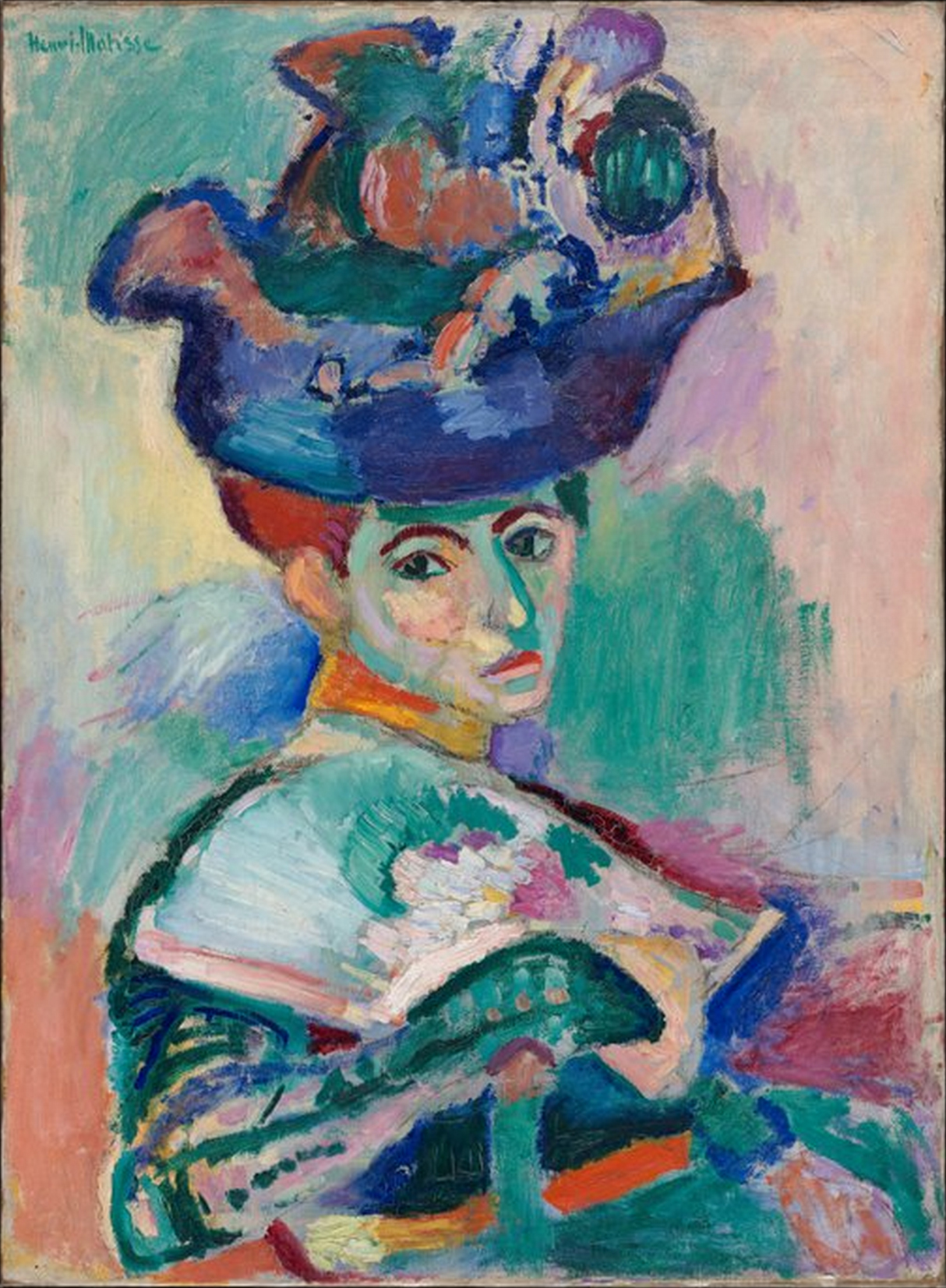
Completed in 1905, "Woman with a Hat" offers a captivating glimpse into Matisse's evolving style. It depicts his wife, Amélie, clad in a large, feather-adorned hat and an extravagant dress. Her portrait, rendered in non-representational, vibrant colors and bold strokes, became a testament to Matisse's audacious departure from the artistic norms of his time.
The painting initially incited considerable controversy when it was presented at the 1905 Salon d'Automne in Paris. Critics and the public alike were shocked by the painting's bright, clashing colors and its seemingly arbitrary placement of shades and tones. However, this unconventional approach was precisely what catapulted Matisse and his contemporaries into the forefront of the avant-garde scene in Europe.
Cities Where It's Been Presented
Since its unveiling, "Woman with a Hat" has graced the galleries of some of the most prestigious museums globally. After its debut in Paris, the painting has traveled to various locales, showcased in landmark exhibitions focused on Fauvism or Matisse's oeuvre. However, its permanent home is the San Francisco Museum of Modern Art (SFMOMA), where it has been since 1936, after being purchased by the collectors Sarah and Michael Stein, avid supporters of Matisse.
Why It Is Famous
"Woman with a Hat" occupies a significant place in art history, not just because it’s a Matisse, but because it heralded a new art movement: Fauvism. With this painting, Matisse confronted traditional ideals about realistic representation and color theory, using color as an expressive, structure-giving element rather than a mere tool to capture the likeness of the subject.
Its fame is also tied to the initial outrage it provoked. The reactions were so strong that they led to the christening of the Fauvist movement. When art critic Louis Vauxcelles saw the array of boldly painted works, he described them as "wild beasts" or "fauves" in French, hence the term Fauvism.
The Movement or Style: Fauvism
Fauvism, an early 20th-century art movement led by Matisse and André Derain, was characterized by a revolutionary use of color. The Fauvists veered away from the naturalistic palettes and detailed precision of impressionism, choosing instead to embrace vivid, non-representational color as an emotional force.
"Woman with a Hat" embodies the essence of Fauvism. The painting's riotous explosion of color, unmodulated and direct from the tube, challenges viewers' perceptions and expectations. It encapsulates Matisse's belief that artists should use color and form to express their emotions, reflecting their internal state rather than strictly representing reality.
To this day, "Woman with a Hat" continues to intrigue art enthusiasts worldwide, not just for its aesthetic appeal, but for the artistic revolution it sparked. It remains an iconic symbol of Matisse's bravura and the daring spirit of the Fauvist movement, making it undoubtedly one of the best paintings of all time.
