
Art is a boundless ocean of expression, one that spans centuries, crosses borders, and evokes a myriad of emotions.
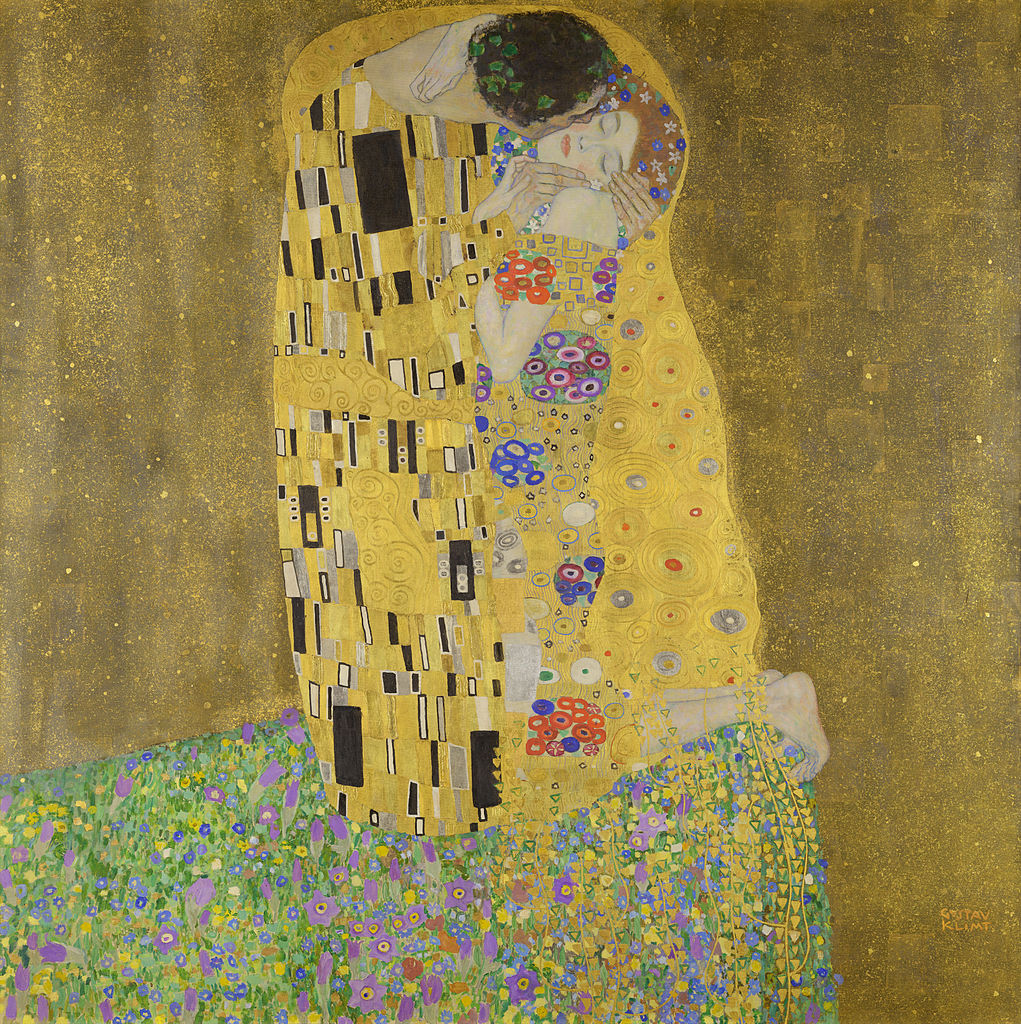
Among the many masterpieces that have stood the test of time and continued to captivate audiences worldwide, Gustav Klimt's 'The Kiss' holds a special place. This piece is not just a painting; it's a profound statement of love, intimacy, and passion frozen in a timeless embrace.
History of 'The Kiss'
'The Kiss' was painted during Klimt's 'Golden Period', between 1907 and 1908. By this time, the Austrian artist was already renowned for his distinctive and controversial style. He was known for pushing the boundaries of traditional art, often featuring erotic themes that were met with public scorn and criticism.
Klimt's vision for 'The Kiss' was driven by an inspiration that married love and art in an exquisitely intricate tapestry of passion. Using oil paints and layers of gold leaf—an influence drawn from his travels to Italy, where he was inspired by the Byzantine mosaics of Ravenna—he created an iconic image that continues to resonate with audiences even over a century later.
Residence of the Painting
The painting currently resides in Vienna, Austria, at the Österreichische Galerie Belvedere, a museum housed in the Belvedere palace. The painting has found its home here since it was purchased, even before it was finished, by the modern gallery of the Austrian state. It's noteworthy to mention that 'The Kiss' has not been frequently loaned out for exhibitions due to its fragility and the potential risk of damage in transit.
Why is 'The Kiss' Famous?
'The Kiss' is an intricate marriage of symbolism, technique, and emotion that illustrates Klimt's unmatched artistic prowess. It's renowned for its provocative representation of an intimate moment shared between two lovers, contrasted against a background that evokes a universal sense of passion and romance.
The painting's fame can also be attributed to its unique use of materials. The extravagant use of gold leaf is a testament to Klimt's admiration for Byzantine art and his inclination towards the unconventional. This is further exemplified by his intricate patterns that adorn the subjects, lending a mythical quality to their human forms.
Moreover, the painting's recognition is rooted in its exploration of a subject as universal and timeless as love. 'The Kiss' embodies the passion, the tenderness, and the blissful surrender that characterizes this profound emotion, making it relatable to audiences across generations.
Art Movement and Style
Gustav Klimt was a pivotal figure in the Vienna Secession movement—a response to the conservatism of the Viennese art establishment during the late 19th and early 20th centuries. The Secessionists aimed to create a platform for unconventional and abstract art, welcoming international artists and encouraging diversity.
Klimt's style, however, extended beyond this. His distinctive approach was a combination of Symbolism, which seeks to represent absolute truths symbolically through language, metaphors, and suggestive imagery, and Art Nouveau, characterized by its intricate linear designs and flowing curves. 'The Kiss' exemplifies this style perfectly, with its detailed mosaic-like patterns, sensual subject matter, and ethereal symbolism.
In conclusion, 'The Kiss' is a masterpiece that embodies love in its most passionate form. Its history, place of residence, global fame, and association with the Secessionist movement and Symbolism all contribute to its enduring status as one of the greatest paintings of all time. Like a golden thread woven into the fabric of art history, Gustav Klimt's 'The Kiss' continues to glitter, enthrall, and inspire, making it a vital part of our global artistic heritage.
