
The fine arts sphere is one teeming with a cornucopia of influential and inspiring works. Among this vast catalogue, certain pieces command a unique space of their own.
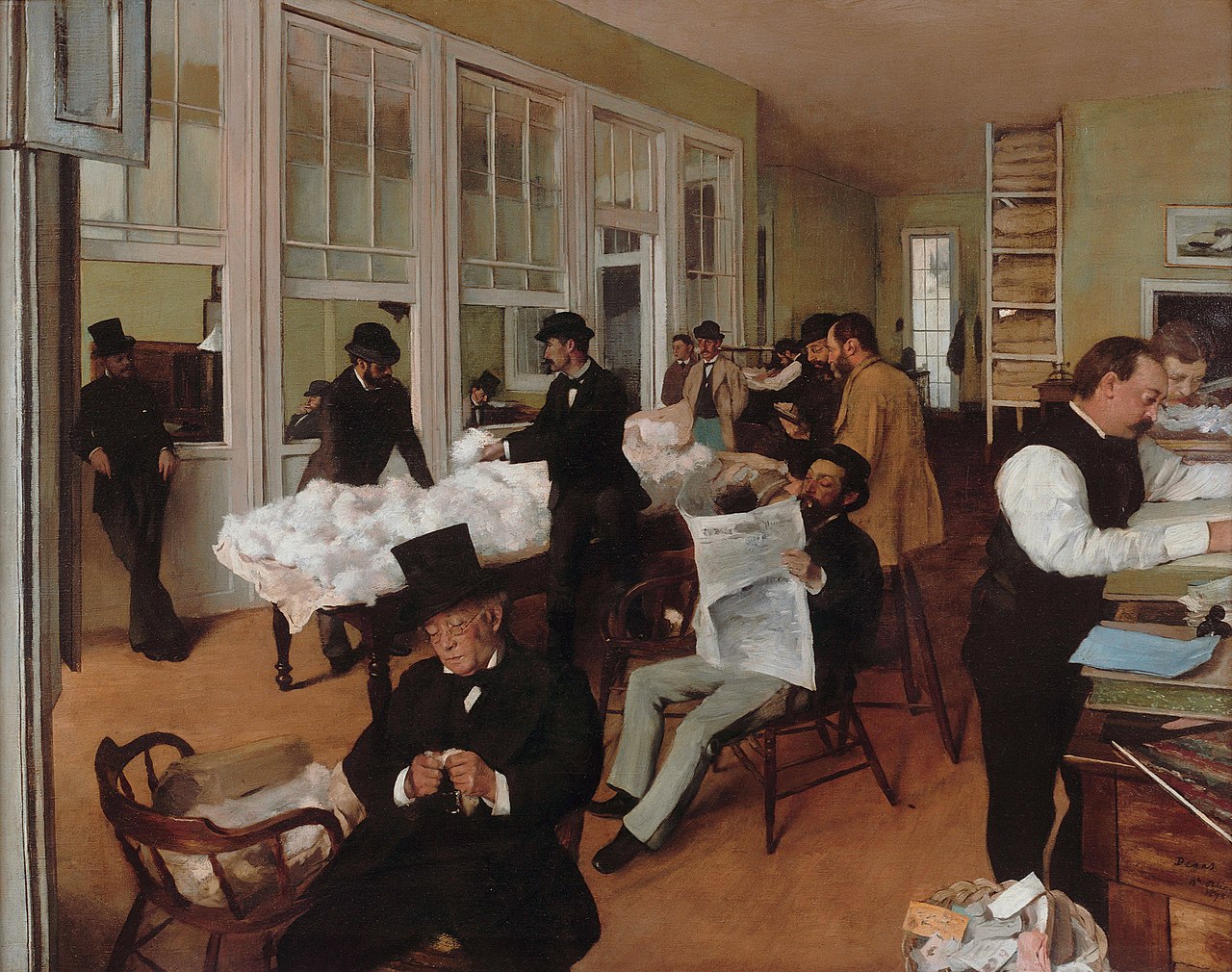
One such painting that has consistently garnered attention and appreciation is "A Cotton Office in New Orleans" by the renowned French artist, Edgar Degas.
Degas, one of the progenitors of Impressionism, deviated from the typical subjects of the movement—landscapes and scenes of modern life—to explore the bustling world of commerce in his painting, A Cotton Office in New Orleans. While the subject matter is unusual for Degas, it exemplifies his keen interest in capturing the energy and dynamic of contemporary life.
Painted in 1873, this artwork holds historical significance for multiple reasons. Firstly, it is the only one of Degas' works that was acquired by a museum, the Musée des Beaux-Arts in Pau, during his lifetime. Moreover, it was created during the artist's visit to New Orleans, where his mother was born and his brother René lived. This visit marked a critical period in Degas' life as it broadened his subject matter, steering him toward more complex scenes of contemporary life.
The painting itself vividly depicts the interior of a cotton brokerage office, a focal point of the southern economy in the late 19th century. The dense composition filled with detailed figures hard at work projects an authentic snapshot of the dynamics of the cotton trade. By capturing both the toil and the calculated negotiations of the cotton traders, Degas presents a unique, realistic portrayal of a world that was mostly hidden from the Parisian society of his time.
A Cotton Office in New Orleans is a testament to Degas' mastery in capturing light and motion. The painting is filled with a rich assortment of colors, bringing a sense of vibrancy and life into the bustling office. The natural light flooding in through the windows illuminates the subjects and the cotton bales, creating a complex interplay of light and shadow. This nuanced use of light is a hallmark of the Impressionist movement, lending a sense of realism and immediacy to the painting.
Despite being part of the Impressionist movement, Degas was known for his unconventional approach. Unlike his contemporaries, he was less interested in painting en plein air (outdoors) and more focused on indoor scenes. A Cotton Office in New Orleans showcases this preference as well as his fascination with the human figure and urban life.
As of today, the painting resides in the Musée des Beaux-Arts de Pau, in Pau, France. Its fame stems from the unique perspective it offers on an otherwise commonplace subject. It is more than just a depiction of a cotton office; it is a testament to Degas' pioneering spirit, his ability to find beauty in the mundane, and his deft representation of the vibrancy of human activity.
A Cotton Office in New Orleans isn't merely a painting; it's a portal into a particular moment in history, a vibrant slice of life immortalized on canvas. Its fame and acclaim serve as enduring testimony to Degas' incredible ability to encapsulate reality with a brushstroke. It's this ability that propels the painting into the upper echelons of the world's most revered artworks. And, it's why any lover of fine arts should endeavor to experience this masterful work at least once in their lifetime.
