
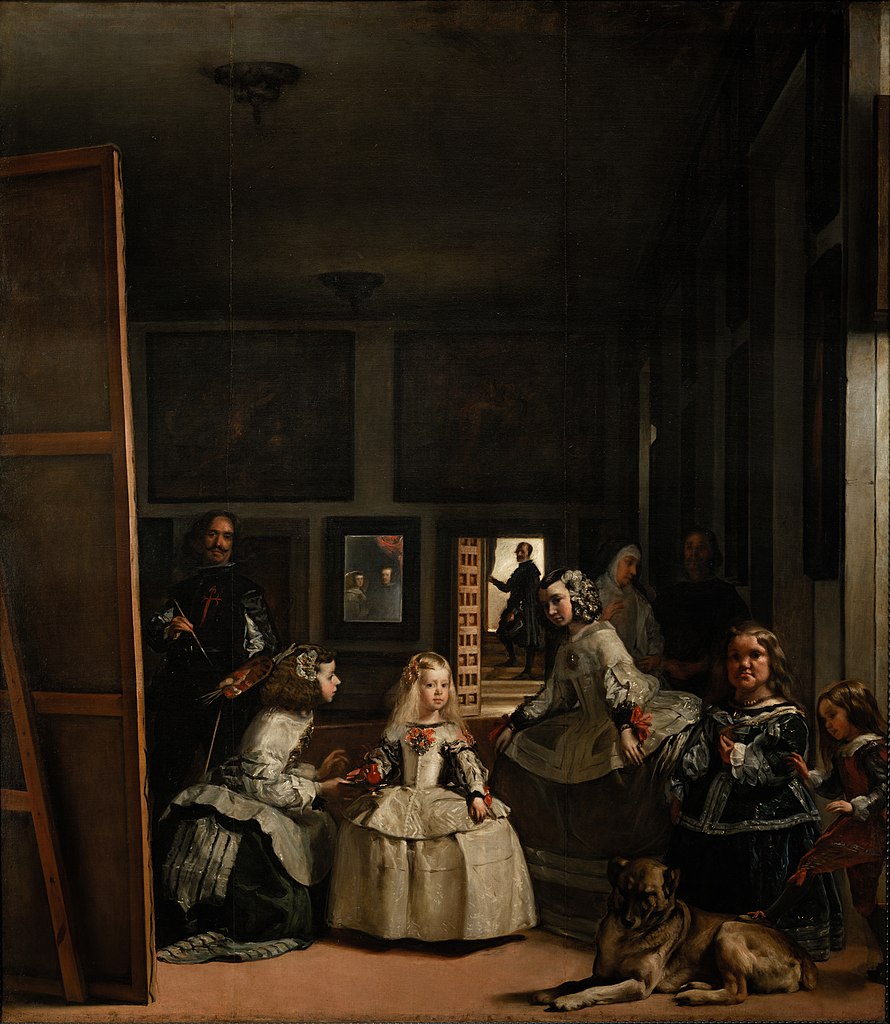
Las Meninas, or The Maids of Honor, is arguably one of the most influential and admired works in Western art history.
Painted in 1656 by the eminent Spanish artist, Diego Velázquez, it's celebrated not only for its technical brilliance but also for its complex and multifaceted narrative that has intrigued and captivated art historians, critics, and enthusiasts for centuries.
A Glimpse into History
Diego Velázquez was one of the most prominent painters of the Spanish Golden Age. He served as a court painter to King Philip IV, which allowed him access to the royal family and aristocracy, a privilege reflected in his works. Velázquez's unparalleled ability to capture the human essence is on full display in Las Meninas, an intriguing composition that presents an intimate view of the Spanish court.
The painting captures a moment in the life of Infanta Margarita, the daughter of King Philip IV and Queen Mariana. Surrounded by her maids of honor, a dwarf, a dog, and the artist himself, the Infanta is the luminous center of the scene. Meanwhile, the king and queen are reflected in a mirror in the background, adding another layer of complexity to the composition.
The Journey of Las Meninas
Unlike many other great masterpieces, Las Meninas hasn't been a globetrotter. From the moment it was painted, this artwork has resided primarily in Spain. It has endured various political upheavals, survived the ravages of time, and yet remained remarkably intact. Today, it is housed in Madrid's Prado Museum, one of the world's most visited museums, where it continues to fascinate visitors with its magnetic allure.
A Masterpiece's Fame
What makes Las Meninas so famous? The painting is renowned for its innovative composition, engaging narrative, and its uncanny ability to blur the lines between reality and illusion. By including a mirror reflecting the king and queen, Velázquez introduces a clever play of perspective, making the viewer both an observer and a participant in the scene. Moreover, by painting himself into the scene, he made a bold statement about the role and status of the artist in society.
The Style and Movement
Las Meninas is widely regarded as a masterpiece of Baroque painting, a movement characterized by dramatic lighting, rich color, and intense emotional expression. However, Velázquez's work transcends these characteristics to encapsulate a unique blend of realism and illusion. His profound understanding of human nature, combined with his skillful manipulation of light and shadow, results in a painting that is both a detailed representation of a specific moment in time and a timeless commentary on the nature of perception.
In conclusion, Las Meninas is more than just a painting; it is an artistic phenomenon that has influenced generations of artists and continues to inspire contemporary art. It's a testament to Velázquez's genius and his enduring legacy in the world of art.
