
In the canon of Western art, few artists have had as profound an influence as Pablo Picasso, and few of his works are as iconic as The Old Guitarist.
This timeless painting, completed in 1903-1904, offers a haunting exploration of human suffering and perseverance, themes that continue to resonate more than a century later.
The Old Guitarist is one of the most emblematic works from Picasso's Blue Period (1901-1904), named so due to the blue-dominated palette and melancholic subject matter the artist employed during these years. This period was initiated by the suicide of Picasso's close friend Carlos Casagemas, which sent the artist into a deep emotional turmoil.
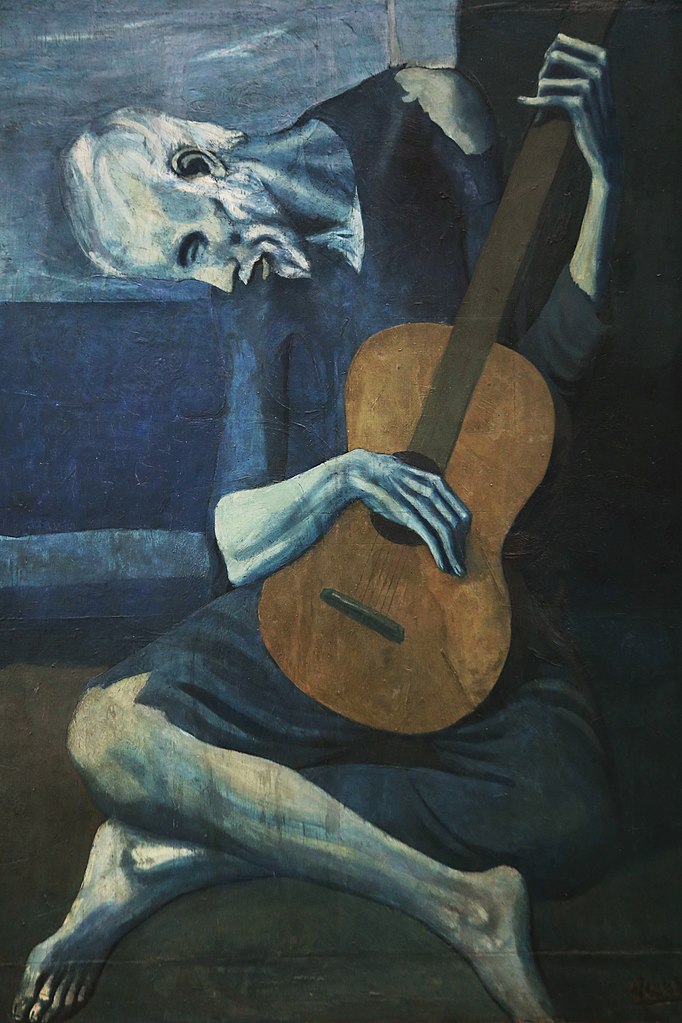
The painting depicts an elderly, gaunt man hunched over an old, battered guitar. His thin, fragile body - accentuated by the use of blues and cool, spectral tones - is a testament to his despair and destitution. Yet, amidst his evident hardship, the man is seen playing his guitar, symbolizing a lifeline, perhaps the only source of solace and purpose in his world of sorrow.
The Old Guitarist is recognized not just for its emotive depth, but also for the revolutionary techniques Picasso employed. It reflects the influence of El Greco, a Spanish Renaissance painter known for his elongated figures. Furthermore, this painting reveals Picasso's interest in the symbolism and expressiveness of color, which he explored more deeply in later periods.
This masterpiece has been exhibited in numerous cities worldwide, and its influence transcends borders and cultures. After being acquired by the Art Institute of Chicago in 1922 through a generous donation by Frederic Clay Bartlett, The Old Guitarist has been a mainstay of their collection, drawing innumerable visitors each year.
The Old Guitarist's fame is a testament to its poignant depiction of human suffering, as well as Picasso's innovative approach to painting. The artwork's universality and enduring emotional resonance have solidified its place among the most iconic works of the 20th century.
The painting belongs to the modernist movement, specifically a subset known as Symbolism. This movement rejected the literal representation of the physical world, instead favoring subjective emotional experience. Picasso, in this painting, leaned heavily into symbolism, utilizing color and form to express deeper psychological and emotional states. His exploration of such themes would later influence his development of Cubism, a revolutionary art movement that shattered traditional perspectives of reality.
In conclusion, The Old Guitarist serves as a poignant reminder of the human spirit's resilience amidst despair. Picasso's masterful use of color and form creates an emotive image that continues to speak volumes about the human condition, making this painting one of the most celebrated works of modern art.
By expertly synthesizing the tenets of Symbolism and his own profound emotional experiences, Picasso elevated The Old Guitarist beyond mere artwork, transforming it into a timeless expression of humanity's struggle and hope. As such, it deserves its distinguished place among the best paintings of all time.
