
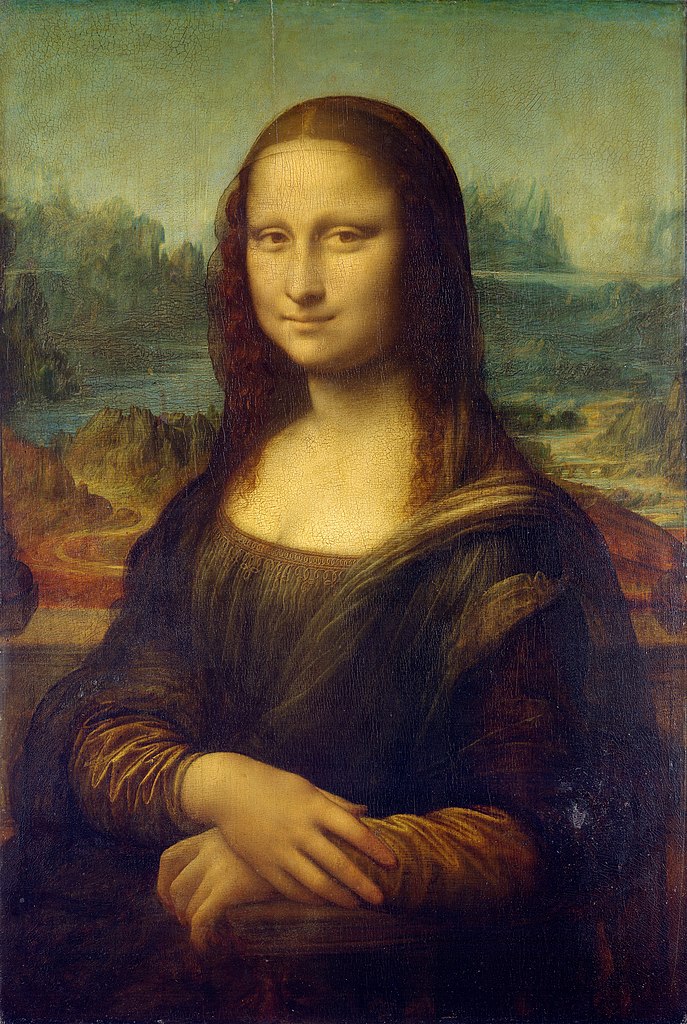
When it comes to the pantheon of great artworks, there are few paintings that rival the fame and intrigue of the 'Mona Lisa'.
The painting, a work of the legendary Italian artist Leonardo da Vinci, is an undisputed symbol of the Renaissance and has left a mark on art and culture that is arguably unparalleled.
The History of Mona Lisa
Created around the turn of the 16th century, the Mona Lisa, or 'La Gioconda', was commissioned by Florentine merchant Francesco del Giocondo. The subject of the painting, a woman with an elusive smile, is believed to be Lisa Gherardini, del Giocondo's wife.
Da Vinci's genius lay not just in his ability to capture Lisa's physical likeness, but also in imbuing the portrait with an emotional depth and complexity rarely seen in works of that era. The painting is known for its mysterious atmosphere, created by Da Vinci’s use of sfumato, a technique of soft, heavily shaded modeling.
The painting remained in Leonardo's possession until his death in 1519, and it eventually found its way to the royal collection of King Francis I of France. From there, it adorned the walls of various French palaces until it found its permanent home in the Louvre Museum after the French Revolution.
The Cities That Bore Witness
The Mona Lisa has primarily resided in Paris since its completion, save for some interesting detours in its storied history. During the Second World War, to protect it from possible damage, the painting was moved from the Louvre to various locations across France, including the Château de Chambord and the Abbey of Loc-Dieu.
However, the most famous trip the Mona Lisa ever took was its journey to the United States in 1963. At the invitation of First Lady Jacqueline Kennedy, the painting toured the United States, exhibited at the National Gallery of Art in Washington D.C. and the Metropolitan Museum of Art in New York, attracting record-breaking crowds.
The Fame of the Mona Lisa
What makes the Mona Lisa famous? Beyond its exquisite rendering and historical significance, there is also the question of her enigmatic smile - is she happy, coy, or subtly bemused? This ambiguity has fascinated observers for centuries.
The painting's popularity was further heightened by the infamous theft of the artwork in 1911 by an Italian handyman, who believed that the painting should be returned to Italy. After being missing for two years, the painting was recovered and returned to the Louvre, but the incident cemented its fame.
A Symbol of the Renaissance
The Mona Lisa is one of the most exemplary pieces of the High Renaissance period, a time characterized by groundbreaking developments in literature, science, and of course, art. The painting is admired for its realistic representation of the human form and the detailed landscape in the background, both hallmarks of the Renaissance style.
Furthermore, the Mona Lisa serves as a testament to da Vinci's approach to art: a fusion of science and artistry. The shadowing technique of sfumato, the intricate detail of the figure's complexion, the detail in the background landscape, all demonstrate Leonardo's deep understanding of human anatomy, light, and nature - key attributes of the High Renaissance.
The Mona Lisa remains, more than 500 years after its creation, one of the most revered and studied works of art. With her cryptic smile and intense gaze, she continues to captivate the hearts and minds of millions of viewers. Da Vinci's masterpiece is not just a painting; it's a symbol of the human condition in its manifold complexity and a testament to the enduring power of artistic expression.
