
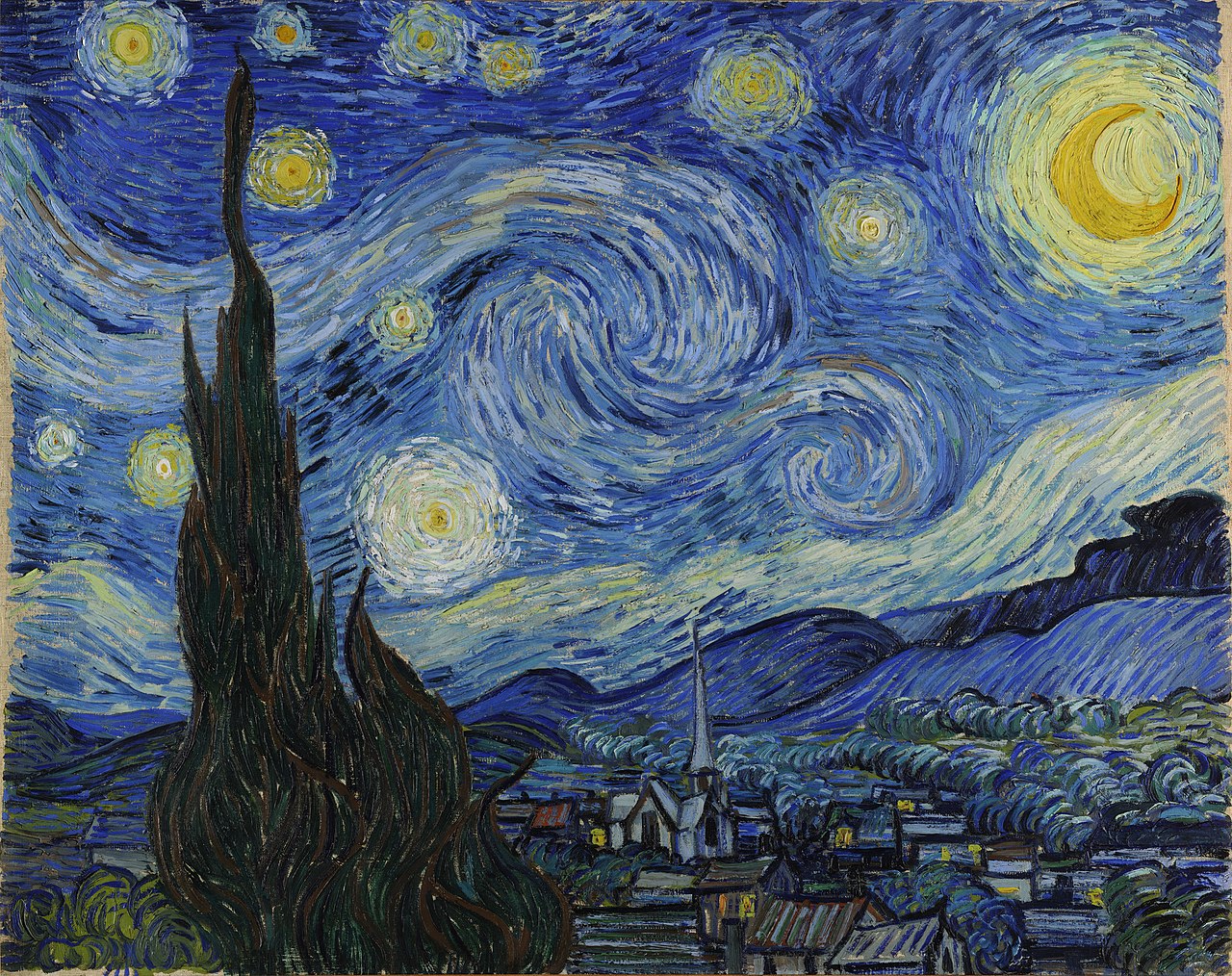
Among the constellation of masterpieces that define the world of art, Vincent Van Gogh's 'Starry Night' shines brightly,
a timeless beacon in the night sky of aesthetic creativity. It is more than just a painting; it is a symphony on canvas that brings together the restlessness of the human soul and the tranquillity of the cosmos.
History and Cities where it is Presented
Painted in June 1889, the Starry Night is the view from the east-facing window of Van Gogh's asylum room at Saint-Paul-de-Mausole in Saint-Rémy-de-Provence, just before sunrise. Vincent Van Gogh, a Dutch post-impressionist painter, was voluntarily confined in the asylum following his mental health struggles. The star-studded masterpiece was one of the many works that he painted during this period.
Since 1941, this iconic artwork has made its home at the Museum of Modern Art (MoMA) in New York City. Since then, it has been exhibited in various cities worldwide as part of traveling exhibitions, such as Paris, Amsterdam, and Tokyo, allowing art aficionados worldwide to witness this iconic masterpiece.
The Fame of Starry Night
Starry Night is not just famous; it is iconic, immediately recognizable to even those outside the art world. It stands out because of its stark contrast to the typical depiction of the night sky. Instead of the passive and peaceful darkness, Van Gogh portrays the night as an energetic, dynamic cosmos bursting with colour, movement, and life.
The painting's popularity stems from its emotional depth and innovative artistic techniques. Van Gogh's unique brushwork, with thick, sweeping strokes, creates a sense of turbulence and movement that radiates from the canvas. He infused his feelings into each stroke, and as a result, Starry Night is as much a window into Van Gogh's soul as it is a depiction of the night sky.
Post-Impressionism and Starry Night
Starry Night is a magnificent example of the Post-Impressionist movement. Van Gogh, along with artists like Paul Gauguin and Paul Cézanne, broke away from the Impressionist concern with accurately representing light and color. Instead, they aimed to convey their feelings and impressions, using color and form in expressive and often symbolic ways.
In Starry Night, Van Gogh's dramatic, impulsive brushstrokes and bold, vibrant colors are characteristic of this style. His use of contrasting colors and textures, his emphasis on geometric forms in the stars and the swirling clouds, and his symbolic use of light and dark, reflect the fundamental principles of Post-Impressionism.
Van Gogh himself may not have foreseen the profound impact his work would have on generations of artists and art enthusiasts, but the magnetism of Starry Night has transcended time and remains a testament to his genius. It remains a captivating depiction of human emotion, the universe's grandeur, and the interplay between the two, forever reminding us that "the sight of the stars makes [us] dream."
