Ashgabat Weather
ASHGABAT WEATHERAbout Ashgabat
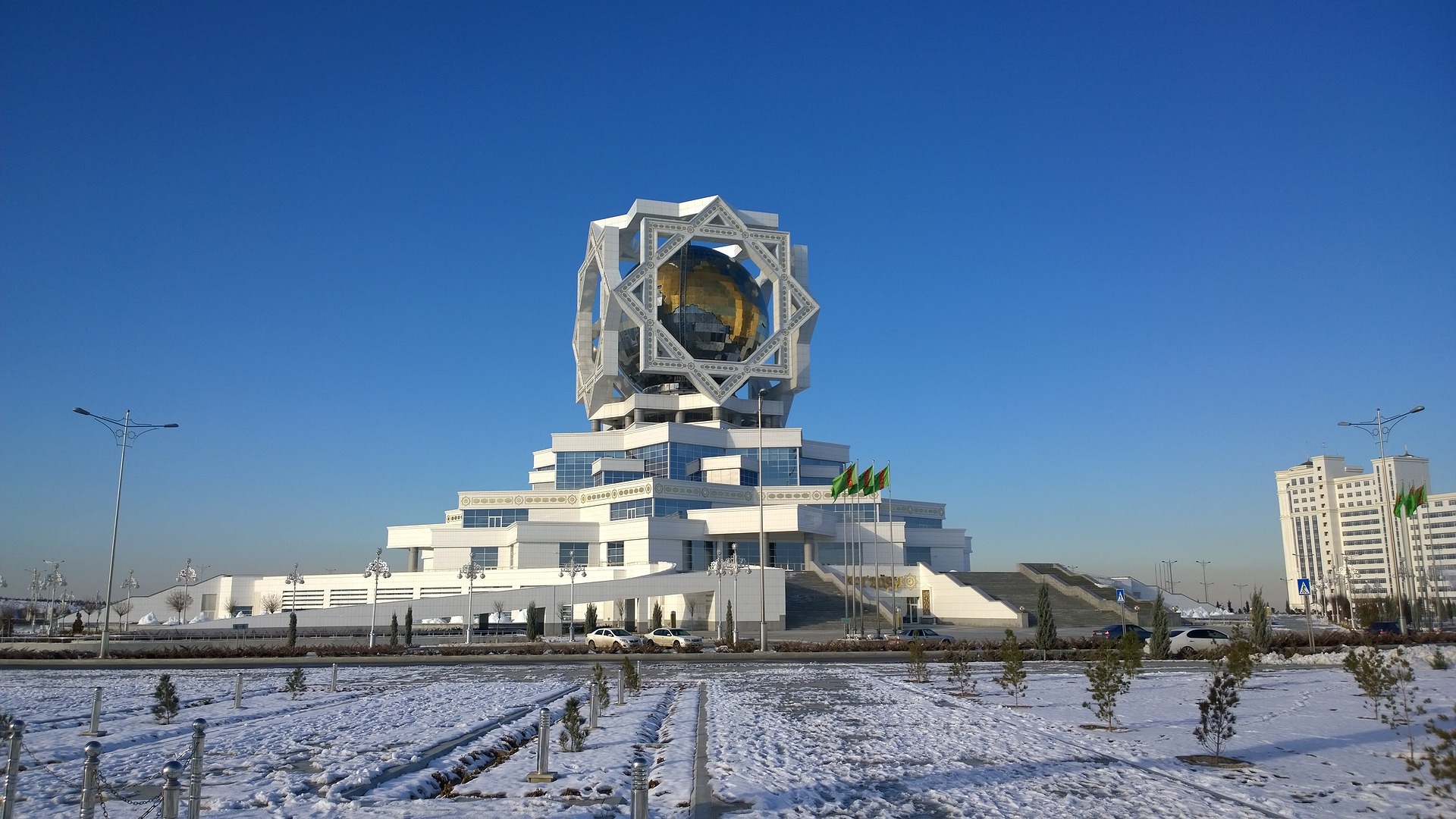
Ashgabat is the capital and largest city of Turkmenistan — a Central Asian republic of vast, largely uninhabited desert occupying the territory between the Caspian Sea to the west, Iran and Afghanistan to the south, Uzbekistan to the east, and Kazakhstan to the north. Situated in a narrow fertile strip between the Kopet Dag mountain range (whose ridges form the border with Iran) and the vast Karakum Desert that covers approximately 80% of the country's territory, Ashgabat occupies one of the most geographically dramatic positions of any Central Asian capital — a city clinging to the northern foothills of a dramatic mountain range at the desert's edge, at an elevation of approximately 219 metres, where the irrigated gardens and parks of the urban oasis give way within minutes to the sand and scrub of the Karakum. The city's name is believed to derive from the Arabic ishq abad — city of love — though other etymologies suggesting a Turkic origin are also proposed. Founded as a Russian Imperial military outpost in 1881 following the Russian conquest of the Tekin Turkmen stronghold of Geok-Tepe, Ashgabat served as the administrative centre of the Trans-Caspian region under Russian and then Soviet rule — it was known as Poltoratsk briefly in the early Soviet period before reverting to Ashgabat, and was almost entirely destroyed by a catastrophic earthquake in October 1948 that killed an estimated 110,000–176,000 people (the true death toll suppressed by Soviet authorities for decades) and levelled the city completely. Rebuilt from rubble by Stalin's planners as a model Soviet city of wide boulevards, public gardens, and monumental architecture, Ashgabat was transformed again after Turkmenistan's independence in 1991 into one of the most extraordinary and most surreal urban environments on earth — a planned capital rebuilt almost entirely in white marble by the successive authoritarian governments of Saparmurat Niyazov (Turkmenbashi — "Father of the Turkmen", President 1991–2006) and Gurbanguly Berdimuhamedow (Arkadag — "the Patron", President 2007–2022) in a grandiose, dazzling exercise in presidential self-glorification that has given the city more white marble-clad buildings than any other city in the world — a distinction recognised by the Guinness World Records.
Best Time to Visit Ashgabat & Weather Guide
Ashgabat has a hot continental desert climate with four clearly defined seasons — mild, pleasant springs; intensely hot, arid summers; warm, beautiful autumns; and cold winters with occasional frost. The city's position between the Kopet Dag mountains and the Karakum Desert produces a climate of dramatic extremes that rewards visitors who time their arrival carefully.
🌸 Spring (March–May)
The finest season for visiting Ashgabat — temperatures rising gently from a pleasant 14–20°C in March to a warm 25–30°C in May, the city's parks and gardens exploding into blossom, and the surrounding Kopet Dag foothills covered in a brief but spectacular carpet of wildflowers and new grass that transforms the landscape from winter brown to vivid green. April and May are the peak of spring beauty: the roses of Ashgabat's abundant public gardens, the fruit orchards of the Kopet Dag villages, and the fresh, clear mountain air create a city of remarkable pleasantness. The Novruz festival (21 March — the Persian and Turkmen new year, one of the most joyful public celebrations in Central Asia) fills the city's public squares with music, traditional food, and community celebration. The ideal time for the marble city sightseeing, the Nisa ruins, and the day trip to Darvaza in spring temperatures. Book accommodation well in advance — spring is the most popular visitor season and hotel availability is limited in a city with restricted tourist infrastructure.
Best Time to Visit🥵 Summer (June–August)
Ashgabat's summer is one of the most intense in Central Asia — temperatures regularly reaching 40–45°C in July and August, the desert sun bleaching the white marble of the city centre to a blinding intensity, and the dry desert air providing none of the humidity relief of coastal or riverside cities. Summer is genuinely challenging for sightseeing and is strongly not recommended for visitors without prior experience of extreme desert heat. The marble-clad city, which reflects rather than absorbs sunlight, can feel even hotter at street level than the ambient temperature suggests. If visiting in summer, restrict outdoor activity to the early morning (6–9am) and evening (after 7pm), use the air-conditioned metro and shopping centres during midday, and drink a minimum of 4 litres of water daily. The Darvaza Gas Crater is at its most spectacular in summer nights, when the heat of the day has subsided and the flaming crater glows orange against the velvet-black desert sky.
Extreme Heat — Caution🍂 Autumn (September–November)
The second-finest season in Ashgabat and, for many experienced Central Asia travellers, the most atmospheric — temperatures cooling from the summer highs to a perfect 20–28°C through September and October, the city's abundant plane trees and poplars turning gold and amber, and the bazaars and markets of the Old City reaching the peak of their autumn produce abundance. September and October are ideal months for combining Ashgabat sightseeing with day trips to the Nisa ruins, the Kopet Dag mountain villages, and the Darvaza Gas Crater (the Karakum Desert is at its most comfortable in the autumn warmth). The autumn light — clear, golden, and low — illuminates the white marble facades of the presidential buildings with a particular warmth that photographers find especially rewarding. Autumn is also the most pleasant season for the 4-hour drive north to Darvaza, when the desert is neither baking nor cold. October is the single finest month for a first-time visit to Ashgabat.
Golden Autumn Season❄️ Winter (December–February)
Ashgabat's winter is colder than most visitors expect — average temperatures of 4–8°C in December and January, with occasional frosts and rare snowfall that transforms the white marble city into an unexpectedly beautiful winter landscape. The Kopet Dag mountains above the city are frequently snow-capped from November through March, providing a dramatic backdrop to the gleaming white city below. The winter light — clear, sharp, and low-angled — illuminates the marble facades with a crisp intensity that creates spectacular photography conditions. Tourist numbers are at their lowest in winter, hotel rates drop, and the city's limited tourist infrastructure is at its most accessible and most personal. The Darvaza Gas Crater is arguably at its most dramatic in the cold winter nights, when the flaming pit provides genuine warmth as well as spectacle. Pack warm layers — Ashgabat winters are genuinely cold, particularly after dark.
Quiet Low SeasonSpring (Mar–May): Light layers for mild days and cool evenings; a light jacket or fleece for March–April evenings. Comfortable walking shoes for the marble boulevards. High-factor sunscreen from April — the desert sun is intense even in spring. Modest clothing (covered shoulders and knees) for visiting mosques and the Nisa archaeological site.
Summer (Jun–Aug): The lightest possible breathable cotton and linen; a wide-brimmed hat; SPF 50+ sunscreen; minimum 4 litres of water per day outdoors. Avoid outdoor activity 10am–6pm if possible. A light jacket for heavily air-conditioned interiors.
Autumn (Sep–Nov): Light to mid-weight clothing for warm September; warmer layers for October–November evenings. A light jacket essential by October.
Winter (Dec–Feb): Warm coat, scarf, gloves, and warm footwear — Ashgabat winters are genuinely cold. Layering essential.
Year-round: Turkmenistan uses Type C and F plugs (European standard) at 220V/50Hz. Cash in Manat (TMT) is essential — ATMs are limited and card acceptance is very restricted outside major hotels. The Turkmenistani Manat is not freely convertible outside Turkmenistan — exchange on arrival at the airport or authorised banks. Photography restrictions are significant — see safety section. A valid tourist visa is required and must be arranged in advance; independent travel requires a licensed guide in many areas.
Top Attractions in Ashgabat
Ashgabat offers one of the most genuinely unique and most visually extraordinary urban experiences in the world — the white marble presidential city, the Soviet-era monuments, the ancient Parthian ruins, and the surreal spectacle of the Darvaza Gas Crater combine to create an unforgettable Central Asian destination quite unlike anywhere else.
🏛️ The White Marble City — Presidential Boulevard
The most extraordinary and most visually overwhelming urban environment in Central Asia — the Presidential Boulevard (Bitarap Türkmenistan Şaýoly) and the surrounding government quarter of central Ashgabat constitute the most concentrated display of white marble monumental architecture on earth. Rebuilt almost entirely since 1991 at extraordinary expense, the entire city centre has been clad in brilliant white Makrana marble (imported from India) in a planned urban composition of deliberately overwhelming scale: the Rukhnama Monument (a revolving book-shaped structure housing the sacred text written by Niyazov), the Neutrality Monument (a 75-metre tripod crowned by a golden rotating statue of Niyazov — moved and reinstalled under Berdimuhamedow), the Oguz Han Presidential Palace (the most imposing government building in the complex, flanked by eight white ministries in matching marble), the Alem Cultural Centre (whose indoor Ferris wheel holds a Guinness World Record), and the broad, empty, immaculately maintained marble boulevards connecting them — empty of traffic and pedestrians in a way that gives the city centre a dreamlike, slightly unsettling quality unlike any urban environment on earth. Walking the Presidential Boulevard with a knowledgeable guide provides one of the most intellectually stimulating and most visually astonishing urban experiences available anywhere in Central Asia.
World Record White Marble City🏺 Ancient Nisa — Parthian Empire Ruins
The most historically significant archaeological site in Turkmenistan and a UNESCO World Heritage Site of outstanding importance — Ancient Nisa (both Old Nisa and New Nisa), located approximately 18km west of central Ashgabat at the village of Bagyr, preserves the remains of the royal capital of the Parthian Empire — one of the great civilisations of the ancient world, which ruled a territory stretching from the Euphrates to eastern Iran between the 3rd century BC and the 3rd century AD and successfully resisted Roman expansion into the eastern Mediterranean for three centuries. The Old Nisa site — a compact fortified citadel on a low hill, its mudbrick towers and walls partially reconstructed, surrounded by the flat agricultural plain of the Kopet Dag piedmont — contains the remains of royal storehouses, a treasury, and the extraordinary Round Hall where the famous Nisa rhytons (elaborately carved ivory drinking horns, now in the National Museum of Turkmenistan) were discovered. The combination of the site's extraordinary historical significance — as the origin point of one of antiquity's greatest empires — with its peaceful, relatively uncrowded atmosphere makes Ancient Nisa one of the most rewarding and most intellectually enriching archaeological experiences in Central Asia.
UNESCO Parthian Heritage🔥 Darvaza Gas Crater — Gates of Hell
The single most spectacular and most photographed natural sight in Turkmenistan and one of the most extraordinary geological spectacles on earth — the Darvaza Gas Crater (known locally as the Shaytan Ojary — "Hell's Door"), located approximately 260km north of Ashgabat in the heart of the Karakum Desert, is a 70-metre wide, 30-metre deep natural gas crater that has been burning continuously since 1971, when Soviet geologists accidentally caused the collapse of a natural gas pocket during drilling operations and set the escaping methane alight to prevent environmental contamination — intending the fire to burn itself out in a few weeks. More than 50 years later, the crater still burns with a spectacular intensity, the natural gas from the Karakum's vast underground reserves feeding a ring of interconnected flames whose orange glow is visible from miles away in the darkness of the desert night. Visiting the Darvaza crater — typically as an overnight camping excursion from Ashgabat along the 4-hour road through the Karakum, camping beside the crater under the vast desert sky — is one of the most memorable and most genuinely extraordinary travel experiences available in Central Asia. The crater is most spectacular at night; few experiences in world travel compare to sitting at the crater's rim in the desert darkness, watching the flames and feeling the heat radiating from the burning pit below.
Gates of Hell — Must See🕌 Ruhy Mosque (Turkmenbashi Ruhy Mosque)
The largest mosque in Central Asia and one of the most architecturally magnificent religious buildings in the post-Soviet world — the Turkmenbashi Ruhy Mosque (also known as the Kipchak Mosque after the village of Kipchak, birthplace of Saparmurat Niyazov, where it is located, approximately 80km northwest of Ashgabat), completed in 2004, is a building of extraordinary scale and ambition: capable of accommodating 10,000 worshippers within its prayer hall and 30,000 more in its surrounding grounds, the mosque's four 91-metre minarets (the height symbolic of the year of Turkmenistan's independence) and its central dome of brilliant white marble and gold tile create a silhouette of overwhelming grandeur against the Karakum horizon. The interior — marble floors, enormous chandeliers, and the full vocabulary of Central Asian Islamic decorative art in the finest contemporary craftsmanship — is one of the most impressive mosque interiors in the world. The Mausoleum of Niyazov (and his parents and brother) is attached to the mosque complex. Dress modestly and remove shoes for entry — the mosque is an active place of worship of great spiritual significance for the Turkmen people.
Largest Mosque in Central Asia🏛️ National Museum of Turkmenistan
The most important repository of Turkmenistan's extraordinary cultural and natural heritage — the National Museum of Turkmenistan, housed in a magnificent domed building in central Ashgabat, contains the finest collection of objects relating to the history and culture of Turkmenistan, from the Neolithic settlements of the Kopet Dag piedmont to the modern republic. The museum's most celebrated holdings are the Nisa rhytons — the extraordinary carved ivory drinking horns, decorated with mythological scenes of the Parthian court, discovered at Ancient Nisa and considered among the finest examples of Hellenistic-influenced Parthian art surviving from the ancient world. The collections of traditional Turkmen jewellery (the most elaborate and most technically sophisticated silversmithing tradition in Central Asia — the massive pectoral ornaments, headdresses, and bracelet sets of the Turkmen bridal costume represent one of the greatest bodies of applied art produced by any nomadic people), the exceptional Turkmen carpet collection, and the Silk Road archaeological materials from Merv and other Turkmenistan sites make this one of the finest and most rewarding museum experiences in Central Asia.
National Heritage Collection🛍️ Tolkuchka Bazaar
The largest and most authentic bazaar in Turkmenistan and one of the most remarkable traditional markets in Central Asia — Tolkuchka Bazaar (the name means "pushing" or "jostling" in Turkmen — a reference to the density of the crowds), located on the northern edge of Ashgabat, operates on Thursdays, Saturdays, and Sundays as an open-air market of extraordinary scale: thousands of vendors spread across a vast outdoor space selling the full range of Turkmen goods — the extraordinary hand-knotted Turkmen carpets (the finest carpet-weaving tradition in Central Asia, produced by the five main Turkmen tribal groups — Tekke, Yomut, Ersari, Saryk, and Salor — in distinctive tribal patterns of great beauty and considerable commercial value), traditional silver jewellery, Turkmen national dress (the embroidered velvet robes and elaborate headdresses that are still worn daily throughout rural Turkmenistan), fresh produce, livestock, and household goods. The Saturday market is the largest and most spectacular — a chaotic, joyful, intensely sensory experience of old Central Asian bazaar culture that provides the most authentic and most personally engaging encounter with Turkmen commercial and social life available in the capital.
Great Central Asian Bazaar🏙️ Ashgabat Metro & Alem Centre
Two of Ashgabat's most remarkable contemporary architectural achievements — the Ashgabat Metro, opened in 2011 and expanded since, is a modern underground railway of notable architectural ambition: its stations, finished in white marble, polished granite, and elaborate decorative tilework combining Soviet monumental traditions with Turkmen national motifs, continue the Central Asian tradition (established by the Tashkent Metro in 1977) of treating the underground railway as a gallery of architectural and decorative art. The Berkarar Mall station and the Mollanepes station are particularly notable for their interior decoration. Adjacent to the metro network, the Alem Cultural and Entertainment Centre — a 95-metre diameter circular structure housing the world's largest indoor Ferris wheel (57 metres, Guinness World Record 2012) alongside exhibition spaces, restaurants, and entertainment facilities — represents the most extravagant of Ashgabat's recent architectural Guinness record projects and provides one of the best panoramic views of the white marble city from the Ferris wheel's highest point.
Architecture & World Records🧶 Turkmen Carpet Museum
The most specialised and most internationally significant museum in Ashgabat — the National Carpet Museum of Turkmenistan, housed in a building shaped like a partially unrolled carpet in the city centre, contains the world's largest collection of Turkmen hand-knotted carpets: over 2,000 carpets spanning six centuries of the five main Turkmen tribal traditions, from small torba (bag face) pieces to room-sized masterworks of extraordinary technical achievement. The museum's centrepiece is the world's largest hand-knotted carpet (Guinness World Record) — a massive carpet woven for the Independence Palace of Ashgabat, measuring over 300 square metres, requiring years of work by hundreds of weavers. The Turkmen carpet tradition — the haly (carpet) is the most sacred and most culturally significant object in Turkmen nomadic culture, used as wall decoration, floor covering, tent furnishing, wedding gift, and currency — is explored through the museum's extraordinary collection with a depth and contextual richness unavailable anywhere else in the world. The museum shop sells quality contemporary Turkmen carpets at prices that, while substantial, represent significant savings on international art market equivalents.
World's Finest Carpet CollectionLocal Food Recommendations
Ashgabat's food scene reflects the Turkmen nomadic heritage — a cuisine of great simplicity and directness built on lamb, bread, and dairy, enriched by the culinary traditions of the Silk Road cities of Merv and Nisa, and now supplemented by the Russian-influenced restaurant culture of the Soviet era and a modest but growing international dining scene in the presidential hotel zone.
🍽️ Must-Try Turkmen Dishes
- Plov (Palov) — the great rice dish of Central Asia, present in Turkmenistan in its distinctive local form: Turkmen plov is prepared with mutton, yellow carrots, onions, and the long-grain rice of the Amu Darya region in the traditional kazan (cast-iron cauldron) method, with a generous proportion of rendered mutton fat that gives the dish its characteristic richness and depth. The Turkmen plov is somewhat less elaborate than the Uzbek versions of Tashkent or Samarkand but possesses a directness and purity of flavour — the mutton fat, the caramelised carrot, and the perfectly cooked rice with no additional garnish — that dedicated plov enthusiasts consider the most honest expression of the dish. Served at communal restaurants and çaýhana (teahouses) throughout Ashgabat for approximately TMT 15–30 (USD 4–9) per portion.
- Çorba (Lamb Soup) — the most universal and most deeply rooted daily food in Turkmenistan: çorba, a hearty broth of lamb on the bone with vegetables (onion, potato, tomato, and fresh herbs), slow-cooked until the meat falls from the bone and the broth reaches a rich, deeply flavoured depth that reflects the quality of Turkmenistan's grass-fed mountain lamb, is the food that sustains the Turkmen people through the harsh winters and the demanding physical work of pastoral life. Eaten with fresh çörek (Turkmen flatbread, baked in a clay tandoor) and washed down with green tea in every home and teahouse in the country, çorba is the most fundamental and most personally comforting food experience available in Ashgabat.
- Shashlik — the universal Central Asian street food and the dominant restaurant dish in Ashgabat: skewered lamb, beef, chicken, or the distinctively Turkmen ýürek kebaby (heart kebab — the organ meats of freshly slaughtered lamb, threaded on skewers and grilled over charcoal with onion and herbs) grilled over charcoal mangals at the outdoor restaurants and teahouses of the city. Ashgabat's shashlik — made from the fine-textured, lightly fatted mountain lamb of the Kopet Dag villages — is among the finest in Central Asia. Served with raw onion, fresh herbs, and a vinegar-based sauce, with fresh flatbread and green tea, at approximately TMT 20–40 (USD 6–12) per portion at the better restaurants.
- Çörek (Turkmen Bread) — the sacred foundation of Turkmen culture and the most important food in the nomadic Turkmen worldview: çörek, a round, slightly domed flatbread baked in the traditional clay tandoor, is present at every meal and every social occasion in Turkmenistan. The Turkmen bread culture — in which bread must never be placed upside down, must never be wasted, and must be broken by hand rather than cut with a knife — reflects the profound spiritual importance of bread in the nomadic tradition where grain was a precious commodity obtained through trade rather than grown locally. The freshly baked çörek from an Ashgabat tandoor baker — hot, slightly smoky, with a crisp bottom crust and a soft, slightly sour interior — is one of the most simple and most satisfying food experiences in Central Asia.
- Dograma — one of the most distinctively Turkmen dishes and a food of deep ritual significance: dograma (the word means "to crumble" or "to chop") is prepared by crumbling dry bread into a broth of boiled mutton and onion, creating a dense, sustaining porridge-like dish of considerable warmth and comfort traditionally served at memorial feasts (sadaka) and community celebrations. The combination of the slightly sour, stale bread absorbing the rich mutton broth produces a flavour and texture quite different from any Western food experience — dense, meaty, deeply satisfying, and unmistakably Central Asian in its simplicity and directness.
🍵 Drinks & Tea Culture
- Green tea (gök çaý) — the cornerstone of Turkmen social life and the beverage that structures the rhythm of daily life in Ashgabat: green tea is served at every çaýhana (teahouse), restaurant, home, and business meeting in the country — always in a small ceramic bowl (piyala), always without sugar (sweetness is provided by dried fruit, sweets, or the sugared melon that accompanies the tea in the teahouse tradition), and always refilled by the host as an expression of hospitality. The traditional teahouse culture of Ashgabat — where men gather to drink tea, play backgammon, and discuss business and community affairs in an unhurried, convivial atmosphere — is the most characteristically Central Asian social environment in the city and provides the most genuine and most relaxed engagement with Turkmen daily life available to visitors.
- Çal (Fermented Camel Milk) — the most distinctive and most culturally significant traditional beverage in Turkmenistan: çal (similar to the Kazakh shubat), a lightly fermented drink made from fresh camel milk, slightly effervescent, tangy, and cooling, with a mild alcoholic content of 1–3%, is the traditional beverage of the Turkmen nomadic tradition — consumed in large quantities in the summer heat for its cooling and refreshing properties and its significant nutritional value (camel milk is rich in vitamins and minerals). Difficult to find in the city restaurants, çal is best sought at the Tolkuchka Bazaar and the rural teahouses of the Kopet Dag villages — an experience of authentic Turkmen nomadic food culture unavailable in most Central Asian capitals.
- Gawun (Melon) — Turkmenistan's most celebrated agricultural product and one of the great food experiences of Central Asia: the Turkmen melon (gawun) — grown in the Murgab and Amu Darya river oases under the intense desert sun that concentrates the fruit's natural sugars to extraordinary levels — is considered by connoisseurs of Central Asian food to be the finest melon in the world. Over 400 varieties are grown in Turkmenistan, ranging from the small, pale green, intensely sweet waharman to the large, heavily netted gürbek of the late summer harvest. Turkmenistan has a national holiday dedicated to the melon (second Sunday in August — Melon Day) and the fruit appears on banknotes, in public art, and in the national consciousness as a symbol of the country's agricultural abundance. Eating fresh Turkmen melon — bought directly from a market vendor or teahouse, cut into thick wedges and eaten in the desert air — is one of the most memorable and most intensely pleasurable food experiences in Central Asia.
- Vodka and Russian-influenced spirits — Turkmenistan's Soviet legacy is evident in its vodka culture: despite the country's predominantly Muslim population, alcohol is available at licensed restaurants and international hotels, and the tradition of vodka at male social gatherings is present in the city's Russian-influenced communities. Local Turkmen beer brands (Berk and Zip) are available at restaurants and shops. However, alcohol availability has become more restricted under recent government policies — always check current regulations with your hotel or guide.
🍽️ Where to Eat — Local Tips
- Ýyldyz Hotel Restaurant — the most reliable and most comfortable international dining option in Ashgabat, serving a menu of Turkmen traditional dishes alongside Russian and international cuisine in the grand, Soviet-era atmosphere of the city's principal tourist hotel. The restaurant is frequently used by the guided tour groups that constitute the majority of international visitors to Ashgabat; quality is consistent and the service is professional by the standards of a city with limited tourist restaurant experience. Budget USD 15–30 per person for a complete dinner.
- Çaýhanalar (Teahouses) — Old Ashgabat area — for the most authentic and most genuinely Turkmen dining experience, the traditional teahouses of the older residential areas of the city (away from the marble government quarter) serve plov, çorba, shashlik, and çörek in the informal, unhurried atmosphere of the Turkmen çaýhana. Finding the right teahouse requires a knowledgeable guide — the best are known to local residents rather than appearing on any tourist map — but the combination of excellent simple food, fresh tea, and the genuine warmth of Turkmen hospitality in an authentic setting makes this the most personally rewarding and most memorably Turkmen eating experience available in the city. Budget TMT 15–30 (USD 4–9) for a complete meal.
- Tolkuchka Bazaar food stalls — the most affordable and most authentically local food experience in Ashgabat: on the bazaar days (Thursday, Saturday, Sunday), the food stalls operating at the Tolkuchka Bazaar serve fresh shashlik grilled over charcoal, hot çörek straight from the tandoor, boiled manti (steamed dumplings filled with spiced lamb), and the seasonal fruits and melons of the Turkmen agricultural year at prices accessible to local market-goers. A complete bazaar lunch — shashlik, fresh bread, fresh melon, and green tea — costs approximately TMT 15–25 (USD 4–7) and provides the most genuine and most personally memorable food experience in the Turkmen capital.
- Hotel Oguzkent Restaurant — the newest and most architecturally imposing of Ashgabat's presidential-era hotels (a 35-floor tower visible from across the city) operates a rooftop restaurant offering panoramic views of the white marble cityscape — arguably the finest dining view in Ashgabat. The menu covers Turkmen and international cuisine at prices of USD 20–40 per main course. Booking through your hotel concierge or guide is recommended as access for independent visitors can require advance arrangement.
🎨 Arts, Culture & Heritage
- Turkmenistan's most celebrated and most internationally significant artistic tradition is its carpet weaving — the hand-knotted Turkmen carpet (haly), produced by the women of the five main Turkmen tribal groups in distinctive tribal patterns of great beauty, is one of the finest and most technically accomplished textile art traditions in the world. The National Carpet Museum provides the most comprehensive and most authoritative introduction to this tradition; the Tolkuchka Bazaar provides the most authentic purchasing experience; and the carpet workshops of the Ashgabat suburbs — where groups of women work together at large upright looms, knotting the intricate pile of a carpet that may take months to complete — can be visited with a knowledgeable guide for the most direct and most personally engaging encounter with the tradition.
- The Turkmen jewellery tradition — represented in the National Museum's outstanding collection and at the Tolkuchka Bazaar's silver dealers — is one of the most distinctive and most visually powerful applied art traditions in Central Asia: the massive, heavily worked silver pectoral ornaments (göwüslik), elaborate headdresses (tahýa and börük), and stacked bracelet sets of the Turkmen bridal costume represent a tradition of silversmithing of extraordinary technical sophistication that has been practised continuously by Turkmen artisans for centuries.
- The Novruz holiday (21 March — the Turkmen and Persian new year) is the most important and most joyful public celebration in Ashgabat — the city's public spaces fill with traditional music performances, folk dance, göreş (traditional Turkmen wrestling), at çapyşyk (horse racing), and the communal preparation and distribution of semeni (wheat-germ pudding — the traditional Novruz food) at outdoor stalls throughout the city. Visiting Ashgabat at Novruz provides the most spontaneous and most culturally vibrant encounter with Turkmen public life available at any time of year.
- Turkmenistan's Akhal-Teke horse breed — considered one of the oldest and most beautiful horse breeds in the world, the Akhal-Teke (named for the Teke Turkmen tribe of the Akhal oasis where it was developed) is the most prized cultural symbol in Turkmenistan and appears on the national emblem, the national flag, and the national currency. The National Horse Racing Track (Türkmen At Hojalygy) on the outskirts of Ashgabat holds horse races on national holidays and offers the finest opportunity to see Akhal-Teke horses in competitive performance — the breed's extraordinary metallic sheen, long neck, and floating gait create a visual spectacle quite unlike any other horse breed in the world.
Day Trip Itineraries from Ashgabat
Ashgabat's position in southern Turkmenistan provides access to some of the most remarkable and most historically significant sites in Central Asia — from the ancient Parthian capital at Nisa to the burning crater of the Karakum Desert and the ruins of one of the Silk Road's greatest cities at Merv:
🏺 Day Trip: Ancient Nisa
Travel time: 30 minutes west by road | Cost: Entry TMT 5 (USD 1.50); guide essential
The most accessible and most historically profound archaeological site near Ashgabat — Ancient Nisa (UNESCO World Heritage Site), located just 18km west of the city centre at the village of Bagyr, preserves the ruins of the royal capital of the Parthian Empire that dominated the ancient world between the 3rd century BC and 3rd century AD. The Old Nisa citadel — a compact fortified site whose mudbrick walls and towers have been partially excavated and consolidated — contained the royal treasury, storehouses, and ceremonial halls where the famous ivory rhytons and precious objects of the Parthian court were discovered by Soviet archaeologists in the 1940s–50s. A half-day visit combining Ancient Nisa with the Niyazov Mausoleum at Kipchak (40km beyond Nisa) — the monumental white marble tomb complex of Saparmurat Niyazov, attached to the largest mosque in Central Asia — provides the most complete half-day introduction to both ancient and modern Turkmenistan accessible from the capital.
Parthian Empire Capital🔥 Overnight: Darvaza Gas Crater
Travel time: 4 hours north by 4WD through Karakum Desert | Cost: Guide + transport + camping USD 80–150 per person; overnight strongly recommended
The most spectacular and most unforgettable excursion from Ashgabat — an overnight camping trip to the Darvaza Gas Crater in the heart of the Karakum Desert. The drive north from Ashgabat along the Trans-Karakum Highway passes through the extraordinary empty landscape of the world's fourth-largest desert — dunes, saxaul scrub, and the occasional camel caravan against the vast, flat, sky-dominated horizon that gives the Karakum its hypnotic, slightly terrifying grandeur. Arriving at the Darvaza crater area in the late afternoon, camping beside the flaming pit as the desert sky transitions from deep blue to star-scattered black, and watching the crater's orange flames reflected in the night sky is one of the most genuinely extraordinary travel experiences in all of Central Asia. There are actually three craters at Darvaza — the famous flaming gas crater, a water crater (a muddy pool of warm mineral water), and a mud crater — all accessible on foot from the camping area.
Gates of Hell Overnight🏛️ Overnight: Merv — Ancient Silk Road City
Travel time: 6 hours east by road or 1.5 hours by domestic flight | Cost: Flight TMT 100–150 (USD 30–45); entry USD 5; best as overnight
Ancient Merv (UNESCO World Heritage Site), in the Murgab River oasis of eastern Turkmenistan near the city of Mary, was one of the greatest and most important cities of the ancient and medieval Silk Road — at various times the capital of the Parthian, Sassanid, Arab Caliphate, and Seljuk empires, and at its 12th-century peak under the Seljuk Sultan Sanjar, possibly the largest city in the world with a population estimated at over one million. The archaeological site — covering approximately 1,200 hectares and encompassing the superimposed remains of five successive cities spanning 4,000 years — preserves the most extraordinary concentration of pre-Mongol Islamic architecture in Central Asia: the Mausoleum of Sultan Sanjar (the finest surviving Seljuk building in the world — a magnificent 12th-century domed structure of extraordinary ambition whose original turquoise-tiled dome was visible for days' journey across the flat Merv oasis), the Erk Kala and Gyaur Kala ancient citadels, and the vast archaeological landscape of ancient streets, palaces, and mosques that the Mongol destruction of 1221 ended in a single catastrophic event.
Ancient Silk Road Capital🏔️ Day Trip: Kopet Dag Mountains & Nokhur Village
Travel time: 1.5–2 hours west by road | Cost: Guide + transport USD 40–70 per person; border zone permit required
The most beautiful natural landscape accessible from Ashgabat and one of the most culturally distinctive village destinations in Turkmenistan — the Nokhur village, nestled in a deep, forested valley of the Kopet Dag mountains approximately 100km west of Ashgabat, is home to a small community of the Nokhurly people — a Turkmen sub-group who maintain unique cultural traditions including the veneration of ibex (the village's goat-horned gravestones are a distinctive local tradition found nowhere else in Central Asia), distinctive traditional dress, and an isolated mountain way of life quite different from the lowland Turkmen culture of Ashgabat and the Karakum. The mountain scenery of the Kopet Dag — dramatic limestone gorges, forested slopes, and the occasional glimpse of the Iranian mountains beyond the border ridge — provides a dramatic natural contrast to the flat desert of the capital. A border zone permit is required (arranged by your guide in advance) and the visit must be conducted with a licensed guide.
Mountain Village CultureTourist Tips for Ashgabat
🚗 Getting Around
- Independent movement in Ashgabat is technically restricted — all tourists are required to be accompanied by a licensed guide for most activities beyond the immediate hotel vicinity. In practice, the authorities' enforcement of this requirement varies, and experienced travellers report that walking in the central marble boulevard area and visiting the bazaar with basic precautions is generally possible — but always consult your tour operator and guide for current guidance on what is permissible for independent movement. The safest and most practical approach is to arrange all travel and sightseeing through a licensed Turkmen tour operator who can provide a guide and manage all permit requirements.
- The Ashgabat Metro (three lines, opened 2011 and expanded) is the cleanest, most comfortable, and most architecturally remarkable public transport option in the city — single-journey tickets are very inexpensive and the marble-finished stations are worth visiting as architectural experiences in their own right. Ask your guide to accompany you for the first metro journey to navigate the ticketing system.
- Taxis in Ashgabat are plentiful — both official metered taxis and private car (taksi) services operate throughout the city. Always negotiate the fare before boarding. Your hotel or guide can arrange reliable taxi drivers for city journeys and day trips. Ride-hailing apps do not operate in Turkmenistan.
- Ashgabat International Airport (ASB) is located approximately 5km from the city centre — a 10–15 minute taxi journey. The airport is served by Turkmenistan Airlines (the national carrier — connections to Moscow, Istanbul, Dubai, Frankfurt, Beijing, and regional Central Asian cities), Turkish Airlines (Istanbul hub), Flydubai (Dubai), and a small number of other carriers. Most visitors from Europe connect through Istanbul or Dubai. Turkmenistan Airlines' fleet is modern and its safety record has improved significantly — it was removed from the EU safety blacklist in 2019.
💡 General & Visa Tips
- The Turkmenistani Manat (TMT) is pegged at approximately TMT 3.5 = USD 1 (official rate). Exchange currency only at authorised bank branches or hotel exchange desks — do not exchange on the street. The Manat is not freely convertible outside Turkmenistan. ATMs are extremely limited in Ashgabat — carry sufficient USD or EUR cash for your entire trip and exchange gradually as needed. Card acceptance is essentially limited to the international hotels. USD and EUR are the most accepted foreign currencies for exchange.
- Turkmenistan uses Type C and F plugs (European standard) at 220V/50Hz — UK visitors need an adaptor; US visitors need both adaptor and voltage converter. Power supply in central Ashgabat is generally stable. Internet is heavily filtered — WhatsApp, Facebook, Instagram, YouTube, and most Western news sites are blocked. A downloaded offline map (Maps.me or Google Maps offline) is essential as online mapping will not be reliable.
- Visa: Turkmenistan requires a visa for virtually all nationalities — there is no visa on arrival for most visitors. The standard tourist visa must be applied for in advance through a licensed Turkmen tour operator who submits the visa application on your behalf to the State Migration Service. Processing takes 10–20 business days typically. The Letter of Invitation (LOI) from a licensed Turkmen travel agency is required before the visa can be issued. Some nationalities may apply for a transit visa (up to 5 days) at the airport, but this is not guaranteed and should not be relied upon without advance confirmation. Book your entire Turkmenistan trip through a licensed operator — this is both a regulatory requirement and a practical necessity in a country where independent logistics are extremely challenging. Check current requirements at visacentral.com/destination/tkm or with a specialist Central Asia tour operator.
- The finest Ashgabat souvenirs: Turkmen hand-knotted carpets — the most internationally prized and most culturally significant Turkmen craft, available at the Tolkuchka Bazaar and specialist carpet shops with export documentation; Turkmen silver jewellery — the massive pectoral ornaments and headdresses of the Turkmen bridal tradition, available at the bazaar and jewellery dealers in the old city; Akhal-Teke horse figurines and prints — the national symbol of Turkmenistan, available in various craft media at the bazaar and gift shops; Turkmen national dress — the embroidered velvet robes and embroidered caps (tahýa) that are still worn daily in rural Turkmenistan; and dried fruits and nuts from the Tolkuchka Bazaar — the figs, raisins, pistachios, and apricots of the Turkmen oases are of outstanding quality and make excellent food souvenirs.
Apply for Tourist Visa
A tourist visa is required for virtually all nationalities visiting Turkmenistan. The standard tourist visa must be obtained through a licensed Turkmen tour operator who submits a visa application and Letter of Invitation (LOI) to the Turkmenistan State Migration Service on your behalf — typically taking 10–20 business days. Independent applications without a licensed operator's LOI are not accepted for most nationalities. Transit visas of up to 5 days may be available at Ashgabat Airport for certain nationalities but are not guaranteed. Book your trip through a licensed Turkmen tour agency — this is both a regulatory requirement and the most practical approach to visiting this restricted destination. Turkmenistan Visa Information
Important Emergency Numbers
🇹🇲 Ashgabat Emergency Contacts
- 🚑 Ambulance: 102
- 🔥 Fire Brigade: 101
- 👮 Police: 103
- 🆘 General Emergency: 112
International Emergency Phone Numbers
Find Flights to Ashgabat
Airport Code: ASB — Ashgabat International Airport (5km from city centre)
Airlines serving Ashgabat: Turkmenistan Airlines (direct to Moscow, Istanbul, Dubai, Frankfurt, Beijing, Almaty, Tashkent, and other regional hubs), Turkish Airlines (via Istanbul), Flydubai (via Dubai), S7 Airlines (via Moscow). Most visitors from Western Europe connect through Istanbul or Dubai. Airport to city centre by taxi: approximately TMT 20–30 (USD 6–9), 10–15 minutes.
International Airport FinderCurrency in Ashgabat
The currency of Turkmenistan is the Turkmenistani Manat (TMT), pegged at approximately TMT 3.5 = USD 1 at the official rate. The Manat is not freely convertible outside Turkmenistan — exchange currency only at authorised bank branches or hotel exchange desks on arrival; do not attempt street exchange. ATMs are extremely limited in Ashgabat and card acceptance is essentially restricted to international hotels. Bring USD or EUR cash for your entire trip and exchange gradually at the hotel or authorised bank. Ashgabat is relatively affordable for international visitors — a complete plov meal at a traditional teahouse costs TMT 15–30 (USD 4–9); a guided day trip to Nisa and Kipchak costs USD 40–80 per person including guide and transport; a carpet at the Tolkuchka Bazaar costs USD 50–500+ depending on quality and size.