

Country's codes
International phone code for Bahamas: +1 242
3 letters: BHS
2 letters (internet domain): .BS
Digital country code 044
Standard EAN-13 (country barcode): -
 Olympic country code: BAH

Discovering The Bahamas: A Healthy Traveler’s Guide
With turquoise waters, pink‑sand beaches, vibrant culture, and sunshine year‑round, The Bahamas is a paradise for wellness travelers seeking relaxation, adventure, and island charm. From rejuvenating ocean escapes to world‑class marine encounters, it’s an ideal destination for mind, body, and spirit.
Best Time to Visit The Bahamas
The Bahamas enjoys warm tropical weather throughout the year, but the best time to visit depends on your preferred activities — beach relaxation, diving, festivals, or nature adventures.
These months offer dry, sunny weather and comfortable temperatures — perfect for beaches, snorkeling, and outdoor excursions.
- December–April: Dry season with sunny skies, low humidity, and ideal beach conditions.
- May: Warm and pleasant shoulder season — fewer crowds.
- June–November: Atlantic hurricane season; expect hotter, more humid days and occasional storms.
- Year‑round: Excellent visibility for snorkeling and diving.
Travel Tips for Tourists
Getting There
The Bahamas is easily accessible by air and sea. Major entry points include Lynden Pindling International Airport (Nassau) and Grand Bahama International Airport (Freeport). Cruise ships frequently dock at Nassau and several Out Islands, making it a popular stop for Caribbean voyages.
Entry & Essentials
Most travelers arrive with a valid passport and do not require special vaccinations. English is widely spoken, and the U.S. dollar is accepted alongside the Bahamian dollar.
Health & Wellness
The Bahamas promotes open‑air living, fresh seafood, clean beaches, and water activities that help visitors stay active and rejuvenated. Tap water is treated in most cities, but bottled water is recommended in remote islands.
Top Attractions in The Bahamas
Exuma Cays
A breathtaking chain of islands famous for crystal‑clear waters, secluded beaches, luxury retreats, and the famous swimming pigs of Big Major Cay.
BeachesWildlifeScenic
Pink Sand Beach (Eleuthera)
A naturally pink shoreline created by crushed coral and shells — one of the most beautiful beaches in the world, perfect for photography and relaxation.
BeachNature
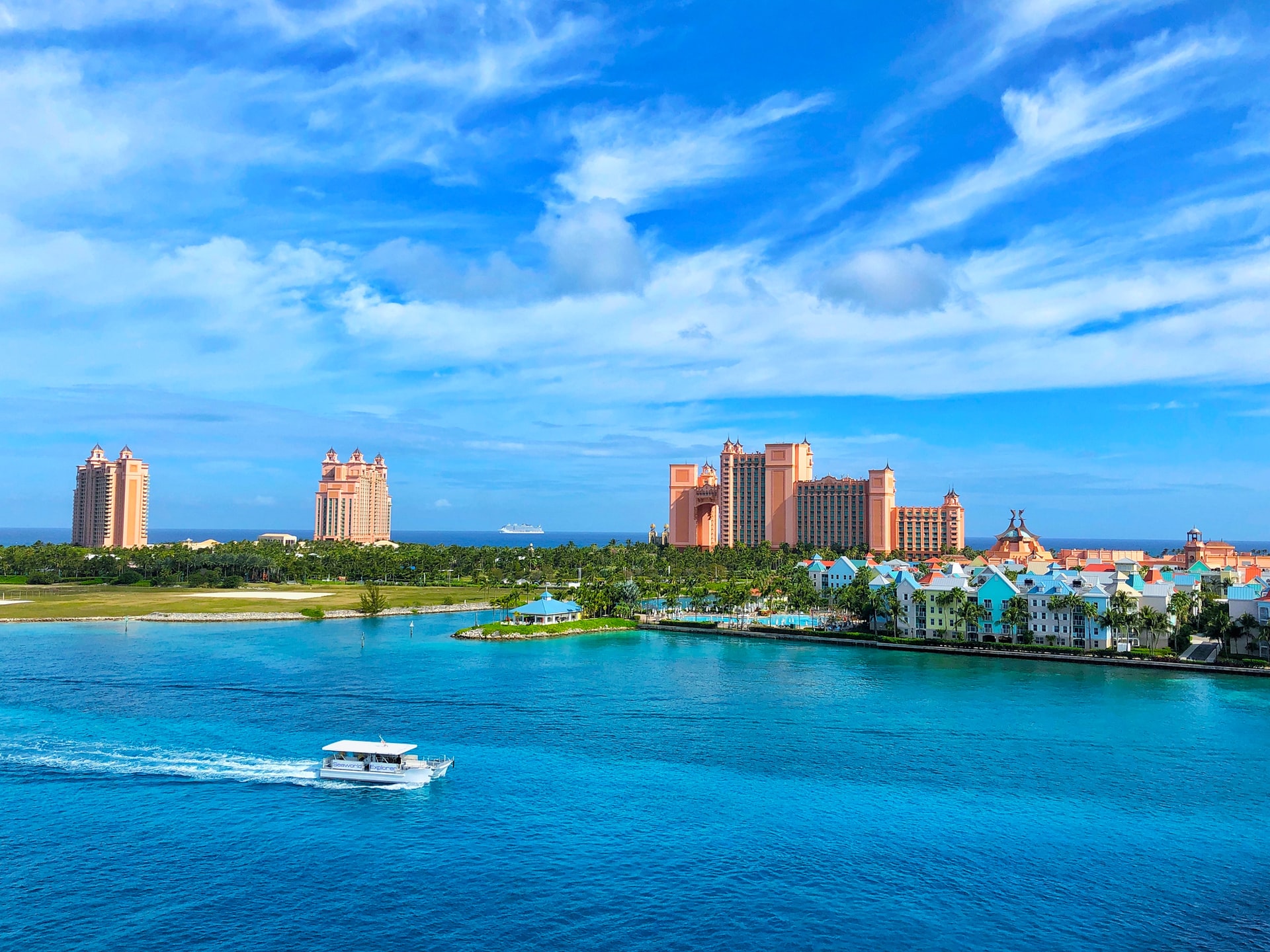
Atlantis Paradise Island
A world‑renowned resort featuring water parks, marine habitats, aquariums, and thrilling water activities suitable for families and adventure travelers.
FamilyAdventure
Blue Holes of Andros
Mysterious underwater sinkholes ideal for diving, with rich marine life, limestone formations, and a sense of natural wonder.
DivingNature
Junkanoo Festival
A vibrant celebration of music, dance, drums, and colorful costumes, held every year on Boxing Day and New Year’s Day.
CulturalFestival
Healthy Travel Advice
Vaccinations: Travelers should be up to date on routine immunizations. Depending on activities, vaccines for hepatitis A/B, typhoid, or rabies may be recommended.
Mosquito Protection:
Use repellent and long sleeves to reduce exposure to mosquito‑borne illnesses.
Water Safety:
The waters are beautiful but can be unpredictable. Follow local guidance regarding currents,
marine wildlife, and boating safety.
Food & Water:
Drink bottled water when unsure. Stick to reputable restaurants to avoid foodborne issues.
Useful country information
Land area: 3,888 sq mi (10,070 sq km); total area: 5,382 sq mi 13,940 sq km)
Population (2022 est.): 396,914
Capital and largest city (2022 est.): Nassau, 266,100

Nassau: Capital City Profile
Monetary unit: Bahamian dollar
Languages: English (official), Creole (among Haitian immigrants)
Ethnicity/race: black 90.6%, white 4.7%, black and white 2.1%, other 1.9%, unspecified 0.7% (2010 est.)
Religions: Protestant 69.9% (includes Baptist 34.9%, Anglican 13.7%, Pentecostal 8.9% Seventh Day Adventist 4.4%, Methodist 3.6%, Church of God 1.9%, Brethren 1.6%), Roman Catholic 12%, other Christian 13% (includes Jehovah's Witness 1.1%), other 0.6%, none 1.9%, unspecified 2.6% (2010 est.)
National Holiday: Independence Day, July 10

Background:
A Glimpse into The Bahamas’ History
The Bahamas was originally inhabited by the Lucayan Taínos, an Arawakan-speaking people. In 1492, Christopher Columbus made his first landfall in the New World on one of the Bahamian islands. During the 17th century, the islands became a haven for pirates, including the infamous Blackbeard. In 1718, the British established control, and The Bahamas remained a colony until gaining independence on July 10, 1973. Today, its rich history is reflected in colonial architecture, museums, and cultural traditions.
Current Political Landscape
The Bahamas is a constitutional parliamentary democracy and a member of the Commonwealth of Nations. The British monarch serves as the ceremonial head of state, represented locally by a Governor-General. The Prime Minister is the head of government, elected through a multi-party system. The country enjoys a stable political environment and continues to focus on economic development, tourism, and climate resilience.
Country Map

COUNTRY MAP WITH STATES/PROVINCES BOUNDARIES CLICK HERE

Source of Information:


