Country's codes
International phone code for Bosnia and Herzegovina: +387
3 letters: BIH
2 letters (internet domain): .BA
Digital country code 070
Standard EAN-13 (country barcode): 387
 Olympic country code: BIH

Bosnia & Herzegovina Travel Guide: Top Attractions & Best Time to Visit
A captivating blend of East and West, Bosnia & Herzegovina enchants travelers with its medieval towns, turquoise rivers, Ottoman bridges, lush mountains, and warm hospitality. It’s a country where history, culture, and nature meet in picturesque harmony.
Best Time to Visit Bosnia & Herzegovina
With four distinct seasons, Bosnia & Herzegovina offers something beautiful year‑round. Your ideal time to visit depends on whether you prefer cultural sightseeing, nature, or winter activities.
These months offer mild temperatures, ideal hiking weather, and fewer crowds in major cities.
- Spring (Apr–Jun): Lush landscapes, ideal for national parks and sightseeing.
- Summer (Jul–Aug): Warm weather perfect for river activities and festivals.
- Autumn (Sep–Oct): Stunning fall colors and pleasant temperatures.
- Winter (Dec–Feb): Great for skiing in mountain resorts like Jahorina and Bjelašnica.
Top Attractions in Bosnia & Herzegovina
Mostar & Stari Most
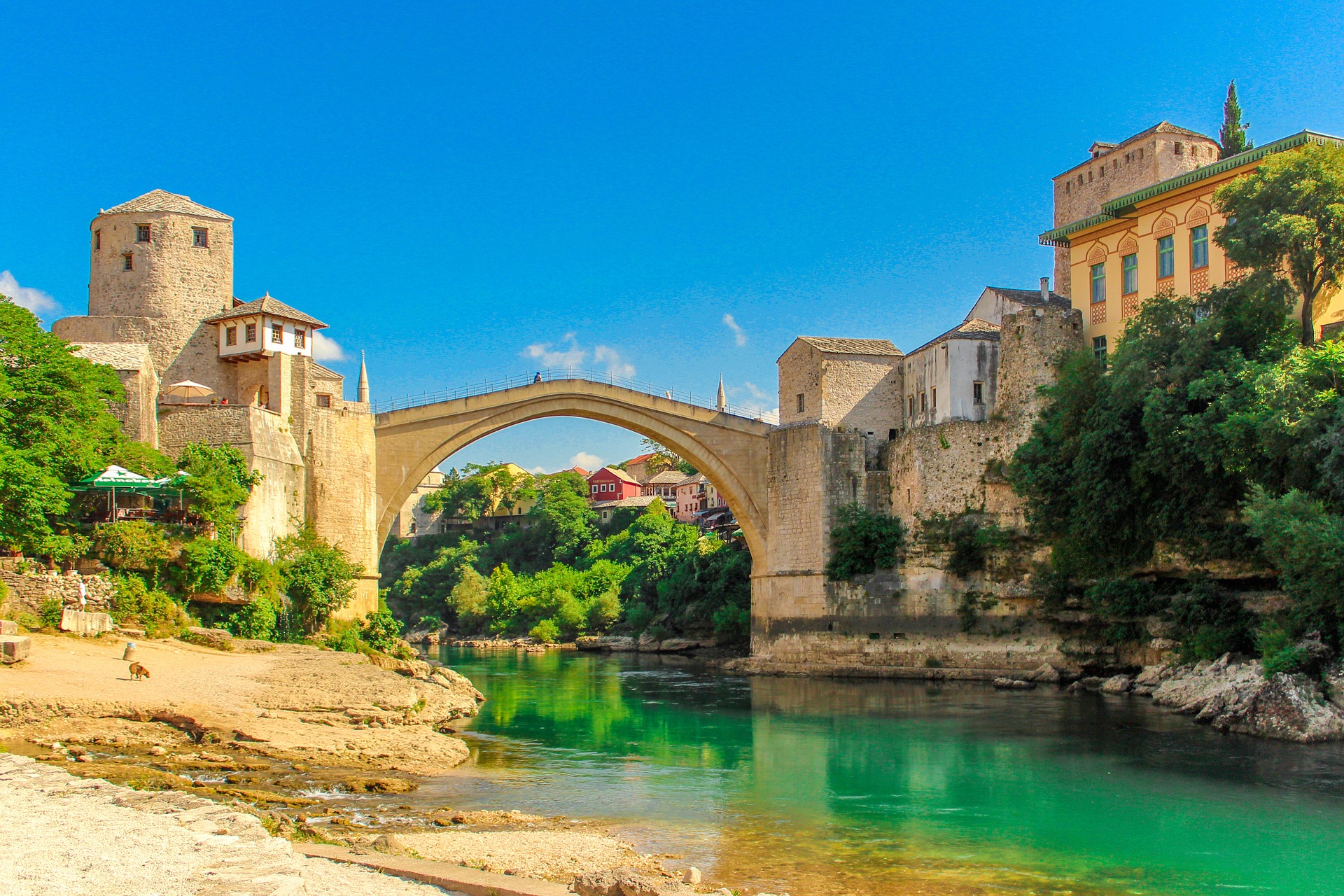
The iconic Ottoman-era Stari Most (Old Bridge) spans the emerald Neretva River, offering breathtaking views and traditional diving displays. The Old Town’s cobbled paths are full of charm, culture, and history.
HistoricIconicScenic
Sarajevo
A vibrant capital where Ottoman bazaars, Austro‑Hungarian architecture, and modern cafés blend effortlessly. Explore Baščaršija, Latin Bridge, and the city’s rich cultural diversity.
CityCulture
Blagaj Tekke
A serene Dervish monastery set beneath a towering cliff at the source of the Buna River. One of the country’s most peaceful and photogenic sites.
SpiritualNature
Kravica Waterfalls
A spectacular series of cascading waterfalls surrounded by lush greenery. Perfect for swimming, picnicking, and photography during warm months.
NatureAdventure
Jajce
A charming royal town known for its impressive waterfall, medieval fortress, and tranquil Pliva Lakes with iconic watermills.
CulturalScenic
Počitelj
A stone-built hillside village with Ottoman towers, narrow paths, and sweeping river views. A must for history lovers and photographers.
HistoricHeritage
Una National Park
A nature reserve featuring crystal-clear rivers, waterfalls, forests, and excellent rafting opportunities. Ideal for eco‑travelers.
AdventureNature
Jahorina & Bjelašnica Mountains
Popular winter resorts offering skiing, snowboarding, and scenic mountain views. These were key venues during the 1984 Winter Olympics.
SkiingMountain
Travel Tips for Bosnia & Herzegovina
Transportation:
Buses connect most cities and towns, while renting a car gives greater flexibility
for exploring rural areas and national parks.
Food & Culture:
Enjoy hearty traditional dishes like cevapi, pita (burek), and Bosnian coffee.
Respect local customs, especially in historic neighborhoods and religious areas.
With its mix of natural beauty, cultural richness, and historical depth, Bosnia & Herzegovina offers unforgettable experiences for every traveler.
Useful Country Information
Total area: 19,767 sq mi (51,209 sq km)
Population (2026 est.): Approximately 3.2 million
Capital and largest city: Sarajevo
Currency: Convertible Mark (BAM)
Official languages: Bosnian, Croatian, and Serbian
Time zone: Central European Time (CET, UTC+1)
Major cities: Banja Luka, Tuzla, Mostar, Zenica, Bihać

Languages: Bosnian, Serbian, and Croatian are the official languages. All are closely related South Slavic languages and were formerly grouped under the term “Serbo-Croatian.”
Ethnic groups: Bosniaks, Serbs, and Croats are the three main constituent peoples of Bosnia and Herzegovina, alongside smaller minority communities including Roma, Jews, and others.
Religions: Islam, Serbian Orthodox Christianity, and Roman Catholicism are the principal religions, reflecting the country’s diverse cultural and historical heritage.
National Holiday: 1 March – Independence Day
Government type: Parliamentary republic with a complex power-sharing system established under the Dayton Peace Agreement.
Administrative structure: The country consists of two entities — the Federation of Bosnia and Herzegovina and Republika Srpska — plus the self-governing Brčko District.
Get Travel Insurance Quote

Background
A Glimpse into Bosnia and Herzegovina’s History
Bosnia and Herzegovina has a rich and diverse history shaped by Illyrian, Roman, Ottoman, Austro-Hungarian, and Yugoslav influences. During the medieval period, the region was home to the independent Kingdom of Bosnia before falling under Ottoman rule in the 15th century. The Ottoman era left a lasting cultural and architectural legacy visible today in cities such as Sarajevo and Mostar.
In 1878, Bosnia and Herzegovina came under Austro-Hungarian administration, bringing major political and economic changes. The assassination of Archduke Franz Ferdinand in Sarajevo in 1914 became the spark that triggered World War I. After the war, the country became part of the Kingdom of Yugoslavia and later socialist Yugoslavia under Josip Broz Tito following World War II.
Bosnia and Herzegovina declared independence from Yugoslavia in 1992. This led to the Bosnian War (1992–1995), one of Europe’s most devastating conflicts since World War II. The war caused significant human suffering, mass displacement, and destruction, particularly during the Siege of Sarajevo. The Dayton Peace Agreement signed in 1995 ended the conflict and established the country’s current constitutional structure.
Current Political Landscape
Bosnia and Herzegovina operates under a complex democratic political system created by the Dayton Agreement. The country consists of two main entities: the Federation of Bosnia and Herzegovina and Republika Srpska, in addition to the self-governing Brčko District.
The national presidency is shared among Bosniak, Serb, and Croat representatives, reflecting the country’s multicultural composition. While democratic elections are held regularly, political disagreements and ethnic divisions can slow reforms and decision-making processes.
Bosnia and Herzegovina is officially a candidate for European Union membership and continues working toward closer European integration, economic development, and institutional modernization. Younger generations and civil society groups increasingly advocate for transparency, unity, and improved opportunities.
Today, the country is known for its scenic mountains, Ottoman-era towns, historic bridges, multicultural heritage, and warm hospitality. Destinations such as Sarajevo, Mostar, and the Dinaric Alps attract visitors from around the world seeking history, culture, and outdoor adventure in the heart of the Balkans.