

Country's / Region codes
International phone, Canary Islands (Spain): +34
3 letters: ESP
2 letters (internet domain): .ES
Digital country code: 724
Standard EAN-13 (country barcode): 84 (Spain)
 Olympic country code: ESP
Regional ISO / abbreviation: IC / ES-CN (Canary Islands Autonomous Community)
Canary Islands’ Top Attractions for Tourists
The Canary Islands are a Spanish Atlantic archipelago famous for year-round sunshine, volcanic landscapes, and a mix of lively resorts and wild nature. Here are the highlights to help you plan an unforgettable trip.
Iconic Beaches
- Maspalomas & Playa del Inglés (Gran Canaria): Golden sands backed by rolling dunes and a big choice of hotels, cafés and watersports.
- Corralejo Beaches (Fuerteventura): Long white beaches with turquoise water and strong breezes—perfect for kite-surfing.
- Playa de Papagayo (Lanzarote): A set of sheltered coves with clear water and a postcard view.
- Playa de Las Teresitas (Tenerife): A calm, palm-lined beach just outside Santa Cruz—great for families.
Nature and Adventure
- Teide National Park (Tenerife): Spain’s highest peak and a surreal volcanic landscape—cable car rides and hiking trails are a must.
- Timanfaya National Park (Lanzarote): Lava fields and geothermal demonstrations on an other-worldly island formed by eruptions.
- Roque Nublo (Gran Canaria): A dramatic rock monolith with panoramic ridge walks through pine forests.
- Whale & Dolphin Watching: Especially popular off Tenerife and La Gomera, with frequent sightings year-round.
Landmarks and Culture
- La Laguna (Tenerife): A UNESCO-listed old town with colonial architecture, cafés, and a relaxed student vibe.
- César Manrique Sites (Lanzarote): Art, architecture, and lava-land garden spaces that blend perfectly with the island.
- Puerto de Mogán (Gran Canaria): A charming marina town with canals, bougainvillea streets, and sunset spots.
Practical Notes
The Canaries feel safe and very tourist-friendly. Usual travel awareness applies in busy resort areas at night, and on hiking trails carry water and sun protection even in winter.
Useful region information
Total area: 7,446 km² (2,875 sq miles)
Capital Cities: Santa Cruz de Tenerife and Las Palmas de Gran Canaria (shared capitals).
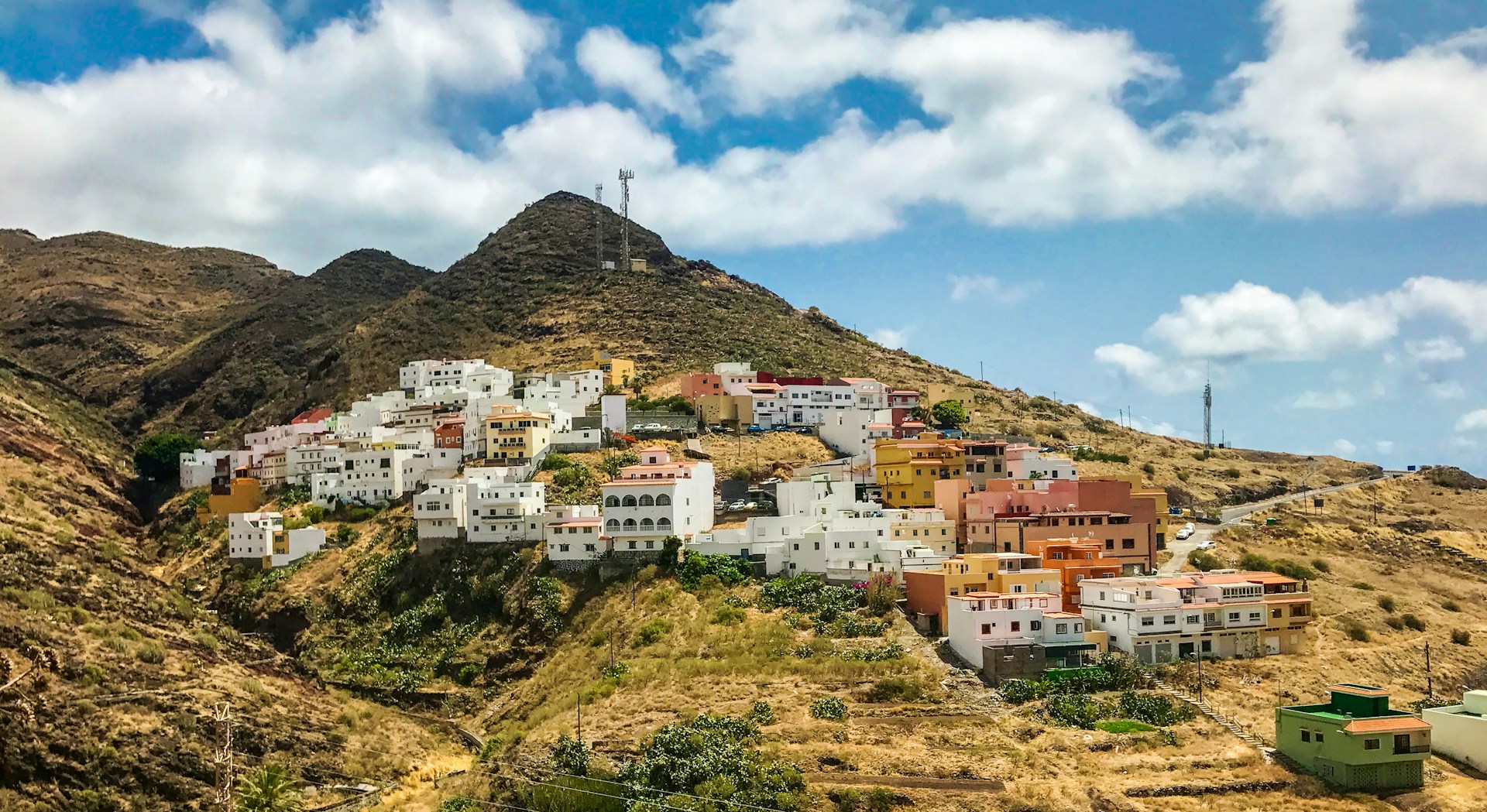
Santa Cruz de Tenerife: Capital City Profile
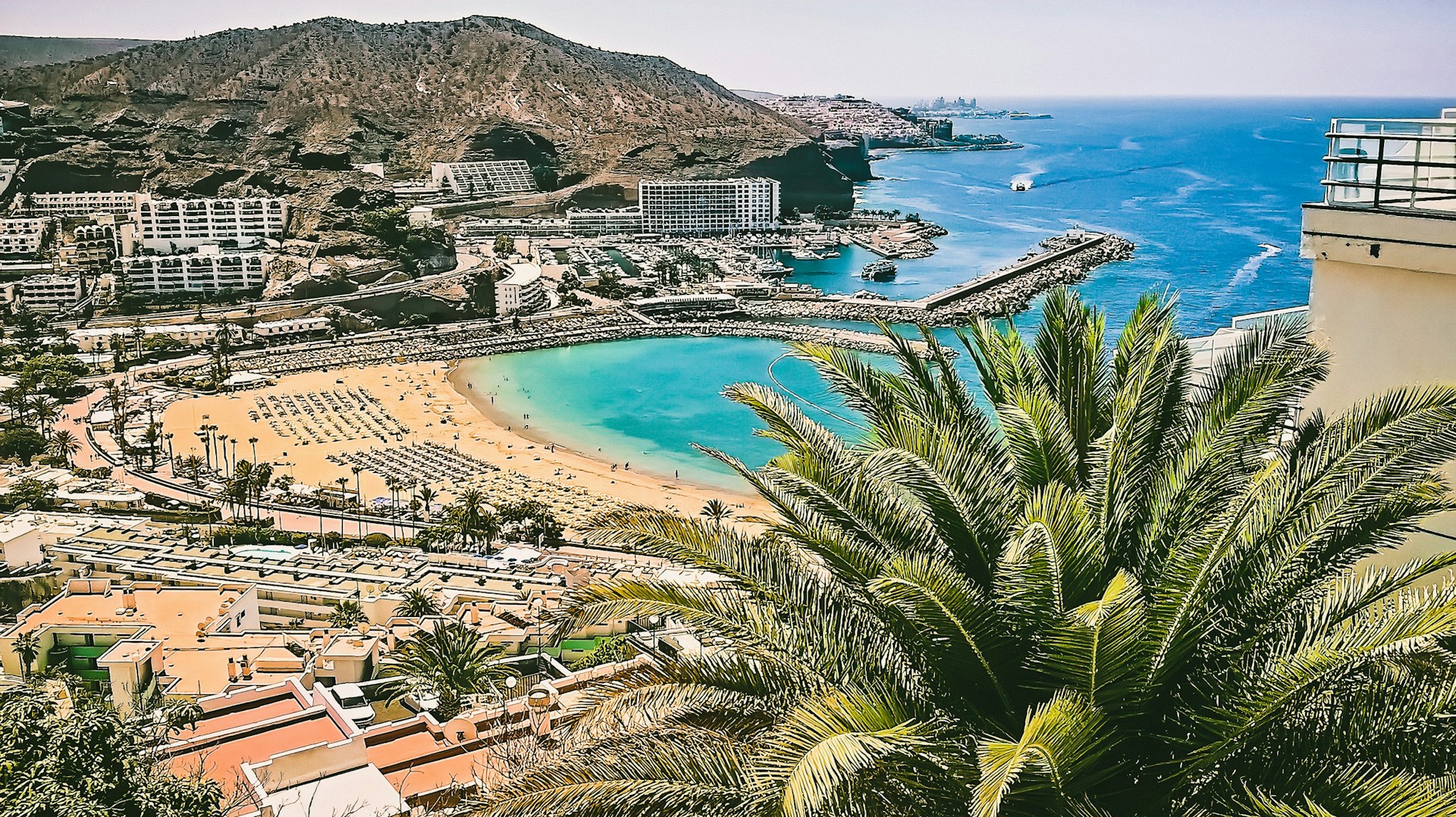
Las Palmas de Gran Canaria: Capital City Profile
Other Major Towns: Puerto de la Cruz (Tenerife), Arrecife (Lanzarote), Corralejo (Fuerteventura), Santa Cruz de La Palma (La Palma).
Climate: Subtropical / oceanic—mild winters and warm summers with lots of sunshine.
Monetary unit: Euro (EUR)
Population: ~2.27 million (2025 est.)
Ethnic Groups: Predominantly Spanish/Canarian, with sizable European and Latin American resident communities.
Religions: Mostly Christian (Roman Catholic), with diverse smaller communities.
Languages: Spanish (official). Local Canarian dialects are common; on La Gomera you may also encounter Silbo Gomero (whistled language).
Regional Holiday: Canary Islands Day (Día de Canarias) — May 30
Literacy rate: ~99% (Spain)

Background:
The Canary Islands (Islas Canarias) are an autonomous community of Spain located in the Atlantic Ocean, about 100 km off the northwest coast of Africa. The archipelago has seven main islands, all of volcanic origin.
Thanks to their mild subtropical climate, the Canaries are a year-round destination—especially popular for winter sun. The biggest islands for visitors are Tenerife, Gran Canaria, Lanzarote, and Fuerteventura.
 Photo by Jose Antonio Jiménez Macías on Unsplash


Source of Information:


