Colombo Weather
COLOMBO WEATHERAbout Colombo
Colombo is the commercial capital of Sri Lanka and by far the largest and most cosmopolitan city on the island — a teeming, layered, endlessly fascinating port city of approximately 620,000 people in the city proper (and some 5.6 million in the wider Western Province metropolitan area) situated on the southwestern coast of the Indian Ocean island that was known to Arab traders as Serendib, to the Portuguese as Ceilão, to the Dutch as Ceylan, and to the British as Ceylon before independence in 1948 brought the name Sri Lanka. The legislative capital of Sri Lanka is the neighbouring city of Sri Jayawardenepura Kotte, commonly known as Kotte — a suburb located just 9km east of Colombo's city centre — but Colombo remains the undisputed economic, cultural, and administrative heart of the country: the home of the country's Central Bank, the Colombo Stock Exchange, the headquarters of all major Sri Lankan corporations, and the base for the majority of the country's diplomatic missions and international organisations. Strategically located on the ancient maritime Silk Road between the Arabian Peninsula and Southeast Asia, Colombo has been one of the most important trading ports in the Indian Ocean for over 2,000 years — Sinhalese, Tamil, Arab, Chinese, Portuguese, Dutch, and British civilisations have all left deep marks on the city's architecture, cuisine, religion, and cultural identity, producing a layered urban character of extraordinary richness and complexity.
Best Time to Visit Colombo & Weather Guide
Colombo has a tropical monsoon climate — warm and humid year-round, with average temperatures between 26°C and 31°C in all months — shaped by two distinct monsoon seasons that affect different parts of the island at different times of year. Understanding the monsoon calendar is essential for planning a visit to Colombo and Sri Lanka.
☀️ Dry Season — West Coast (December–March)
The finest time to visit Colombo and the west and south coasts of Sri Lanka — the northeast monsoon brings dry, sunny weather to the western side of the island from December through March, with average temperatures of 27–30°C, low humidity, and the brilliant blue skies that make Colombo's oceanfront at its most beautiful. January and February are the driest and most comfortable months — ideal for exploring the city on foot, visiting the historic Fort district and Pettah bazaar, and making day trips to the south coast beaches of Unawatuna and Mirissa. December brings the festive season and the beautiful illuminated streets of the Fort and Kollupitiya hotel district. This is the peak season for tourism in western Sri Lanka — book accommodation in advance for December–February travel.
Best Time to Visit🌿 Shoulder Season (April–May & October–November)
April and May mark the intermonsoon period between the northeast and southwest monsoons — hot (31–33°C), occasionally humid, with short afternoon showers that rarely disrupt a full day's sightseeing. The Sinhala and Tamil New Year (13–14 April) is the most important cultural festival in Sri Lanka and an extraordinary time to be in Colombo: the city closes for two days of family celebration, traditional games, and the most atmospheric street life of the year. October and November are the second intermonsoon period — the tail end of the northeast monsoon with occasional heavy showers but generally good weather for city exploration. Shoulder season brings significantly lower hotel rates and a more relaxed, less tourist-heavy atmosphere throughout the city.
Cultural Festival Season🌧️ Southwest Monsoon (May–September)
The southwest monsoon brings sustained rainfall to Colombo and the western coast from late May through September — heavy afternoon and evening downpours of considerable intensity, high humidity (80–85%), and overcast skies that can persist for days. While the monsoon does not make Colombo unvisitable — the rains usually come in concentrated bursts rather than all-day drizzle, and the city continues to function normally — it is not the ideal season for outdoor sightseeing or beach visits. June and July are the wettest months. The monsoon season is however the ideal time to visit Sri Lanka's east coast (Trincomalee, Arugam Bay) which enjoys its dry season while the west is wet — and hotel rates in Colombo drop significantly, making it excellent value for visitors whose itineraries focus on the city's interior attractions: temples, museums, restaurants, and shopping.
Monsoon Season🎆 Vesak Season (May Full Moon)
The most visually spectacular and spiritually significant festival in the Sri Lankan calendar — Vesak Poya, the full-moon day of May celebrating the birth, enlightenment, and passing of the Buddha, transforms Colombo into one of the most extraordinarily beautiful cities in Asia for three days: every temple, government building, and thousands of private homes are illuminated with elaborate lanterns (vesak koodu), pandals (giant illuminated picture frames depicting scenes from the Jataka stories), and coloured lights of breathtaking artistry. The Gangaramaya Temple and the streets of the Fort district under full Vesak illumination are among the most magical urban spectacles in South Asia. Free food stalls (dansalas) operated by Buddhist organisations line the streets throughout the holiday, offering anyone who passes — regardless of religion or nationality — free meals in an act of communal generosity that is deeply moving in its scale and sincerity.
Most Spectacular FestivalDry Season (Dec–Mar): Light cotton or linen clothing — loose, breathable fabrics are essential in Colombo's tropical heat. Modest clothing for temple visits (shoulders and knees covered; many temples require removal of shoes — slip-ons are practical). High-factor sunscreen (SPF 50+) and sunglasses for the strong tropical sun. A light scarf for air-conditioned restaurants and shopping malls, which can be very cold.
Monsoon Season (May–Sep): A compact umbrella or lightweight rain poncho for the afternoon downpours. Waterproof sandals or quick-drying footwear — Colombo's streets can flood briefly after heavy rain. The heat and humidity remain high even during the monsoon — light, moisture-wicking fabrics are essential.
Year-round: Sri Lanka uses the Type G British three-pin plug (230V/50Hz) — the same plug as the UK. European and American visitors need an adaptor, available at the airport and supermarkets. Mosquito repellent for evening use, particularly in garden restaurants and the Colombo suburbs. Tap water is not reliably safe to drink — bottled water is inexpensive and universally available. Dress modestly when visiting Buddhist temples and Hindu kovils: a sarong (available at the temple entrance for a small fee) covers bare legs adequately.
Top Attractions in Colombo
Colombo rewards exploration with a remarkable depth of heritage, religious architecture, colonial history, tropical gardens, and one of the most vibrant street-food cultures in South Asia — a city that reveals its extraordinary character gradually, neighbourhood by neighbourhood.
🏰 Colombo Fort & the Old City
The historic heart of colonial Colombo and the most architecturally significant district in Sri Lanka — Colombo Fort was originally the fortified settlement built by the Portuguese in the 16th century, expanded by the Dutch East India Company into a walled city of canals and fortifications, and transformed by the British into the most important commercial and administrative centre in colonial Ceylon. The Fort's magnificent British-era buildings — the Grand Oriental Hotel (1837), the Cargills Department Store (1906), the Bank of Ceylon headquarters, the Old Parliament Building (now the Presidential Secretariat), and the Colombo Lighthouse — represent the finest ensemble of colonial commercial architecture in South Asia, their ornate facades and wide verandahs now housing banks, government offices, and some of the most characterful luxury hotels on the Indian Ocean. The Fort's World Trade Center towers and the adjacent Beira Lake provide a striking contrast between colonial heritage and contemporary commercial ambition.
Colonial Heritage District🕌 Pettah Bazaar
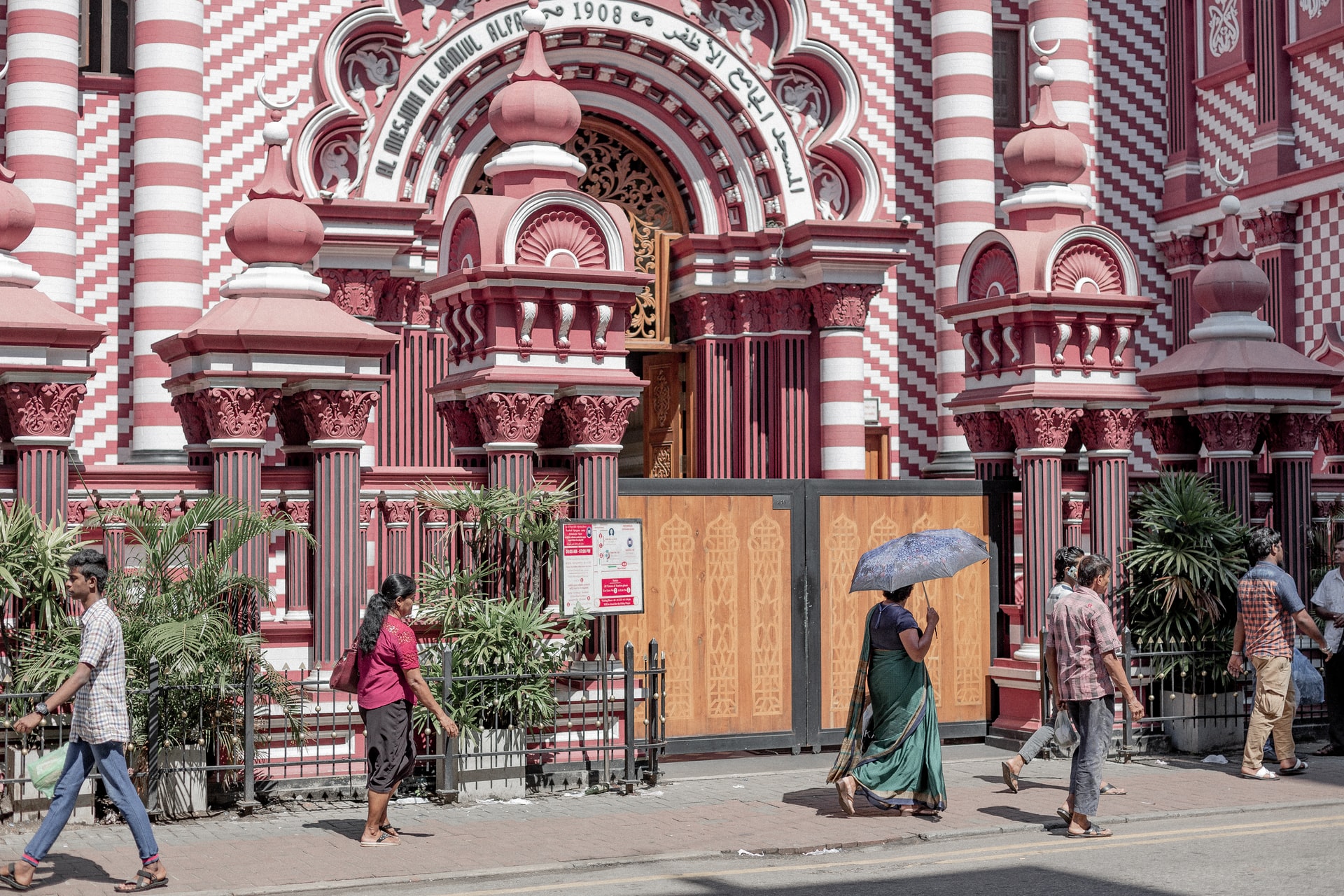
The most exhilarating, chaotic, and quintessentially South Asian commercial district in Sri Lanka — Pettah (from the Tamil pettai, meaning "outside the fort") is Colombo's ancient bazaar quarter: a dense, traffic-choked grid of streets where every lane specialises in a different trade — electronics, textiles, spices, hardware, jewellery, ayurvedic medicine, and the extraordinary Manning Market (Colombo's wholesale produce market, operating since 1876, where the entire island's fruit and vegetable supply passes through in a spectacle of organised chaos beginning at 3am). Among Pettah's most remarkable features are its places of worship: the Jami Ul-Alfar Mosque (1909), Colombo's most photographed building — a candy-striped red and white confection of Indo-Saracenic architecture of startling beauty — stands a few metres from the Old Kathiresan Hindu Kovil and the Wolfendhal Dutch Reformed Church (1749), a juxtaposition of faiths that perfectly expresses Colombo's multi-religious identity. The best time to experience Pettah is early morning, before the traffic reaches its midday peak.
Bazaar & Spice Markets🪷 Gangaramaya Temple
The most important and most visited Buddhist temple in Colombo and one of the most visually extraordinary religious complexes in South Asia — Gangaramaya Temple, founded in the late 19th century on the banks of the Beira Lake in the Slave Island district, has grown from a modest meditation centre into a sprawling, multi-building complex of staggering eclecticism: the main shrine room blends Sri Lankan, Thai, Indian, and Chinese Buddhist architectural traditions in a synthesis that manages, improbably, to be both overwhelming and deeply spiritual; the temple's museum houses an extraordinary collection of donated objects ranging from ancient ivory Buddhas to antique automobiles gifted by devotees; and the sacred Bo tree in the temple compound, propagated from a cutting of the original Bo tree at Anuradhapura (itself a cutting from the tree under which the Buddha attained enlightenment in Bodh Gaya), provides a direct living connection to the founding moment of Buddhism. The Vesak Perahera procession from Gangaramaya in May is the largest religious procession in Colombo and one of the most spectacular in Sri Lanka.
Iconic Buddhist Temple🌊 Galle Face Green
Colombo's most beloved public space and the finest oceanfront promenade in South Asia — Galle Face Green, a 5-hectare strip of grass and esplanade running along the Indian Ocean between the Fort and the Kollupitiya hotel district, has been the communal living room of Colombo since the Dutch created it in the 17th century as a military clearing. Today it is one of the most democratic and joyful public spaces in Asia: at dusk, thousands of Colombo residents — families with kites, young couples, street food vendors, cricket-playing schoolchildren, and tourists from across the world — converge on the ocean breeze and the spectacular sunsets, making the evening promenade along Galle Face the most atmospheric and most characteristically Colombo experience available anywhere in the city. The Galle Face Hotel (1864), directly across the road — one of the oldest hotels in Asia, where Somerset Maugham, Vivien Leigh, and Yuri Gagarin have stayed — provides a perfect backdrop and an incomparable venue for a sundowner on the colonial verandah.
Colombo's Living Room🌿 Viharamahadevi Park & National Museum
The finest green space in central Colombo and the most important museum in Sri Lanka within easy walking distance of each other — Viharamahadevi Park (formerly Victoria Park), named after the mother of the great Sinhalese king Dutugamunu, is a 14-hectare tropical garden in the heart of Cinnamon Gardens (Colombo 7) filled with ancient trees, flowering tropical plants, a children's play area, and a large golden seated Buddha statue of considerable beauty, providing a welcome refuge from the city's heat and traffic. The adjacent National Museum of Colombo (1877), Sri Lanka's largest museum, houses the finest collection of Sinhalese royal regalia, ancient Buddhist sculpture, and Lankan cultural artefacts in the world — including the spectacular throne of the last Kandyan king, ancient moonstone carvings of extraordinary delicacy, and a comprehensive documentation of Sri Lanka's 2,500-year-recorded history. A half-day combining the park and museum is the best single introduction to Sri Lankan cultural heritage available in Colombo.
History & Gardens🎨 Colombo 7 — Cinnamon Gardens
The most elegant and historically resonant residential neighbourhood in Sri Lanka — Cinnamon Gardens (Colombo 7), named for the vast cinnamon plantation that covered this area during Dutch colonial rule (Dutch Ceylon was at one point the world's largest cinnamon producer), is today the most prestigious address in Colombo: wide, tree-lined avenues of temple trees and royal palms shade the colonial and post-independence mansions of government ministers, ambassadors, and Colombo's business elite, alongside the Independence Square (a magnificent open-air commemoration of Ceylon's 1948 independence, surrounded by the Independence Memorial Hall), the Lionel Wendt Theatre (Sri Lanka's most important performing arts venue), the Sri Lanka Tennis Association courts, and the finest concentration of independent galleries, boutique restaurants, and artisan shops available in the city. The Sunday morning walking route from Independence Square through the Cinnamon Gardens streets to the Lionel Wendt and the Green Path art market is the most pleasant and most civilised urban walk in Sri Lanka.
Elegant Heritage District🏙️ Port City Colombo & the Waterfront
The most ambitious urban development project in South Asia and the most dramatic transformation of any Indian Ocean city in the 21st century — Port City Colombo, a 269-hectare reclaimed land development extending into the Indian Ocean adjacent to the Fort district, is emerging as Sri Lanka's new international financial centre and the largest real estate development in the country's history: a planned city of gleaming towers, wide boulevards, and a marina district rising from the sea where, a decade ago, there was only ocean. The adjacent Colombo International Financial City and the redevelopment of the South Harbour district with its new cruise terminal, retail promenades, and waterfront restaurants represent the face of the Colombo that Sri Lanka's government is projecting to the world: ambitious, modern, and strategically positioned to become the financial hub of the Indian Ocean region.
Modern Colombo🛍️ Barefoot Gallery & the Colombo Art Scene
The most important and most beloved independent cultural institution in Sri Lanka — Barefoot Gallery on Galle Road, Colombo 3, founded in 1964 by Barbara Sansoni as a shop selling Sri Lankan handloom textiles of extraordinary beauty, has grown into a gallery, café, garden, and bookshop complex that represents the finest single expression of Sri Lankan creative culture available in Colombo: the gallery's rotating programme of Sri Lankan contemporary art, the handloom fabrics in the signature Barefoot palette woven by rural cooperatives, the garden café shaded by tropical trees, and the carefully curated bookshop specialising in Sri Lankan literature, art, and history together make Barefoot the finest cultural afternoon in Colombo. The Green Path (Ananda Coomaraswamy Mawatha) art market — a Sunday morning open-air market where Sri Lankan artists sell original work at accessible prices — and the galleries of Colombo 7 complete the picture of a city with a small but serious visual arts scene.
Art & Design HubLocal Food Recommendations
Colombo's food scene is one of the most exciting and most underrated in South Asia — a city where millennia of trade connections with Arabia, India, China, Portugal, the Netherlands, and Britain have layered extraordinary culinary complexity onto a Sri Lankan foundation of extraordinary depth and spice, producing a cuisine that is simultaneously deeply local and cosmopolitan in its influences.
🍽️ Must-Try Colombo Dishes
- Rice and curry — the foundation of Sri Lankan cuisine and the most important meal in the country: not a single dish but an elaborate composition of a mound of fragrant samba or keeri samba rice surrounded by six to twelve small portions of different curries — fish or meat curry, dhal (lentil) curry, several vegetable curries, mallung (wilted greens with scraped coconut), sambol (chilli-coconut condiment of considerable heat), and papadam (thin crispy lentil crackers) — assembled on a banana leaf at traditional restaurants or on a plate at more formal venues. The Sri Lankan rice and curry is a meal of astonishing complexity and nutritional completeness; a properly assembled traditional rice and curry from a good Colombo restaurant is one of the finest and most flavourful meals in Asia.
- Hoppers (appa) — Sri Lanka's most distinctive breakfast food and the dish most closely identified with the country's culinary identity worldwide: a thin, bowl-shaped pancake of fermented rice flour and coconut milk batter, cooked in a small hemispherical iron pan to produce a crispy, lacy edge and a soft, slightly spongy centre. The egg hopper — with a whole egg broken into the centre of the hopper before the batter sets — is the most beloved version; the string hopper (idiyappam — steamed rice noodle nests of extraordinary delicacy) is a softer alternative. Hoppers are eaten with seeni sambol (caramelised onion chutney of great sweetness), coconut sambol, and dhal curry; a breakfast of fresh hoppers from a good Colombo restaurant or street stall is among the most pleasurable morning meals available anywhere in South Asia.
- Kottu roti — Colombo's most beloved street food and late-night staple: shredded godamba roti (a thin, oiled flatbread) chopped on a flat iron griddle with eggs, vegetables, and meat or seafood in a rhythmic clattering chop that produces one of the most characteristic sounds of Colombo evenings. The clatter of the kottu blades on the griddle — audible from 50 metres away — is the Pavlovian signal for midnight hunger throughout the city. Kottu is eaten at every price point in Colombo, from roadside stalls (Rs. 300–500) to upmarket restaurant versions with premium seafood (Rs. 1,500–2,500); the best versions are found at the dedicated kottu kades (kottu shops) of the Dehiwala and Wellawatte districts south of the city centre.
- Lamprais — Sri Lanka's most historically distinctive Dutch-Burgher dish and a culinary relic of exceptional character: a portion of Dutch-spiced rice cooked in meat broth, accompanied by a Dutch-Burgher curry (usually a combination of lamb, pork, and offal), frikkadels (Dutch meatballs), a slice of fried aubergine, and a blachan (shrimp paste) sambol, all wrapped together in a banana leaf parcel and baked in an oven until the banana leaf imparts its green, slightly smoky fragrance to the entire package. Lamprais — from the Dutch lomprijst (lump of rice) — is the culinary legacy of the Dutch colonial period (1640–1796) and the Dutch Burgher community of mixed Dutch-Sinhalese descent; it is available at a handful of specialist restaurants in Colombo, most notably at The Gallery Café and the Dutch Burgher Union.
- Devilled dishes — Sri Lanka's most addictive restaurant staple and the best expression of the country's Chinese-influenced street cooking tradition: chunks of meat (chicken, beef, or pork), seafood (prawns, cuttlefish, or fish), or vegetables tossed in a wok over fierce heat with a sauce of garlic, ginger, green chilli, tomato, and capsicum of considerable power — the "devil" of the name referring to the fiery heat. Devilled cuttlefish and devilled prawns are the definitive versions; both are available at Sri Lankan Chinese restaurants throughout Colombo and at the dedicated rice-and-curry restaurants of the Fort and Pettah districts.
- Watalappan — Sri Lanka's most beloved Malay-Muslim dessert and one of the finest puddings in South Asian cuisine: a steamed coconut milk custard of extraordinary richness sweetened with kithul jaggery (the smoky, complex palm sugar tapped from the kithul palm, unique to Sri Lanka) and flavoured with cardamom, cloves, nutmeg, and cashew nuts. Watalappan is served at every Sri Lankan Muslim household during Ramadan and Eid, and at the finest hotels and restaurants in Colombo year-round; its combination of silky coconut custard richness and the complex dark sweetness of kithul jaggery is deeply satisfying. Available at the Muslim restaurants of Pettah and the upmarket hotel restaurants of the Fort district.
🍵 Drinks & Tea Culture
- Ceylon tea — the most important agricultural product in Sri Lanka and the beverage most closely associated with the country's identity worldwide: Ceylon tea, grown in the central highlands of the island (Nuwara Eliya, Dimbula, Uva, and Kandy districts) at elevations of 600–2,200 metres, is among the finest tea in the world — clean, bright, brisk, and with a distinctive golden colour and citrus character that sets it apart from Indian and Chinese teas. Sri Lankan tea culture is built on the milk tea tradition: strong black Ceylon tea brewed loose in a pot, poured into a glass, and softened with condensed milk or full-cream milk and sweetened with sugar — the result is a deeply satisfying, warming drink of considerable comfort at any hour. High-grown Nuwara Eliya teas (delicate, floral, almost Darjeeling-like) and low-grown Ruhuna teas (rich, full-bodied, ideal with milk) are the two extremes of a quality spectrum that produces some of the world's most complex tea varietals.
- King coconut (thambili) — Sri Lanka's most distinctive and most refreshing drink and the most practical hydration solution for visitors to Colombo's tropical heat: the thambili or king coconut (Cocos nucifera var. aurantiaca), recognisable by its brilliant orange shell, contains cool, sweet, slightly effervescent coconut water of particular delicacy — lighter and more nuanced than the green drinking coconut of other tropical countries. A chilled king coconut from a street vendor (Rs. 80–120, approximately USD 0.25–0.35) is available on virtually every street corner in Colombo, the vendor machete-cutting the crown of the orange nut to expose the natural bowl within; drinking directly from the shell while watching Colombo's traffic is one of the most authentic and most refreshing experiences the city offers.
- Arrack — Sri Lanka's national spirit and one of the most complex and most underappreciated distilled beverages in Asia: Ceylon arrack, distilled from the fermented sap of the coconut flower (toddy), is produced in a uniquely Sri Lankan tradition stretching back at least 2,000 years — the toddy tapper (illicit moonshiner in the villages, registered distillery employee in the formal industry) climbing the coconut palms to collect the sap from the cut flower before it ferments too far. Premium aged Ceylon arrack (particularly Old Reserve and Double Distilled) has a complexity comparable to fine rhum agricole — floral, slightly funky, with caramel and vanilla notes from barrel aging. The classic Colombo cocktail is an arrack and ginger beer — the "lion's tail of South Asia" — served tall over ice with a wedge of lime at every hotel bar in the city.
- Faluda — Colombo's most beloved Muslim street dessert-drink and one of the most pleasurable ways to cool down in tropical heat: a tall glass layered with rose syrup, basil seeds (swollen in water to a caviar-like transparency), vermicelli noodles, milk, and a scoop of vanilla ice cream, drizzled with more rose syrup and served with a long spoon and a straw. Available at the Muslim sweet shops and faluda parlours of Pettah and Slave Island at Rs. 200–350 (USD 0.60–1.00) — extraordinary value for an extraordinarily pleasurable experience. The best faluda in Colombo is from the Pilawoos Hotel on Galle Road or the Masjid Jamia Mosque area of Pettah on a Friday evening.
🍽️ Where to Eat — Local Tips
- Ministry of Crab (Fort) — Sri Lanka's most internationally celebrated restaurant and the finest seafood dining experience in South Asia: Ministry of Crab, founded by two former Sri Lanka cricket captains and celebrity chef Dharshan Munidasa, serves Sri Lankan lagoon crab in preparations ranging from the classic chilli and garlic butter to Sri Lankan black pepper and arrack — the crabs sourced exclusively from Sri Lankan mangrove lagoons and served at their peak seasonal weight. Located in the beautifully restored Dutch Hospital shopping precinct in the Fort. Book 2–3 weeks in advance for dinner. Budget Rs. 10,000–18,000 (USD 30–55) per person with wine. Considered by many food writers to be one of the finest seafood restaurants in the world.
- Pilawoos Hotel (Kollupitiya) — the most beloved 24-hour Sri Lankan hotel (the Sri Lankan term for a casual restaurant) in Colombo and the best single venue for experiencing authentic Colombo street dining at its most characterful: Pilawoos on Galle Road serves roti, kottu, devilled dishes, and biriyani around the clock at prices of extraordinary value (Rs. 400–900 / USD 1.20–2.70 per dish). At 2am, after Colombo's clubs have closed, Pilawoos is one of the most atmospheric and most socially diverse restaurants in South Asia — politicians, nightclub-goers, three-wheel drivers, and hotel guests from the surrounding luxury properties eating side by side in the fluorescent-lit, ceiling-fan-cooled dining room of great democratic charm.
- Gallery Café (Cinnamon Gardens) — the finest heritage dining experience in Colombo and the most beautiful restaurant setting in the city: the Gallery Café, housed in the former architecture studio of Geoffrey Bawa — Sri Lanka's most celebrated architect and the founder of the Tropical Modernist movement that has influenced hotel and resort design across Southeast Asia — occupies a garden compound in Colombo 3 of extraordinary beauty, with Bawa's original drawings, furniture, and art collection arranged throughout the restaurant and gallery spaces. Serves excellent Sri Lankan and international cuisine at mid-to-upper range prices (Rs. 2,500–4,500 / USD 7.50–13.50 per main course) in an atmosphere of unmatched architectural distinction. The Sunday brunch at Gallery Café is one of the finest in Colombo.
- The Pettah Street Food Circuit — the best value and most authentic eating experience available in Colombo, requiring only courage, appetite, and a willingness to follow the crowds: the street food vendors of the Pettah bazaar serve Sri Lankan Muslim biriyani (fragrant long-grain rice with slow-cooked mutton or chicken, topped with fried onions and boiled egg), isso wade (prawn-topped lentil fritters of great crispness), ulundu wade (black lentil doughnuts of South Indian origin), and fresh thambili at prices of Rs. 80–250 (USD 0.25–0.75) per item. The best time for the Pettah street food circuit is Friday lunchtime, when the Muslim community's weekly gathering after Jumu'ah prayers transforms the streets around the mosques into the most vibrant outdoor food market in Sri Lanka.
- Nuga Gama (Cinnamon Grand Hotel) — the most authentic and most beautifully designed village dining experience available in an urban setting anywhere in South Asia: Nuga Gama (meaning "village under the nuga/banyan tree"), set beneath a 200-year-old banyan tree in the garden of the Cinnamon Grand Hotel in the heart of Colombo, recreates a Sri Lankan village cooking scene with live clay-pot cooking stations, traditional woodfire ovens, and a menu of regional Sri Lankan dishes — outstation curries from Jaffna, Kandy, and the deep south — that represents the most comprehensive single introduction to the diversity of Sri Lankan cuisine available in the capital. Dinner only; Rs. 5,000–7,500 per person (USD 15–23) — exceptional quality and genuine cultural authenticity in a remarkable setting.
🎨 Art, Culture & Creative Scene
- Colombo's arts and cultural scene is the most active in Sri Lanka — significantly revitalised since the end of the civil war in 2009 and increasingly connected to the global contemporary art circuit. The Lionel Wendt Theatre in Cinnamon Gardens — named after the celebrated Sri Lankan photographer and patron of the arts who donated his studio and home to the nation — stages theatre, dance, music concerts, and film screenings of the highest quality throughout the year, with an annual programme that includes classical Indian dance, Western classical music, Sri Lankan theatre, and international touring productions. The Lionel Wendt Gallery holds some of the most significant exhibitions of Sri Lankan contemporary art available in the country.
- The Barefoot Gallery on Galle Road remains the most important and most beloved independent arts institution in Sri Lanka — its rolling programme of exhibitions by Sri Lankan photographers, painters, sculptors, and printmakers provides the most consistent and most accessible introduction to contemporary Sri Lankan visual culture available in Colombo. The gallery's annual Barefoot Photography Prize is one of the most prestigious awards in Sri Lankan art. The Barefoot shop and café — the garden, the handloom fabrics, the books, the cold drinks on a hot afternoon — constitute one of the finest cultural afternoons in the South Asian region.
- The Sri Lanka National Museum concert programme, the Colombo International Film Festival (December), and the Kala Pola open-air art market held annually on Independence Square (usually January–February) — the largest open-air art sale in Asia, where over 400 Sri Lankan artists sell original paintings at remarkably accessible prices — collectively provide a cultural programme of surprising richness for a city of Colombo's size. The Independence Day celebrations (4 February) centred on Independence Square with traditional dance, military pageantry, and cultural performances represent the most spectacular free public event of the Colombo calendar year.
- The fashion and design scene emerging around the Colombo Design Market, the Odel Department Store in Cinnamon Gardens, and the independent boutiques of the Kollupitiya and Bambalapitiya districts represents the most dynamic creative retail culture in Sri Lanka: Sri Lankan designers working with traditional handloom fabrics, batik traditions, and sustainable craft materials at a level of quality and originality that is beginning to attract international attention. The Design Dialogue and Colombo Creative platforms provide the most current overview of Sri Lankan design talent.
Day Trip Itineraries from Colombo
Colombo's position on Sri Lanka's southwestern coast and its excellent road connections make it an outstanding base for day trips to some of the most extraordinary heritage, wildlife, and beach destinations in South Asia:
🦁 Day Trip: Yala National Park
Travel time: 4.5–5 hours southeast by car | Cost: Entry USD 25; organised safari from USD 60
Yala National Park — Sri Lanka's most famous and most visited wildlife reserve, covering 979 km² of dry-zone scrub forest and lagoon along the southeastern coast — has one of the highest densities of leopard per square kilometre of any protected area in the world, making it the finest place on earth to observe the Sri Lankan leopard (Panthera pardus kotiya) in its natural habitat. In addition to leopard, Yala harbours elephant, sloth bear, water buffalo, crocodile, jackals, and an extraordinary diversity of waterbirds in its lagoons and tanks. A day trip is long from Colombo (best combined with an overnight stay in Tissamaharama), but an organised day safari is possible from the capital for visitors with limited time. The dry season (June–September, when the water holes shrink and animals concentrate) is the optimal time for leopard sightings.
Leopard Safari🏛️ Day Trip: Sigiriya & Dambulla
Travel time: 3.5–4 hours north by car | Cost: Sigiriya entry USD 30; Dambulla entry USD 15
The two finest cultural heritage sites in Sri Lanka and among the most extraordinary ancient monuments in Asia — Sigiriya (Lion Rock), a 200-metre sheer rock fortress rising from the jungle of the cultural triangle, was the palace of the 5th-century king Kashyapa: its summit, accessible by climbing a series of staircases and walkways cut into the rock face, bears the ruins of the royal palace, spectacular water gardens, and the celebrated Sigiriya Frescoes — celestial women painted in a rock hollow that represent the finest surviving ancient painting in Sri Lanka. The adjacent Dambulla Cave Temple (a UNESCO World Heritage Site), carved into a natural cave in the 1st century BC, houses 153 statues of the Buddha and 2,000 square metres of ceiling paintings representing the most complete complex of ancient Buddhist cave art in South Asia.
UNESCO Heritage🌊 Day Trip: Galle & the South Coast
Travel time: 2 hours south by Southern Expressway | Cost: Expressway toll Rs. 300; Galle Fort entrance free
Galle Fort — a UNESCO World Heritage Site and the finest surviving example of a Portuguese/Dutch colonial fortified city in Asia — is the most charming and most walkable heritage town in Sri Lanka: the Dutch Reformed Church (1755), the National Museum of Galle, the lighthouse, the cricket ground within the fort walls (the only international cricket ground in the world enclosed within a UNESCO heritage site), and the extraordinary concentration of boutique hotels, galleries, and restaurants in the restored Dutch-period merchant houses make Galle the most sophisticated small-town destination in Sri Lanka. Combine with the whale-watching boats at Mirissa (blue whale season November–April) and the sea turtle hatcheries at Kosgoda for a full day of extraordinary richness.
Colonial Fort & Beaches🍵 Day Trip: Kandy & the Tea Highlands
Travel time: 3 hours northeast by expressway | Cost: Temple of the Tooth entry Rs. 1,500; tea factory tours from Rs. 500
Kandy — the last capital of the Sinhalese kings and the most important cultural and religious city in Sri Lanka — is the site of the Temple of the Sacred Tooth Relic (Sri Dalada Maligawa), Sri Lanka's most sacred Buddhist shrine housing what is venerated as a tooth relic of the Buddha, set on the banks of the Kandy Lake in a complex of extraordinary ceremonial architecture. The Kandy Esala Perahera (July–August) — the most spectacular religious procession in Asia, involving over 100 elephants, thousands of dancers and drummers, and ten days of nightly ceremony — is one of the greatest festivals on earth. The road north of Kandy leads through the most beautiful highland tea landscape in the world — the Nuwara Eliya tea country of misty mountains, colonial bungalows, and endless green tea terraces — for a day of Highland scenery of extraordinary beauty.
Cultural Capital & Tea CountryTourist Tips for Colombo
🚌 Getting Around
- PickMe and Uber are the strongly recommended transport options for visitors to Colombo — both operate reliably throughout the city, provide metered fares in advance, and accept card payment. A typical PickMe ride within the city (Fort to Cinnamon Gardens, Kollupitiya to Bambalapitiya) costs Rs. 300–600 (USD 0.90–1.80), making Colombo one of the most affordable cities in Asia for app-based transport. PickMe is the dominant Sri Lankan platform and often has better availability than Uber in outer suburbs.
- Three-wheelers (tuk-tuks) are ubiquitous throughout Colombo and provide the most atmospheric and most flexible way to navigate the city's narrower streets and bazaar districts — but always agree on the fare before departure if the driver declines to use the meter. A fair rate from the Fort to Pettah is Rs. 150–200; from Kollupitiya to Bambalapitiya Rs. 250–350. Three-wheelers cannot be used for airport journeys — use a metered taxi or PickMe for airport transfers.
- Colombo Metro (under construction) — the Light Rail Transit project connecting the Fort to Malabe via Rajagiriya is under construction and will transform urban mobility in the capital when completed; at present, Colombo has no metro system. The Sri Lanka Railways coastal line (Fort station to Kalutara, stopping at Bambalapitiya, Dehiwala, and Mount Lavinia) is an excellent and inexpensive way to reach the southern suburbs — the commuter train along the coast, with views of the Indian Ocean through the open carriage doors, is one of the most scenic urban rail journeys in South Asia (Rs. 30–80).
- Bandaranaike International Airport (CMB) is located at Katunayake, 35km north of central Colombo — approximately 45–60 minutes by expressway in normal traffic, or 60–90 minutes in peak hours. Airport taxis from the official prepaid taxi counters inside the arrivals hall cost approximately Rs. 3,500–4,500 (USD 10.50–13.50) to the Fort/Kollupitiya hotel district — more reliable and safer than the unmetered vehicles outside the arrivals exit. PickMe operates from the airport; a PickMe car to central Colombo costs approximately Rs. 2,800–3,500 (USD 8.50–10.50). The Airport Expressway (E03) provides the most direct and fastest road link between the airport and Colombo.
💡 General Safety & Travel Tips
- Sri Lanka uses the Sri Lanka Rupee (LKR) — exchange rates fluctuate significantly. ATMs are widely available in all Colombo districts (Colombo 1–7 especially well served); use ATMs inside banks and shopping malls (Liberty Plaza, Majestic City, One Galle Face Mall) rather than unmonitored street machines. Major credit cards (Visa, Mastercard) are accepted at hotels, upmarket restaurants, and larger shops; smaller restaurants, street vendors, and tuk-tuk drivers require cash. Avoid exchanging currency with unofficial money changers — licensed exchange bureaux at the airport and major hotels provide safe and competitive rates.
- Sri Lanka uses the Type G British three-pin plug (230V/50Hz) — the same plug system as the United Kingdom, Hong Kong, and Singapore. European (Type C/E/F), American (Type A/B), and Australian (Type I) visitors all require a plug adaptor, available at the airport and supermarkets throughout Colombo.
- Religious etiquette is important in Colombo and throughout Sri Lanka: dress modestly when visiting Buddhist temples (cover shoulders and knees; remove footwear and hats before entering), Hindu kovils (same rules apply), and mosques (women cover hair; men remove footwear). Photography inside temple sanctuaries may be restricted — always ask before photographing religious ceremonies. Turning your back to a Buddha image for a photograph is considered disrespectful — face the statue when posing for photos.
- Colombo experiences significant traffic congestion during morning (7:30–9:30am) and evening (4:30–7:30pm) rush hours — plan sightseeing to avoid major arterials during these periods. The Galle Road (Colombo's main coastal highway) and the Rajagiriya interchange are the worst congestion points. Walking between nearby attractions in Colombo 3–7 is often faster than driving during peak hours; the city is more walkable than it appears on the map.
- The Sri Lanka Tourism Development Authority tourist hotline (1912, 24 hours) provides tourism information, emergency assistance, and complaints handling for visitors. The tourism police unit based at the Fort operates specifically to assist tourists and is generally responsive and helpful.
Apply for Tourist Visa
Sri Lanka offers an Electronic Travel Authorization (ETA) — an online visa system available to citizens of most countries, applied for in advance through the Sri Lanka Department of Immigration and Emigration website. The tourist ETA is typically issued for a 30-day stay (extendable to 90 days in Sri Lanka) and should be applied for before departure. Citizens of Singapore and the Maldives currently enjoy visa-free entry; citizens of most other countries require the ETA. Apply only through the official government portal — numerous unofficial third-party sites charge significantly higher fees for the same visa. All visitors require a passport valid for at least 6 months beyond their departure date. Apply for Sri Lanka ETA
Important Emergency Numbers
🇱🇰 Colombo Emergency Contacts
- 🚑 Ambulance: 110
- 🔥 Fire Brigade: 110
- 👮 Police: 110
- 🏥 Tourism Hotline: 1912
International Emergency Phone Numbers
Find Flights to Colombo
Airport Code: CMB — Bandaranaike International Airport (35km north of the city centre, Katunayake)
Airport Transfer: Prepaid taxi from arrivals hall Rs. 3,500–4,500 (USD 10.50–13.50); PickMe approximately Rs. 2,800–3,500 (USD 8.50–10.50); journey time 45–60 minutes on the expressway. International airlines serving Colombo include SriLankan Airlines, Emirates, Qatar Airways, Singapore Airlines, IndiGo, Air India, Turkish Airlines, Cathay Pacific, and British Airways, with direct connections to the Middle East, India, Southeast Asia, Europe, and Australia.
International Airport FinderCurrency in Colombo
The currency of Sri Lanka is the Sri Lanka Rupee (LKR). ATMs are widely available at all major shopping centres, bank branches, and the airport. Use ATMs inside shopping malls and bank branches for greater security. Major credit cards (Visa, Mastercard) are accepted at hotels, upmarket restaurants, and larger shops. Licensed exchange bureaux at the airport and major hotels offer safe and competitive rates.