Country's codes
International phone code for Djibouti: +253
Standard ISO 3166-1:
3 letters: DJI,
2 letters (internet domain): .DJ
digital country code: 262
 Olympic country code: DJI
Discovering Djibouti
Travel Tips for Tourists
• Getting There:
Djibouti is served by Djibouti–Ambouli International Airport, which connects to major cities in Africa, the Middle East, and Europe. Taxis are the main form of transport from the airport to the city center. For exploring beyond the capital, renting a 4x4 is recommended due to rough terrain in remote areas.
• Best Time to Visit:
The best time to visit Djibouti is from December to February when temperatures are cooler and more comfortable for outdoor activities. For diving and snorkeling, October to January offers the clearest waters and best visibility. Summers can be extremely hot, with temperatures soaring above 40°C.
• Top Attractions:
- Lake Assal: One of the saltiest and lowest lakes on Earth, surrounded by volcanic landscapes.
- Djibouti City: A vibrant capital with markets, mosques, and colonial architecture.
- Tadjoura: A historic port town known for its whitewashed buildings and relaxed coastal vibe.
- Day Forest National Park: A rare green oasis with juniper forests and endemic bird species.
- Khor Ambado & Doraleh Beaches: Ideal for swimming, snorkeling, and sunset views.
- Gulf of Tadjoura: A hotspot for diving and whale shark encounters.
- Ali Sabieh & Grand Bara Desert: Great for hiking, sandboarding, and experiencing nomadic culture.
• Healthy Travel Advice:
Travelers should be up to date on routine vaccinations, including MMR, polio, and influenza. Additional recommended vaccines include hepatitis A and B, typhoid, and rabies (for extended stays or rural travel). Malaria prophylaxis is strongly advised, and mosquito bite prevention is essential.
Drink only bottled or purified water, and avoid raw or undercooked foods. Healthcare facilities are limited outside the capital, so carry a basic medical kit and ensure you have comprehensive travel insurance. Avoid swimming in freshwater lakes to prevent parasitic infections.
A Glimpse into Djibouti’s History
Djibouti’s history stretches back to prehistoric times, with archaeological evidence of early human settlements and Neolithic cultures. The region was likely part of the ancient Land of Punt, known for trade with Egypt. During the Middle Ages, it was home to the Ifat and Adal Sultanates, which played key roles in regional Islamic history.
In the late 19th century, France established a colony in the area, naming it French Somaliland. It was later renamed the French Territory of the Afars and the Issas. Djibouti gained independence on June 27, 1977, becoming the last French colony in Africa to do so. Hassan Gouled Aptidon became the first president, leading the country into a new era.
Current Political Landscape
Djibouti is a presidential republic led by President Ismaïl Omar Guelleh since 1999. His party, the Union for the Presidential Majority, dominates the political scene. While the country is relatively stable, it operates under an authoritarian system with limited political freedoms and a weak opposition.
The government has focused on infrastructure development and positioning Djibouti as a strategic logistics hub due to its location at the Red Sea’s gateway. However, challenges persist, including high unemployment, regional ethnic tensions, and reliance on foreign investment, particularly from China.
Despite these issues, Djibouti maintains strong international partnerships and plays a key role in regional security, hosting several foreign military bases.
Djibouti
Discover a small but strategically important country in the Horn of Africa, known for its dramatic volcanic landscapes, salt lakes, Red Sea coastline and multicultural capital.
Gateway to the Red Sea
Djibouti lies at the entrance to the Red Sea, close to one of the world’s busiest international shipping routes. Although it is one of Africa’s smallest countries, its ports and geographical position give it major regional importance.
Visitors are drawn to its otherworldly landscapes, including salt lakes, volcanic formations, desert plains, coral reefs and the clear waters of the Gulf of Tadjoura.
Useful Country Information
Area
About 8,958 square miles. Djibouti is one of the smallest countries on the African mainland.
Population
The latest available World Bank estimate records a population of approximately 1,168,700 people in 2024.
Capital
The capital is the country’s largest city and its principal centre for government, business, transport and international trade.
Languages
Arabic and French are the official languages. Somali and Afar are widely spoken and are recognized as national languages.
People and Culture
The Somali and Afar peoples form the country’s two principal cultural communities. Djibouti is also home to Arab, Ethiopian, European and other communities.
Religion
Islam is the official and predominant religion. Small Christian and other religious communities are also present.
National Holiday
Djibouti celebrates its independence from France, achieved on 27 June 1977.
Government
Djibouti is a presidential republic. The current president is Ismaïl Omar Guelleh, who first took office in 1999.
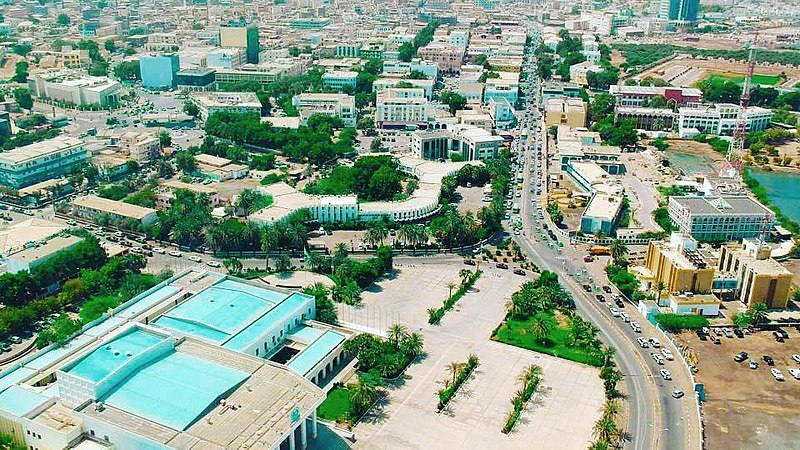
Djibouti City

Natural Highlights
Lake Assal
Lake Assal is a spectacular crater lake surrounded by volcanic terrain and salt flats. Its shoreline lies more than 150 metres below sea level, making it one of Africa’s lowest points.
Lake Abbe
Lake Abbe is famous for its limestone chimneys, hot springs and surreal desert scenery. The landscape is especially striking around sunrise and sunset.
Gulf of Tadjoura
The Gulf of Tadjoura offers clear water, coral reefs and opportunities for diving and snorkelling. Whale sharks may be seen seasonally in waters close to the coast.
Historical Background
Djibouti’s location between the Red Sea and the Gulf of Aden has made the region an important meeting point for African, Arab and maritime trading cultures for centuries.
During the nineteenth century, France established a colonial presence in the area. The territory was later known as French Somaliland and, from 1967, as the French Territory of the Afars and the Issas.
Following a referendum, the country became the independent Republic of Djibouti on 27 June 1977. Hassan Gouled Aptidon became its first president and remained in office until 1999.
Tensions between the government and an Afar-led rebel movement developed into civil conflict during the 1990s. Peace agreements signed during the 1990s and in 2001 brought the conflict largely to an end.
Ismaïl Omar Guelleh succeeded Hassan Gouled Aptidon as president in 1999. Djibouti has since expanded its ports, transport links and role as a regional logistics and security centre.
Its location near the Bab el-Mandeb Strait makes Djibouti strategically significant for international shipping. The country hosts military facilities used by several foreign partners, including France, the United States, China, Japan and Italy.
Strategic Importance
Djibouti sits close to the Bab el-Mandeb Strait, which connects the Red Sea with the Gulf of Aden and the Indian Ocean. Large volumes of international shipping pass through this narrow maritime route.
The country’s modern ports also provide an important trade connection for landlocked Ethiopia and other parts of the East African interior.
Travel advice: Conditions can be extremely hot, particularly during the summer. Travellers should carry sufficient water, protect themselves from the sun and arrange experienced local transport when visiting remote desert areas.
Monetary unit: Djibouti franc