Country's codes
International phone code for Ethiopia: +251
3 letters: ETH
2 letters (internet domain): .ET
Digital country code: 231
Standard EAN-13 (country barcode): -
 Olympic country code: ETH
Ethiopia
Africa's oldest independent nation — ancient empires, rock-hewn churches, and landscapes unlike anywhere else on Earth.
✦ Top Tourist Attractions
Lalibela
The "New Jerusalem" of Africa — 12th-century rock-hewn churches carved entirely from stone, including the iconic St. George's Church, shaped as a perfect cross.
Simien Mountains
A UNESCO World Heritage Site of dramatic peaks, deep valleys, and endemic wildlife — home to the Gelada baboon and Walia ibex. A hiker's paradise.
Danakil Depression
One of the hottest, most surreal places on Earth — colourful sulphur springs, salt flats, and active volcanoes make this a bucket-list destination for adventurers.
Aksum
Former capital of the Aksumite Empire — towering obelisks, ancient tombs, and the Church of St. Mary of Zion, said to house the Ark of the Covenant.
Gondar
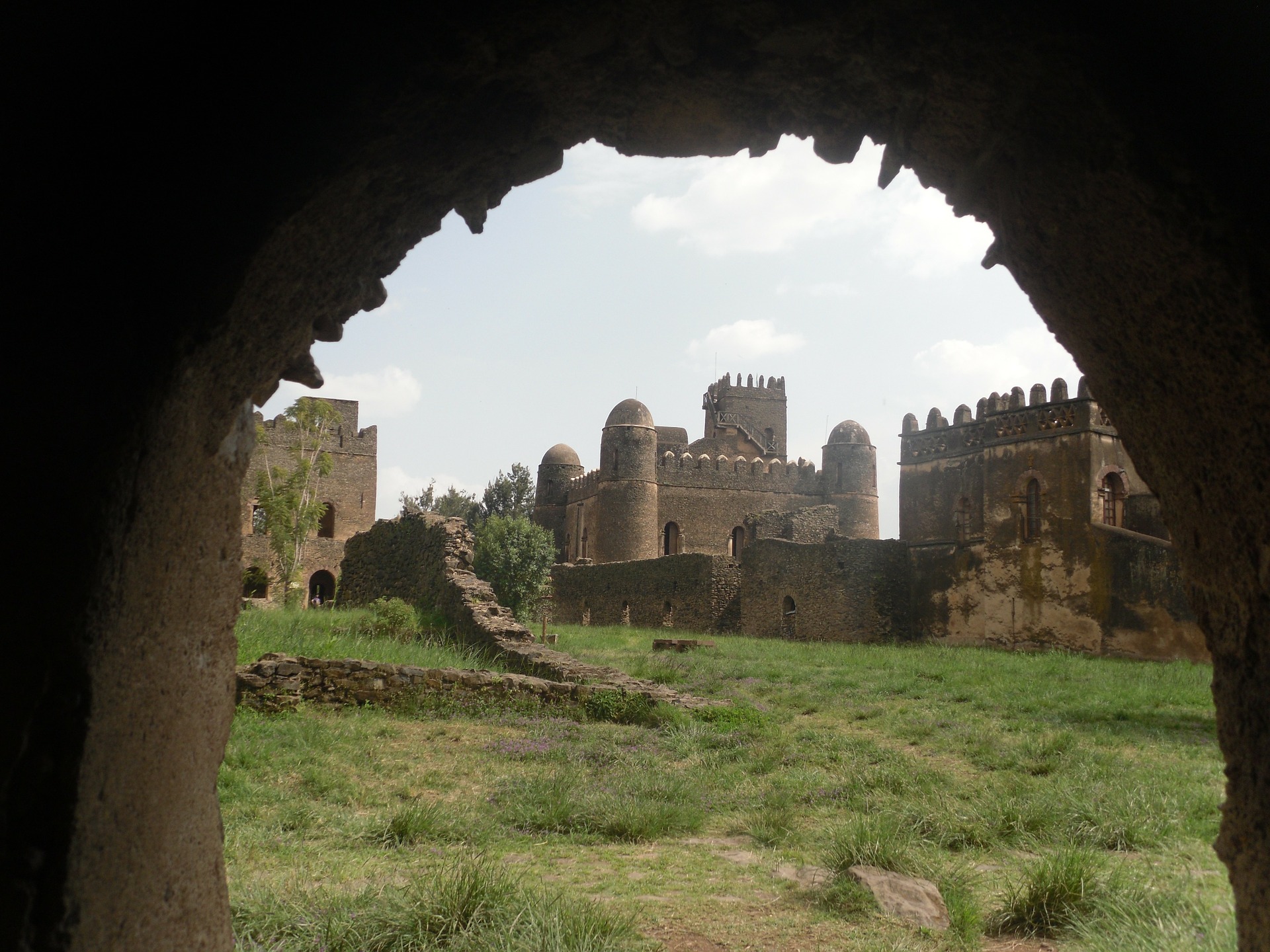
The "Camelot of Africa" — the Fasil Ghebbi fortress complex and the painted Debre Berhan Selassie Church are the jewels of this 17th-century royal city.
Lake Tana & Blue Nile Falls
Ethiopia's largest lake, dotted with ancient monasteries, is the source of the Blue Nile. Nearby Tis Issat (Blue Nile Falls) cascades spectacularly in the rainy season.
Harar
The fourth holiest city in Islam, encircled by ancient walls and home to over 80 mosques. Famous for its vibrant markets and the nightly hyena-feeding tradition.
✦ Plan Your Trip
Online Travel Visa Check
Check Ethiopia entry requirements and visa conditions for your nationality before departure.
Check Visa →Travel Insurance
Find the best travel insurance plan for your Ethiopia trip — medical, cancellation, and adventure cover.
Get a Quote →Travel Health Advice
Check recommended vaccinations and health precautions for travellers heading to Ethiopia.
See Vaccines →When is the Best Time to Visit Ethiopia?
Discover the land of origins at its finest, from the historic northern routes to the rugged Simien Mountains.
Quick Answer: The best time to visit Ethiopia is during the dry season from October to March. During these months, skies are clear, temperatures are pleasant, and conditions are optimal for both trekking and exploring ancient historical landmarks like Lalibela and Gondar.
Breakdown of Ethiopia’s Seasons
The Dry Season (Peak Season): October – March
This is widely considered the ultimate window for travel. The rains have cleared, leaving lush landscapes behind in October, transitioning into crisp, dry weather through the winter months.
- Highlights: Perfect trekking weather in the Simien and Bale Mountains; clear access to the rock-hewn churches of Lalibela.
- Major Festivals: Experience major cultural events like Genna (Ethiopian Christmas in January) and Timkat (Ethiopian Epiphany, famously celebrated in Gondar).
The Shoulder Season: April – May
Marked by the "small rains" (Belg), this period brings occasional showers, but also fewer crowds and blooming flora across parts of the country.
- Highlights: Great for budget-conscious travelers looking for lower prices and quieter historical sites.
- Note: Southern regions like the Omo Valley can become more humid and muddy during this transition.
The Wet/Rainy Season: June – September
The heavy monsoon rains (Kiremt) sweep across the central and northern highlands, making rural road travel challenging. However, the countryside transforms into a vibrant, emerald paradise.
- Highlights: Stunning photography conditions and vibrant green scenery. September hosts the colorful Meskel festival right as the rains start to fade.
- Note: Avoid heavy trekking and remote lowland areas like the Danakil Depression during peak downpours.
Pro-Tip for Your Itinerary
If you want to blend cultural festivals with comfortable weather, aim to book your trip for January. Just remember to reserve your accommodations well in advance, as it's the most popular month for international travelers!
✦ Country Information
| Land area | 432,310 sq mi (1,119,683 sq km); total 435,186 sq mi (1,127,127 sq km) |
| Population | 117.9 million (2022 est.) |
| Capital city | Addis Ababa — pop. 5,006,000 (2022 est.) |
| Currency | Birr (ETB) |
| National name | Ityop'iya Federalawi Demokrasiyawi Ripeblik |
| National holiday | Independence Day, 28 May |
| Languages | Oromo 33.8%, Amharic (official) 29.3%, Somali 6.2%, Tigrigna 5.9%, and 75+ others. English is the major foreign language taught in schools. |
| Ethnicity | Oromo 34.4%, Amhara 27%, Somali 6.2%, Tigray 6.1%, Sidama 4%, and others (2007 est.) |
| Religions | Ethiopian Orthodox 43.5%, Muslim 33.9%, Protestant 18.5%, Traditional 2.7%, Catholic 0.7% (2007 est.) |

Addis Ababa: Capital City Profile
✦ Background
Africa's oldest independent nation
Ethiopia exists for at least 2,000 years — one of the world's oldest continuous civilisations. It comprises more than 80 ethnic groups and as many languages, united above all by their shared independence. Unique among African countries, Ethiopia was never colonised; the sole exception was Italy's occupation from 1936–41, ended after just five years. This proud heritage of sovereignty runs through every aspect of Ethiopian culture — from its ancient Ge'ez script and unique 13-month calendar to its living traditions of faith, music, and community. Ethiopia is also the only African country with its own ancient alphabet still in use today.