

Country's codes
International phone code for Iraq: +964
Standard EAN-13 (country barcode): 626
 Olympic country code: IRQ
Iraq: A Healthy Travel Guide
Travel Tips for Tourists
Getting There:
Iraq is primarily accessed via Baghdad International Airport, which connects to major cities in the Middle East and some international destinations. Travelers generally require a visa, which should be arranged in advance. Due to security considerations, it’s essential to check current travel advisories and register with your embassy before arrival.
Best Time to Visit:
The best time to visit Iraq is during spring (March to May) and autumn (September to November), when temperatures are moderate and conditions are more comfortable for sightseeing. Summers can be extremely hot, especially in southern regions, while winters are cooler but can be rainy in the north.
Top Attractions:
- Baghdad: Explore the historic city center, museums, and cultural landmarks.
- Babylon: Visit the ruins of one of the most famous ancient cities in Mesopotamia.
- Erbil Citadel: A UNESCO World Heritage site and one of the oldest continuously inhabited settlements in the world.
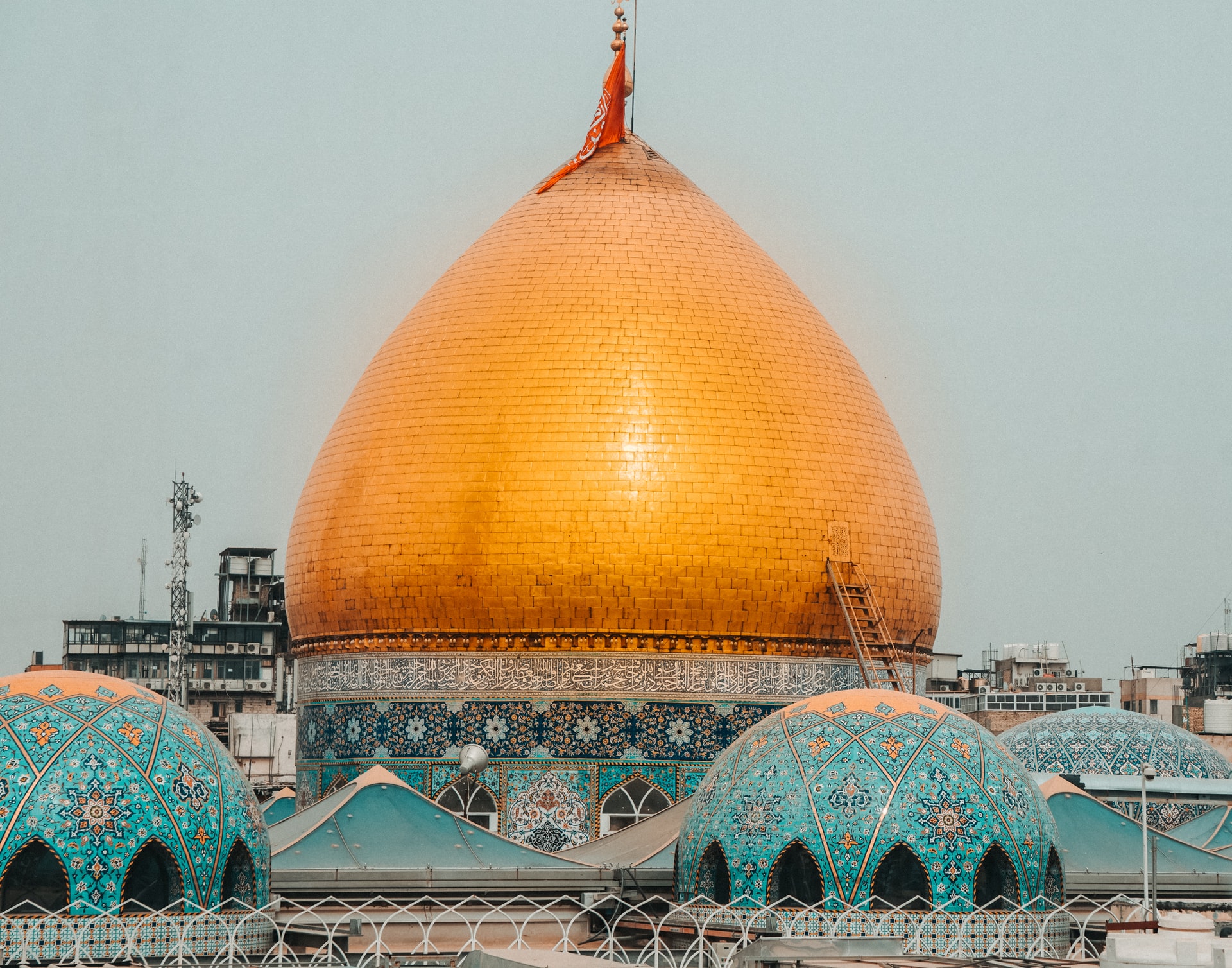
- Najaf and Karbala: Important religious cities for Shi’a Islam, attracting pilgrims from around the world.
- Marshlands of Southern Iraq: Unique ecosystems offering boat tours and cultural experiences.
Healthy Travel Advice:
- Vaccinations: Ensure routine vaccines are up to date; consider Hepatitis A & B, Typhoid, and Rabies for extended stays.
- Water Safety: Drink bottled or boiled water; avoid ice and raw foods.
- Heat Precautions: Summers are extremely hot; stay hydrated and avoid outdoor activities during peak heat hours.
- Security Awareness: Travel with a reputable guide, avoid high-risk areas, and follow local regulations.
- Emergency Numbers: Ambulance: 122. Carry comprehensive travel insurance.
A Glimpse into History
Iraq is often called the cradle of civilization, as it was home to ancient Mesopotamia, where writing, agriculture, and urban life first developed. The Sumerians, Akkadians, Babylonians, and Assyrians shaped early human history from this region. Later, Iraq became part of the Persian Empire, followed by Islamic rule after the 7th century. Baghdad rose as a center of learning during the Abbasid Caliphate. In modern times, Iraq was under Ottoman control until World War I, then became a British mandate before gaining independence in 1932. The 20th century saw political upheavals, wars, and the fall of Saddam Hussein in 2003, leading to ongoing reconstruction and challenges.
Current Political Landscape
Iraq is a federal parliamentary republic with a multi-party system. The government faces challenges in maintaining stability due to internal divisions, economic struggles, and security concerns. While democratic institutions exist, political tensions between various ethnic and sectarian groups remain significant. Iraq continues to work toward rebuilding infrastructure and improving governance, while balancing relations with regional powers and addressing the influence of armed groups. Despite progress, security risks and political uncertainty persist, making cautious travel planning essential.
Useful country information
Total area: 167,556 sq mi (433,970 sq km)
Population (2022 est.): 41.18 million
Capital and largest city (2022 est.): Baghdad, 7,323,000

Baghdad: Capital City Profile
Largest cities: Mosul 1.494 million; Erbil 1.039 million; Basra 942,000; As Sulaymaniyah 867,000; Najaf 779,000
Monetary unit: Iraqi Dinar
Languages: Arabic (official), Kurdish (official), Turkmen (a Turkish dialect) and Assyrian (Neo-Aramaic) are official in areas where they constitute a majority of the population), Armenian
Ethnicity/race: Arab 75%?80%, Kurdish 15%?20%, Turkoman, Assyrian, or other 5%
Religions: Muslim (official) 99% (Shia 60%-65%, Sunni 32%-37%), Christian 0.8%, Hindu <.1, Buddhist <.1, Jewish <.1, folk religion <.1, unafilliated .1, other <.1
note: while there has been voluntary relocation of many Christian families to northern Iraq, recent reporting indicates that the overall Christian population may have dropped by as much as 50% since the fall of the Saddam HUSSEIN regime in 2003, with many fleeing to Syria, Jordan, and Lebanon (2010 est.)
National Holiday: Revolution Day, July 17

Background:
From earliest times Iraq was known as Mesopotamia?the land between the rivers?for it embraces a large part of the alluvial plains of the Tigris and Euphrates rivers.
An advanced civilization existed in this area by 4000 B.C. Sometime after 2000 B.C., the land became the center of the ancient Babylonian and Assyrian empires. Mesopotamia was conquered by Cyrus the Great of Persia in 538 B.C. and by Alexander in 331 B.C. After an Arab conquest in 637?640, Baghdad became the capital of the ruling caliphate. The country was pillaged by the Mongols in 1258, and during the 16th, 17th, and 18th centuries was the object of Turkish and Persian competition.
Territorial disputes with Iran led to an inconclusive and costly eight-year war (1980-1988). In August 1990 Iraq seized Kuwait, but was expelled by US-led, UN coalition forces during January-February 1991. The victors did not occupy Iraq, however, thus allowing the regime to stay in control. Following Kuwait's liberation, the UN Security Council (UNSC) required Iraq to scrap all weapons of mass destruction and long-range missiles and to allow UN verification inspections.
Country Map

COUNTRY MAP WITH STATES/PROVINCES BOUNDARIES CLICK HERE

Source of Information:


