Country's codes
International phone code for Isle of Man: +44
ISO 3166-1 Alpha-3 (Country): IMN
ISO 3166-1 Alpha-2 (Country): IM
2 letters (internet domain): .IM
Digital country code: 833
Standard EAN-13 (country barcode): n/a
 Olympic country code: n/a (competes under Great Britain)
Isle of Man: Land of Vikings, TT Races, and Celtic Heritage
Getting to the Isle of Man
The Isle of Man is served by Ronaldsway Airport near the capital Douglas, with regular scheduled flights to and from London, Manchester, Liverpool, Edinburgh, Dublin, and other UK and Irish cities. easyJet, Loganair, and Aer Lingus Regional are among the main carriers. Flight times from London and Manchester are just under an hour.
Steam Packet Company ferries connect Douglas to Heysham (Lancashire) and Liverpool year-round, with seasonal sailings from Belfast and Dublin. The crossing from Heysham takes around 3.5 hours on the conventional ferry or 2.5 hours on the fast craft. Ferries carry cars, making it easy to explore every corner of the island at your own pace.
Tip: Book ferry crossings well in advance around the TT Races (late May to early June) — the island fills up fast and prices rise significantly during this period.
Best Time to Visit the Isle of Man
The Isle of Man has a mild maritime climate year-round, but the best time to visit for outdoor activities and sightseeing is May through September. Summer brings the warmest temperatures (averaging 17–19°C), long daylight hours, and the island's two most famous events: the iconic TT Races in late May/June and Tynwald Day — the national day — on 5th July.
Spring (April–May) is lovely for coastal walks and wildlife spotting before the summer crowds arrive. Winter is quieter and cheaper, with atmospheric misty landscapes and cosy Manx pubs — ideal for those seeking a peaceful escape. Heritage railways and many attractions run reduced schedules outside the main summer season.
Tip: Tynwald Day (5th July) is one of the most extraordinary public ceremonies in the British Isles — laws passed that year are proclaimed in both English and Manx Gaelic at the ancient Tynwald Hill in St John's, and it's free to attend.
Top Attractions on the Isle of Man
The island is home to a remarkable concentration of heritage. Castle Rushen in Castletown — originally built for a Norse king in 1265 — is one of the best-preserved medieval castles in Europe. Peel Castle, built by the Vikings on St Patrick's Isle, offers dramatic cliff-top views and can be explored in full. The Great Laxey Wheel — built in 1854 — is the largest working waterwheel in the world.
The Snaefell Mountain Railway climbs to the island's highest point at 620 metres, where on a clear day you can see six kingdoms: England, Scotland, Ireland, Wales, the Isle of Man, and Heaven. The island was also the world's first entire nation to be awarded UNESCO Biosphere Reserve status, reflecting its exceptional natural beauty and conservation efforts.
Tip: The Go Explore card gives unlimited travel on scheduled buses, heritage railways, horse trams, and admission to all Manx National Heritage sites — outstanding value for visitors planning more than a day of sightseeing.
A Glimpse into the Isle of Man's History
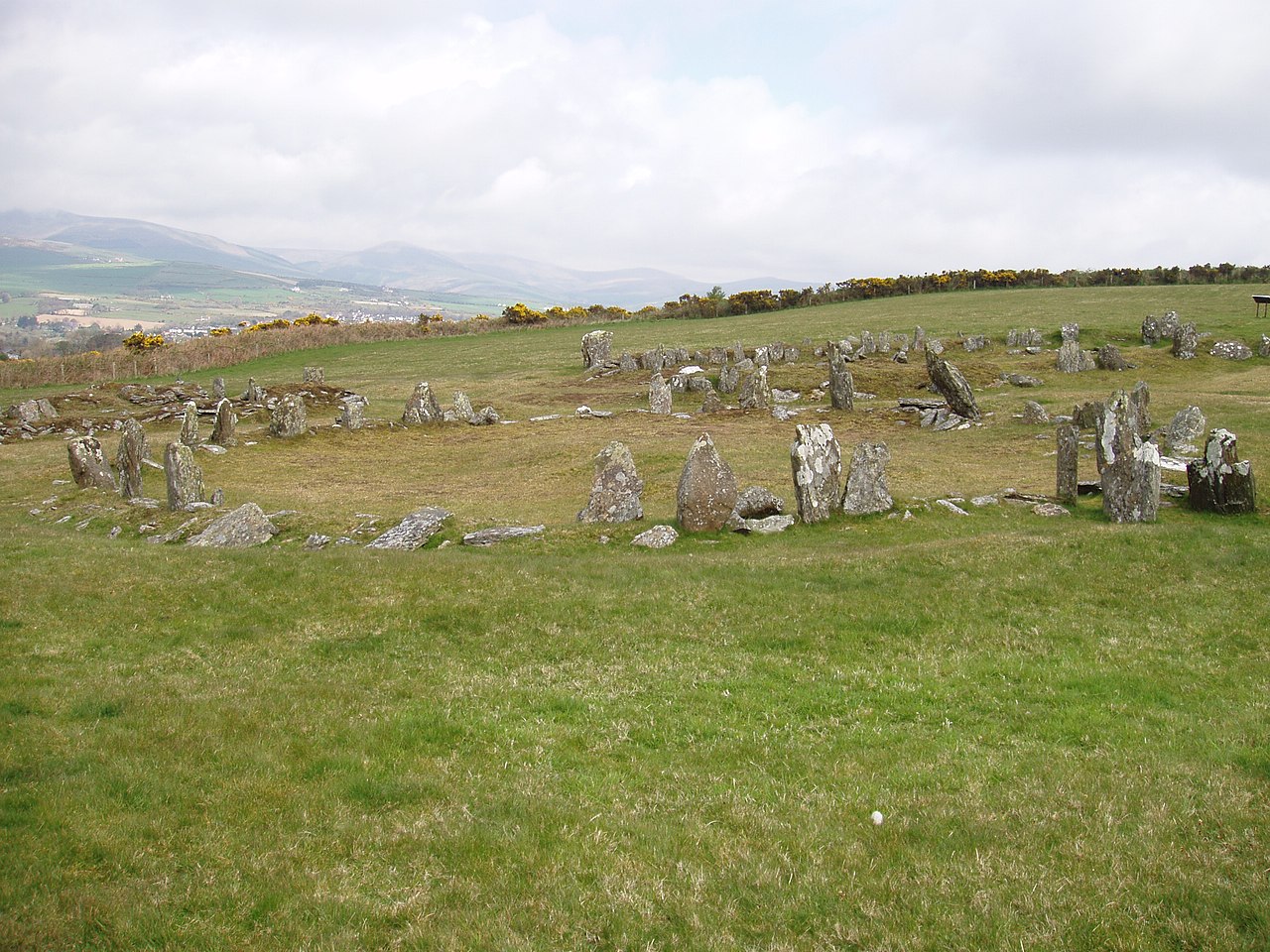
The Isle of Man has one of the most layered histories of any small island in the world. Celtic peoples settled here in prehistoric times, leaving behind Neolithic tombs and standing stones. Viking settlers arrived in the late 8th century, establishing the island as a Norse-Gaelic kingdom and founding Tynwald — the parliament that has governed the island continuously for over 1,000 years, making it the oldest parliament in the world with an unbroken existence.
Control of the island passed through Norse, Scottish, and English hands throughout the Middle Ages, before the Act of Revestment of 1765 returned it to the British Crown. In 1881, Tynwald became the first national legislative body in the world to grant women the right to vote in a general election. Today the island is a self-governing Crown Dependency — neither part of the United Kingdom nor the European Union — with full control over its own laws and taxation.
Tip: The Manx Museum in Douglas is the island's national museum and offers a superb free introduction to 10,000 years of Manx history, art, and natural heritage.
Practical Tips for Visiting the Isle of Man
The Isle of Man uses both pound sterling (£) and its own Manx pound — the two currencies are interchangeable on the island, but Manx notes are not accepted in mainland UK. Contactless payments are widely accepted. The island has no capital gains tax, inheritance tax, or stamp duty, making it one of Europe's most favourable tax environments — though this has no impact on visitors.
The island's famous heritage railways — including the Victorian Isle of Man Steam Railway (operating since 1874), the Manx Electric Railway, and the charming Douglas Horse Trams along the promenade — are both transport and tourist attractions in their own right. The island is also extremely safe, with very low crime rates, and is one of the most family-friendly destinations in the British Isles.
Tip: Look out for classic Manx produce — Manx kippers (smoked herring), Loaghtan lamb (a rare native breed), local cheeses, and Manx ales are all island specialities worth seeking out.
The Isle of Man's Political Landscape
The Isle of Man is a self-governing British Crown Dependency — not part of the United Kingdom or the European Union, and not represented in the UK Parliament. It has its own parliament (Tynwald), government, civil service, judiciary, and tax system. King Charles III serves as Head of State, known on the island as the Lord of Mann, represented locally by the Lieutenant Governor.
Tynwald is a bicameral parliament comprising the directly elected House of Keys (24 members) and the Legislative Council. Uniquely, party politics plays almost no role — the vast majority of candidates stand as independents. The Chief Minister is elected by Members of the House of Keys after each general election. A House of Keys general election is due to be held on 24 September 2026. The UK is responsible for the island's defence and international affairs, but all domestic matters are handled entirely by Tynwald.
Tip: Tynwald's annual open-air ceremony at Tynwald Hill in St John's each 5th July — where new laws are proclaimed in English and Manx Gaelic — is one of the most ancient and unique democratic traditions anywhere in the world.
Useful country information
Land Area: 221 square miles (572 square kilometers)
Population: Around 85,410 (2021 census)
Languages: English is the main language. Manx Gaelic (Gaelg) is a native Celtic language, officially recognised and actively revived — around 2% of the population speak it.
Ethnicity/Race:
- White: ~96%
- Asian: ~2%
- Mixed or Multiple ethnic groups: ~1%
- Other: ~1%
Religions:
- Christian: ~54%
- No religion: ~38%
- Other religions: ~1%
- Not stated: ~7%
Capital and largest city: Douglas

Douglas: Capital City Profile
Get Travel Insurance Quote