

Country's codes
International phone code for Lebanon: +961
Standard EAN-13 (country barcode): 528
 Olympic country code: LIB
Travel Tips for Tourists
- Getting There: Lebanon is served by Beirut–Rafic Hariri International Airport, with direct flights from Europe, the Middle East, and parts of Asia. Entry requirements vary, but many nationalities can obtain a visa on arrival. Overland travel from Syria is possible but not recommended due to security concerns.
- Best Time to Visit: The best time to visit Lebanon is from April to June and September to November. These months offer mild weather, ideal for exploring historical sites and enjoying the Mediterranean coast. Summer is hot and dry, while winter brings snow to the mountains, perfect for skiing in resorts like Faraya.
- Top Attractions:
- Beirut: A vibrant city with a mix of modern and historical charm, featuring the National Museum, Corniche, and lively districts like Gemmayzeh and Hamra.
- Baalbek: Home to some of the most impressive Roman ruins in the world, including the Temple of Jupiter.
- Byblos: One of the oldest continuously inhabited cities, offering ancient ruins, a picturesque harbor, and a charming old souk.
- Jeita Grotto: A stunning cave system with underground rivers and impressive rock formations.
- Cedars of God: A UNESCO World Heritage site showcasing Lebanon’s iconic cedar trees in a serene mountain setting.
- Healthy Travel Advice:
- Ensure you are up to date on routine vaccinations including MMR, tetanus, and polio. Hepatitis A and B, rabies, and typhoid are also recommended.
- Tap water is not consistently safe—stick to bottled water and avoid ice in drinks unless you're sure of its source.
- Healthcare quality varies. Private hospitals in Beirut offer good care, but rural areas may lack adequate facilities. Travel insurance with medical evacuation is essential.
- Air pollution can be high in urban areas—sensitive individuals should monitor air quality and limit exposure.
- Due to regional tensions, check travel advisories and avoid border areas, especially near Israel and Syria.
A Glimpse into Lebanon’s History
Lebanon’s history spans thousands of years, beginning with the ancient Phoenicians, renowned seafarers and traders who developed one of the earliest alphabets. The region later came under the rule of the Assyrians, Babylonians, Persians, Greeks, and Romans, each leaving their mark through architecture, culture, and religion.
During the Middle Ages, Lebanon was part of various Islamic empires, including the Umayyads and Ottomans. In the 20th century, following the collapse of the Ottoman Empire, Lebanon came under French mandate and gained independence in 1943. The country’s unique confessional political system was designed to balance its diverse religious communities.
Lebanon endured a devastating civil war from 1975 to 1990, followed by periods of reconstruction and political instability. Despite challenges, Lebanon remains a cultural and historical gem in the Middle East.
Current Political Landscape
Lebanon is currently navigating a complex political and security crisis. In early 2025, a new leadership emerged with President Joseph Aoun and Prime Minister Nawaf Salam, a respected jurist and former UN ambassador. Their administration aims to implement reforms and reduce Hezbollah’s political dominance[1](https://diplomatmagazine.eu/2025/01/15/lebanons-political-shift/).
However, the country remains deeply affected by regional tensions, particularly the ongoing conflict between Hezbollah and Israel. Ceasefire violations and cross-border strikes have destabilized southern Lebanon and displaced thousands[2](https://www.hrw.org/world-report/2025/country-chapters/lebanon). The Lebanese Armed Forces, supported by international partners, continue to play a key role in maintaining internal security[3](https://www.cfr.org/backgrounder/lebanon-how-israel-hezbollah-and-regional-powers-are-shaping-its-future).
Lebanon’s economy is still in crisis, with high inflation, unemployment, and a weakened currency. Political gridlock and sectarian divisions hinder progress, but the new government offers cautious optimism for reform and recovery.
Useful country information
Total area: 4,015 sq mi (10,400 sq km)
Population (2022 est.): 6.769 million
Capital and largest city (2022 est.): Beirut, 2,433,000

Beirut: Capital City Profile
Monetary unit: Lebanese pound
Languages: Arabic (official), French, English, Armenian
Ethnicity/race: Arab 95%, Armenian 4%, other 1%; note: many Christian Lebanese do not identify themselves as Arab but rather as descendents of the ancient Canaanites and prefer to be called Phoenicians
Religions: Muslim 54% (27% Sunni, 27% Shia), Christian 40.5% (includes 21% Maronite Catholic, 8% Greek Orthodox, 5% Greek Catholic, 6.5% other Christian), Druze 5.6%, very small numbers of Jews, Baha'is, Buddhists, Hindus, and Mormons. (2012 est.) note: 18 religious sects recognized
National Holiday: Independence Day, November 22

Background:
Lebanon lies at the eastern end of the Mediterranean Sea.
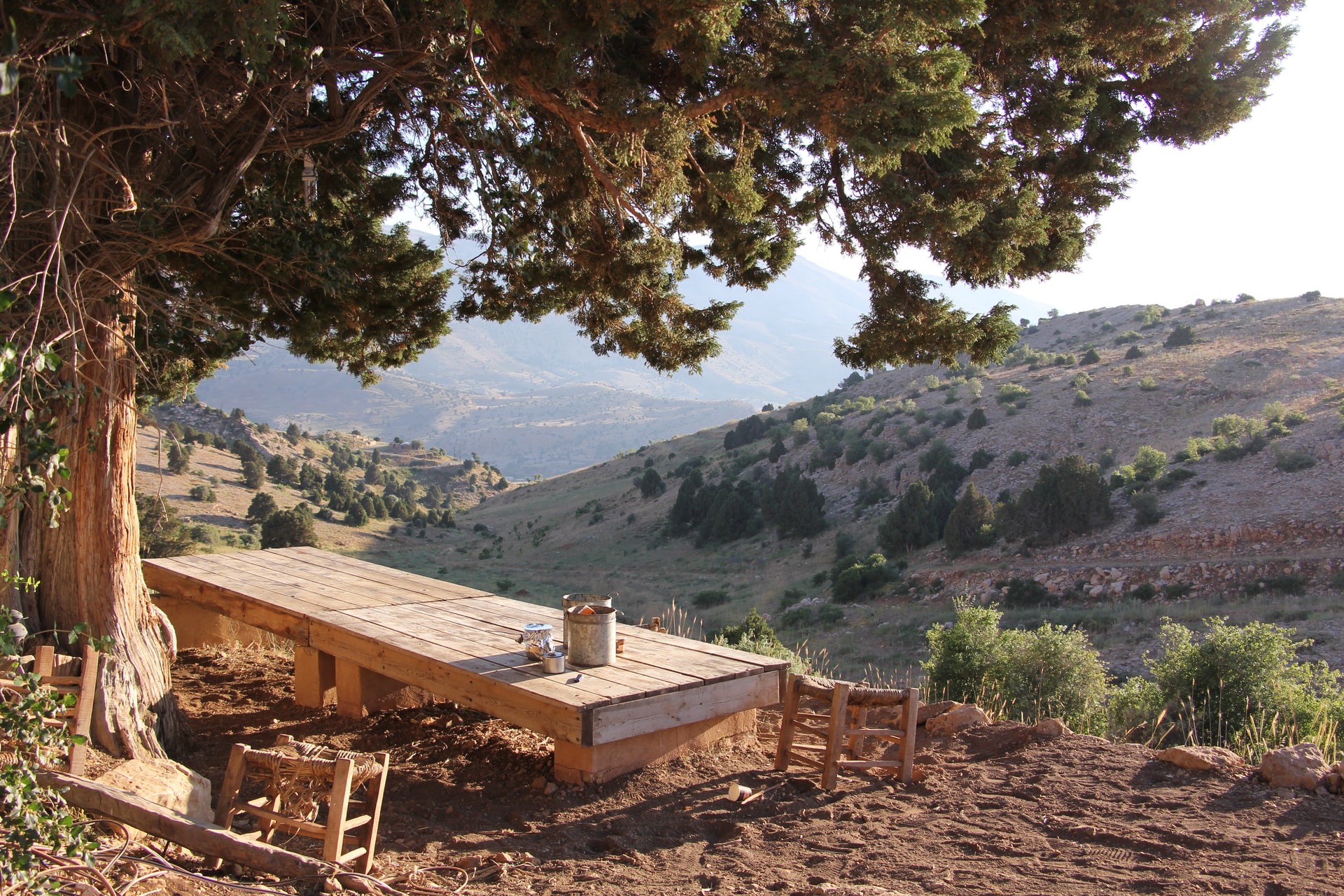
The Lebanon Mountains, which run parallel to the western coast, cover most of the country, while on the eastern border is the Anti-Lebanon range. Between the two lies the Bekaa Valley, the principal agricultural area.
Lebanon has made progress toward rebuilding its political institutions since 1991 and the end of the devastating 15-year civil war. Under the Ta'if Accord - the blueprint for national reconciliation - the Lebanese have established a more equitable political system.
According to the unwritten National Pact, different religious communities were represented in the government by a Maronite Christian president, a Sunni Muslim prime minister, and a Shiite national assembly speaker.
Since the end of the war, the Lebanese have conducted several successful elections, most of the militias have been weakened or disbanded, and the Lebanese Armed Forces (LAF) have extended central government authority over about two-thirds of the country.


Source of Information:


