Libreville Weather
LIBREVILLE WEATHERAbout Libreville
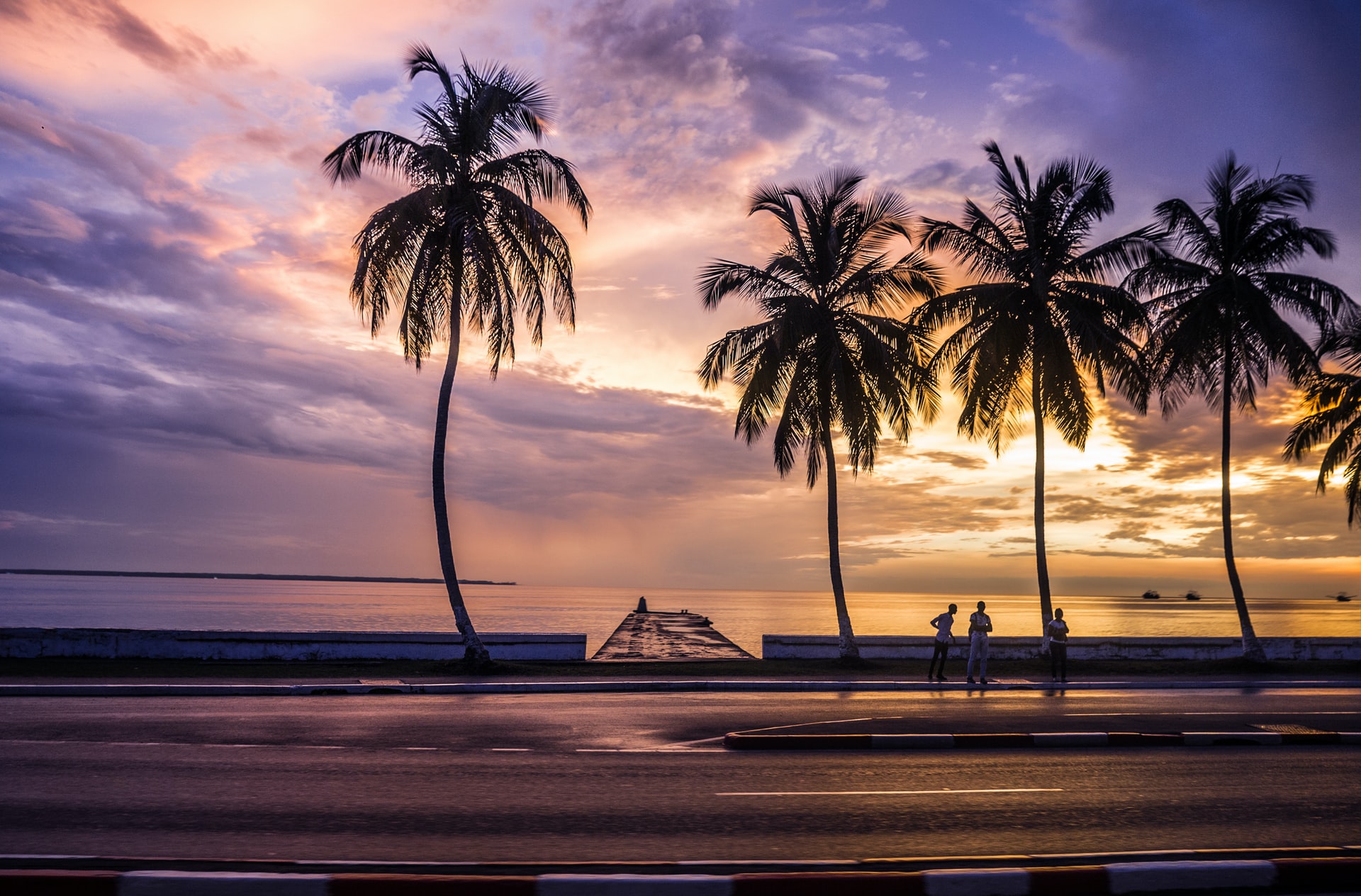
Libreville is the sprawling, vibrant capital of Gabon — one of Central Africa's most prosperous and ecologically extraordinary nations, a country so committed to conservation that it has set aside over 11% of its land as national parks, protecting some of the most pristine and biodiverse tropical rainforest remaining on Earth. Sitting on the estuary of the Gabon River where it meets the Atlantic Ocean, Libreville ("Free Town" in French) was founded in 1849 as a settlement for freed slaves — a history reflected in its name and its diverse, cosmopolitan character. The city is the economic and political capital of a country whose oil wealth has funded significant infrastructure, producing a skyline of modern towers and wide boulevards that contrast dramatically with the dense rainforest pressing in from every side. For travellers, Libreville serves primarily as the gateway to Gabon's extraordinary natural wonders — its 13 national parks, pristine Atlantic beaches where forest elephants bathe at sunrise, and some of the finest gorilla and chimpanzee tracking in all of Africa.
Best Time to Visit Libreville & Weather Guide
Gabon straddles the equator and has a classic equatorial climate — hot and humid year-round, with two wet and two dry seasons. The dry seasons are significantly more comfortable and offer the best conditions for wildlife viewing and outdoor activities.
☀️ Long Dry Season (June–September)
The best and most popular time to visit Libreville and Gabon's national parks. Temperatures remain warm (24–28°C) but humidity drops significantly, rainfall is minimal, and the skies are often overcast but fresh. July and August are the driest months. This is the peak season for wildlife viewing in Lopé and Loango National Parks — forest elephants, gorillas, buffalo, and the famous surf-beach elephants are most reliably visible. Humpback whales visit Gabon's Atlantic coast June–September, and surfing conditions at Libreville's beaches are excellent.
Best Time to Visit🌤️ Short Dry Season (December–January)
A second, shorter dry season that offers another good window for visiting — temperatures are warm (26–30°C), rainfall is lower than the wet seasons, and the national parks are accessible. The short dry season coincides with European winter holidays and can be busy at the major lodges. December is particularly pleasant — warm, drier days, festive atmosphere in Libreville's restaurants and bars, and excellent conditions for both coastal and forest wildlife viewing.
Also Good🐋 Humpback Whale Season
Between June and September, humpback whales migrate to Gabon's Atlantic coastal waters to breed and nurse their calves — creating extraordinary opportunities for boat-based whale watching from Libreville and the beaches of Loango National Park. Gabon's waters host one of the largest concentrations of humpback whales in the world during this season, and encounters from small boats can be breathtakingly close. Several Libreville-based operators offer whale watching excursions during the dry season.
Special Event🌡️ Climate Notes for the City
Libreville sits almost exactly on the equator — temperatures are warm year-round (average 25–30°C) with very high humidity throughout the year. The two main wet seasons (October–November and March–May) bring heavy tropical rainfall and reduced visibility in the forests. Even in the dry season, brief showers are possible at any time. Lightweight, breathable clothing and a compact rain layer are recommended year-round. The city's coastal position provides occasional Atlantic breezes that offer relief from the equatorial humidity.
EquatorialDry season: Lightweight, breathable clothing (cotton or moisture-wicking synthetic) is essential in the humidity. A light rain jacket for occasional showers. Comfortable, sturdy walking shoes or hiking boots for forest and beach excursions. High-DEET insect repellent is non-negotiable — malaria is present throughout Gabon year-round. Long-sleeved shirts and long trousers for evening protection against mosquitoes.
Wet season: Quick-dry clothing, quality waterproof jacket, and waterproof footwear for muddy forest trails. A dry bag for electronics and documents is strongly recommended. Sunscreen for coastal activities. Always carry more insect repellent than you think you need.
Top Attractions in Libreville & Gabon
Libreville is primarily a gateway city — but the national parks and coastal wilderness accessible from it rank among the finest wildlife destinations in all of Africa:
🐘 Loango National Park — Africa's Last Eden
One of the greatest wildlife destinations in the world — a vast, roadless wilderness of pristine Atlantic beach, coastal lagoons, savanna, and dense rainforest where forest elephants, western lowland gorillas, chimpanzees, buffalo, hippos, and leopards roam freely in extraordinary numbers. Loango is most famous for its surf-beach elephants — forest elephants that emerge from the jungle to play, forage, and even surf in the Atlantic waves at sunrise. Accessible by light aircraft from Libreville (1 hour), the park offers some of the most extraordinary and least-visited wildlife experiences in Africa.
World Class🦍 Lopé National Park — UNESCO World Heritage
A UNESCO World Heritage Site and Gabon's oldest and most studied national park — a remarkable landscape where ancient savanna grasslands meet lowland rainforest in a mosaic of habitats that has been continuously inhabited for over 400,000 years. Home to the highest density of western lowland gorillas in Central Africa, forest elephants, chimpanzees, mandrills (the world's largest monkey species), and over 400 bird species. The park's ancient rock art sites add a fascinating archaeological dimension to what is already one of Central Africa's premier wildlife destinations. Accessible by train from Libreville (5 hours on the Trans-Gabon railway).
UNESCO Heritage🌊 Pointe Denis Beach
The finest beach easily accessible from Libreville — a long, beautiful strip of golden Atlantic sand on the Pointe Denis peninsula, accessible by pirogue (motorised canoe) from Libreville's port in approximately 20 minutes. Pointe Denis has several beach bar-restaurants, excellent surf, and a relaxed weekend atmosphere beloved by Libreville's residents. The beach stretches for kilometres in both directions — calm lagoon water on one side, Atlantic surf on the other. An ideal half-day or full-day escape from the city, particularly rewarding on weekends when local families gather.
Beach Escape🦍 CIRMF Primate Research Centre (Franceville)
The Centre International de Recherches Médicales de Franceville houses one of the most important primate research programmes in Africa — and offers visitors the unique opportunity to observe chimpanzees and mandrills in large, semi-natural forest enclosures under the guidance of researchers. The mandrills of CIRMF are the most closely observed wild mandrill troop in existence — the males' extraordinary facial colouring (vivid blue and red) is one of the most spectacular sights in all of African wildlife. Located in Franceville in southeastern Gabon (1.5 hours by domestic flight from Libreville).
Unique🌿 Pongara National Park
Directly across the Gabon Estuary from Libreville — accessible by boat in 30 minutes — Pongara National Park is a beautiful coastal wilderness of beaches, mangroves, and rainforest that serves as one of Central Africa's most important leatherback sea turtle nesting sites. Between October and March, leatherback turtles (the world's largest reptile) haul themselves up Pongara's beaches at night to lay eggs — guided night turtle watching is one of Gabon's most magical wildlife experiences. Forest elephants, hippos, and a rich variety of birds are also present in the park.
Wildlife🏛️ Libreville City Centre & Marché Mont-Bouët
The largest and most vibrant market in Libreville — a vast, multi-storey covered market selling tropical produce, dried fish, spices, traditional medicines, textiles, carved wooden masks, and everyday goods in a bustling, authentic Central African market atmosphere. The Cathédrale Saint-Michel de Libreville (built 1954, famous for its columns carved from Gabon's finest tropical hardwoods) and the Musée National du Gabon (housing Gabon's most important collection of traditional masks, ritual objects, and ethnographic artefacts) are both worthwhile city centre visits.
City Culture🐢 Turtle Watching — Leatherback Nesting
Gabon hosts the largest leatherback sea turtle nesting population in the world — an estimated 30,000 leatherback turtles nest on Gabon's Atlantic beaches each season, making it a globally critical nesting site for this critically endangered species. The beaches of Pongara National Park (across from Libreville) and Mayumba National Park (in southern Gabon) offer the most accessible turtle watching experiences. Guided night tours during the nesting season (October–March) allow visitors to observe these magnificent prehistoric animals at close range under the guidance of expert rangers.
Remarkable🐬 Whale Watching & Marine Wildlife
Gabon's Atlantic waters are one of West Africa's most important marine wildlife habitats. Between June and September, humpback whales gather offshore in large numbers to breed — Gabon has one of the largest concentrations in the world, and boat-based encounters can be extraordinary. Atlantic humpback dolphins (a species found almost exclusively in Gabon's coastal waters) are also present year-round. Spinner dolphins, bottlenose dolphins, and occasional orca sightings add to the marine biodiversity. Several Libreville operators offer guided marine wildlife tours during the whale season.
MarineLocal Food Recommendations
Libreville's food scene reflects Gabon's French colonial heritage and its rich Central African culinary traditions — a cuisine built around fresh Atlantic seafood, plantain, cassava, bush meat, and the distinctive flavours of equatorial forest ingredients.
🍖 Must-Try Gabonese Dishes
- Poulet nyembwe — Gabon's national dish and one of the great dishes of Central African cuisine: chicken slow-cooked in a rich sauce made from palm nuts (the red-orange fruit of the oil palm), producing a deeply flavoured, slightly smoky, intensely aromatic stew. The palm nut sauce — extracted by crushing and boiling the nuts — has a flavour unlike any other oil and gives Gabonese cooking its most distinctive character.
- Saka saka (cassava leaves) — young cassava leaves pounded to a smooth paste and slow-cooked with palm oil, onions, garlic, and smoked fish or meat. One of the most widely eaten dishes across Central Africa — earthy, slightly bitter, and deeply satisfying, served over rice or with plantain.
- Grilled Atlantic fish — Libreville's position on the Atlantic coast provides outstanding fresh seafood. Whole grilled barracuda, red snapper, dorade, and the excellent local shrimp are served at the city's beach restaurants and fish market. Simply grilled with lime, chilli, and garlic — the best Atlantic seafood in Central Africa.
- Atanga (African pear) — a distinctively Gabonese seasonal ingredient: the dark purple atanga fruit (also called African plum or bush butter) is boiled in salt water and eaten with corn or bread. Its creamy, avocado-like flesh with a distinctive earthy flavour is a much-loved Gabonese seasonal treat — look for street vendors selling it from large bowls in season.
- Mbika (pumpkin seed stew) — ground pumpkin seeds cooked with smoked fish, crayfish, and vegetables into a thick, nutty, deeply flavoured stew. A distinctive and delicious dish of Gabonese home cooking, rarely found outside the country.
- Plantain dishes — boiled, fried, or roasted plantain accompanies almost every meal in Libreville — aloco (fried ripe plantain with chilli sauce) is the universal street food snack, sold from roadside stalls throughout the city.
🍺 Drinks & Street Food
- Régab Beer — Gabon's own locally brewed lager, produced in Libreville since 1966 and the national drink of choice. Cold, crisp, and deeply associated with Gabonese social life — a cold Régab with grilled fish at a beach bar is the quintessential Libreville experience.
- Palm wine (vin de palme) — freshly tapped from raffia palms and consumed the same day, milky white, slightly fizzy, and mildly sweet and alcoholic. Found at market stalls and in the city's traditional bars — a genuinely local and convivial drink.
- Odika/Dika chocolate — the seeds of the African wild mango (Irvingia gabonensis) are ground into a paste called odika or dika, which forms the base of several Gabonese sauces and is also dried and sold as a traditional cooking ingredient. Its faintly chocolatey, nutty flavour is uniquely Central African.
- Fresh coconut and tropical juices — vendors throughout Libreville sell fresh green coconuts, passion fruit, guava, and mango juices. Essential refreshment in the equatorial heat.
- Aloco street stalls — fried ripe plantain, sold hot from oil drums converted into fryers at street corners throughout the city from late afternoon. The most ubiquitous and satisfying street snack in Libreville — eaten with chilli sauce and sometimes with grilled fish.
🏪 Where to Eat — Local Tips
- Marché des Cocotiers (Coconut Market) — the most atmospheric outdoor market dining area in Libreville, particularly lively on weekends. Street food stalls serve grilled fish, poulet nyembwe, plantain, and fresh juices at very affordable prices alongside the waterfront.
- Restaurant Le Relais de la Poste — one of Libreville's most respected traditional restaurants, serving excellent Gabonese and French-influenced cuisine in a pleasant garden setting. Particularly good for poulet nyembwe, grilled Atlantic fish, and Gabonese forest specialities.
- Pointe Denis beach restaurants — the beach restaurants at Pointe Denis, across the estuary from Libreville, are the finest setting for fresh seafood in the area. Whole grilled fish, cold Régab, Atlantic breezes, and no traffic — the most relaxed and enjoyable dining experience near the capital.
- Libreville's French boulangeries — the French colonial legacy means Libreville has excellent French-style bakeries producing outstanding baguettes, croissants, and patisserie. A morning baguette with coffee from a neighbourhood boulangerie is a daily ritual for many Libreville residents.
🌳 Gabon's Forest Ingredients
- Gabon's extraordinary biodiversity extends to its food culture — the equatorial rainforest provides an extraordinary range of wild ingredients that have shaped Gabonese cuisine for millennia. Palm oil (from the red fruit of the oil palm), palm nuts, wild mushrooms, forest yams, and bush meat (where sustainably sourced) are the building blocks of traditional Gabonese cooking.
- Moabi oil — extracted from the seeds of the moabi tree (Baillonella toxisperma), one of Gabon's towering forest giants. The oil has a distinctive nutty flavour and is used in cooking and as a cosmetic product. Moabi trees can live for over 1,000 years — the oil is a product of the deep forest in the most literal sense.
- Smoked fish — the smoking of fresh Atlantic and river fish over hardwood is a fundamental technique of Gabonese cooking. Smoked fish appears in virtually every traditional stew and sauce, contributing a deep, complex smokiness that is the defining flavour note of Central African coastal cuisine.
- The market at Mont-Bouët sells an extraordinary range of forest ingredients, traditional medicines, dried fish, and spices that offer a fascinating window into Gabon's food culture beyond the restaurant menu.
Day Trip Itineraries from Libreville
Libreville is the launching pad for some of the most extraordinary wildlife and nature experiences in Central Africa — all within a few hours by boat, road, or light aircraft:
🏖️ Day Trip: Pointe Denis Beach
Travel time: 20 minutes by pirogue from Libreville port | Cost: ~$10–15 return boat crossing
The easiest and most refreshing escape from Libreville — a short pirogue crossing of the Gabon Estuary to the beautiful beaches of the Pointe Denis peninsula. Wide, golden Atlantic beaches, calm lagoon swimming on the interior side, beach bar-restaurants serving cold Régab and fresh grilled fish, and a relaxed, convivial atmosphere make Pointe Denis the favourite weekend destination of Libreville's residents. The peninsula stretches for kilometres with few other visitors outside weekends — perfect for a long beach walk in near-total solitude.
Most Popular🐢 Day Trip: Pongara National Park
Travel time: 30 minutes by boat | Cost: ~$50–80 with guide and boat transfer
A short boat crossing leads to one of Gabon's most accessible national parks — a beautiful coastal wilderness of beaches, mangroves, and rainforest where forest elephants, hippos, and an extraordinary diversity of birds can be encountered. Between October and March, guided night tours allow visitors to observe leatherback sea turtles nesting on the park's beaches — one of the most moving and memorable wildlife encounters in Central Africa. A full day in Pongara combines beach walking, forest birding, and (in season) turtle watching for a remarkable day trip from the capital.
Wildlife🦍 Multi-Day: Lopé National Park
Travel time: 5 hours by train (Trans-Gabon Railway) or 1 hour by domestic flight | Cost: ~$150–300 per night at Lopé lodges
Best as a 2–3 night stay — Gabon's premier wildlife destination and a UNESCO World Heritage Site. The Trans-Gabon Railway journey from Libreville to Lopé is itself spectacular — a 5-hour passage through some of the most pristine equatorial rainforest in the world. At Lopé, guided gorilla and mandrill tracking, forest elephant encounters, and birding in the ancient savanna-forest mosaic make this one of the finest wildlife experiences in Central Africa. The Lopé Hotel on the park boundary is the most comfortable base.
Multi-Day🐋 Whale Watching (June–September)
Travel time: 30–60 minutes by boat from Libreville marina | Cost: ~$80–120 per person with guided boat tour
During Gabon's dry season, humpback whale watching boat tours depart from Libreville marina and cruise the coastal waters where whales have gathered to breed. The encounters can be extraordinary — Gabon's humpback population is among the largest in the world, and the sheltered coastal waters mean sightings are frequent and often very close. Atlantic humpback dolphins — one of the rarest cetaceans in the world, found almost exclusively in Gabon's waters — are also regularly spotted on these tours.
SeasonalTourist Tips for Libreville
🚌 Getting Around
- Libreville is a sprawling city with limited public transport — the most practical way to get around is by taxi. Both shared taxis (taxi brousse) and private hire taxis operate throughout the city. Always negotiate the fare before departure — meters are not used. Private hire taxis for day use can be arranged through hotels and are the most efficient option for sightseeing.
- The city centre — including the waterfront, Marché Mont-Bouët, the cathedral, and the main restaurants of the Boulevard Triomphal — is more compact and walkable than the outer suburbs, though the equatorial heat and humidity limit comfortable walking to early morning and late afternoon hours.
- For Pointe Denis, pirogues depart from the Port Môle dock near the city centre — the crossing takes 20 minutes and is straightforward. For Pongara National Park, boat transfers are arranged through tour operators or the park authority.
- For national park visits and excursions outside Libreville, booking through a reputable licensed tour operator is strongly recommended — they arrange all transport, accommodation, guides, and park permits, ensuring safety and proper access.
💡 General Safety & Travel Tips
- Libreville is generally safe by Central African standards for visitors who exercise normal urban precautions. Avoid displaying expensive items, don't walk alone at night in unfamiliar areas, and be alert around the central market and bus station areas during busy periods.
- Malaria is a serious risk throughout Gabon year-round — consult a travel health clinic before departure and take prescribed anti-malarial prophylaxis. Use high-DEET insect repellent at all times outdoors, particularly from dusk to dawn. Sleep under a mosquito net if not in air-conditioned accommodation.
- Water: Do not drink tap water in Libreville. Bottled water is widely available throughout the city and at all hotels and restaurants.
- Language: French is the official and working language of Gabon — basic French is essential for navigating Libreville beyond the major hotels. English is rarely spoken outside the diplomatic and business communities.
- The Central African CFA Franc (XAF) is the currency — pegged to the Euro. ATMs are available in central Libreville at major banks. Credit cards are accepted at upmarket hotels and restaurants. Cash is essential for markets, taxis, and street food.
- Gabon is a predominantly Catholic country with a Muslim minority — dress modestly when visiting places of worship. The country's political situation has been in transition since a military coup in 2023 — check current FCO/State Department travel advisories before travelling.
Apply for Tourist Visa
Gabon offers an e-visa system allowing most nationalities to apply online before travel. The visa is processed electronically and presented on arrival at Libreville International Airport. Citizens of ECOWAS member states and several other African nations may be eligible for visa-free entry or visa-on-arrival. Processing typically takes 3–5 business days. Always verify current visa requirements for your specific passport before travelling — Gabon's visa policies have been subject to change in recent years. Apply for Gabon e-Visa
Important Emergency Numbers
🇬🇦 Libreville Emergency Contacts
- 🚑 Ambulance: 1730
- 🔥 Fire Brigade: 1300–1399
- 👮 Police: 18
International Emergency Phone Numbers
Find Flights to Libreville
Libreville Airport Code: LBV — Libreville International Airport / Léon-Mba International Airport (located approximately 11km north of the city centre)
Airport Transfer: Taxis are the standard transport from the airport to central Libreville — the journey takes approximately 20–30 minutes. Agree on the fare before departure. Most major hotels offer airport pick-up services. Direct international flights connect Libreville to Paris, Brussels, Casablanca, Addis Ababa, Nairobi, and several other African hubs.
International Airport FinderCurrency in Libreville
The currency of Gabon is the Central African CFA Franc (XAF), shared with five other Central African nations and pegged to the Euro at a fixed rate of 1 EUR = 655.96 XAF. The CFA Franc is a stable, widely trusted currency — Euros are sometimes accepted at major hotels and upmarket establishments. ATMs are available at major banks in central Libreville. Credit cards are accepted at larger hotels, restaurants, and supermarkets. Cash is essential for taxis, markets, and street food.