Country's codes
International phone code for Macau: +853
3 letters: MAC
2 letters (internet domain): .mo
Digital country code: 446
Standard EAN-13 (country barcode): 958
 Olympic country code: -
Travel Tips for Tourists
Macau offers a unique fusion of East and West, where Portuguese heritage meets modern Chinese culture. Famous for its historic streets, UNESCO‑listed monuments, vibrant food scene, and world‑class entertainment, Macau delivers culture, cuisine, and excitement in a compact destination.
Top Attractions in Macau
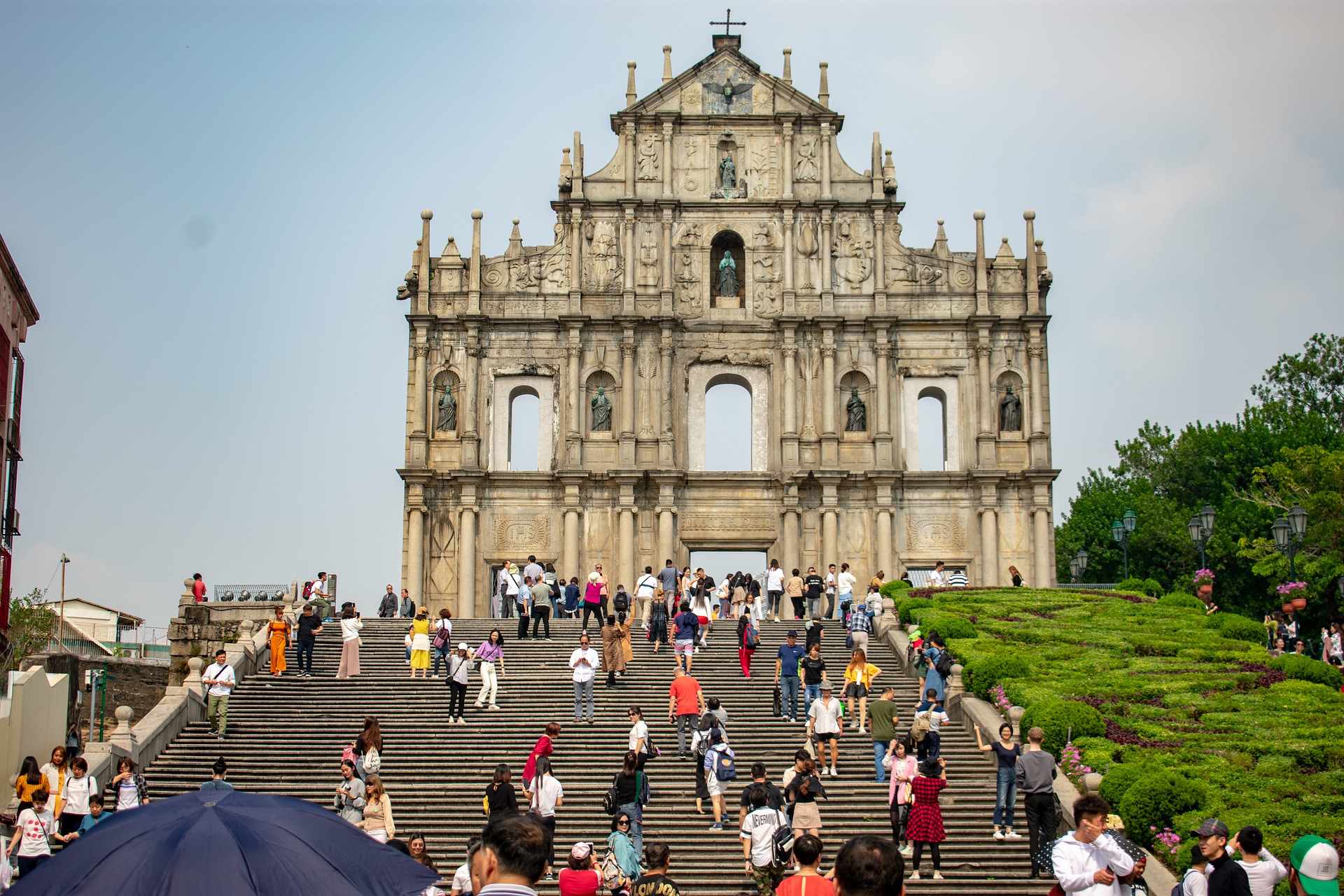
🏛️ Ruins of St. Paul’s
Macau’s most iconic landmark, the stone façade of a 17th‑century church symbolizing the city’s Portuguese heritage.
🎰 Cotai Strip
A dazzling entertainment zone featuring luxury resorts, casinos, shopping malls, and spectacular live shows.
🏯 A‑Ma Temple
A historic Taoist temple dedicated to the sea goddess Mazu, predating the city’s name and Portuguese arrival.
🌊 Senado Square & Historic Centre
A UNESCO‑listed area with colonial architecture, wave‑patterned pavements, and lively shopping streets.
Best Places to Visit
- 🏙️ Macau Peninsula – Historic landmarks, temples, and colonial streets.
- 🎰 Cotai – Modern resorts, casinos, and entertainment complexes.
- 🌴 Taipa Village – Traditional charm, local food, and cultural sites.
- 🏖️ Coloane – Beaches, hiking trails, and relaxed village life.
- 🌉 Macau Tower – Panoramic views, dining, and adventure activities.
Things to Do in Macau
- Explore UNESCO World Heritage sites in the Historic Centre.
- Try Macanese cuisine, a unique mix of Portuguese and Chinese flavors.
- Enjoy world‑class shows, shopping, and casinos along the Cotai Strip.
- Visit temples and churches reflecting centuries of cultural blend.
- Walk along Coloane beach or hike its scenic coastal trails.
Travel Tips for Visitors
- ☀️ Subtropical climate — best weather from October to March.
- 🚌 Public buses and hotel shuttles are convenient and affordable.
- 💳 Cards widely accepted; carry some cash for local eateries.
- 🏛️ Dress modestly when visiting temples and cultural sites.
A Glimpse into Macau’s History
Macau’s history spans thousands of years, with early settlements dating back over 6,000 years. It became a strategic port during the Han dynasty and later flourished as a trading hub known as “Ou Mun” or “trading gate.” In 1557, the Portuguese established a permanent settlement, marking the beginning of over four centuries of European influence.
Macau developed into a major center for trade between China, Japan, India, and Europe. It also became a cultural crossroads, with missionaries like Matteo Ricci preparing for work in China at the Christian college near the Ruins of St. Paul’s. Despite the decline of Portuguese dominance in Asia, Macau remained a vital link in East-West commerce. In 1999, Macau was officially handed over to China, becoming a Special Administrative Region under the “one country, two systems” framework.
Online Travel Visa Check.
Find Visa information for your destination.Useful country information
Location: Eastern Asia, bordering the South China Sea and China.
Area: 28.2 km² total, with 8.9 km² on a peninsula connected to China and the southern islands of Taipa (6.5 km²), Coloane (7.6 km²), and Co Tai (5.2 km², land reclaimed from the sea between Taipa and Coloane) linked by bridges and causeway.
Climate: Subtropical; hot and rainy from spring through summer, cool and humid in winter.
Population: 658,391 (2022)
Ethnic groups: Chinese 95.7%, Portuguese 1.7%.
Religions: Buddhist 17%, Roman Catholic 7%, Christian 2%.
Languages: Chinese (Cantonese) language has official status and the same legal force as Portuguese, the official language.
Get Travel Insurance Quote
Find the best travel insurance plan for you and your trip.
Background:
Colonized by the Portuguese in the 16th century, Macau was the first European settlement in the Far East. Pursuant to an agreement signed by China and Portugal on 13 April 1987, Macau became the Macau Special Administrative Region (SAR) of China on 20 December 1999. China has promised that, under its "one country, two systems" formula, China's socialist economic system will not be practiced in Macau and that Macau will enjoy a high degree of autonomy in all matters except foreign and defense affairs.