

Country's codes
International phone code for Maldives: +960
Standard EAN-13 (country barcode):-
 Olympic country code: MDV
🇲🇻 Maldives Travel Guide
The Maldives offers postcard‑perfect beaches, crystal‑clear waters, and unmatched tranquility. Whether you’re seeking romance, luxury, or underwater adventure, every island feels like a private escape surrounded by vibrant marine life.
Top Attractions in the Maldives
🏝️ Private Resort Islands
Each resort occupies its own island, offering exclusive beaches, overwater villas, and complete privacy.
🐠 Coral Reefs & Diving Sites
Home to some of the world’s best snorkeling and diving, with manta rays, reef sharks, turtles, and colorful corals.
🏙️ Malé City
The compact capital featuring local markets, mosques, museums, and a glimpse into everyday Maldivian life.
🌅 Sandbanks & Lagoons
Iconic sandbanks surrounded by shallow turquoise water, perfect for swimming, photography, and sunset views.
Best Places to Visit
- 🏖️ North Malé Atoll – Easy access from the airport and home to many luxury resorts.
- 🌊 South Ari Atoll – Famous for whale shark sightings and excellent diving.
- 🏝️ Baa Atoll – A UNESCO Biosphere Reserve known for manta rays at Hanifaru Bay.
- 🛶 Local Islands – Maafushi and Thulusdhoo offer budget stays and authentic culture.
- 🌴 Private Sandbanks – Ideal for romantic picnics and unforgettable photos.
Things to Do in the Maldives
- Snorkel or dive among coral reefs and tropical fish.
- Stay in an overwater villa with direct lagoon access.
- Go dolphin‑watching or sunset cruising.
- Enjoy spa treatments inspired by ocean and island traditions.
- Experience bioluminescent plankton on select beaches at night.
Travel Tips for Visitors
- ☀️ Expect warm temperatures year‑round; pack light, breathable clothing.
- 🕌 The Maldives is a Muslim country — dress modestly on local islands.
- 💳 US dollars are widely accepted, especially at resorts.
- 🌊 Protect marine life by using reef‑safe sunscreen.
Useful country information
🌍 Total area: 115 sq mi (298 sq km)
👥 Population (2022 est.): ~521,000
🏙️ Capital and largest city (2022 est.): Malé (≈252,800 residents)
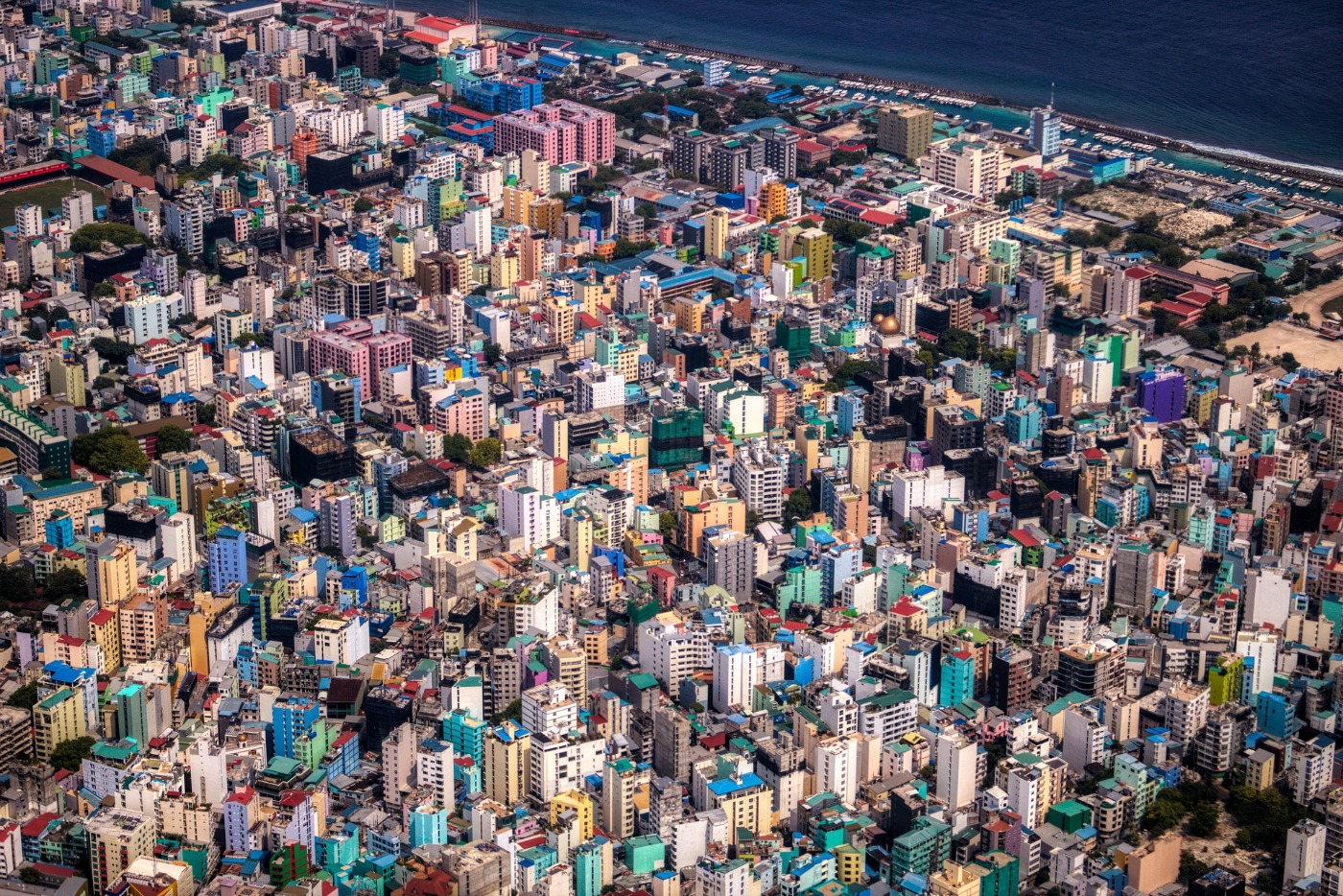
Male: Capital City Profile
Monetary unit: Rufiya
National name: Dhivehi Raajjeyge Jumhooriyyaa
Languages: Maldivian Dhivehi (official); English spoken by most government officials
Ethnicity/race: South Indians, Sinhalese, Arabs
Religion: Islam (Sunni)
National Holiday: Independence Day, July 26

Background
Archaeological evidence suggests that the islands of the Maldives were first inhabited around 1500 BC. Early settlers were likely Indo‑Aryan peoples from the Indian subcontinent, closely linked to the populations that also settled in present‑day Sri Lanka. Over centuries, additional migration from southern India and Sri Lanka further shaped the ethnic and cultural makeup of the islands.
From an early period, the Maldives occupied a key position along important Indian Ocean trade routes. Arab traders played a major role in influencing Maldivian society, language, and customs. This influence culminated in the official conversion to Islam in 1153 AD, which remains central to Maldivian national identity.
The Republic of Maldives occupies a strategic location astride major sea lanes in the Indian Ocean. The country became a republic in 1968, following independence from British protection in 1965. Today, the Maldivian economy is driven primarily by tourism and fishing, both carefully developed across the archipelago’s fragile coral islands.


