
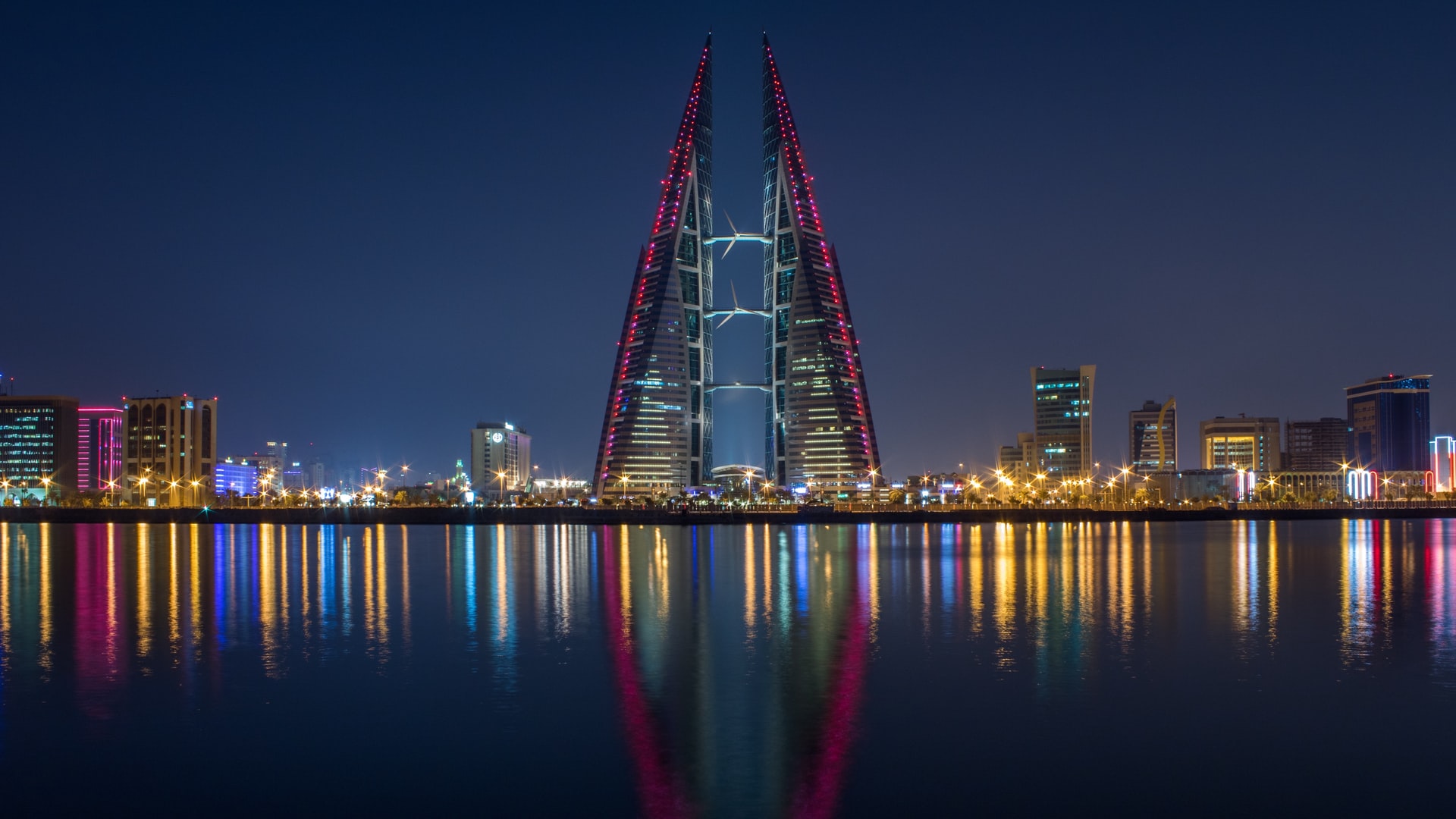
Manama
Known as the "Pearl of the Gulf", Manama is the capital and largest city of Bahrain — a dynamic island metropolis at the crossroads of ancient Arab culture and modern finance, celebrated for its towering skyline, vibrant souqs, world-class Formula 1 circuit, and status as one of the Middle East's leading banking and business hubs.
City at a Glance
About Manama
Manama has been a significant settlement since at least the 14th century, growing from a modest fishing and pearl-diving village on the northeastern tip of Bahrain island into one of the Gulf's most cosmopolitan cities. The city passed through Portuguese control from 1521 to 1602 and Persian rule until 1783, when the Al-Khalifa family — Bahrain's ruling dynasty to this day — took control. In 1971, when Bahrain declared independence from Britain, Manama was confirmed as the nation's capital.
Today, Manama is the undisputed financial and cultural heart of Bahrain — a city that has reinvented itself as one of the Middle East's premier banking centres, home to hundreds of financial institutions and one of the region's most liberal economies. Its skyline of gleaming towers rises above a corniche lapped by the warm waters of the Gulf, while just a few streets away, the atmospheric lanes of the Bab Al Bahrain souq and the ancient stones of Bahrain Fort remind visitors of the island's deep Dilmun-era past. With no income tax, a vibrant dining scene, and the famous Bahrain Grand Prix circuit at Sakhir, Manama draws visitors, expatriates, and business travellers from across the world.
Best Time to Visit & Weather
Winter / Cool Season Best Time
November – March. The finest time to visit Manama. Temperatures drop to a pleasant 15–24 °C, with sunny skies, low humidity, and comfortable evenings. This is peak tourist season — the city's outdoor attractions, souqs, and waterfront promenades are at their most inviting. The Bahrain Grand Prix typically takes place in March, drawing huge international crowds; book well in advance.
Spring Shoulder Season Good Value
March – April. Temperatures begin to climb (24–32 °C) but remain manageable for sightseeing and outdoor exploration. Tourist numbers thin out after the Grand Prix, and hotel rates offer better value. An excellent time for museum visits, fort excursions, and exploring the old city before the intense summer heat arrives.
Summer
May – September. Manama's summer is extremely hot and humid — temperatures regularly exceed 40 °C with high humidity levels, making extended outdoor activity uncomfortable. This is the off-season: hotels offer steep discounts and the city is quieter. Indoor attractions — malls, museums, restaurants, and the city's excellent spas — remain fully operational in air-conditioned comfort.
Autumn
October – November. Temperatures begin to moderate (28–35 °C), making this a transitional period between the brutal summer and the ideal winter season. October can still be oppressively warm, but by November conditions become increasingly pleasant. A reasonable time to visit for those seeking lower prices ahead of the peak December–March season.
- Manama sits just 26° north of the equator on a low-lying island in the Persian Gulf — summers are intense. Always carry water and seek shade during midday hours from May to September.
- The Bahrain Grand Prix (Formula 1) is held at the Bahrain International Circuit in Sakhir, about 30 km from Manama — usually in March. Book accommodation months in advance if visiting during race week.
- Ramadan significantly affects the city's rhythm — many restaurants close during daylight hours, but the evenings come alive with special Iftar meals and a festive atmosphere. Dress modestly and avoid eating or drinking in public during daylight hours.
- The King Fahd Causeway connects Bahrain to Saudi Arabia — a remarkable 25 km bridge crossing that makes a memorable half-day excursion from Manama.
- Manama's souqs — especially Bab Al Bahrain and the Gold Souq — are best explored in the early morning or after 5 PM, when the heat eases and the markets fill with local shoppers.
Top Attractions
Bahrain Fort (Qal'at al-Bahrain)
A UNESCO World Heritage Site and one of the most important archaeological sites in the Gulf — a vast fortified complex built on the remains of the ancient Dilmun civilisation, dating back more than 4,000 years. The fort's imposing Portuguese-era ramparts rise from the seashore just north of Manama, enclosing layer upon layer of ancient history. The adjacent Bahrain Fort Museum provides superb context. An absolutely essential half-day excursion.
Bab Al Bahrain Souq
The historic heart of Manama's old commercial district — an atmospheric gateway market built in 1945 that opens into a labyrinth of narrow lanes packed with gold jewellery, spices, textiles, perfumes, and traditional Bahraini crafts. The Gold Souq nearby is one of the Gulf's most dazzling — row upon row of gleaming jewellery at prices significantly lower than most Western markets. A sensory feast and an authentic window into Manama's merchant soul.
Al-Fateh Grand Mosque
One of the largest mosques in the world, capable of accommodating over 7,000 worshippers, the Al-Fateh Grand Mosque is Manama's most iconic building and a masterpiece of modern Islamic architecture. The vast white structure — topped by one of the world's largest fibreglass domes — sits on the Manama corniche and is open to non-Muslim visitors outside of prayer times. Guided tours offer an illuminating introduction to Islamic faith, culture, and Bahraini history.
Bahrain National Museum
The finest museum in the Gulf — a beautifully designed institution on the Manama corniche holding extraordinary collections spanning 6,000 years of Bahraini and Gulf history. The Dilmun Gallery's artefacts from one of the ancient world's great civilisations are breathtaking. The museum also covers traditional pearling culture, Islamic art, and contemporary Bahraini society. Allow a full half-day — this is genuinely world-class.
Manama Corniche
Manama's elegant waterfront promenade stretches along the northeastern shoreline, offering spectacular views of the city skyline, the Gulf waters, and the distant silhouette of the Bahrain World Trade Center's wind turbines. The corniche comes alive in the cooler evening hours with strolling families, cyclists, street food vendors, and the warm golden light of the setting Gulf sun. The Four Seasons Hotel and Bahrain Bay development at its eastern end is particularly photogenic.
Bahrain World Trade Center
An architectural landmark and global first — the world's first skyscraper to integrate wind turbines into its structure. Twin 50-storey sail-shaped towers are connected by three bridge structures, each carrying a massive wind turbine that harnesses the Gulf's prevailing sea breezes to generate electricity for the building. The towers define Manama's modern skyline and are a symbol of Bahrain's forward-thinking ambitions. The surrounding Seef District is the city's premier shopping and dining hub.
Tree of Life (Shajarat-al-Hayat)
One of Bahrain's most remarkable natural wonders — a 400-year-old mesquite tree that stands entirely alone in the middle of the Bahraini desert, with no visible water source for miles in any direction. Standing 9.75 metres tall with a wide, lush canopy, the tree has defied explanation for centuries and is deeply embedded in Bahraini folklore and mythology. Located about 40 km south of Manama near Jebel Dukhan — an easy and rewarding half-day excursion.
Pearling Path UNESCO Trail
A UNESCO World Heritage Site inscribed in 2012, the Pearling Path is a 3.5 km heritage trail threading through Manama's historic merchant quarter, connecting seventeen buildings — merchants' houses, warehouses, and a mosque — that tell the story of Bahrain's pearl diving industry, once the foundation of the island's entire economy. Guided tours bring the remarkable history of Bahraini pearling to life against a backdrop of beautifully restored traditional architecture.
Day Trip Itineraries
Day 1 — History, Culture & the Old City
- 8:30 AM – Breakfast at a traditional café near Bab Al Bahrain — Start the day with a Bahraini breakfast of khameer (sweet saffron bread), cheese, date syrup, and qahwa (cardamom coffee) at one of the small traditional cafés near the old souq. The perfect fuel for a morning of exploration.
- 9:30 AM – Bab Al Bahrain Souq & Gold Souq — Explore the historic market at its morning best. Wander the spice lanes, admire the spectacular Gold Souq jewellery displays, and pick up traditional Bahraini crafts — woven baskets, frankincense, and hand-embroidered textiles. Allow 1.5 hours.
- 11:30 AM – Bahrain National Museum — Spend 2 hours in the Gulf's finest museum. The Dilmun Gallery and the Pearling History exhibition are unmissable. The building's corniche setting and architectural design are impressive in their own right.
- 2:00 PM – Lunch on the Corniche — Head to one of the waterfront restaurants along the Manama corniche for lunch. Try a machboos (spiced rice with fish or meat) — Bahrain's national dish — with a fresh fruit juice as you look out over the Gulf.
- 4:00 PM – Al-Fateh Grand Mosque — Visit the magnificent Grand Mosque during non-prayer hours (check times in advance). Guided tours are available and highly informative. The vast white dome and gleaming interior are extraordinary.
- 6:30 PM – Corniche sunset stroll & dinner — Walk the corniche at sunset as the city's towers light up against the darkening Gulf sky. End the evening at one of Manama's excellent seafood restaurants — fresh hammour (grouper) or shrimp with garlic is the quintessential Gulf dinner.
Day 2 — Ancient Forts, Desert Wonders & Modern Manama
- 8:00 AM – Bahrain Fort (Qal'at al-Bahrain) — Head to the UNESCO-listed fort early for the coolest temperatures and best light for photography. Explore the vast ruins, visit the museum, and walk the ramparts for views over the Gulf. Allow 2 hours — this is one of the most historically significant sites in the entire Middle East.
- 10:30 AM – Pearling Path Heritage Trail — Return toward central Manama to walk the 3.5 km UNESCO Pearling Path, threading through the historic merchant quarter and its beautifully restored trading houses. Hire a guide for the richest experience.
- 12:30 PM – Lunch in the Diplomatic Area — The modern Diplomatic Area has an excellent range of restaurants catering to Manama's international business community. Try a traditional Bahraini muhammar (sweet rice with dates) or a simple shawarma at one of the casual Lebanese restaurants.
- 2:00 PM – Tree of Life day excursion — Drive 40 km south to see Bahrain's legendary Tree of Life in the desert. The surreal sight of this solitary, lush tree standing in the bare desert landscape is genuinely unforgettable. Stop at the Bahrain Oil Museum nearby to understand how oil transformed the island.
- 5:00 PM – Bahrain World Trade Center & Seef Mall — Return to Manama to admire the iconic twin towers up close. Browse the Seef District — Manama's modern retail and dining hub — for a coffee and some window shopping before the evening.
- 7:30 PM – Traditional Bahraini dinner — End at a traditional Bahraini restaurant for a full tasting experience: harees (slow-cooked wheat and meat), fresh Gulf fish, muhammar rice, and muhallabia (rose water milk pudding) for dessert. A perfect conclusion to two days exploring this remarkable island capital.
Local Food & Dining
Bahraini cuisine is a rich tapestry of Gulf Arab culinary tradition, woven through with Persian, Indian, and East African influences accumulated over centuries of maritime trade and pearl diving. The cornerstone ingredients are fresh Gulf seafood, fragrant basmati rice, dates, saffron, cardamom, dried limes (loomi), and rose water. Manama's dining scene ranges from bustling street-food stalls in the old souq district to sleek rooftop restaurants in the Diplomatic Area and polished hotel dining rooms lining the corniche.
Must-Try Bahraini Foods
- Machboos — Bahrain's unofficial national dish and the Gulf's answer to biryani. A fragrant, slow-cooked rice dish of saffron-stained basmati with tender fish, shrimp, or chicken, spiced with loomi (dried lime), cardamom, cinnamon, and rose water. Deeply aromatic, complex, and utterly satisfying — found on every traditional restaurant menu in Manama.
- Muhammar — Sweet rice cooked with dates, sugar, saffron, and cardamom — a uniquely Bahraini dish that pairs the sweetness of dates with the savoury richness of slow-cooked fish or meat. One of the most distinctive and memorable flavours in Gulf cuisine — not to be missed.
- Harees — A comforting, slow-cooked porridge of wheat and meat (usually chicken or lamb), simmered for hours until silky smooth, then dressed with clarified butter and cinnamon. A staple of Bahraini home cooking and a fixture on Ramadan tables — simple, ancient, and deeply nourishing.
- Hammour (Grouper) — The king of Gulf seafood. Fresh hammour, grilled whole or filleted and pan-fried with garlic, lime, and fresh herbs, is Manama's finest restaurant dish. The fish's firm white flesh absorbs the flavours of the Gulf beautifully — seek it out at any traditional seafood restaurant on the corniche.
- Khameer — Bahrain's beloved traditional bread — a soft, slightly sweet flatbread flavoured with saffron and cardamom, baked in a tandoor. The essential breakfast accompaniment, eaten with date syrup, honey, or fresh white cheese. Sold at traditional bakeries throughout the old city from early morning.
- Qahwa (Arabic Coffee) — The cornerstone of Bahraini hospitality — lightly roasted coffee infused with cardamom, saffron, and cloves, served in small handleless cups alongside sweet dates. Refusing qahwa when offered is considered impolite — embrace the ritual and the subtle, fragrant flavour.
Fakhreldin
One of Manama's most celebrated Lebanese and Gulf restaurants — an elegant, long-established institution in the Diplomatic Area serving refined mezze, outstanding fresh seafood, and exceptional slow-roasted meats in a sophisticated dining room. A favourite with Gulf royalty, diplomats, and international business visitors. The extended mezze spread is arguably the finest in Bahrain.
Al Abraaj Restaurant
An authentic traditional Bahraini restaurant in the heart of the old city, beloved by locals for its honest, home-style Gulf cooking. The machboos here is considered among the best in Manama — served in generous portions with fresh salad and pickles. Busy, unpretentious, and completely genuine. The right place to eat the way Bahrainis actually eat.
Coral Bay Restaurant
A well-regarded waterfront restaurant on the corniche serving outstanding fresh Gulf seafood — the daily catch from local fishermen prepared simply and brilliantly. The grilled hammour, shrimp tawook, and fresh crab are exceptional. Beautiful Gulf views, relaxed atmosphere, and excellent value make this a reliable choice for a long, leisurely seafood lunch.
Café Lilou
Manama's most charming and beloved French-inspired café — a beautifully designed, plant-filled space in Adliya serving outstanding café au lait, fresh croissants, and excellent light lunches. A daily ritual for Manama's creative and professional community. The shaded terrace and art-gallery-like interior make it the city's finest spot for a long, unhurried breakfast or afternoon coffee.
- Manama offers excellent dining value — a generous traditional meal at a local Bahraini restaurant rarely exceeds 3–8 BHD (€8–21) per person including a soft drink.
- The Adliya neighbourhood has Manama's highest concentration of independent restaurants, cafés, and art galleries — a must-visit for food lovers seeking beyond the hotel dining room.
- Bahrain is the most alcohol-permissive country in the Gulf — licensed hotels, restaurants, and bars can serve alcohol to non-Muslim visitors. Respect local customs and dress modestly when outside licensed premises.
- During Ramadan, eating, drinking, and smoking in public during daylight hours is prohibited for all — Muslim and non-Muslim alike. Restaurants in hotels remain open, while street dining resumes after sunset Iftar.
- Lunch (12:30–2:30 PM) remains the main meal of the day — many traditional Bahraini restaurants offer their best dishes and best value at lunchtime, with smaller evening portions.
Entry Requirements
Manama is the capital of Bahrain. Many nationalities can obtain a visa on arrival or apply for an e-visa online before travelling. Check the official Bahrain e-visa portal for your country's eligibility. Apply for Bahrain e-Visa List of e-Visa Countries
Important Emergency Numbers
Find Flights to Manama
Manama Airport Code: BAH — Bahrain International Airport
Cities with IATA Airport CodesCurrency: Bahraini Dinar (BHD)
Currencies of the WorldManama Streets Map
Manama Coordinates: 26.2153600°N, 50.5832000°E
Coordinates of World CitiesBook the Best Tours

Manama is the capital city of Bahrain, Middle East.
Bahrain Country Profile


