Monrovia Weather
MONROVIA WEATHERAbout Monrovia
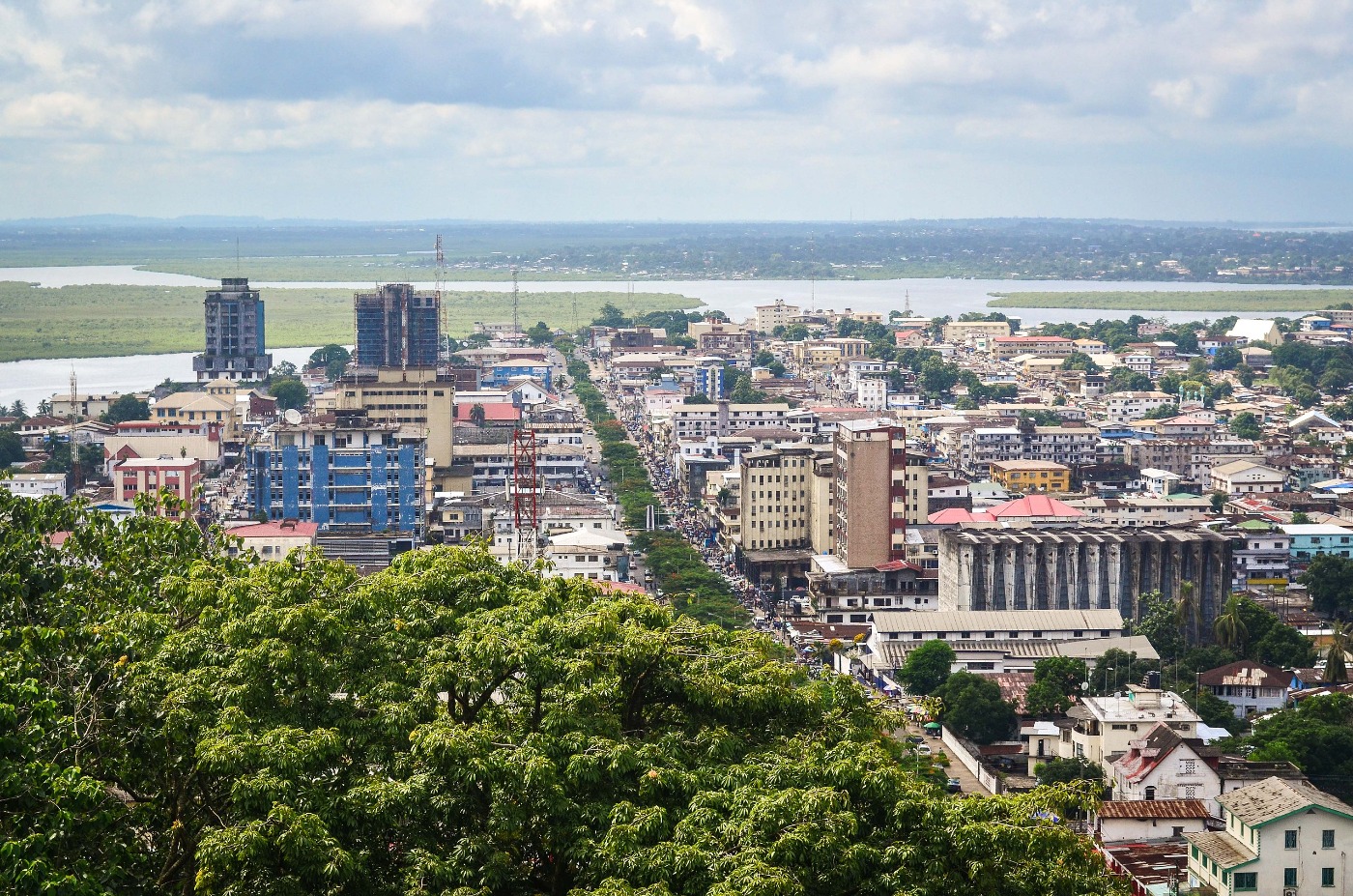
Monrovia is the capital and largest city of Liberia — one of the most historically unique nations in Africa and the world. Founded in 1822 by freed American slaves and free-born Black Americans repatriated to West Africa under the auspices of the American Colonization Society, Liberia became Africa's first republic in 1847 — a nation born from the contradiction of American ideals of freedom and the brutal reality of American slavery. Monrovia, named after US President James Monroe, sits on a dramatic Atlantic peninsula — Cape Mesurado — where the Mesurado River meets the Atlantic Ocean, giving the city a setting of extraordinary natural beauty: wide white sand beaches, crashing Atlantic surf, tropical forest, and the mangrove-lined Farmington River just to the south. The city carries deep scars from the devastating civil wars of 1989–2003, during which it was almost completely destroyed — but Monrovia today is a city of remarkable resilience, rebuilding its infrastructure and cultural life while preserving a distinctive character that is both unmistakably Liberian and unmistakably shaped by its extraordinary American-African heritage. For adventurous visitors, Monrovia is the gateway to some of West Africa's most pristine and least-visited rainforest, beaches, and wildlife — a genuine frontier destination of extraordinary interest.
Best Time to Visit Monrovia & Weather Guide
Monrovia has one of the highest average annual rainfalls of any capital city in the world — over 5,000mm per year — with a dramatically defined wet season and a distinct dry season that strongly determines the best time to visit.
☀️ Dry Season (November–April)
The best and only practical time to visit Monrovia for most travellers — warm, sunny days (26–32°C), low rainfall, manageable humidity, and roads passable throughout the country. December through March are the finest months. The Harmattan season (December–February) brings dusty, dry winds from the Sahara — temperatures slightly cooler and the air hazy, but conditions far preferable to the wet season. This is the best time for beach visits, rainforest excursions, and travel into the interior to Sapo National Park. The dry season is also when Liberian cultural events and festivals are most active.
Best Time to Visit🌧️ Wet Season (May–October)
Monrovia's wet season is one of the most intense in West Africa — the city receives over 5,000mm of annual rainfall, the vast majority falling between May and October. June and July are the wettest months, with near-daily torrential downpours that can cause severe flooding, make roads impassable (particularly unpaved roads into the interior), and render many outdoor activities impractical. The rainforest and surrounding landscape turns an extraordinary lush green. This season is not recommended for most visitors — flooding, road closures, and the significant risk of malaria and other vector-borne diseases make wet-season travel genuinely challenging.
Not Recommended🌿 Rainforest & Wildlife Season
Liberia contains some of West Africa's most important and pristine remaining Upper Guinea rainforest — part of a biodiversity hotspot of global significance. The Sapo National Park, Liberia's largest national park and the second-largest protected rainforest in West Africa, is home to pygmy hippopotamuses (Liberia has the world's largest population), forest elephants, chimpanzees, leopards, and extraordinary birdlife. Wildlife viewing is best in the dry season (November–April) when trails are accessible and animals concentrate near remaining water sources. Sapo is reached by a lengthy road journey from Monrovia — advance planning with a specialist operator is essential.
Wildlife🏖️ Beach Season
Monrovia's Atlantic beaches — particularly Robertsport (2.5 hours north of the city, Liberia's premier surf destination) and the beaches of Marshall and Buchanan to the south — are accessible year-round but most enjoyable in the dry season. The Atlantic surf along Liberia's coast is consistent and powerful throughout the year — Robertsport has become one of West Africa's best-known surfing destinations among international surfers seeking uncrowded, world-class waves. The beaches are pristine, almost completely undeveloped, and among the most beautiful in West Africa.
Atlantic SurfDry season: Lightweight cotton and linen clothing (26–32°C), high-DEET insect repellent (malaria is endemic year-round and mosquito protection is non-negotiable — prophylaxis medication is essential), high-SPF sun protection, comfortable walking shoes for urban exploration, and sturdy footwear for any rainforest excursions. A light long-sleeved layer for evening mosquito protection. A quality head torch for areas with unreliable electricity.
For Sapo National Park: Proper hiking boots (trails can be muddy even in dry season), quick-dry clothing, a waterproof dry bag for electronics, and comprehensive first-aid supplies including malaria rapid test kits and treatment. Carry enough cash — ATMs are unreliable outside Monrovia.
Year-round: Yellow fever vaccination certificate is mandatory for entry to Liberia and will be checked at Roberts International Airport. Ensure this is current and carry the original certificate at all times.
Top Attractions in Monrovia & Liberia
Monrovia and Liberia offer a genuinely frontier travel experience — extraordinary natural beauty, profound historical significance, and the authentic warmth of Liberian hospitality, with minimal tourist infrastructure and a rawness that adventurous visitors find deeply rewarding.
🏖️ Liberia's Atlantic Beaches
Liberia's coastline is among the finest and least-visited in West Africa — 570km of Atlantic beaches ranging from wide, palm-fringed white sand to dramatic rocky headlands. Robertsport, 2.5 hours north of Monrovia, is the country's premier beach destination: a strikingly beautiful colonial-era town at the edge of a wide lagoon and superb Atlantic surf breaks — consistently rated as one of West Africa's best surfing destinations. The Cape Mount area around Robertsport combines excellent surfing, a beautiful lagoon for kayaking, and the atmospheric ruins of 19th-century Americo-Liberian settlements. Closer to Monrovia, Kendeja Beach and the beaches of Sinkor are accessible for a city day-trip.
Unmissable🦛 Sapo National Park — Pygmy Hippos & Rainforest
One of West Africa's most important and pristine wilderness areas — Sapo National Park, in southeastern Liberia, protects 180,000 hectares of Upper Guinea rainforest and harbours the world's largest population of pygmy hippopotamuses (one of the world's most endangered large mammals), alongside forest elephants, chimpanzees, leopards, duikers, and an extraordinary array of endemic West African birds. Sapo is Liberia's greatest wildlife treasure — and one of the least-visited national parks of its quality in Africa. Access requires serious planning, a 4WD vehicle, and ideally a specialist guide. The effort rewards with wildlife encounters of exceptional rarity and intimacy.
World Class Wildlife🏛️ Providence Island — Where Liberia Was Born
The most historically significant site in Liberia — Providence Island, a small island in the Mesurado River at the mouth of Monrovia's harbour, was the landing point on April 25, 1822, where the first group of freed American slaves and Black Americans arrived to begin the settlement that would become the Republic of Liberia. The island contains remnants of the original settlement, a monument to the founders, and a small heritage display. Accessible by boat from the Monrovia waterfront, Providence Island is a site of extraordinary historical resonance — the physical birthplace of Africa's oldest republic and the most poignant monument to the complex history of African-American repatriation.
Historic🌿 Nimba Nature Reserve — UNESCO Biosphere
One of West Africa's most important biodiversity sites — the Mount Nimba Strict Nature Reserve (shared between Liberia, Guinea, and Côte d'Ivoire, and a UNESCO World Heritage Site) protects a remarkable montane ecosystem at the junction of three countries, harboring extraordinary endemic species including the viviparous toad (Nimbaphrynoides occidentalis) — one of the only toads in the world to give birth to live young. The reserve's high-altitude grasslands, gallery forests, and iron ore peaks (rising to 1,752m) are spectacularly beautiful and rich in endemic flora and fauna. Access from Monrovia requires a full-day drive to the Liberia-Guinea border region.
UNESCO Heritage🏺 Waterside Market & Downtown Monrovia
Monrovia's most vibrant and authentic urban experience — the Waterside Market in central Monrovia is a vast, chaotic, and extraordinarily lively open-air market selling everything from fresh produce, dried fish, and palm oil to fabrics, electronics, traditional medicines, and second-hand clothing. The market and the surrounding downtown streets around Broad Street and the Capitol Building give the most immediate sense of Monrovian daily life. The downtown area also contains several significant colonial-era buildings and war-scarred structures that are powerful reminders of the city's tragic recent history alongside its extraordinary resilience.
Authentic🌊 Buchanan & Bassa Coastal Town
Liberia's second city and main port — Buchanan, 175km southeast of Monrovia on the Atlantic coast, is the largest town in Grand Bassa County and an important historical centre of Americo-Liberian settlement. The town has several excellent beaches, a natural harbour, and a more relaxed pace than the capital. The drive from Monrovia to Buchanan along the Atlantic coastal road — through palm plantations, fishing villages, and stretches of forest — is one of the most pleasant road journeys in coastal West Africa. Good base for exploring the forests and beaches of Grand Bassa County.
Coastal🦅 Lake Piso — Birdwatching & Wetlands
West Africa's largest coastal lagoon — Lake Piso (also called Piso Lagoon), near Robertsport in Grand Cape Mount County, is one of Liberia's most important wetland ecosystems and a superb birdwatching destination. The lagoon's mangroves, freshwater marshes, and adjacent forest support an extraordinary diversity of waterbirds including African fish eagles, saddle-billed storks, marabous, various herons and egrets, and rare West African forest species. Canoe trips on Lake Piso through the mangroves at dawn are among the finest birdwatching experiences in West Africa. Accessible as part of a Robertsport surf/beach trip.
Birdwatching🎭 Liberian Cultural Heritage & Poro Society
Liberia's 16 indigenous ethnic groups — Kpelle, Bassa, Grebo, Gio, Mano, Kru, Lorma, Krahn, Gola, Gbandi, Loma, Kissi, Vai, Dei, Belle, and Mandingo — preserve extraordinarily rich cultural traditions including the Poro (men's secret society) and Sande (women's secret society) initiation systems, elaborate wooden mask traditions, the Vai syllabic script (one of the few writing systems independently developed in sub-Saharan Africa), and a living tradition of spiritual practices, storytelling, and musical culture of great depth and complexity. The Cuttington University Museum and the National Museum of Liberia in Monrovia provide the best introduction to this heritage.
Cultural HeritageLocal Food Recommendations
Liberian cuisine is deeply satisfying West African cooking built on rice, cassava, palm oil, fresh Atlantic seafood, and the rich bush meat and forest produce of the Upper Guinea rainforest — with a distinct Americo-Liberian culinary thread running alongside the indigenous food traditions.
🍲 Must-Try Liberian Dishes
- Palava sauce (palm butter) — the most iconic and beloved dish in Liberia: a rich, intense sauce made from the pulp of palm nuts, slow-cooked with meat (chicken, beef, or bushmeat), dried fish, and leafy greens until it reaches a deep, complex flavour of extraordinary richness. Served over white rice, palm butter is the definitive Liberian meal — eaten daily by millions and always present at celebrations. The distinctive orange-red colour and earthy, slightly smoky flavour of fresh palm oil is the defining taste of Liberian cooking.
- Jollof rice — Liberia's version of West Africa's great contested one-pot rice dish: long-grain rice cooked in a rich tomato, pepper, and palm oil sauce with chicken or meat, seasoned with Liberian spices. Each country's jollof has its own character — Liberian jollof is deeply flavoured, slightly smoky, and typically richer than Ghanaian or Senegalese versions.
- Fufu and soup — pounded cassava or plantain rolled into smooth balls and served alongside a deeply flavoured soup of meat, smoked fish, and vegetables. The fufu is torn by hand and dipped into the soup — an ancient eating tradition shared across West and Central Africa. Liberian versions of this dish use a remarkable range of soups including palm nut soup, groundnut soup, and bitter leaf soup.
- Pepper soup — a fiery, deeply flavoured clear broth made with goat, chicken, or fish, seasoned generously with scotch bonnet peppers, ginger, and Liberian spices. One of West Africa's most restorative and warming dishes — served at celebrations and as a curative for colds and fatigue. Liberians eat theirs with a particularly assertive heat.
- Cassava leaf stew — slow-cooked pounded cassava leaves with smoked fish, meat, and palm oil — nearly identical to the saka-saka of Central Africa, reflecting the shared Congolese culinary influence across the Upper Guinea and Congo Basin food zones. Rich, earthy, and deeply nourishing.
- Check rice — Liberia's beloved comfort food: rice cooked with dried beans and palm oil until the beans are soft and the rice absorbs their starchy richness — simple, filling, and deeply satisfying. The most common everyday meal in Liberian homes alongside palava sauce.
🐟 Seafood & Street Food
- Grilled Atlantic barracuda and snapper — Monrovia's Atlantic coast provides an abundance of exceptional fresh fish. Whole barracuda, red snapper, and grouper grilled over charcoal at beach restaurants and street stalls are among the finest eating in Monrovia — fresh, flavourful, and served with rice, plantain, and a fiery pepper sauce. The beach restaurants near Elwa Beach and along the Sinkor coastal strip serve consistently excellent grilled fish.
- Roasted corn (roasted cassava) — roadside vendors throughout Monrovia sell freshly roasted corn cobs and boiled or roasted cassava, served with palm oil and salt. An essential Monrovian street food — cheap, satisfying, and available from dawn to late evening.
- Potato greens — sweet potato leaves sautéed with palm oil, onion, and dried fish or meat — one of the most popular leafy vegetable dishes in Liberia and a nutritional cornerstone of the Liberian diet. Served alongside rice at almost every family meal.
- Kanya (groundnut candy) — roasted groundnuts mixed with sugar and ginger, pressed into dense, sweet bars — the most popular Liberian sweet snack, sold at markets and roadside stalls throughout the city. A perfect energy snack for a day of sightseeing.
- Club beer and Cane Juice — Club Beer (brewed locally) is Liberia's most popular lager — cold, light, and the definitive social drink of Monrovia's bars and beach restaurants. Cane juice (freshly pressed sugarcane juice from street vendors) is the most refreshing non-alcoholic drink in the tropical heat.
🍽️ Where to Eat — Local Tips
- Local chop houses (Sinkor & Mamba Point) — Monrovia's informal local restaurants (chop houses) serve the most authentic Liberian food at the most affordable prices. Palava sauce, check rice, cassava leaf, and grilled fish are the staples. The Sinkor neighbourhood and the Mamba Point area have reliable chop houses popular with both locals and expatriate residents.
- Tides Restaurant (Mamba Point area) — one of Monrovia's better-regarded restaurants serving Liberian and international food. Good grilled fish, palm butter, and Liberian stews in a comfortable setting. Popular with NGO workers and diplomats — a reliable option for visitors.
- Elwa Beach restaurants — the beach restaurant strip at Elwa, south of central Monrovia, is the most pleasant setting for a Liberian meal: plastic chairs at the water's edge, cold Club Beer, and freshly grilled Atlantic fish with rice and pepper sauce. Go for lunch on a weekend when Monrovians fill the beach.
- Waterside Market food stalls — the food stalls in and around the Waterside Market serve the cheapest and most authentic street food in the city. Fufu and soup, jollof rice, grilled corn, and fried plantain at prices accessible to everyone.
- The Cape Hotel — Monrovia's most prominent hotel has a rooftop restaurant with the finest views in the city — across the Atlantic, Cape Mesurado, and the Monrovia skyline. Good for a special meal in a reliable setting with consistent quality.
🌿 Palm Oil — West Africa's Culinary Foundation
- Palm oil is the absolute culinary and nutritional foundation of Liberian cuisine — and Liberia is in the heart of one of the world's original palm oil producing regions. The oil palm (Elaeis guineensis) is native to the Upper Guinea forest zone, and Liberians have used palm oil as the primary cooking fat, flavouring agent, and nutritional base of their cuisine for thousands of years. The rich, earthy, slightly smoky flavour of fresh red palm oil — quite different from the refined, deodorised palm oil of industrial production — permeates every aspect of Liberian cooking.
- Liberia's largest employer and one of its most important economic assets is the Firestone Natural Rubber Company, which has operated the world's largest rubber plantation (at Margibi County, 60km east of Monrovia) since 1926. The plantation covers over 40,000 hectares and employs thousands of Liberians. The history of Firestone in Liberia — and the complex relationship between the Liberian government, American capital, and Liberian labour — is one of the most significant and contested chapters in the country's modern history.
- The Americo-Liberian culinary tradition — the cooking of the settler community descended from freed American slaves — adds a distinct layer to Liberian food culture: sweet potato pie, cornbread, fried chicken, and other dishes with unmistakable American Southern roots survive as heritage foods in Liberian families with settler ancestry, creating a unique culinary bridge across the Atlantic.
Day Trip Itineraries from Monrovia
Monrovia is the base for exploring Liberia's extraordinary combination of Atlantic coastline, Upper Guinea rainforest, and the fascinating heritage of Africa's oldest republic:
🏄 Day Trip: Robertsport — Surf & History
Travel time: 2.5–3 hours by road northwest of Monrovia | Cost: ~$30–50 by hired car
The finest day trip from Monrovia — the beautiful colonial-era fishing town of Robertsport at Cape Mount, with its striking natural setting between a wide lagoon and powerful Atlantic surf breaks. Robertsport has become West Africa's most celebrated surf destination among international surfers — excellent right-hand point breaks and beach breaks with almost no crowds. The town itself has 19th-century Americo-Liberian architecture, excellent beach restaurants, and the beautiful Lake Piso for birdwatching and canoe trips. An overnight stay at one of the simple guesthouses is recommended to experience the sunset and dawn over the lagoon.
Most Popular🌿 Day Trip: Kpatawee Waterfall & Bong Mines
Travel time: 3 hours by road northeast of Monrovia | Cost: ~$30–50 for transport
A rewarding inland day trip through Liberia's tropical forest interior — the Kpatawee Waterfall in Bong County, a spectacular series of cascades in the rainforest, is one of Liberia's most beautiful natural attractions. The route passes through the extraordinary landscape of the abandoned Bong Mines — once one of the largest iron ore operations in West Africa, now a dramatic landscape of rusted industrial infrastructure slowly being reclaimed by the forest — a haunting and visually extraordinary sight. Best in the dry season when roads are passable.
Nature & History🦛 Extended Trip: Sapo National Park
Travel time: 8–10 hours by road southeast to Sinoe County | Cost: $100–200+ for transport, guide, and park fees — minimum 2-night stay recommended
Liberia's greatest wildlife destination and one of the most important remaining patches of Upper Guinea rainforest in West Africa — Sapo National Park requires serious planning and commitment but rewards with wildlife encounters of exceptional rarity. Pygmy hippopotamuses (most active at night along forest streams), chimpanzees, forest elephants, leopards, and extraordinary birdlife in a truly pristine rainforest. Arrange through a specialist Liberian tour operator (Liberia Tourism Association) well in advance. This is a frontier wildlife experience of global significance — the African equivalent of a remote Amazon expedition.
Extraordinary🌊 Day Trip: Marshall & Farmington River
Travel time: 1–1.5 hours south of Monrovia | Cost: ~$15–25 by shared transport
The most accessible beach and nature escape from Monrovia — the Marshall Peninsula, where the Farmington River meets the Atlantic, offers a beautiful combination of river and ocean in a single setting. The beaches at Marshall are wide, clean, and far quieter than the city beaches. The Farmington River estuary is a good spot for birdwatching and canoe trips through mangrove channels. Several simple beach restaurants serve fresh fish and cold beer. Popular with Monrovians on weekends — a relaxed, unpretentious, and genuinely Liberian beach experience.
Easy EscapeTourist Tips for Monrovia
🚌 Getting Around
- Monrovia has no functioning public transport system in the conventional sense — shared taxis and motorcycles (okadas) are the primary modes of urban transport, supplemented by private hired cars. Shared taxis run along fixed routes and are the cheapest option but can be crowded and slow in Monrovia's notorious traffic.
- For tourist purposes, hiring a private car with driver through your hotel or guesthouse is the most practical and comfortable option. Agree on a daily rate in advance — typical rates are $60–100/day for a reliable car and experienced driver. A trustworthy local driver is invaluable for navigation, safety, and local knowledge.
- Okada motorbike taxis are fast and inexpensive for short urban journeys but carry significant safety risks — road conditions in Monrovia are poor and traffic discipline minimal. Use only if comfortable with the risk, and always wear the helmet.
- For trips outside Monrovia, a 4WD vehicle is strongly recommended — roads deteriorate rapidly outside the main paved routes, and in or near the wet season even the best roads can become impassable without high clearance.
- Fuel (petrol) availability can be unreliable outside Monrovia — always fill up before leaving the city for any significant excursion, and carry a spare fuel container for remote journeys.
💡 General Safety & Travel Tips
- Monrovia is a post-conflict city still rebuilding its infrastructure and institutions. The security situation is generally calm, but visitors should exercise vigilance — petty theft is common, and isolated areas of the city should be avoided after dark. Travel with a local contact or guide wherever possible.
- Malaria is one of the most serious health risks in Liberia — the country has one of the highest malaria transmission rates in West Africa. Rigorous anti-malarial prophylaxis (consult your doctor — mefloquine, Malarone, or doxycycline), high-DEET repellent, long sleeves and trousers after dark, and mosquito nets are all essential. Do not travel to Liberia without comprehensive malaria prevention in place. Rapid test kits are useful for longer stays.
- Yellow fever vaccination is mandatory for entry to Liberia — a valid yellow fever certificate will be checked at Roberts International Airport. Typhoid, hepatitis A, and rabies vaccinations are also strongly recommended.
- The US dollar (USD) circulates alongside the Liberian dollar (LRD) and is accepted almost universally in Monrovia. ATMs are available but unreliable — carry sufficient USD cash for your entire stay, including a substantial emergency reserve. Credit cards are accepted at major hotels only.
- Mobile internet (4G) is available in Monrovia through the main operators (Lonestar Cell MTN, Orange Liberia) — purchase a local SIM on arrival for affordable data. Signal deteriorates rapidly outside the capital.
- Register with your country's embassy on arrival for longer stays — several embassies (US, UK, EU) maintain offices in Monrovia and can provide emergency assistance and security alerts.
Apply for Tourist Visa
Liberia requires a visa for most nationalities — visas must be obtained in advance from a Liberian embassy or consulate before travel. Citizens of ECOWAS member states may enter visa-free. A yellow fever vaccination certificate is mandatory for all visitors and is strictly checked on arrival at Roberts International Airport — ensure your certificate is valid and carry the original at all times. Apply for your Liberian visa well in advance as processing can take several weeks. Liberia Visa Information
Important Emergency Numbers
🇱🇷 Monrovia Emergency Contacts
- 🚑 Ambulance: 911
- 🔥 Fire Brigade: 911
- 👮 Police: 911
International Emergency Phone Numbers
Find Flights to Monrovia
Monrovia Airport Code: MLW — Spriggs Payne Airport serves domestic flights within Liberia. Most international flights arrive at Roberts International Airport (ROB), located approximately 56km east of central Monrovia — allow 1.5–2 hours for the airport transfer by road.
Airport Transfer: Taxis from Roberts International Airport to central Monrovia cost approximately $40–60 USD — agree on the fare before departure. There is no reliable public transport from the international airport. Direct international flights connect Monrovia to Brussels (Brussels Airlines), Addis Ababa (Ethiopian Airlines), Casablanca (Royal Air Maroc), Accra, Lagos, and Dakar.
International Airport FinderCurrency in Monrovia
Liberia operates a dual-currency economy — both the Liberian Dollar (LRD) and the US Dollar (USD) are legal tender and widely accepted throughout Monrovia. US dollars are the de facto currency for larger transactions, hotel bills, and international services. Liberian dollars are used for smaller everyday transactions, markets, and street vendors. ATMs dispensing USD are available in central Monrovia but can be unreliable — carry sufficient cash for your entire trip, including a significant USD emergency reserve.