About Montgomery
Montgomery is the capital city of the state of Alabama and one of the most historically significant cities in the United States — a place where the full weight of American history, in both its darkest chapters and its most heroic moments of moral courage, is present in the streets, the monuments, and the living memory of its people in a way that few American cities can match. Situated on the Alabama River in the heart of the state's Black Belt — the fertile crescent of dark soil that was the foundation of the antebellum cotton economy and the slave society that sustained it — Montgomery played a central role in two of the defining events of American history: it was the first capital of the Confederate States of America (February–May 1861), and, almost exactly a century later, it became the birthplace of the American Civil Rights Movement, where Rosa Parks' refusal to give up her bus seat on December 1, 1955, ignited the Montgomery Bus Boycott — the 381-day mass protest that launched Dr. Martin Luther King Jr. to national prominence, broke the back of segregated public transit, and lit the moral fire that would ultimately produce the Civil Rights Act of 1964 and the Voting Rights Act of 1965.
Modern Montgomery is a city grappling seriously and honestly with this dual legacy — the city that was both a capital of the Confederacy and the birthplace of the movement that dismantled the racial hierarchy the Confederacy was built to defend. The extraordinary institutions that have transformed Montgomery's downtown in recent years — the National Memorial for Peace and Justice (the first national memorial to the victims of racial terror lynching in America), the Legacy Museum (a comprehensive narrative of American racial inequality from slavery to mass incarceration), and the older Dexter Avenue King Memorial Baptist Church (where Dr. King preached during the boycott) — make Montgomery one of the most morally serious and most intellectually important heritage destinations in the United States. Alongside this profound historical weight, Montgomery is also a city of genuine charm: a walkable, affordable downtown with excellent restaurants, the magnificent Alabama State Capitol building, a thriving arts scene, and the easy warmth of Deep South hospitality that makes even difficult histories easier to approach and absorb.
Best Time to Visit Montgomery & Weather Guide
Montgomery has a humid subtropical climate — hot, humid summers; mild, variable winters; and two glorious seasons (spring and fall) that represent the finest times to visit. The city sits at an elevation of approximately 67 metres in the Alabama Black Belt, producing weather patterns typical of the Deep South: abundant sunshine, significant summer humidity, and the occasional severe thunderstorm and tornado risk associated with the Southeast's dynamic spring weather.
🌸 Spring (March–May)
The finest season for visiting Montgomery — temperatures of 16–27°C, the city's abundant dogwood and azalea trees in spectacular bloom, and the pleasant warmth of an Alabama spring that rewards walking between the downtown Civil Rights sites, the State Capitol grounds, and the riverfront without the brutal humidity of summer. April is particularly beautiful — the air scented with wisteria and honeysuckle, the sky a brilliant Southern blue, and the temperatures in the perfect 20–24°C range for comfortable outdoor exploration. Spring is also the season of the Montgomery Azalea Trail (March–April), when the city's residential streets are lined with the most spectacular azalea displays in the Deep South, and the Jubilee CityFest (May) — the city's largest outdoor music festival, drawing national acts to the downtown riverfront. The outdoor terraces of Montgomery's Dexter Avenue restaurant district are at their most pleasant in spring evenings.
Best Time to Visit🥵 Summer (June–August)
Montgomery's most intense and most challenging season for visitors — temperatures regularly reaching 33–38°C in July and August, with humidity levels that make the heat feel significantly more oppressive than the thermometer reading suggests. The heat index (feels-like temperature) frequently exceeds 40°C in mid-afternoon. That said, summer in Montgomery is also a season of genuine pleasure for those who embrace Deep South culture: the outdoor community pools, the evening crawfish boils and barbecue gatherings, the cool interiors of the city's excellent museums and air-conditioned restaurants, and the long, languid summer evenings when the temperature finally drops below 30°C and Montgomery's downtown becomes lively with outdoor dining and live music. The Alabama Shakespeare Festival summer season (June–August) brings outstanding classical and contemporary theatre to the 750-seat Festival Stage. Plan all outdoor sightseeing for before 10am or after 5pm in July and August, and carry water at all times.
Hot & Humid — Plan Accordingly🍂 Fall (September–November)
The second-finest season in Montgomery and increasingly the preferred time for serious Civil Rights heritage visitors — temperatures cooling from the summer highs to a perfect 18–27°C through October, the humidity dropping sharply after the first autumn fronts push through from the northwest, and the city's parks and riverside trails at their most walkable and most pleasant. October is consistently the finest month of the year in Montgomery: warm, sunny days of crystalline clarity, cool evenings perfect for long dinners on downtown restaurant terraces, and the fall colours of the Alabama hardwoods adding a golden warmth to the landscape around the memorial sites and state parks. The Montgomery Greek Festival (October) and the Southern Brew Festival are among the best fall events. The Civil Rights sites are at their least crowded in September–October, making fall the optimal time for the deep, unhurried engagement the Legacy Museum and National Memorial deserve.
Golden Season❄️ Winter (December–February)
Montgomery's mildest season by comparison with the rest of the United States — average temperatures of 8–15°C in January, with genuine cold snaps occasionally bringing temperatures below freezing and the rare but memorable snowfall that transforms the city's antebellum architecture and live oak-lined streets into an unexpectedly beautiful winter landscape. Snow in Montgomery is a genuine event — the city averages less than one inch per year, and even a light dusting brings the city to a delighted, photogenic standstill. Winter is the low season for tourism, meaning the major Civil Rights museums and the State Capitol are uncrowded and offer the most reflective and unhurried visitor experience of any season. Hotel prices drop significantly from the spring peak. The Alabama Shakespeare Festival winter season (December–February) includes the company's most ambitious and most celebrated productions. Christmas on Dexter Avenue — with the State Capitol's lights reflecting on the historic street — is one of the most characteristically Southern festive atmospheres in the Deep South.
Quiet Low SeasonSpring (Mar–May): Light layers for the mild days and occasionally cool evenings of March — a light jacket for March evenings; pure cotton or linen for the warm April–May days. Comfortable walking shoes essential for the downtown Civil Rights heritage trail, which covers significant distances on foot. Umbrella for the spring showers (April averages 5 inches of rain).
Summer (Jun–Aug): The lightest possible breathable clothing; a wide-brimmed hat for sun protection; high-factor sunscreen (SPF 50+); minimum 2 litres of water for any outdoor activity. A light layer for the aggressive air conditioning in museums, restaurants, and shops — the temperature contrast between outdoor Alabama heat and indoor American AC can be 15°C or more.
Fall (Sep–Nov): Light to mid-weight clothing for September; warmer layers for November evenings when temperatures can drop sharply after dark. A light jacket becomes useful by October evenings. The finest walking weather of the year.
Winter (Dec–Feb): A warm coat and layers for the cold days and genuinely cold nights — temperatures below freezing occur several times each winter. The Deep South cold is not extreme but is damp and penetrating. Rain gear for the wetter winter months (January averages 4.5 inches of rain). Year-round: Montgomery is a driving city — a rental car is strongly recommended for visiting sites outside the walkable downtown core (Rosa Parks Museum, Dexter Avenue Church, Legacy Museum, and National Memorial for Peace and Justice are all within walking distance of each other; Maxwell Air Force Base, the Hank Williams Museum, and day trips require a vehicle).
Top Attractions in Montgomery
Montgomery rewards visitors with a depth and seriousness of historical engagement available at very few American cities of its size — the concentration of Civil Rights heritage sites alone makes it one of the most important heritage destinations in the United States, and the Alabama Shakespeare Festival, the State Capitol, and the city's emerging food and arts scene provide a richness well beyond the purely historical.
✊ National Memorial for Peace and Justice
The most important new American memorial of the 21st century and the most morally powerful public space in the United States — the National Memorial for Peace and Justice, opened in April 2018 by Bryan Stevenson's Equal Justice Initiative on a six-acre hilltop site overlooking downtown Montgomery, is the first national memorial dedicated to the victims of racial terror lynching in America: more than 4,400 African American men, women, and children killed by white mobs across the South between 1877 and 1950. The memorial's central installation — 805 steel monuments, one for each county in America where racial terror lynching occurred, suspended from the ceiling of an open-air pavilion so that visitors must walk among them as they lower from eye level to above-head height — is an architectural and experiential achievement of extraordinary power that has been compared to the finest memorial architecture in the world. An essential and emotionally demanding experience that no serious visitor to Montgomery should omit; allow at least 2–3 hours. Entry USD 10; combined ticket with the Legacy Museum strongly recommended.
America's Most Important Memorial📖 Legacy Museum
The most comprehensive and most unflinching narrative of American racial inequality available in any museum format — the Legacy Museum: From Enslavement to Mass Incarceration, operated by the Equal Justice Initiative on the site of a former warehouse that once held enslaved people in Montgomery, presents a full, unflinching account of American racial history from the transatlantic slave trade through the Civil War, Reconstruction, racial terror, Jim Crow segregation, and the modern era of mass incarceration in which Black Americans are imprisoned at five times the rate of white Americans. The museum's immersive narrative — combining historical artefacts, documentary testimony, holographic figures speaking first-person accounts of slavery and lynching, and searing statistics on contemporary racial inequality — is a profoundly important intellectual and emotional experience that many visitors describe as the most affecting museum they have ever visited in the United States. Allow 3–4 hours for a thorough visit. Entry USD 10; combined ticket with the National Memorial for Peace and Justice USD 16.
Essential American History🚌 Rosa Parks Museum
The most emotionally immediate and most narratively vivid of Montgomery's Civil Rights museums — the Rosa Parks Museum at Troy University, built on the exact corner of Montgomery Street and Dexter Avenue where Rosa Parks boarded the Cleveland Avenue bus on December 1, 1955, and was arrested for refusing to give up her seat to a white passenger, tells the story of that act of extraordinary moral courage and the 381-day Montgomery Bus Boycott that followed with an intimacy and detail that larger institutions cannot match. The museum's centrepiece — a full-scale, historically accurate recreation of the Cleveland Avenue bus, with Rosa Parks' figure in the seat she refused to vacate — places visitors as direct witnesses to the moment that changed American history. The surrounding exhibits on the boycott, the carpooling network that sustained it, the violence and harassment directed at boycotters, and the eventual Supreme Court ruling that declared bus segregation unconstitutional in November 1956, provide the most complete account of the boycott available anywhere. Entry USD 7.50.
Civil Rights Birthplace⛪ Dexter Avenue King Memorial Baptist Church
The most important church in American Civil Rights history and one of the most significant religious buildings in the United States — Dexter Avenue King Memorial Baptist Church, the red-brick Victorian church on Dexter Avenue directly across the street from the Alabama State Capitol, was the pulpit from which a 26-year-old Dr. Martin Luther King Jr. preached during the Montgomery Bus Boycott (1955–56) and organised the mass meetings that sustained 381 days of community resistance against segregation. The church's basement mural — a commissioned painting depicting the major events of the Civil Rights Movement — is one of the most important works of American historical art of the 20th century. The church is still an active congregation and offers guided tours that provide the most personal and most historically grounded account of the boycott available at any Montgomery site. Tours typically led by church members whose families lived through the boycott; booking in advance recommended. Free admission (donations welcomed).
Dr. King's Church🏛️ Alabama State Capitol
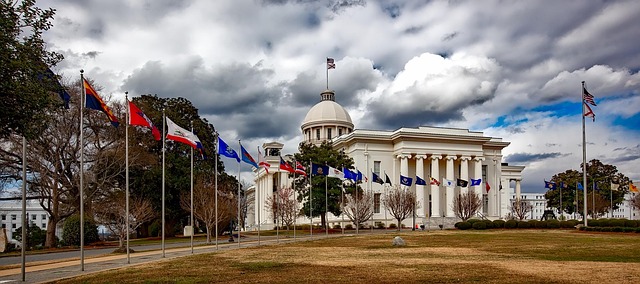
The most architecturally commanding building in Montgomery and one of the most historically layered state capitols in the United States — the Alabama State Capitol, completed in 1851 in Greek Revival style and crowning the top of Goat Hill at the head of Dexter Avenue, is the building where Jefferson Davis was inaugurated as President of the Confederate States of America on February 18, 1861 — a brass star in the portico marks the exact spot — and is also the building where, 104 years later, the thousands of marchers who completed the Selma to Montgomery March (March 25, 1965) gathered to hear Dr. King deliver his "How Long, Not Long" speech from the same front steps. The building's interior — restored to its 19th-century appearance — includes the original Senate and House chambers, executive offices, and a remarkable collection of Alabama historical paintings. Free guided tours available Monday–Saturday. The view down Dexter Avenue from the Capitol steps — the street that connects the Confederacy's first capital building to the church where the Civil Rights Movement was born — is the most historically charged urban vista in the American South.
Confederate & Civil Rights History🎭 Alabama Shakespeare Festival
One of the largest and most respected Shakespeare festivals in the world and the most unexpected cultural treasure in the Alabama capital — the Alabama Shakespeare Festival (ASF), founded in 1972 and housed since 1985 in a magnificent purpose-built 250,000-square-foot performing arts complex in the 250-acre Wynton M. Blount Cultural Park, presents a year-round programme of classical and contemporary theatre across two stages (the 750-seat Festival Stage and the 225-seat Octagon) that would be remarkable for a city ten times Montgomery's size. The ASF has been designated one of the five largest Shakespeare festivals in the world by the Shakespeare Theatre Association and is the largest performing arts organization in the Southeast by annual production budget. Productions range from Shakespearean classics performed with the polish and ambition of a major regional theatre to world premieres of new American plays, musicals, and the acclaimed Southern Writers' Project — a programme dedicated to developing and presenting new work by writers of the American South. An essential Montgomery experience; check the current season schedule and book in advance for the most popular productions.
World-Class Theatre🎵 Hank Williams Museum
The definitive tribute to one of the greatest and most influential figures in the history of American music — the Hank Williams Museum on Commerce Street in downtown Montgomery celebrates the life and career of the country music pioneer who was born in Butler County, Alabama in 1923, made his first professional performances in Montgomery, and died on New Year's Day 1953 at the age of 29 after recording some of the most enduring songs in American popular music history: Your Cheatin' Heart, I'm So Lonesome I Could Cry, Lovesick Blues, Hey Good Lookin', and dozens of others that defined an entire musical genre and influenced artists from Bob Dylan to Bruce Springsteen. The museum's most prized exhibit is the light blue 1952 Cadillac convertible in which Hank Williams was riding when he died — a heartbreaking, iconic object of American musical mythology. Includes the most comprehensive collection of Hank Williams memorabilia in existence: handwritten lyrics, stage costumes, guitars, fan mail, and home recordings. Entry USD 12.
Country Music Legend🌿 Montgomery Riverfront & Downtown Parks
Montgomery's most scenic and most rapidly developing public spaces — the Riverfront Park and Riverwalk Stadium (home of the Montgomery Biscuits minor league baseball team — one of the best minor league baseball experiences in the Southeast, with excellent food, affordable tickets from USD 10, and the most festive atmosphere in Alabama on summer evenings) along the Alabama River constitute the most relaxed and most socially vibrant part of downtown Montgomery. The Alabama Nature Center and the Blount Cultural Park — a 250-acre landscaped park in the eastern suburbs housing the Alabama Shakespeare Festival complex, the Montgomery Museum of Fine Arts (free admission, excellent collection of American and Southern art), and a network of walking and cycling trails along Wynton M. Blount's beautifully landscaped grounds — provide the finest outdoor and cultural leisure experience accessible from the city centre. The Selma to Montgomery National Historic Trail, commemorating the 54-mile voting rights march of March 1965, begins at Selma's Edmund Pettus Bridge (50 miles west) and ends at the Alabama State Capitol — the route between can be driven in a day, providing one of the most profound road trip experiences available in the American South.
Riverfront & Green SpacesLocal Food Recommendations
Montgomery's food scene is deeply rooted in the great traditions of Deep South and Alabama cooking — a cuisine of remarkable richness built on barbecue, fried chicken, biscuits, catfish, and the extraordinary vegetable and pie traditions of the American South, now enriched by a growing generation of chefs bringing national-level ambition to local ingredients and regional heritage.
🍽️ Must-Try Montgomery Dishes
- Alabama Barbecue — the defining food of Alabama culture and the dish most closely associated with the Deep South's culinary identity: Alabama BBQ is distinguished from the barbecue traditions of Tennessee, Texas, and the Carolinas by two signature elements — the slow-smoked pork shoulder (pulled, chopped, or sliced) that is the foundation of Alabama pit cooking; and the extraordinary Alabama White Sauce, a mayonnaise-based barbecue sauce unique to the state, invented by Big Bob Gibson of Decatur in the 1920s, combining mayonnaise, apple cider vinegar, horseradish, black pepper, and a touch of cayenne into a tangy, creamy, coolly acidic sauce that cuts through the richness of the smoked meat with remarkable effectiveness and is one of the most distinctive regional food inventions in America. Montgomery's barbecue culture is centred on the smokehouses and roadside pits of the city and its surrounding counties — the finest experiences are found at family-run operations where the pork has been smoking since 4am and the sauce is made from scratch each morning.
- Fried Chicken & Chicken Biscuits — the most beloved food in the Deep South and the dish that defines Alabama home cooking: buttermilk-marinated chicken, seasoned with salt, black pepper, garlic, and cayenne, dredged in seasoned flour, and deep-fried in a cast-iron skillet in lard or Crisco until the crust is shatteringly crisp, golden, and impossibly fragrant — while the meat inside remains tender, juicy, and cooked through to the bone. Montgomery's fried chicken tradition is one of the finest in Alabama, and the city's Black-owned restaurants and soul food institutions carry a lineage of recipe knowledge stretching back generations. The chicken biscuit — a piece of hot fried chicken (or the crisp tenders known as chicken fingers) inside a fresh, flaky, butter-rich Southern biscuit — is the quintessential Deep South fast food and is available from drive-throughs and bakeries throughout Montgomery at any hour of the day.
- Soul Food Plate — the great culinary tradition of the African American South and the most culturally significant food in Montgomery's history: a soul food plate at a traditional Montgomery restaurant brings together the full richness of Black Southern cooking — collard greens (slow-simmered with smoked ham hock until silky and deeply flavoured), black-eyed peas (cooked with fatback and onion into a thick, starchy stew of great satisfaction), mac and cheese (baked, with a thick crust of melted cheese and a custard interior of great richness — not the Northern pasta version but the Southern baked casserole that is simultaneously a side dish and a comfort of the highest order), cornbread (cast-iron skillet-baked, slightly sweet, with a crisp bottom crust and a moist, crumbly interior), and fried catfish (the freshwater fish of Alabama's rivers and ponds, cornmeal-crusted and deep-fried, served with hush puppies and coleslaw). Soul food in Montgomery is not merely cuisine but cultural memory — the food that sustained the community through the boycott, the food served at the mass meetings, the food of the churches and the kitchens that kept the Civil Rights Movement fed.
- Boiled Peanuts — Alabama's most beloved and most distinctive roadside snack and perhaps the most surprising introduction to Southern food culture for first-time visitors: raw green peanuts boiled for hours in heavily salted water (sometimes with Cajun spice, sometimes with garlic and red pepper) until the shells soften and the peanuts inside reach a creamy, tender, intensely savoury consistency that is entirely unlike the roasted peanuts of the North. Sold from enormous cast-iron pots by roadside vendors throughout Alabama — particularly on the highways leading out of Montgomery toward Selma, Tuskegee, and the rural Black Belt — at USD 2–5 per bag. The combination of the salty, steaming peanuts and a cold Cheerwine or RC Cola from a gas station cooler is as quintessentially Alabamian as it is possible to eat and drink.
- Pecan Pie & Lane Cake — the great pie and cake traditions of Alabama: pecan pie — the quintessential Southern dessert, made from the native pecans of the Alabama bottomlands, brown sugar, butter, eggs, and Karo syrup, baked in a buttery pastry shell until the filling sets to a dense, intensely sweet, nutty perfection — is available at every bakery, diner, and Southern restaurant in Montgomery. Lane cake — a four-layer white cake filled with a boiled icing of egg yolks, pecans, raisins, and bourbon or whiskey, originating in Clayton, Alabama in the 1890s and celebrated in Harper Lee's To Kill a Mockingbird as the finest of Southern cakes — is the most distinctively Alabamian dessert of all: rich, complex, and unmistakably of this particular place and tradition.
- Conecuh Sausage — Alabama's most celebrated artisan food product and a source of fierce regional pride: Conecuh Sausage, produced by the Conecuh Sausage Company in Evergreen, Alabama (90 miles south of Montgomery) since 1947, is a smoked pork sausage of exceptional quality — made from fresh pork seasoned with black pepper, red pepper, and proprietary spices and hickory-smoked over natural hardwood to produce a sausage of deep, complex flavour that has achieved cult status far beyond Alabama. Available at every grocery store and farmers market in Montgomery; served grilled at tailgates, campfires, and the outdoor events that are the foundation of Alabama social life. A package of Conecuh Sausage is one of the most prized and most portable culinary souvenirs from Montgomery.
🍺 Drinks & Bar Culture
- Sweet Tea — the unofficial state beverage of Alabama and the most fundamental expression of Southern food culture: sweet tea is brewed black tea (Luzianne or Lipton, typically) sweetened with an enormous quantity of sugar added while the tea is still hot (so the sugar fully dissolves), chilled, and served over ice in a tall glass with a lemon wedge. The sweetness is not a polite suggestion — authentic Alabama sweet tea is aggressively, unapologetically sweet, and requesting "unsweetened tea" in a traditional Montgomery diner will earn a moment of genuine puzzlement. Sweet tea at a Montgomery soul food restaurant or barbecue joint — cold, syrupy, and served in a glass the size of a small bucket with free refills — is one of the most refreshing and most characteristically Southern food experiences available anywhere in the Deep South. Never order Pepsi where sweet tea is available.
- Alabama craft beer — Alabama has developed a vibrant and rapidly growing craft beer scene since the state raised its cap on beer alcohol content in 2009 (before which Alabama law prohibited beers above 6% ABV, severely limiting craft brewing): the Back Forty Beer Company, Good People Brewing (Birmingham), and Montgomery's own Cahaba Brewing and True Story Brewing represent the finest of the state's craft producers, with ales, stouts, and IPAs using Alabama ingredients including locally grown hops and Alabama wildflower honey. The craft beer bars of Montgomery's downtown — particularly along the Dexter Avenue and Commerce Street corridors — have transformed the city's nightlife culture since the early 2010s. The traditional beer culture is anchored by the standard American lagers of Budweiser, Miller, and Coors, consumed ice-cold at tailgates, barbecue competitions, and the outdoor events that structure Alabama's social calendar.
- Bourbon and Southern spirits — the South's great spirits tradition, and Alabama's proximity to the Tennessee and Kentucky bourbon country makes the state's bars and liquor stores well-stocked with the finest American whiskeys: Buffalo Trace, Maker's Mark, Pappy Van Winkle (the most sought-after bourbon in America, produced in tiny quantities each year and allocated by lottery to retailers), and the rapidly growing Alabama craft distillery scene — with producers like John Emerald Distilling making single malt Alabama whiskey and fruit brandies from local produce — provide the finest bourbon and spirits culture in the Southeast. Bourbon on the rocks with a splash of branch water at a downtown Montgomery bar on a warm fall evening is one of the most pleasurably Southern drinking experiences available in the Alabama capital.
- RC Cola and Moon Pie — the most distinctively Southern snack-and-drink pairing and a combination of almost mythological significance in Alabama's food culture: RC Cola (Royal Crown Cola — a slightly sweeter, slightly less carbonated cola than Coca-Cola or Pepsi, bottled in Columbus, Georgia, and the dominant cola of the rural South for much of the 20th century) paired with a Moon Pie (two round graham-cracker biscuits sandwiching a marshmallow filling, enrobed in chocolate, banana, or vanilla coating — manufactured in Chattanooga, Tennessee since 1917 and distributed throughout the Southeast) constitutes the "working man's lunch" of 1930s–1960s Alabama and a combination that is simultaneously a food experience and a piece of living cultural history. Available at gas stations, convenience stores, and the diner counters of downtown Montgomery for approximately USD 2 for both together — the most affordable and most culturally resonant snack in the city.
🍽️ Where to Eat — Local Tips
- Chris' Hot Dogs (Downtown) — the most beloved and most historically resonant restaurant in Montgomery and one of the oldest continuously operating hot dog restaurants in the United States: Chris' Hot Dogs on Dexter Avenue has been serving its distinctive steamed hot dogs — topped with the original secret chili sauce recipe, mustard, and onions — since 1917, and the restaurant's history is inseparable from the history of the street on which it stands. F. Scott Fitzgerald ate here while stationed at Camp Sheridan during World War I; Hank Williams was a regular customer; Martin Luther King Jr. ate here during the boycott years. The small, time-worn lunch counter — with its original stools, its steam cabinet, and the sauce whose recipe has never been written down — is one of the finest and most characterful food experiences in Alabama. Open Monday–Saturday; cash preferred. Budget USD 5–8 for a complete lunch — the best value meal in downtown Montgomery.
- Central Restaurant (Downtown) — Montgomery's finest upscale restaurant and the best address for modern Southern cuisine using premium Alabama ingredients: Central on Dexter Avenue serves creative, technique-driven interpretations of Southern classics — Alabama catfish with shrimp and grits, duck with Alabama honey and pecan, and the finest bourbon selection in Montgomery in an elegantly restored downtown dining room. Central represents the best of Montgomery's emerging fine dining scene — chefs who have trained at nationally recognised restaurants returning to Alabama with the technical skills to do justice to the extraordinary ingredient quality available in the state. Budget USD 35–55 per person for dinner with drinks. Reservations recommended for weekends.
- Martin's Restaurant (Downtown) — the finest and most authentic soul food restaurant in Montgomery and the institutional standard-bearer for the city's Black culinary tradition: Martin's Restaurant on Carter Hill Road has served the best collard greens, fried chicken, black-eyed peas, and cornbread in Montgomery since 1942, operated by the same family through four generations, and represents the most direct and most genuine connection to the food culture that sustained the Civil Rights community during the boycott years. The daily changing lunch specials — two vegetables, a meat, cornbread, and sweet tea — cost USD 10–14 and represent one of the finest culinary experiences in Alabama at any price. Lunch only (Monday–Friday); arrive by 11:30am before the best dishes sell out.
- Dreamland BBQ (Downtown) — the Montgomery outpost of the legendary Tuscaloosa barbecue institution, serving the Alabama barbecue tradition at its most accessible and most consistent: slow-smoked pork ribs, pulled pork, and chicken with the house sauce in a wood-panelled dining room of considerable atmosphere. The ribs — smoked over hickory for 8 hours and served with only white bread and the house sauce, in the original Dreamland tradition — are among the finest in Alabama. Budget USD 15–25 per person; a half-rack of ribs with two sides is the definitive order.
- Wintzell's Oyster House — Montgomery's finest seafood restaurant and the best address for Gulf Coast seafood 90 miles from the coast: fresh Gulf oysters (raw on the half shell or char-grilled with garlic butter and Parmesan — the Gulf oyster, plumper and brinier than the East Coast variety, is one of the finest shellfish in America), Gulf shrimp, blue crab, and the extraordinary Alabama-style seafood platter that combines fried shrimp, oysters, fish, and crab claws on a single enormous platter with coleslaw, hush puppies, and the house cocktail sauce. Budget USD 20–35 per person. The char-grilled oysters are the definitive order and one of the finest dishes available in Montgomery.
🎨 Arts, Culture & Creative Scene
- Montgomery's arts and cultural scene is anchored by the Alabama Shakespeare Festival — one of the great American regional theatre companies, producing 8–10 productions annually across two stages with a company of professional actors of national and international reputation. The Festival's Southern Writers' Project has developed and premiered dozens of important new plays over three decades, establishing Montgomery as one of the most important homes of new American drama outside New York and Chicago. The Festival also operates extensive education and community engagement programmes that make it the most significant arts institution in the state of Alabama.
- The Montgomery Museum of Fine Arts (MMFA) in Blount Cultural Park — free admission — holds the finest permanent collection of art in Alabama: a comprehensive survey of American art from the colonial period to the present, with particular strength in Southern regional painting, American landscapes, and a growing collection of work by African American artists. The museum's special exhibition programme brings nationally significant shows to Montgomery on a regular basis, and the elegant Wynton M. Blount Cultural Park setting makes a museum visit one of the most pleasant cultural outings in the city.
- The Civil Rights Memorial at the Southern Poverty Law Center headquarters — designed by Maya Lin (designer of the Vietnam Veterans Memorial in Washington, D.C.) and unveiled in 1989 — is one of the most important works of public art in America: a circular black granite table engraved with the names of 40 people who died during the Civil Rights Movement, over which a thin sheet of water flows, inviting visitors to touch the names as the water moves over their hands. Free admission. The combination of the Civil Rights Memorial, the Legacy Museum, the National Memorial for Peace and Justice, Dexter Avenue Church, the Rosa Parks Museum, and the Alabama State Capitol constitutes the most important Civil Rights heritage circuit available at any single American city.
- Montgomery's music heritage extends well beyond Hank Williams — the city is also associated with the Tuskegee Airmen military heritage (Tuskegee, 40 miles east, was the training base for the first African American military pilots in U.S. history), the Alabama gospel music tradition (Montgomery's Black churches were the musical foundation of the Civil Rights Movement — the mass meeting singing of freedom songs at Dexter Avenue, First Baptist Church Ripley Street, and Hutchinson Street Baptist Church represents the most important body of protest music in American history), and the emerging contemporary music scene of the downtown arts district, where live music venues like Soul Bar and the Capri Theatre (a restored 1941 art deco cinema showing independent and classic films) contribute to Montgomery's growing identity as a cultural destination of genuine depth.
Day Trip Itineraries from Montgomery
Montgomery's central position in Alabama — within easy driving distance of some of the most significant Civil Rights, natural, and cultural heritage sites in the American South — provides access to outstanding day trips in every direction:
✊ Day Trip: Selma & the Edmund Pettus Bridge
Travel time: 50 miles west, 55 minutes by car | Cost: Free; guided tours available
The most important single Civil Rights pilgrimage destination in the American South — Selma, Alabama and the Edmund Pettus Bridge are the sites of Bloody Sunday (March 7, 1965), when 600 peaceful voting rights marchers were attacked by state troopers with clubs and tear gas at the bridge's crest, in full view of television cameras broadcasting to a horrified nation — the event that directly precipitated President Johnson's submission of the Voting Rights Act to Congress. Walking across the Edmund Pettus Bridge is one of the most historically resonant physical acts available to any American. The adjacent National Voting Rights Museum and Institute and the Selma to Montgomery National Historic Trail Interpretive Center provide essential context. The drive back along US-80 — the route of the 1965 Selma to Montgomery March — following the Lowndes Interpretive Center and the White Hall tent city site, constitutes the most profound road trip in American Civil Rights history.
Bloody Sunday & Voting Rights✈️ Day Trip: Tuskegee & Tuskegee Airmen National Historic Site
Travel time: 40 miles east, 45 minutes by car | Cost: National Park free; Tuskegee University campus tours free
Tuskegee, Alabama — 40 miles east of Montgomery — is one of the most historically significant small cities in America: home to Tuskegee University (founded by Booker T. Washington in 1881, the most important historically Black university in the South), the Tuskegee Airmen National Historic Site at Moton Field (where the first African American military pilots trained during World War II — the 332nd Fighter Group that never lost a bomber under its escort, shattering the myth of Black military inferiority), and the George Washington Carver Museum (dedicated to the brilliant agricultural scientist whose work on peanut and sweet potato cultivation transformed the Southern economy after the Civil War). A day in Tuskegee — visiting the Airmen's hangar, walking the Booker T. Washington campus, and eating at the university cafeteria — is one of the finest and most affecting historical day trips available from Montgomery.
Tuskegee Airmen & HBCU Heritage🏙️ Day Trip: Birmingham
Travel time: 90 miles north, 1.5 hours by car | Cost: Free–USD 15 for museum entries
Birmingham, Alabama — the state's largest city, 90 miles north — provides the perfect complement to Montgomery's Civil Rights narrative: the Birmingham Civil Rights Institute (one of the finest Civil Rights museums in the country, presenting the Birmingham movement of 1963 — the Children's Crusade and the fire hose attacks that shocked the world — in extraordinary detail), Kelly Ingram Park (where the 1963 demonstrations took place and the fire hoses and police dogs were deployed against child marchers), and the 16th Street Baptist Church (where a Klan bomb killed four young girls on September 15, 1963 — the most devastating single act of racist terrorism in the Civil Rights era) together with Montgomery's sites constitute the most complete Civil Rights heritage circuit in America. Birmingham also offers excellent restaurants, craft breweries, and the spectacular Red Mountain Park for hiking.
Civil Rights & Industry🏖️ Day Trip: Gulf Shores & Alabama Gulf Coast
Travel time: 160 miles south, 2.5 hours by car | Cost: Free beach access; Gulf State Park day use USD 5
The finest natural escape from Montgomery and one of the best-kept secrets of the American beach scene — the Alabama Gulf Coast, centred on Gulf Shores and Orange Beach on the Gulf of Mexico, offers 32 miles of brilliant white sugar-sand beaches, warm Gulf water (average 26°C in summer), outstanding fresh Gulf seafood, and the spectacular Gulf State Park — with 28 miles of nature trails, a championship golf course, and the finest birding in Alabama along the spring migration corridors. The Gulf Coast's beaches are significantly less crowded and significantly more affordable than Florida's comparable beaches, and the freshness and quality of the Gulf shrimp, crab, and oyster available at the waterfront seafood restaurants of Gulf Shores is unsurpassed anywhere on the Gulf Coast. A summer weekend at Gulf Shores from Montgomery, combining Civil Rights history with white-sand beaches and Gulf seafood, constitutes one of the finest short trips available in the American South.
Gulf Coast BeachesVisitor Tips for Montgomery
🚗 Getting Around
- Montgomery is a car-oriented city — a rental car is strongly recommended for visitors planning to explore beyond the compact downtown core or to make day trips to Selma, Tuskegee, Birmingham, or the Gulf Coast. All major car rental companies operate from Montgomery Regional Airport (MGM) and from downtown locations. The downtown Civil Rights heritage circuit — Legacy Museum, National Memorial, Rosa Parks Museum, Dexter Avenue Church, Alabama State Capitol — is entirely walkable within a radius of approximately 1 mile, making a car unnecessary for visitors focused on the downtown sites.
- Uber and Lyft both operate in Montgomery and are the most practical transport options for visitors without a rental car — available throughout the city with typical wait times of 5–10 minutes. A typical journey from the airport to downtown costs USD 15–25; between downtown attractions, USD 5–12. The Montgomery Area Transit System (MATS) bus network provides affordable public transit (USD 1 per ride) on the main corridors but has limited frequency (hourly on most routes) and is not well-suited to tourist itineraries.
- Montgomery Regional Airport (MGM) — located 5 miles northwest of the city centre — offers direct connections to Atlanta (Delta, American — 55 minutes), Charlotte (American), and Dallas/Fort Worth (American), with connections to all major US cities via these hubs. Atlanta's Hartsfield-Jackson Airport (2.5 hours by car) provides the widest range of international and domestic connections for visitors flying into the region. Birmingham-Shuttlesworth International Airport (BHM — 90 miles north, 1.5 hours by car) provides an additional option with direct flights to more US cities than MGM.
- For Civil Rights heritage visitors planning a multi-city itinerary, the recommended circuit from Montgomery is: Montgomery (2 nights) → Selma (day trip or 1 night) → Birmingham (1–2 nights) → Memphis, Tennessee (3 hours north — home of the National Civil Rights Museum at the Lorraine Motel, site of Dr. King's assassination). This circuit, which can be completed in 5–7 days, constitutes the most comprehensive and most profoundly affecting Civil Rights heritage journey available in the American South.
- The Selma to Montgomery National Historic Trail along US-80 is easily driven in a day from Montgomery — the 54-mile route passes the Lowndes Interpretive Center, the White Hall tent city site, and ends at the Alabama State Capitol. The National Park Service provides an excellent free map and audio tour guide available at the Dexter Avenue King Memorial Baptist Church and from the NPS website.
💡 General Visitor Tips
- Montgomery, Alabama uses the US Dollar (USD). Credit and debit cards (Visa, Mastercard, Amex) are accepted virtually everywhere in Montgomery — restaurants, hotels, museums, shops, and gas stations. ATMs are widely available at bank branches, shopping centres, and the airport. Tipping is standard and expected: 18–20% at restaurants; USD 1–2 per drink at bars; USD 2–5 per day for hotel housekeeping.
- The United States uses the Type A and B plug standard (110–120V/60Hz). European visitors need a US plug adaptor and a voltage converter for devices that are not dual-voltage (100–240V); most modern phone chargers, laptops, and camera batteries are dual-voltage and require only a plug adaptor. UK visitors need a UK-to-US adaptor.
- Planning Civil Rights visits: The Legacy Museum and National Memorial for Peace and Justice are operated by Bryan Stevenson's Equal Justice Initiative — book timed entry tickets in advance at eji.org, particularly for spring and fall weekend visits when both sites are at their busiest. The combined ticket (USD 16) provides access to both sites and is the recommended option. The Legacy Museum is open Tuesday–Sunday; the National Memorial is open daily. Allow a full day for both sites — they are emotionally demanding experiences that benefit from unhurried engagement and time for reflection between the two.
- Montgomery's climate in summer requires serious heat management for visitors not acclimatised to the Deep South: the combination of 35–38°C temperatures and 70–80% humidity creates conditions where heat exhaustion can develop quickly for visitors unused to the environment. Start sightseeing early (sites open at 9am), take a long air-conditioned lunch break during the 12pm–3pm peak heat, resume in the late afternoon, and stay well hydrated throughout. The walking distance between downtown sites is modest but feels longer in July–August heat.
- Montgomery is an excellent base for visiting the Black Belt National Heritage Area — the stretch of central Alabama counties (Lowndes, Wilcox, Dallas, Perry, Hale) that represent the heart of the cotton-era South and the Civil Rights Movement's most intensely contested terrain. The Alabama Tourism Department produces an excellent free Civil Rights Trail map and guide, available at the Montgomery Visitor Center (300 Water Street, next to the Riverfront) — an essential planning resource for heritage visitors.
Entry Requirements for the USA
International visitors to Montgomery, Alabama enter the United States through US federal immigration procedures. Citizens of 42 Visa Waiver Program (VWP) countries — including the United Kingdom, most EU member states, Australia, Japan, South Korea, and New Zealand — may visit the USA for up to 90 days without a visa, but must obtain prior authorisation through the Electronic System for Travel Authorisation (ESTA) at least 72 hours before travel (USD 21 per applicant; valid for 2 years). Citizens of countries not in the VWP must apply for a B-2 Tourist Visa at their nearest US Embassy or Consulate. All visitors require a passport valid for at least 6 months beyond their intended stay. Entry is through the port of entry on arrival in the United States — most international visitors to Montgomery arrive via Atlanta's Hartsfield-Jackson Airport (the world's busiest airport) or Birmingham-Shuttlesworth Airport. Apply for US ESTA
Important Emergency Numbers
🇺🇸 Montgomery Emergency Contacts
- 🚑 Ambulance: 911
- 🔥 Fire Brigade: 911
- 👮 Police: 911
- 🏥 Baptist Medical Center South: +1 (334) 273-4400
International Emergency Phone Numbers
Find Flights to Montgomery
Airport Code: MGM — Montgomery Regional Airport (5 miles northwest of downtown)
Airport Transfer: Uber or Lyft from MGM to downtown Montgomery approximately USD 15–25, 10–15 minutes. Direct flights to Atlanta (Delta, American — 55 min), Charlotte (American — 1hr 10min), and Dallas/Fort Worth (American — 2hr 15min), with onward connections to all major US and international destinations. International visitors typically route through Atlanta Hartsfield-Jackson (ATL) — 2.5 hours by car or 55 minutes by air — which offers direct transatlantic flights to London, Amsterdam, Paris, Frankfurt, Tokyo, Seoul, and many other major cities.
International Airport FinderCurrency in Montgomery
Montgomery, Alabama uses the United States Dollar (USD). Credit and debit cards are accepted virtually everywhere — restaurants, hotels, museums, shops, and gas stations. ATMs are widely available throughout the city. Tipping is standard in the United States: 18–20% at full-service restaurants; USD 1–2 per drink at bars; USD 2–5 per day for hotel housekeeping is customary.