Country's codes
International phone code for Northern Ireland: +44
ISO 3166-1 Alpha-3 (Country): GBR (United Kingdom)
ISO 3166-2 (Subdivision/Region): GB-NIR (Northern Ireland)
2 letters (internet domain): .GB
Digital country code: 826
Standard EAN-13 (country barcode): 500–509
 Northern Ireland competes under Great Britain in Olympics
Northern Ireland: Land of Giants, History, and the Causeway Coast
Getting to Northern Ireland
Northern Ireland is well connected by air and sea. Belfast International Airport and George Best Belfast City Airport serve a wide range of UK and European destinations, with frequent flights from London taking just over an hour. Dublin Airport is around a two-hour drive south and offers extensive transatlantic connections.
Ferry services connect Northern Ireland to Scotland and England — Stena Line and P&O operate routes from Cairnryan to Belfast and from Liverpool to Belfast. There is no border control between Northern Ireland and the Republic of Ireland, making cross-border road trips seamless and popular.
Tip: If flying into Dublin, the cross-border Translink coach service connects the airport directly to Belfast city centre — a convenient and affordable option.
Best Time to Visit Northern Ireland
Northern Ireland rewards visitors year-round, but April–May and September–October offer the best balance of mild weather, longer days, and fewer peak-season crowds. Summer (July–August) brings the warmest temperatures — averaging around 20°C — and is ideal for the Causeway Coastal Route and outdoor attractions.
August is particularly lively, with festivals and events across Belfast and Derry~Londonderry. Winter is quieter and cheaper, but many rural attractions operate on reduced hours. Whatever season you visit, expect changeable weather — pack layers and a waterproof jacket as a matter of course.
Tip: If visiting Derry~Londonderry in late October, time your trip for the city's world-famous Halloween festival — widely considered the largest street celebration in Europe.
Top Attractions in Northern Ireland
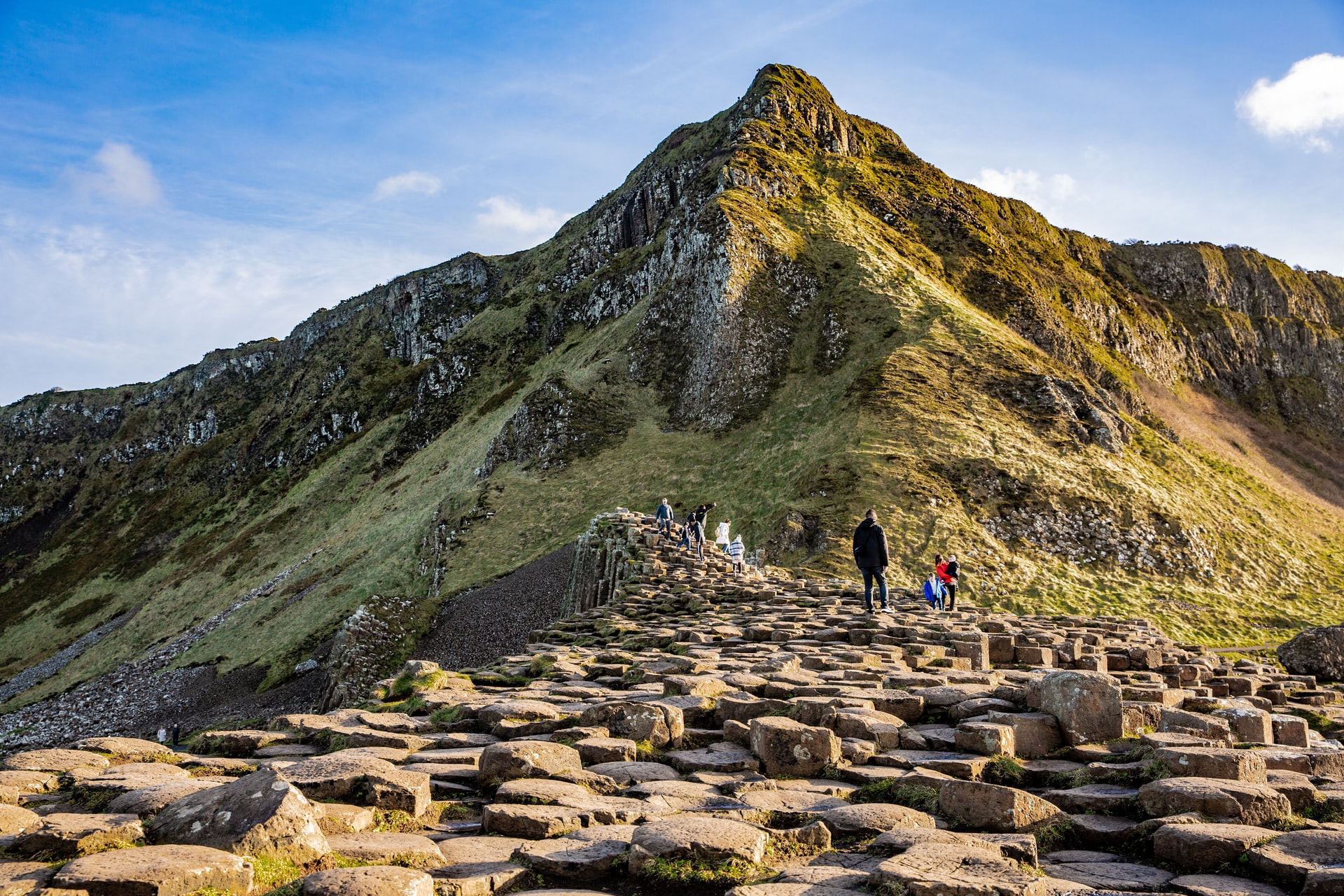
Northern Ireland's crown jewel is the Giant's Causeway in County Antrim — a UNESCO World Heritage Site of over 40,000 interlocking basalt columns formed by ancient volcanic activity, steeped in the legend of the giant Finn McCool. The iconic Carrick-a-Rede Rope Bridge nearby spans a dizzying 30 metres above crashing Atlantic waves.
In Belfast, Titanic Belfast — the world's largest Titanic museum — stands on the very slipway where the ship was built and launched. The Mourne Mountains, which inspired C.S. Lewis's Chronicles of Narnia, and the ancient walled city of Derry~Londonderry complete any first-time itinerary.
Tip: Entry to the Giant's Causeway itself is free — you only pay if you wish to use the visitor centre. Walk through the archway at the side to access it at no cost.
A Glimpse into Northern Ireland's History
Northern Ireland's history is one of the most layered in Europe — from ancient Celtic kingdoms and Viking settlements, through medieval Norman conquest, to the 17th-century Ulster Plantation that brought waves of Scottish and English settlers and shaped the region's complex identity. The walled city of Derry~Londonderry, completed in 1619, remains one of the last great walled cities built in Europe.
The 20th century was defined by The Troubles — three decades of political conflict between unionist and nationalist communities. The 1998 Good Friday Agreement brought a historic peace settlement, and today Belfast and Derry stand as transformed, vibrant, and welcoming cities, with political murals across Belfast serving as powerful open-air memorials to that era.
Tip: A Black Cab Tour of Belfast's murals and peace walls — led by local guides with personal connections to The Troubles — is one of the most moving and illuminating experiences in the UK.
Practical Tips for Visiting Northern Ireland
Northern Ireland uses pound sterling (£) — note that if crossing into the Republic of Ireland you will need euros (€), as the two currencies are not interchangeable. Northern Irish banks issue their own banknotes, which may not always be accepted in England, Scotland, or Wales. Contactless payments are widely accepted throughout the region.
Driving is the best way to explore the countryside and coastline — roads are well maintained and driving is on the left. The legendary Causeway Coastal Route from Belfast to Derry is widely rated as one of the world's greatest road trips. Game of Thrones fans will recognise filming locations across the region, including the haunting Dark Hedges avenue and Castle Ward on Strangford Lough.
Tip: The Old Bushmills Distillery near the Giant's Causeway — licensed since 1608 and one of the world's oldest whiskey distilleries — offers excellent guided tours and tastings.
Northern Ireland's Political Landscape
Northern Ireland operates under a devolved power-sharing government, with the Northern Ireland Assembly at Stormont in Belfast controlling domestic matters including health, education, and justice. The unique power-sharing model — established under the Good Friday Agreement — requires unionist and nationalist parties to govern together.
The main parties are the Democratic Unionist Party (DUP), Sinn Féin, the Social Democratic and Labour Party (SDLP), the Ulster Unionist Party (UUP), and the cross-community Alliance Party. The question of Northern Ireland's long-term constitutional future — remaining in the UK or uniting with the Republic of Ireland — continues to shape political debate and identity.
Tip: Northern Ireland's political and cultural identity is genuinely complex — locals appreciate visitors who approach it with curiosity and an open mind rather than preconceptions.
Useful country information
Land Area: Approximately 5,459 square miles (14,139 square kilometers)
Population: Around 1.9 million people (2021 census)
Languages: English is the main language; Irish (Gaelic) and Ulster Scots are also officially recognised.
Ethnicity/Race:
- White: ~97%
- Asian: ~1.5%
- Mixed or Multiple ethnic groups: ~0.7%
- Black: ~0.4%
Religions:
- Catholic: ~41%
- Protestant & Other Christian: ~42%
- No religion: ~14%
- Other religions: <1% each
Capital and largest city: Belfast
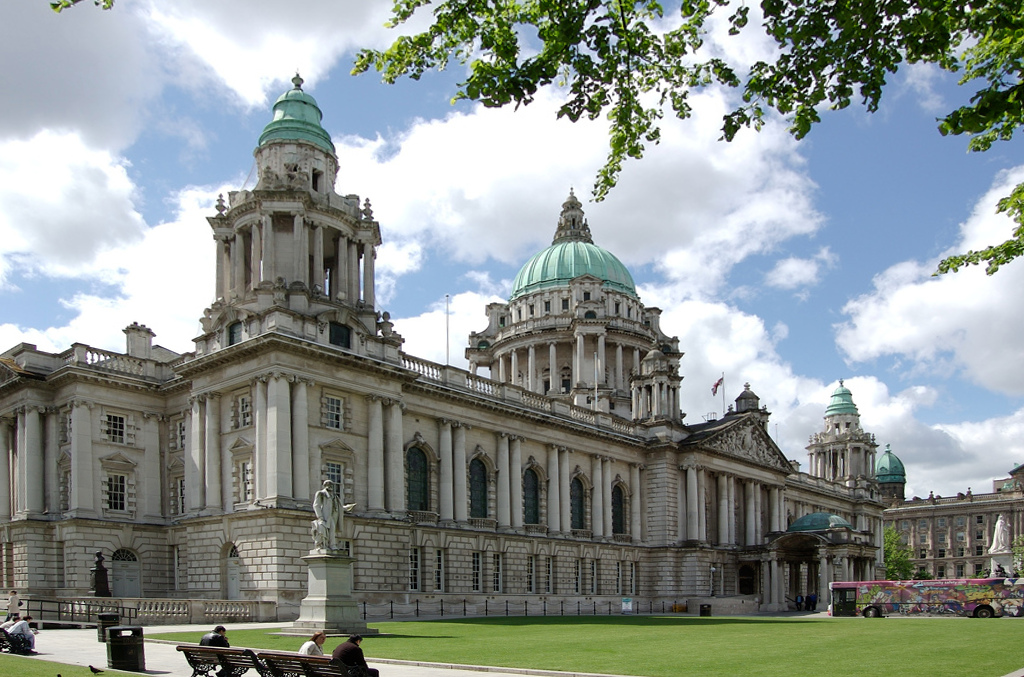
Belfast: Capital City Profile
Get Travel Insurance Quote