Nouakchott Weather
NOUAKCHOTT WEATHERAbout Nouakchott
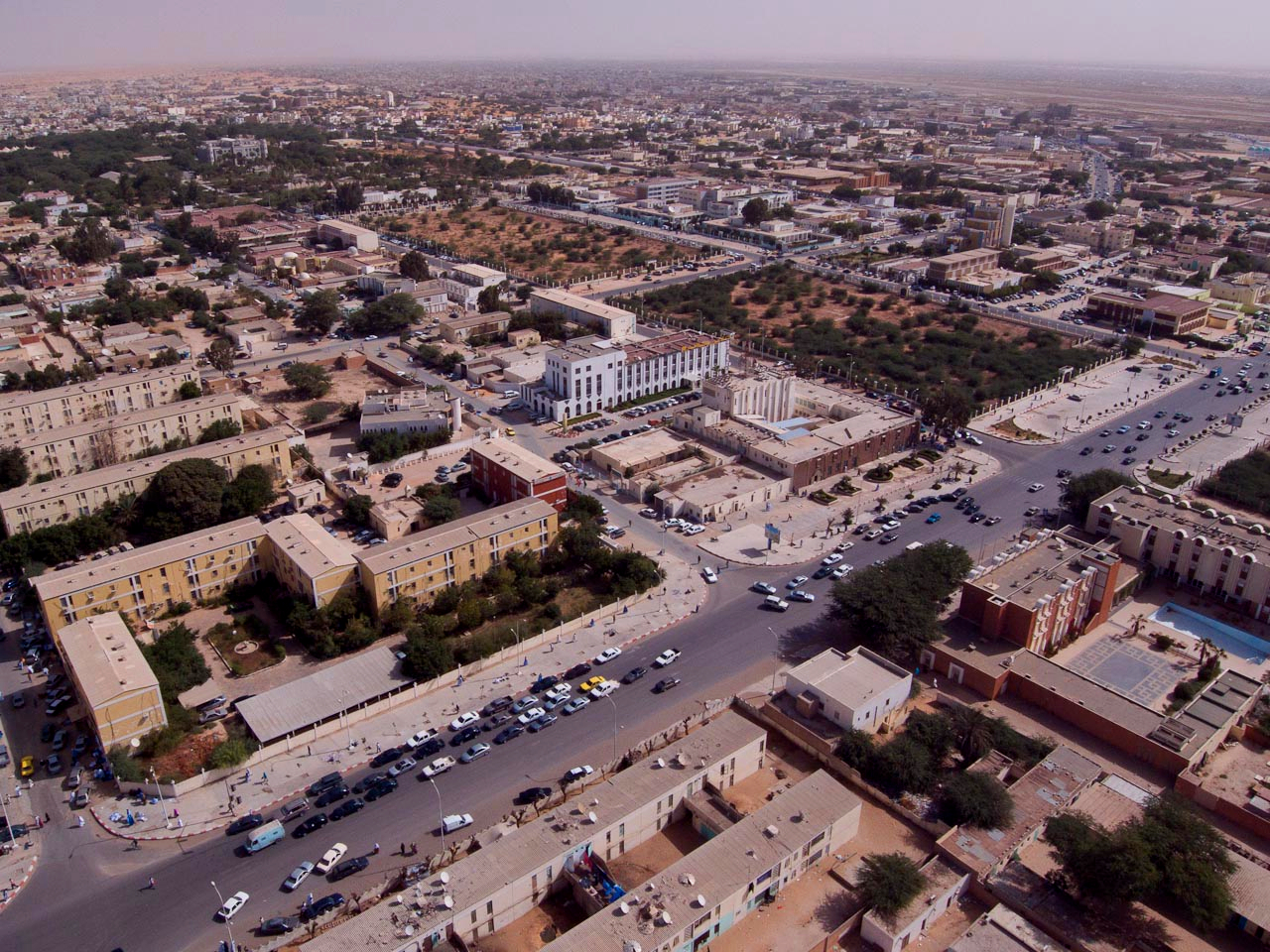
Nouakchott is the capital and largest city of Mauritania — one of the most extraordinary, most unusual, and most genuinely frontier-feeling capital cities in Africa: a metropolis of approximately 1.6 million people built almost entirely from scratch on a flat coastal plain where the Sahara Desert meets the cold waters of the Atlantic Ocean, in a landscape so flat, so sandy, and so elemental that actual Saharan dunes can be found encroaching into the city's outer suburbs, and the smell of salt sea air mingles with the fine orange dust of the desert on every corner. The city's origins are recent and deliberate: before Mauritania's independence from France in 1960, Nouakchott was little more than a large fortified fishing village (ksar) — a modest settlement chosen as the new country's capital not for its historical significance or natural advantages but for its political neutrality, positioned approximately equidistant between the former French colonial administrative centre of Saint-Louis in the south and the economic hub of Nouadhibou in the north, and not dominated by any of Mauritania's main ethnic communities. The name Nouakchott is believed to derive from the Berber Nawakshūt — meaning "the place of the winds" — a name that every visitor instantly understands upon arrival. Since independence, the city has grown at a pace that urban planners never anticipated: a combination of repeated Saharan droughts in the 1970s and 1980s driving massive rural-to-urban migration by Mauritania's formerly nomadic Moor population, the discovery of offshore oil and gas reserves, and the city's role as the hub of all government, commerce, and international connections in a vast, lightly populated country have transformed a village of a few thousand into a city of over a million people in the space of a single generation. Today, Nouakchott is a city of extraordinary contrasts — sandswept boulevards and gleaming embassy compounds, brightly painted pirogues at the Atlantic fishing port and camel caravans at the city's edge, the scent of charcoal brochettes and the call of the muezzin at sunset — and for adventurous travellers, it is the gateway to one of the least-visited and most dramatically beautiful countries in the world.
Best Time to Visit Nouakchott & Weather Guide
Nouakchott has a hot desert climate shaped by two dominant forces: the Sahara to the east, which drives extreme heat and sandstorms in summer, and the cold Canary Current of the Atlantic to the west, which moderates coastal temperatures and generates the persistent cool winds that give the city its name. The result is a climate of sharp seasonal contrast that rewards visitors who arrive in the right months.
☀️ Cool & Dry Season (November–February)
The best season for visiting Nouakchott by a considerable margin — temperatures drop to a pleasant 22–28°C by day and 16–20°C at night, the pervasive summer heat abates, and the harmattan (the dry, cool northeast wind that blows off the Sahara) is at its mildest. The skies are clear, the light is golden and sharp, and the conditions for exploring the city's markets, fishing port, and surrounding landscapes are at their most comfortable. November through February is also the ideal season for extending a Nouakchott visit to the extraordinary interior of Mauritania: the Adrar region (Chinguetti, Ouadane, Atar, and the Terjit Oasis) is at its most accessible and most beautiful in the cool season, and the Banc d'Arguin National Park receives its greatest concentrations of migratory waterbirds between October and April. For all visitors — whether spending 1–2 days in Nouakchott as a transit point or making a more substantial stay — the November–February window is the clear choice.
Best Time to Visit🌬️ Hot Season (March–May)
The transition from the cool season to the intense summer heat — temperatures rising rapidly from March (28–32°C) to May (34–40°C), with increasing humidity along the coast and the beginning of the sirocco-like harmattan sandstorms that periodically reduce visibility to near zero and coat everything with a fine ochre dust. March is still manageable and represents the tail of the acceptable visitor season; April and May are considerably more challenging. The Marché Capitale and the fishing port are best visited in the early morning (6–10am) during these months before the heat becomes oppressive. Hotel prices begin to fall from their peak-season highs. The city's café culture — centred on the tea-houses and outdoor terraces of the Tevragh-Zeina district — retreats indoors or to the cooler Atlantic-facing establishments during the afternoon heat of these months.
Transitional Season🔥 Intense Summer (June–September)
The most challenging season in Nouakchott — temperatures reach 38–43°C in July and August, the harmattan brings periodic blinding sandstorms, and the oppressive combination of heat and humidity (the Atlantic coast amplifies the perceived temperature significantly) makes extended outdoor activity dangerous for unacclimatised visitors. The sea breeze off the Atlantic provides some mitigation along the coast, and the fishing port and beaches are slightly more tolerable in the evenings; the city centre is best experienced only in the early morning and after 6pm. This is Mauritania's low tourist season — hotels are cheaper, the few tourist attractions are uncrowded, and the Mauritanian hospitality culture provides a warmth (social, if not physical) that compensates for the climatic challenges. If visiting in summer: drink at least 4 litres of water daily, avoid sun exposure between 10am and 5pm, and wear light, loose, long-sleeved clothing in the Mauritanian style.
Avoid if Possible🌧️ Brief Rains (October)
October brings the brief and unreliable West African monsoon remnants — occasional heavy showers that are welcome after the long summer but can cause flash flooding in Nouakchott's poorly drained sandy streets. The city's flat topography and minimal drainage infrastructure mean that even modest rainfall can temporarily turn major streets into shallow waterways. October temperatures begin to fall from summer highs (30–35°C), and by late October the welcome return of the cool season conditions begins. October is a reasonable month to visit for travellers who can tolerate some heat and occasional rain, and the falling temperature trend makes conditions progressively more comfortable as the month advances. The Banc d'Arguin migratory bird concentrations begin building from October as northern hemisphere species begin arriving on the West African coast.
Late Season TransitionCool Season (Nov–Feb): Light cotton clothing for the warm days; a light fleece or jacket for the cool evenings and early mornings when temperatures can drop noticeably. Closed-toe shoes or boots are better than sandals for the sandy, uneven streets. High-factor sunscreen year-round — the Saharan sun is intense even in winter. A scarf or shemagh is invaluable for sun protection, dust, and sand.
Hot Seasons (Mar–Sep): The very lightest breathable cotton or linen clothing, loosely fitting. Long sleeves are paradoxically cooler than bare arms in direct Saharan sun. A wide-brimmed hat essential. At least 4 litres of water per day. Electrolyte sachets are strongly recommended. A good quality dust/sand mask or scarf for harmattan sandstorms.
Year-round: Mauritania is a conservative Islamic society — modest dress is strongly recommended for all visitors, particularly women (covering shoulders, knees, and having a headscarf available for mosques and traditional areas). Alcohol is prohibited in Mauritania and not available publicly. Cash (Mauritanian Ouguiya or USD) is essential — credit card acceptance is very limited outside the major hotels. Mauritanian electrical sockets use the Type C European two-pin plug (220V). French is widely understood in business and tourist contexts; Arabic is the official language; a pocket phrase guide in Arabic is invaluable for market and restaurant interactions. Insect repellent is recommended for coastal areas at dusk.
Top Attractions in Nouakchott
Nouakchott rewards the patient and open-minded visitor with a range of experiences that are unlike those of any other city in West Africa — from the spectacular theatre of the Atlantic fishing port and the extraordinary camel market to the elegantly spare interiors of its great mosques and the vivid colours of its central market. This is not a city of conventional tourist monuments, but of living culture, frontier energy, and the raw authenticity of a city still finding its shape.
🐟 Port de Pêche — The Fishing Port
The single most compelling and most visited attraction in Nouakchott and one of the most spectacular fishing ports in all of West Africa — the Port de Pêche (fishing port), located on the Atlantic coast at El Mina district north of the city centre, is a scene of extraordinary sensory intensity and visual drama that no visitor to Mauritania should miss. Every afternoon between approximately 2pm and 5pm, hundreds of brightly hand-painted wooden pirogues — the traditional fishing boats of West Africa, each one a unique artwork of vivid colour and distinctive design, built mostly by Senegalese craftsmen and painted with personal insignia, religious symbols, and geometric patterns of remarkable beauty — come crashing through the Atlantic surf onto the beach, hauled by teams of fishermen knee-deep in the breaking waves, loaded with the day's catch from the extraordinarily rich waters of the Mauritanian coast (the cold Canary Current upwelling makes these among the most productive fishing grounds in the world). The beach at the moment of landing — the roar of surf, the shouts of the fishermen, the gleam of thousands of freshly caught fish, the jostle of buyers and traders, the smell of salt and sea — is one of the most dramatic and most photographically extraordinary scenes in West Africa. Arrive around 3–4pm for the peak activity; keep cameras and valuables secure in the crowd.
Most Visited Attraction🐫 Camel Market
One of the greatest and most authentic surviving camel markets in the world and the most characteristically Mauritanian experience available in the capital — the Camel Market (Marché aux Chameaux), located approximately 40 minutes east of the city centre on the road to Boutilimit, is a vast open ground where hundreds of dromedary camels are bought, sold, and traded daily by Mauritanian nomadic herders, merchants, and butchers in a setting that feels entirely removed from the 21st century. Camels are the foundation of the Mauritanian nomadic economy and remain deeply embedded in the country's cultural identity — used for transport across the Sahara, for milk (camel milk is sold fresh throughout Nouakchott and is a staple of the Mauritanian diet), for meat, and as a traditional marker of social status and wealth. Walking through the camel market — the extraordinary scale of the animals at close range, the complex transaction rituals of buyer and seller, the noise and smell of hundreds of camels — is an experience that connects visitors directly to the ancient Saharan caravan economy. Bring a local guide; the market is located off the tourist trail and navigating it without assistance is challenging.
Authentic Desert Culture🕌 Saudi Mosque (Grande Mosquée Saoudienne)
The most architecturally striking building in Nouakchott and the city's defining landmark — the Saudi Mosque (Mosquée Saoudienne), funded by Saudi Arabia and completed in 1980 in the city centre, rises above Nouakchott's predominantly low-rise sandy skyline with a dramatic verticality that makes it visible from most of the city's flat approaches. The mosque's twin minarets and expansive whitewashed prayer hall — capable of accommodating several thousand worshippers — represent the most important example of contemporary Islamic architecture in Mauritania and one of the finest in West Africa. The surrounding plaza and fountains are among the most pleasant public spaces in the city, and the mosque's exterior can be appreciated and photographed freely. Non-Muslim visitors should request permission before entering the prayer hall and should dress modestly (women must cover hair and shoulders; men must cover knees). The view of the minarets against the desert-blue Nouakchott sky at dusk, with the call to Maghrib prayer echoing across the flat city, is one of the most memorable images of the Mauritanian capital.
City Landmark🏺 National Museum of Mauritania
The most important cultural and historical institution in Mauritania and the finest introduction to the country's extraordinary heritage available in the capital — the National Museum of Mauritania (Musée National de Mauritanie), established in 1960 on Avenue Gamal Abdel Nasser, houses the most significant collection of Mauritanian archaeological, ethnographic, and historical artefacts in the world: pre-Islamic Saharan rock art; ancient gold and silver jewellery of the trans-Saharan trade routes; traditional Moorish khaima (tent) furnishings and nomadic equipment — camel saddles, decorated wooden chests, silver jewellery of remarkable craftsmanship, and the elaborate embroidered melahfa robes of Mauritanian women; Almoravid-period manuscripts from the great library tradition of Chinguetti; and exhibits on the ancient cities of the Adrar — Chinguetti, Ouadane, Tichitt, and Oualata, all UNESCO World Heritage Sites. The museum is modest in scale by international standards but extraordinary in the rarity and cultural significance of its holdings. An essential first stop for visitors seeking context for a journey into the Mauritanian interior.
Cultural Heritage🛍️ Marché Capitale — The Central Market
The beating commercial heart of Nouakchott and the most vivid immersion in everyday Mauritanian urban life available in the capital — the Marché Capitale (Marché Centrale), in the Ksar district at the historic centre of the city, is a sprawling, energetic bazaar of considerable density and colour: bolts of bright West African fabric (bazin — the stiff, glazed cotton that is the fabric of Mauritanian formal dress — in vivid indigo, gold, and crimson); fresh produce from the surrounding countryside; spice vendors with sacks of cumin, coriander, dried peppers, and the fragrant Mauritanian tea blends; silver and gold jewellery in the distinctive Moorish style (heavy silver bracelets, amber beads, and the elaborate tizabiten pendants of Tuareg design); secondhand goods; and the small restaurant stalls at the market perimeter serving thieboudienne, couscous, and brochettes to the midday working crowd. The adjacent Marché du Sixième specialises in craft and souvenir items. Both markets are best visited in the morning (9am–noon) before the heat of the day.
Vivid Local Market🌊 Plage de Nouakchott — Atlantic Beach
The most unexpected and most tranquil natural experience available in Nouakchott — the Atlantic beaches of the Mauritanian capital stretch for kilometres along the city's western edge, wide and relatively empty compared to the crowded beaches of West African cities to the south, with the cold upwelling of the Canary Current keeping the water surprisingly cool (18–22°C even in summer) and producing a dramatic Atlantic surf that breaks on the flat sandy shore in long rolling sets. The beach is at its most photogenic in the early morning and at sunset — when the light over the flat Atlantic horizon turns the sky shades of amber and rose, the fishing boats dot the water, and the occasional camel (led down to the shore by a herdsman) provides the most distinctively Nouakchott image available anywhere. Swimming is possible but the strong rip currents require caution; the northern stretch near the fishing port offers the best combination of scenery, fishing boat activity, and beach walking. The beach at sunset, with the call to prayer drifting from the Saudi Mosque across the flat city, is one of the most atmospheric moments West Africa offers.
Atlantic Coastline🎨 Galerie Zeinart & Contemporary Art
The most significant and most surprising cultural revelation in Nouakchott for visitors expecting a city of purely traditional culture — Galerie Zeinart, in the Tevragh-Zeina district, is a contemporary art and craft gallery of genuine quality that showcases the work of Mauritanian and West African artists working across jewellery design, fine craft, painting, and contemporary visual arts in a space that challenges every assumption about Saharan cultural life. The gallery's collection of silver jewellery and traditional Moorish craft objects in contemporary formats is among the finest available in West Africa. The adjacent cultural space D'Art provides a platform for collaboration between Mauritanian visual artists, musicians, and craftspeople. Together, these spaces represent a creative scene of considerable quiet ambition that is entirely invisible from the outside and entirely authentic in its engagement with Mauritanian aesthetic traditions. Also of cultural note: the Centre Culturel Français Saint-Exupéry (named for Antoine de Saint-Exupéry, who flew mail routes over Mauritania and drew profound inspiration from the Saharan landscape) stages exhibitions, film screenings, and concerts of both French and Mauritanian cultural programming.
Art & Culture🏘️ Ksar & Tevragh-Zeina Neighbourhoods
The two most characterful and most contrasting residential districts of Nouakchott, providing the fullest sense of the city's social geography — Ksar, the oldest established urban quarter on the eastern side of Avenue Gamal Abdel Nasser, is the most traditional and most densely inhabited neighbourhood: a grid of sandy lanes, neighbourhood mosques, tea-houses, and small shops where the daily rhythms of Mauritanian urban life play out with an authenticity impossible to find in the city's newer commercial districts. The Mauritanian tea ceremony (atai — three glasses of green tea brewed with mint and sugar in a lengthy, ritual preparation that can take 30–45 minutes and is an expression of hospitality as much as a drink) is most genuinely experienced in a Ksar tea-house. Tevragh-Zeina, to the northwest, is Nouakchott's most upmarket district — wide, relatively well-maintained streets, the residences of diplomats and government ministers, the best restaurants and cafés in the city, and the cultural institutions of the capital's small but vibrant educated class. Walking between the two districts on a cool morning — from the traditional lanes of Ksar to the café terraces of Tevragh-Zeina — provides the most complete single urban transect through Nouakchott's social landscape.
City NeighbourhoodsLocal Food Recommendations
Nouakchott's cuisine is a fascinating crossroads of Arab-Berber Saharan tradition, West African coastal cooking, and the influences of the Senegalese, Malian, and Guinean communities that have contributed to the city's demographic growth — a food culture built on rice, fish, lamb, dates, couscous, and the extraordinary ritual of Mauritanian tea, in a country where communal eating and the offering of food are among the most fundamental expressions of the famous Mauritanian hospitality.
🍽️ Must-Try Mauritanian Dishes
- Thieboudienne (Thiebou Dieun) — the most widely eaten and most beloved dish in Nouakchott, shared across the Mauritanian, Senegalese, and broader West African communities of the city: a hearty, deeply flavoured dish of whole fish (most commonly grouper, sea bream, or the abundant Atlantic catch of Mauritanian waters) slow-cooked in a fragrant tomato and vegetable sauce and served on a generous mound of rice that has absorbed the full depth of the cooking broth. Originally a Senegalese dish brought to Mauritania's capital by the large Senegalese fishing and trading community, thieboudienne has become so embedded in Nouakchott food culture that it is served at virtually every local restaurant as the standard midday main course. The version prepared with the fresh catch from the Port de Pêche — fish pulled from the Atlantic that morning and cooked over charcoal by midday — is of extraordinary quality. Budget 500–1,500 MRU (USD 1.30–4) per serving at local canteen restaurants; a complete meal with bread and tea.
- Méchoui (Roasted Lamb) — the great ceremonial dish of Mauritanian tradition and the most important food in the country's social and hospitality culture: a whole lamb or goat slow-roasted or charcoal-grilled over several hours until the skin is crisped to a deep mahogany and the meat falls away from the bone in tender, fragrant pieces, seasoned with cumin, coriander, black pepper, and salt in the Moorish tradition. Méchoui is the food of weddings, of religious festivals (Eid al-Adha and Eid al-Fitr), of important family gatherings, and of the kind of generous hospitality that Mauritanians extend to guests with remarkable frequency. Eating méchoui — ideally in a Mauritanian home or at a traditional restaurant during a festival period — from a shared communal platter with bread and sweet tea is one of the most deeply hospitable and most culturally resonant food experiences West Africa offers.
- Couscous with Lamb and Vegetables — the great North African staple in its Mauritanian form: steamed semolina couscous of fine, separate grain, served in a large communal bowl topped with slow-braised lamb shoulder, root vegetables (carrots, turnips, pumpkin), chickpeas, and a fragrant broth of cumin and dried ginger poured over at the table. Mauritanian couscous is somewhat drier and more herb-scented than the Moroccan style, reflecting the desert cooking tradition where economy of water and fuel shapes the technique. Found at traditional restaurants throughout Ksar and the city centre for Friday lunch — the most important communal meal of the Mauritanian week — and at the better restaurant establishments of Tevragh-Zeina at any time. An excellent choice for the visitor's midday meal on a Friday in Nouakchott, when the couscous at local establishments is freshest and most generously prepared.
- Camel Milk — the most characteristically Mauritanian food experience available in the capital and the liquid expression of the country's deep cultural connection to the dromedary camel: lait de chamelle (camel milk) is sold fresh throughout Nouakchott — at market stalls, from roadside vendors, and at the camel market itself — and is a nutritionally dense, lightly tangy, subtly sweet liquid of considerable character, quite different from cow's milk in texture and flavour. Mauritanian camel milk is internationally recognised as a nutritional superfood; it is also the most genuinely distinctive and most culturally meaningful food item available in the capital. Drink it fresh (chilled if possible), or try the lightly fermented version (gariss) that is the traditional Saharan desert food of long camel journeys. A glass of fresh camel milk at the Camel Market, drunk in the company of the herders who produce it, is the most authentic single food experience available in Nouakchott.
- Atai — Mauritanian Tea Ceremony — not a food in the conventional sense but the most important social ritual of Mauritanian culture and the experience that every visitor to Nouakchott should participate in: the preparation and drinking of atai (Mauritanian green tea) is a ceremony of considerable duration and deliberate unhurriedness — green tea from China is brewed in a small pot with fresh mint and an extraordinary quantity of sugar, poured from a height to create a frothy head, then re-poured back into the pot and served in a sequence of three small glasses of diminishing strength and increasing sweetness (the Mauritanian saying holds that the first glass is as bitter as life, the second as sweet as love, and the third as gentle as death). The full ceremony takes 30–45 minutes and is the foundation of all social interaction in Mauritania — refusing tea from a Mauritanian host is a significant social discourtesy. Accepting and participating in the tea ceremony — sitting cross-legged on a floor mat, watching the skilled preparation, drinking the three glasses in unhurried conversation — is the most genuine introduction to Mauritanian culture that any visitor can receive.
- Dates and Zrig — the staple foods of the Saharan nomadic tradition that remain central to the Mauritanian diet and the most important foods of Ramadan and religious observance: the dates of Mauritania's desert oases (particularly the excellent Tidjikja and Atar varieties, available at every market in Nouakchott) are among the finest in West Africa — large, meaty, honeyed, and incomparably fresher than the dried dates exported to European markets. Zrig — a refreshing cold drink of soured camel or cow milk mixed with water and salt, sometimes sweetened with dates — is the traditional desert cooling drink and the most hydrating and most culturally resonant non-alcoholic beverage in Mauritanian food culture.
☕ Tea, Drinks & Café Culture
- Atai (Mauritanian green tea) — see above; the cornerstone of all social life in Mauritania, available everywhere from market tea-houses to restaurant tables, always offered as a gesture of hospitality, always to be accepted. The finest atai in Nouakchott is found in the Ksar neighbourhood tea-houses and at the outdoor tea-stands of the Marché Capitale. Budget 50–100 MRU (USD 0.13–0.27) for a three-glass ceremony at a street tea stand — one of the greatest value social experiences available in any African city.
- Mauritania is a dry country — alcohol is strictly prohibited in Mauritania under Islamic law and is not available for public sale anywhere in the country. This is enforced seriously — attempting to purchase or import alcohol is a legal offence. Visitors accustomed to wine or beer with meals should plan accordingly. The social life of Nouakchott revolves entirely around tea, fresh juice, and soft drinks rather than alcohol, producing a café culture of considerable warmth and conviviality that requires no alcohol to be enjoyable.
- Fresh fruit juices — the juice stalls of the Marché Capitale and the street vendors of Tevragh-Zeina produce excellent fresh-pressed juices from the tropical fruits available in Nouakchott's markets: mango, orange, hibiscus (bissap — the brilliant crimson Senegalese hibiscus drink that is one of the finest natural beverages in West Africa), tamarind, and guava. Bissap — a cold, tart, intensely fruity hibiscus infusion sweetened with sugar — is the most refreshing drink available in Nouakchott's heat and is sold everywhere for 100–200 MRU per glass. It is the finest and most characteristically West African refreshment available in the Mauritanian capital.
- Coffee culture — Nouakchott has a small but genuine café culture concentrated in the Tevragh-Zeina district, where a handful of French-influenced cafés and patisseries serve excellent espresso, cappuccino, and croissants alongside fresh fruit juices and the inevitable atai. The patisseries of Tevragh-Zeina — which bake fresh croissants, eclairs, and Moroccan-influenced pastries daily — provide a welcome and entirely unexpected morning experience for European visitors expecting nothing but sand and flatbread. The best patisserie in the city is known for its eclairs and cronuts, and for the quality of its cappuccino — consistently cited by visitors as the best coffee in Mauritania.
🍽️ Where to Eat — Local Tips
- Marché Capitale street food stalls — the most affordable and most authentic eating experience in Nouakchott: the restaurant canteens on the perimeter of the Central Market serve hot thieboudienne, lamb brochettes, couscous, and fresh bread from midday to early afternoon at prices of extraordinary value (400–800 MRU / USD 1–2 for a complete meal). Sit at the shared tables with the market workers, eat from a communal platter with the right hand in the Mauritanian style, and drink sweet tea from a communal glass — the most genuinely local food experience in the capital. Busy from noon to 2pm; many stalls sell out by 2:30pm.
- Restaurant Iman (Tevragh-Zeina) — the most consistently recommended restaurant in Nouakchott for visitors seeking a step up from street-food level in a more comfortable setting: a long-established Tevragh-Zeina establishment serving the full range of Mauritanian and West African cooking — thieboudienne, lamb brochettes, seafood, and occasionally camel meat dishes — alongside Senegalese, Moroccan, and Lebanese-influenced options. English is spoken; the kitchen is reliable; and the combination of quality, price (2,000–5,000 MRU / USD 5–13 for a main course), and atmosphere represents the best mid-range dining in the city. Suitable for solo travellers and groups alike.
- Chez Lina (Avenue du Général de Gaulle) — the most consistently cited address by French and European visitors to Nouakchott for French-influenced food in an accessible setting: located on the main street connecting the Stade Olympique to the French Embassy, Chez Lina serves steaks, salads, sandwiches, and fresh fish in a simple but reliable environment. The adjacent Tafarit Sun House is a similar establishment in the same street. Both serve as excellent orientation points for newcomers to the city seeking a familiar food environment before venturing further into Mauritanian cuisine.
- Port de Pêche seafood — for the freshest and most locally sourced fish meal in Nouakchott, the small restaurant stalls near the fishing port serve freshly grilled Atlantic fish — grouper, sea bream, barracuda, and the day's catch — directly from the morning's landing to the lunchtime table, in the simplest possible preparation (charcoal-grilled, with fresh bread and chilli sauce) at prices of complete accessibility (600–1,500 MRU / USD 1.60–4). Eating grilled Atlantic fish while watching the pirogues land on the beach is the most complete and most satisfying Nouakchott food experience available.
- Traditional Mauritanian homes — for the most honest and most generous food experience in Nouakchott, nothing approaches the invitation to eat in a Mauritanian home. The city's famous hospitality culture means that genuine invitations to join a family meal (particularly around the Ramadan iftar and festival periods) are extended to visitors with a frequency and warmth that consistently astonishes travellers. Accepting such an invitation — and the méchoui, thieboudienne, couscous, fresh dates, and endless atai that it will involve — is the most deeply culturally enriching food experience Mauritania offers.
🎶 Culture, Music & Nomadic Traditions
- Mauritanian cultural life is anchored in the ancient traditions of the Moorish griots — the hereditary musician-praise-singers known as iggawin in Hassaniya Arabic, who maintain an oral tradition of music, poetry, and historical narrative of extraordinary complexity and antiquity. Mauritanian classical music — centred on the tidinit (a four-string lute) and the ardin (a large harp played exclusively by women) — is one of the most sophisticated musical traditions in West Africa, with a modal system (wayno) of considerable theoretical depth. The finest performances are found at private social gatherings rather than public venues; visitors who are invited to a Mauritanian wedding or celebration will encounter this music in its most genuine context. The Centre Culturel Français Saint-Exupéry occasionally stages formal concerts of traditional Mauritanian music for public audiences.
- The khaima — the traditional black Mauritanian tent of woven camel hair and goat wool, subdivided into male and female reception spaces by embroidered curtains of considerable beauty — is the most important social space in Mauritanian culture and the finest expression of the country's nomadic aesthetic intelligence. Traditional khaimas are still erected in the gardens of Nouakchott homes for celebrations and social gatherings, and some restaurants and tea-houses in the Ksar district maintain khaima-style reception areas for the experience of receiving guests in the traditional manner. Sitting in a khaima on a hand-woven carpet, drinking atai from a silver tray, and experiencing the extraordinary acoustic quality of the tent interior (which amplifies and focuses sound in a way that lends itself perfectly to the close listening required for Mauritanian classical music) is an experience of considerable cultural intimacy.
- The Marché de l'Artisanat (Artisans' Market) on the Autoroute Rosso and the craft stalls of the Marché Sixième carry the finest traditional Mauritanian handicrafts available in the capital: silver jewellery in the distinctive Moorish style (heavy amber bead necklaces, silver bracelets with geometric chasing, tizabiten pendants); elaborately painted and carved camel saddles and wooden marriage chests; hand-woven haïke textiles in natural camel wool; and the magnificent leather goods — sandals, bags, and the decorated leather covers of Quran holders — produced by Mauritanian craftsmen in the Saharan leatherwork tradition. Quality varies considerably; allow time for thorough browsing and expect to negotiate on price.
- Mauritanian cultural life observes a strong religious rhythm — the five daily prayers structure the day, Friday is the day of communal prayer and rest, and the month of Ramadan transforms the city completely (most restaurants close during daylight hours; the city comes to life after sunset with extended family gatherings, outdoor tea-ceremonies, and the particular festive energy of the Ramadan night). Visitors present during Ramadan should plan their eating and sightseeing schedule around the iftar (sunset meal) and suhoor (pre-dawn meal) timing, and should respect the fast by not eating, drinking, or smoking in public during daylight hours.
Day Trip Itineraries from Nouakchott
Nouakchott's position on the Atlantic edge of the Sahara makes it the gateway to some of the most spectacular, least-visited, and most dramatically beautiful landscapes in Africa — from the UNESCO World Heritage ancient cities of the Adrar desert to the extraordinary bird sanctuary of the Banc d'Arguin coast:
🦅 Day Trip / Excursion: Banc d'Arguin National Park
Travel time: 3–4 hours north by 4×4 | Cost: Park entry + guide approximately USD 80–150; best as overnight
Banc d'Arguin National Park — a UNESCO World Heritage Site covering 12,000km² of tidal flats, sandbars, and shallow coastal waters on the Atlantic coast 3–4 hours north of Nouakchott — is one of the most important waterbird sanctuaries in the world and one of the great birdwatching destinations on earth. Between October and April, the park hosts the largest concentration of wintering Palearctic wading birds in the world: up to two million birds including greater flamingo, spoonbill, pelican, grey plover, dunlin, and knot. The traditional Imraguen fishing villages on the park coastline — where a small community of Berber fishermen use an ancient technique of driving mullet schools into their nets with the help of wild bottlenose dolphins — are among the most extraordinary living examples of human-animal cooperation anywhere on earth. The park is best visited with a specialist tour operator from Nouakchott and is most rewarding as an overnight excursion.
UNESCO World Heritage🏜️ Extended Trip: Chinguetti & the Adrar Desert
Travel time: 8–10 hours north to Atar by road | Cost: Best as 3–5 day organised tour from USD 200–400 per person
The most extraordinary travel destination in Mauritania and one of the great desert destinations of Africa — the Adrar region, 500km north of Nouakchott, contains the UNESCO World Heritage ancient cities of Chinguetti (the seventh holiest city of Islam, a pilgrimage waypoint for trans-Saharan pilgrims to Mecca since the 13th century, now slowly being swallowed by the encroaching dunes), Ouadane (an ancient caravan city of haunting ruined beauty), and the Terjit Oasis (a lush palm-fringed spring of warm water in the heart of the Saharan rock plateau — one of the most improbably beautiful natural environments on earth). The Adrar is best visited as a 3–5 day organised tour from Nouakchott with a specialist guide and 4×4 transport. The journey itself — across the flat coastal plain and then into the extraordinary volcanic rock plateau of the Adrar — is one of the great desert drives on the continent.
Ancient Desert Cities🐪 Day Trip: Idini Dunes
Travel time: 30–45 minutes east of Nouakchott by car | Cost: Taxi approximately 2,000–5,000 MRU; camel ride from 3,000 MRU
The closest and most accessible desert landscape to Nouakchott and the ideal half-day escape from the city for visitors with limited time — the Idini Dunes, a field of soft orange sand ridges rising from the flat desert plain 30–45 minutes east of the city, provide the essential Saharan experience within easy reach: the silence and scale of the open desert, the extraordinary quality of the light in the late afternoon, the opportunity for a short camel ride over the dune crests, and the experience of watching the sun set over the empty Sahara from a dune summit — the sky turning from copper to crimson over a landscape of absolute stillness. A simple Mauritanian tea ceremony in a local nomadic camp at the dunes, watching the sunset while the tea is prepared over a charcoal fire, is one of the most genuinely peaceful and most characteristically Saharan experiences available from any African capital city.
Sahara Close By🚂 Multi-Day Adventure: Iron Ore Train
Travel time: From Nouakchott to Choûm: 8 hours by road; iron ore train journey: 12–20 hours | Cost: Train ticket nominal; best as 3–4 day organised trip
One of the most legendary and most talked-about adventure travel experiences in Africa and the principal reason many overland travellers come to Mauritania — the Mauritanian iron ore train (the longest and heaviest train in the world by some accounts) runs 700km across the open Sahara from the iron ore mines of Zouerate to the Atlantic port of Nouadhibou, passing through the extraordinary empty Saharan landscape of the Tiris region. Travellers board in the small desert town of Choûm (accessible by road from Nouakchott) and ride in open ore wagons — exposed to the full Saharan sky, the cold desert night, and the overwhelming scale of the landscape — for up to 20 hours. The experience is physically demanding (bring sleeping bag, food, water, and warm layers for the freezing desert night) but consistently described by those who have done it as one of the most profound and most unforgettable travel experiences in the world.
Ultimate AdventureTourist Tips for Nouakchott
🚖 Getting Around
- Nouakchott is a flat, spread-out city where most attractions are too far apart for walking — taxi transport is essential. The ClassRide app (the Mauritanian equivalent of Uber, available on iOS and Android) is the safest and most straightforward option for visitors — metered, trackable, and English-language customer service available by calling 1122. Fares start at 1,000 MRU for short journeys (under 4km) and increase at 200 MRU per additional km — affordable for any visitor budget. Available throughout Nouakchott's main districts.
- Shared taxis (taxis collectifs) are the standard transport of the Mauritanian population — yellow or white vehicles that travel on fixed routes and charge per seat rather than per journey (approximately 100 MRU per person on a shared basis, 600 MRU to hire the whole taxi). Practical for budget travellers but require knowledge of the routes and destination names in Arabic or French; not recommended for first-time visitors without a local guide.
- Nouakchott–Oumtounsy International Airport (NKC) — the main international airport, 25km north of the city centre — is served by Mauritania Airlines International, Royal Air Maroc, Air Senegal, Tunisair, Turkish Airlines, and Air Algérie, with connections via Casablanca, Tunis, Dakar, Istanbul, and Algiers. No direct flights from the UK or USA — most European visitors connect via Casablanca or Paris. Airport taxi to city centre costs approximately 3,000–5,000 MRU (USD 8–13), 30–45 minutes depending on traffic.
- For day trips to Idini Dunes, the Banc d'Arguin, or the Camel Market, hiring a vehicle with a driver through your hotel or a specialist tour operator is strongly recommended — typically USD 50–100 for a full day depending on distance. The specialist operator Mauritania Best Tours and the guides associated with the Novotel are consistently well-reviewed. A vehicle with driver is also essential for any excursion into the Mauritanian interior beyond the city.
- There are no trains within Nouakchott. City buses exist but are of limited practical use for visitors. The flat topography and wide sandy streets make cycling theoretically possible but extremely uncomfortable in the heat and sand. Walking is practical only within the compact Ksar and Tevragh-Zeina districts in the early morning.
💡 General Safety & Travel Tips
- Mauritania uses the Mauritanian Ouguiya (MRU). Cash is essential — credit card acceptance is very limited in Nouakchott, confined largely to the major international hotels (Novotel, Azalaï Marhaba) and a handful of upmarket restaurants in Tevragh-Zeina. ATMs are available at the major banks in Tevragh-Zeina and Ksar but are unreliable and frequently out of service. Bring sufficient USD or EUR cash to exchange on arrival; the airport money changers offer reasonable rates. Do not carry large amounts of cash visibly in the market areas. The US dollar is widely accepted informally alongside the Ouguiya.
- Mauritania uses the Type C European two-pin plug (220V/50Hz) — UK visitors need a UK-to-European adaptor; US visitors need both adaptor and voltage converter for 110V devices. Power cuts are common throughout Nouakchott — a power bank is strongly recommended for keeping phones and devices charged during the day.
- Most nationalities require a Mauritanian tourist visa — obtainable in advance from the nearest Mauritanian embassy or consulate, or as a visa on arrival at Nouakchott–Oumtounsy Airport for citizens of many countries (check current policy at the Mauritanian Ministry of Foreign Affairs website). The visa-on-arrival process at the airport can take 45–90 minutes; do not schedule onward transport for immediately after landing. The fee is approximately USD 55. Citizens of some countries (including certain Arab League nations) are exempt. Always verify your country's current requirements before travel.
- Cultural sensitivity is particularly important in Mauritania — a conservative Islamic society where modest dress (covering shoulders and knees for all visitors; headscarves available and appreciated for women in mosques and traditional areas), respectful behaviour around prayer times, and complete avoidance of public alcohol consumption are non-negotiable expectations. The left hand should not be used for eating, accepting food, or handshakes — the right hand only for all social interactions. Receiving an invitation to a Mauritanian home is a great honour; bring a small gift (dates, sugar, or tea are appropriate).
- The best souvenirs from Nouakchott: Silver Moorish jewellery (amber bead necklaces, geometric silver bracelets) from the Marché de l'Artisanat; Mauritanian green tea (the same Chinese gunpowder tea used for atai, available in blocks at the Marché Capitale) and a traditional three-glass tea set; hand-painted camel leather goods (sandals, bags, Quran holders); traditional Mauritanian fabric (the stiff glazed bazin cotton in indigo and gold); and a bottle of the finest Mauritanian dates from the Adrar region, available at the Marché Capitale's dried fruit section.
Apply for Tourist Visa
Most nationalities require a tourist visa to enter Mauritania. A visa on arrival is available at Nouakchott–Oumtounsy International Airport for citizens of many countries at a fee of approximately USD 55, with processing that can take 45–90 minutes. Advance visas can be obtained from Mauritanian embassies and consulates abroad for citizens who prefer to avoid the on-arrival process or whose nationality requires advance application. Citizens of some Arab League and African Union member states are exempt from visa requirements. All visitors must hold a passport valid for at least 6 months beyond their intended departure date. Verify your country's current visa requirements with the Mauritanian Ministry of Foreign Affairs before travel. Mauritania Visa Information
Important Emergency Numbers
🇲🇷 Nouakchott Emergency Contacts
- 🚑 Ambulance: 117
- 🔥 Fire Brigade: 118
- 👮 Police: 118
- 🆘 General Emergency: 117 / 118
International Emergency Phone Numbers
Find Flights to Nouakchott
Airport Code: NKC — Nouakchott–Oumtounsy International Airport (25km north of city centre)
Airport Transfer: Taxi from Nouakchott–Oumtounsy Airport (NKC) to city centre costs approximately 3,000–5,000 MRU (USD 8–13), 30–45 minutes. International airlines serving Nouakchott include Mauritania Airlines International, Royal Air Maroc (via Casablanca), Air Senegal (via Dakar), Tunisair (via Tunis), Turkish Airlines (via Istanbul), Air Algérie (via Algiers), and Transavia France (via Paris). No direct flights operate from the UK or USA — most Western visitors connect via Casablanca (Royal Air Maroc) or Paris. The best-value and most reliable European connection is Royal Air Maroc via Casablanca, typically 5–6 hours total from London or Paris.
International Airport FinderCurrency in Nouakchott
The currency of Mauritania is the Mauritanian Ouguiya (MRU). Cash is essential in Nouakchott — credit card acceptance is very limited, confined to major international hotels and a small number of upmarket restaurants. ATMs are available at major banks in Tevragh-Zeina and Ksar but are unreliable; bring sufficient USD or EUR cash to exchange on arrival. Airport money changers offer reasonable rates. The US dollar is widely accepted informally alongside the Ouguiya at tourist-area establishments.