

Country's codes
International phone code for Peru: +51
3 letters: PER
2 letters (internet domain): .PE
Digital country code: 604
Standard EAN-13 (country barcode): 775
 Olympic country code: PER

Peru: Top Attractions & Best Time to Visit
Peru is a land of extraordinary contrasts—Andean peaks, Amazon rainforest, ancient civilizations, world-class cuisine, and desert coastlines. Whether you're seeking culture, outdoor adventure, or iconic archaeological sites, Peru delivers an unforgettable experience.
Best Time to Visit Peru
Peru’s varied geography means the best time to visit depends on the region. For Machu Picchu, Cusco, and the Andes, the ideal time is the dry season from May to September, when skies are clear, and trekking conditions are excellent.
The Amazon rainforest is warm and humid year‑round, but June to October is slightly drier and better for wildlife spotting. Along the Pacific coast (Lima, Paracas), December to March brings warm, sunny weather.
- May–Sep: Best for trekking, Machu Picchu, and Andean travel.
- Oct–Nov: Shoulder season with pleasant temperatures.
- Dec–Mar: Rainy in the mountains; sunny on the coast.
- Apr: Lush green landscape after rains—beautiful for photos.
Top Attractions in Peru
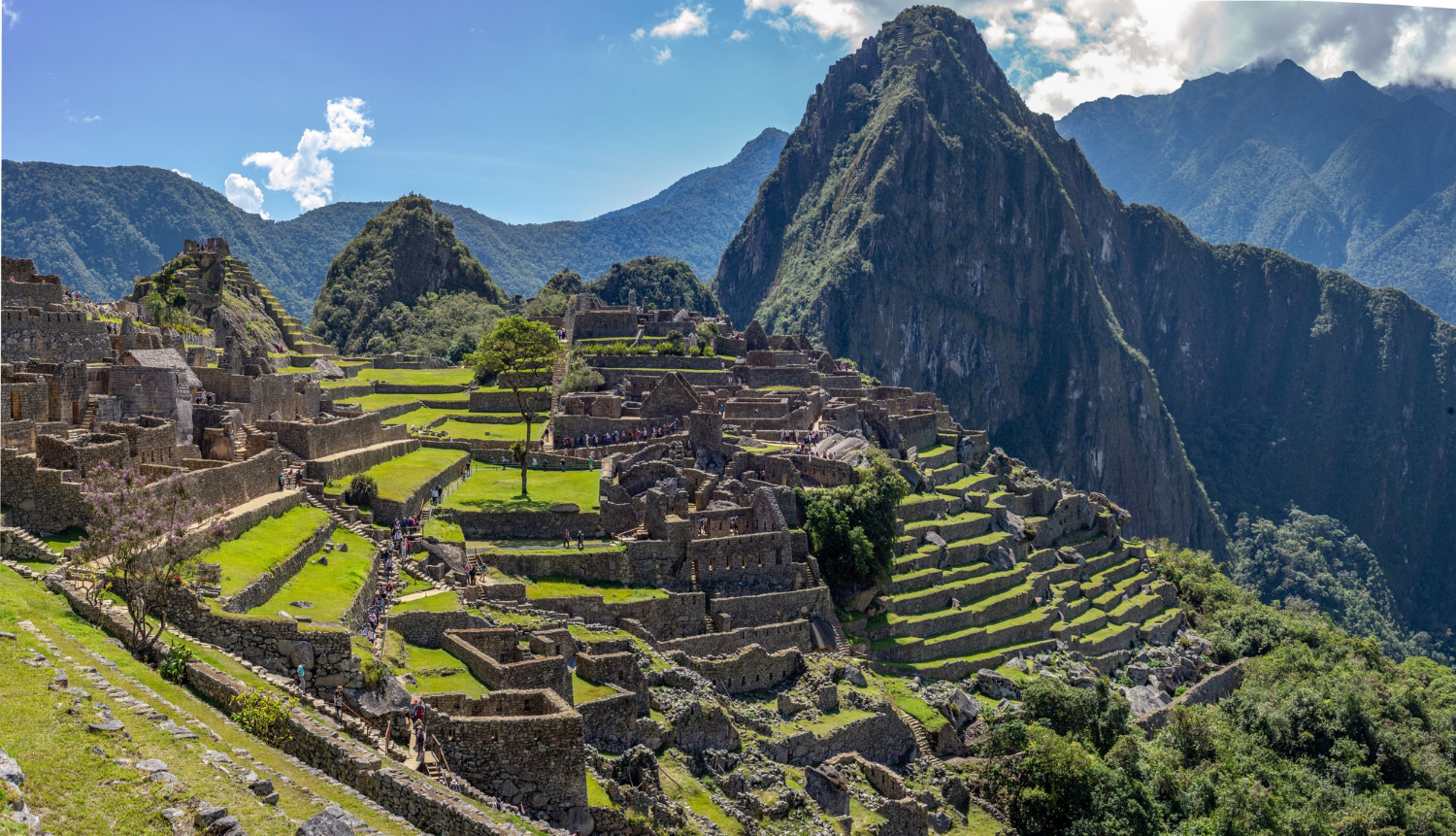
Machu Picchu
Peru’s most iconic site, the lost citadel of the Incas stands high in the cloud forests. Whether you hike the Inca Trail, take the train, or explore with a guide, the experience is magical.
Cusco
Once the capital of the Inca Empire, Cusco blends Spanish colonial architecture with ancient stonework. Explore plazas, markets, nearby ruins, and the vibrant cultural scene.
Sacred Valley
A fertile valley dotted with villages, terraces, and archaeological sites. Highlights include Pisac, Ollantaytambo, and Maras salt flats.
Lake Titicaca
The world’s highest navigable lake, home to the floating Uros islands and traditional Quechua and Aymara communities.
Colca Canyon
One of the world’s deepest canyons, famous for dramatic landscapes, condor spotting, and terraced fields.
Arequipa
Known as the White City for its volcanic stone architecture, Arequipa features the Santa Catalina Monastery and grand colonial buildings.
Amazon Rainforest (Iquitos & Puerto Maldonado)
Explore dense jungle, river lodges, exotic wildlife, and indigenous cultures in one of the most biodiverse areas on earth.
Paracas & Ballestas Islands
Often called the “Galápagos of Peru,” the islands host sea lions, penguins, and marine birds—reachable via a short boat trip from Paracas.
Huacachina
A desert oasis surrounded by high dunes, great for sandboarding, dune buggy rides, and sunset views.
Nazca Lines
Mysterious ancient geoglyphs best appreciated from a small plane—a fascinating glimpse into pre‑Inca civilizations.
Suggested 7‑Day Peru Itinerary
- Day 1 — Lima: Miraflores, Barranco, and coastal views.
- Day 2 — Fly to Cusco: Acclimatize, explore the historic center.
- Day 3 — Sacred Valley: Pisac, Ollantaytambo, Maras.
- Day 4 — Machu Picchu: Full-day visit.
- Day 5 — Cusco: Museums, markets, and nearby ruins.
- Day 6 — Rainbow Mountain or Humantay Lake: Day hike.
- Day 7 — Return to Lima: Culinary stops before departure.
Food & Culture
Peru is a global culinary star, known for cebiche, lomo saltado, ají‑based dishes, and fusion cuisine. Its culture blends Inca heritage with Spanish, African, and Asian influences. Music, textiles, festivals, and colorful Andean traditions enrich every journey.
Practical Tips
- Altitude: Take it slow when arriving in Cusco; stay hydrated.
- Transport: Domestic flights save time between major regions.
- Weather: Pack layers—mountains can be cold even in dry season.
- Cash: Useful in remote towns; ATMs available in cities.
- Permits: Book Inca Trail permits months in advance.
Useful country information
Land area: 494,208 sq mi (1,279,999 sq km)
Total area: 496,223 sq mi (1,285,220 sq km)
Capital: Lima, 11,045,000 (2022 est.)

Lima: Capital City Profile
Other large city: Arequipa, 804,000
Currency: Nuevo sol
National Holiday: Fiestas Patrias (7/28 and 7/29)
Population: 33.36 million (July 2022 est.)
Population Change: Growth rate: 0.95%; 17.8 births/1,000 population, 6.1 deaths/1,000 population, -2.2 migrant(s)/1,000 population; infant mortality rate: 18.4 deaths/1,000 live births (2017 est.)
Life Expectancy: 74 years

Background:
Ancient Peru was the seat of several prominent Andean civilizations, most notably that of the Incas whose empire was captured by the Spanish conquistadores in 1533.
Peruvian independence was declared in 1821, and remaining Spanish forces defeated in 1824.
After a dozen years of military rule, Peru returned to democratic leadership in 1980, but experienced economic problems and the growth of a violent insurgency. President Alberto FUJIMORI's election in 1990 ushered in a decade that saw a dramatic turnaround in the economy and significant progress in curtailing guerrilla activity. Nevertheless, the president's increasing reliance on authoritarian measures and an economic slump in the late 1990s generated mounting dissatisfaction with his regime. FUJIMORI won reelection to a third term in the spring of 2000, but international pressure and corruption scandals caused him to resign in November of that year.
A caretaker government oversaw new elections in the spring of 2001, which ushered in Alejandro TOLEDO as the new head of government.
Pedro Pablo Kuczynski, a center-right former World Bank economist and investment banker known by his initials, “PPK,” narrowly defeated a populist campaign by former President Alberto Fujimori’s daughter in the presidential election of June 2016.
Country Map

COUNTRY MAP WITH STATES/PROVINCES BOUNDARIES CLICK HERE

Source of Information:


