

Country's codes
International phone code for Senegal: +221
3 letters: SEN
2 letters (internet domain): . SN
Digital country code 686
Standard EAN-13 (country barcode): 628
 Olympic country code: SEN

Senegal: Top Attractions & Best Time to Visit
Senegal is one of West Africa’s most welcoming destinations, known for golden beaches, vibrant cities, wildlife parks, and a rich cultural identity shaped by music, art, and tradition. From colorful markets to UNESCO heritage islands, Senegal offers an unforgettable journey.
Best Time to Visit Senegal
The best time to visit Senegal is during the dry season from November to April. Days are sunny and moderately warm, making it ideal for beaches, safaris, island tours, and exploring Dakar.
The rainy season (June to October) brings greener landscapes and occasional showers, especially in the south, but travel is still enjoyable with fewer crowds.
- Nov–Feb: Coolest and most pleasant months—best for sightseeing and coastal travel.
- Mar–Apr: Dry, warm, and great for wildlife parks.
- May–Jun: Hotter but still good for island trips.
- Jul–Oct: Rainy season; lush scenery and quieter tourism.
Top Attractions in Senegal
Dakar
A lively coastal capital known for bustling markets, vibrant nightlife, African art, and dramatic oceanfront cliffs at Les Mamelles. A great base to explore nearby islands.
Île de Gorée
A serene island with pastel‑colored houses, museums, and colonial‑era buildings. Famous for its moving heritage and car‑free atmosphere—just 20 minutes by ferry from Dakar.
Lac Rose (Lake Retba)
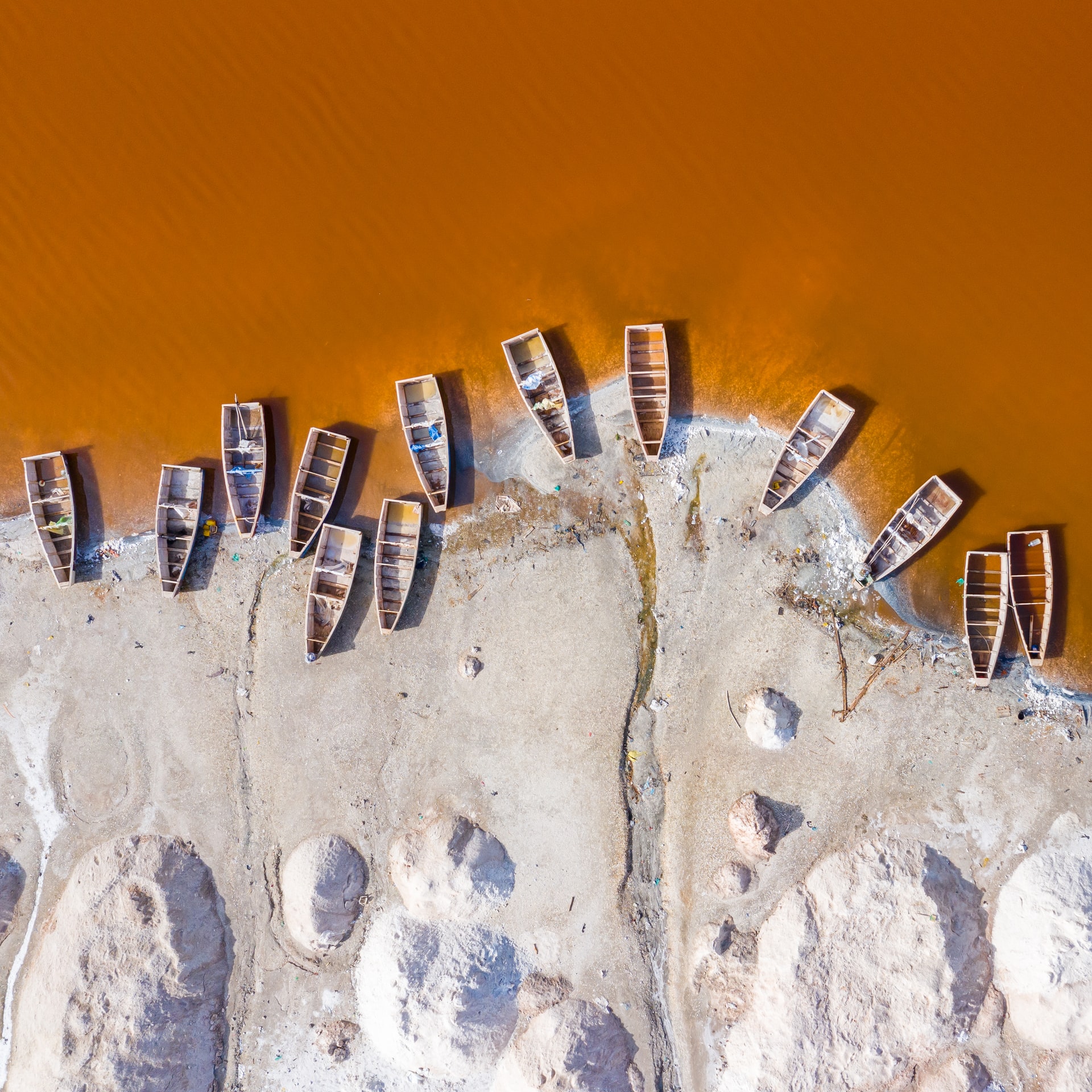
A striking pink lake whose unique color comes from natural microorganisms. Visit for scenic boat rides, salt harvesting areas, and dune activities.
Saly & Petite Côte
One of Senegal’s top beach destinations with golden sand, palm trees, resorts, water sports, and relaxed coastal towns like Somone and Ngaparou.
Djoudj National Bird Sanctuary
A paradise for bird lovers, home to pelicans, flamingos, herons, and thousands of migratory species. A peaceful wetland safari near Saint-Louis.
Saint-Louis
A charming city with colonial architecture, historic bridges, jazz culture, and a laid‑back island vibe. Ideal for slow strolling and cultural exploration.
Casamance
A lush region in southern Senegal with rivers, mangroves, beaches, and vibrant traditions. Ziguinchor and Cap Skirring are popular stops for nature lovers.
Joal‑Fadiouth
A unique shell island reached by a wooden footbridge. Known for its peaceful village atmosphere, artistic touches, and coastal beauty.
Suggested 6‑Day Itinerary
- Day 1 – Dakar: Markets, beaches, art galleries.
- Day 2 – Île de Gorée: Explore the island's museums and colonial streets.
- Day 3 – Lac Rose: Pink lake, dunes, ATV rides.
- Day 4 – Saly: Beaches, water sports, relaxation.
- Day 5 – Saint-Louis: Cultural walk and dinner at the riverfront.
- Day 6 – Djoudj or Langue de Barbarie: Nature and birdwatching.
Practical Travel Tips
- Transport: Taxis and private drivers are common; domestic flights help reach Casamance quickly.
- Food: Try local dishes such as thieboudienne, yassa poulet, and pastels.
- Safety: Senegal is one of West Africa’s friendliest destinations—use normal travel precautions.
- Connectivity: SIM cards are affordable and widely available.
- Clothing: Lightweight clothes are best; evenings can be breezy near the coast.
Useful country information
Total area: 75,749 sq mi (196,190 sq km)
Population (2022 est.): 17.2 million
Capital and largest city (2022 est.): Dakar, 3.94 million

Dakar: Capital City Profile
Monetary unit: CFA Franc
National name: Rpublique du Snegal
Languages: French (official); Wolof, Pulaar, Jola, Mandinka
Ethnicity/race: Wolof 43.3%, Pular 23.8%, Serer 14.7%, Jola 3.7%, Mandinka 3%, Soninke 1.1%, European and Lebanese 1%, other 9.4%
Religions: Islam 94%, Christian 5% (mostly Roman Catholic), indigenous 1%
National Holiday: Independence Day, April 4

Background:
The country, slightly smaller than South Dakota, surrounds Gambia on three sides and is bordered on the north by Mauritania, on the east by Mali, and on the south by Guinea and Guinea-Bissau.
Independent from France in 1960, Senegal joined with The Gambia to form the nominal confederation of Senegambia in 1982. However, the envisaged integration of the two countries was never carried out, and the union was dissolved in 1989.
Despite peace talks, a southern separatist group sporadically has clashed with government forces since 1982. Senegal has a long history of participating in international peacekeeping
Country Map

COUNTRY MAP WITH STATES/PROVINCES BOUNDARIES CLICK HERE

Source of Information:


