Shanghai Weather
SHANGHAI WEATHERAbout Shanghai
Shanghai is the largest city in China and one of the largest cities on earth — a colossal, electrifying, endlessly fascinating metropolis of 28.5 million people that has transformed itself over the past four decades from a faded colonial port into the most dynamic and most internationally significant city in Asia. Situated at the mouth of the Yangtze River on China's eastern coast, Shanghai has been the fulcrum of China's relationship with the wider world for nearly 200 years: it was here that the Opium Wars forced China open to foreign trade, that the International Settlement and the French Concession created a uniquely cosmopolitan colonial city of extraordinary architectural richness, that Communism took root in the 1920s, and that Deng Xiaoping's reforms transformed the swampy farmland of Pudong into the most spectacular urban skyline in the world in the space of barely 30 years. The result is a city of jarring and exhilarating contrasts: the colonial grandeur of the Bund facing the futuristic towers of Pudong across the Huangpu River; centuries-old shikumen lane houses a few blocks from the world's highest-density luxury retail district; Buddhist temples and French-Concession art deco mansions within walking distance of each other in a city that has made ambition, reinvention, and commercial energy its defining civic values. Shanghai is not the capital of China — that is Beijing — but it is unquestionably the country's financial, commercial, and cultural powerhouse, the city through which China presents itself most directly to the world.
Best Time to Visit Shanghai & Weather Guide
Shanghai has a humid subtropical climate with four distinct seasons — mild springs, hot and humid summers, pleasant autumns, and cold, damp winters. The city's weather can be challenging in summer and winter, making the shoulder seasons by far the most comfortable times to visit.
🌸 Spring (April–May)
The finest season for first-time visitors to Shanghai — temperatures of 14–22°C, the cherry blossoms and magnolias in spectacular bloom in Jing'an Park, Fuxing Park, and the French Concession's tree-lined streets, and the pleasant, mild air that makes walking the Bund, exploring the Old City, and cycling the Former French Concession lanes genuinely enjoyable. April is the most beautiful month — clear days, moderate temperatures, and the extraordinary visual richness of a city in full spring blossom. The Shanghai Spring International Music Festival (April–May) and the Long Museum and Yuz Museum spring exhibition openings make this the finest cultural season of the year. Accommodation rates are moderate — book 4–6 weeks in advance for the best central hotels.
Best Time to Visit🍂 Autumn (September–November)
The second-best season for visiting Shanghai and many residents' favourite — the oppressive summer heat breaks in late August, and September through November brings clear skies, comfortable temperatures (16–26°C in September, 8–18°C in November), and the golden autumn light that turns the French Concession's plane-tree-lined avenues into one of the most beautiful street scenes in Asia. The October Golden Week holiday (1–7 October) brings enormous domestic tourism crowds to all major attractions — either plan around it or embrace the festive energy. November is the finest month for the Bund and Pudong skyline photography — the air is clear, the light is low and golden, and the crowds have thinned from the summer peak. The Shanghai International Film Festival (June) and Shanghai Fashion Week (October) are the cultural highlights of the autumn calendar.
Golden Autumn Season☀️ Summer (June–August)
Shanghai's most challenging season for visitors — temperatures regularly exceed 35°C with humidity above 80%, creating a combination of heat and moisture that makes extended outdoor activity genuinely uncomfortable for those unaccustomed to subtropical summer conditions. Air conditioning in Shanghai's hotels, malls, restaurants, and metro system is powerful and ubiquitous, making indoor cultural activities — the Shanghai Museum, the art galleries of the West Bund, the luxury retail of Nanjing Road — entirely pleasant. Summer is however the season of Shanghai's most vibrant nightlife and outdoor dining: the rooftop bars of the Bund and Xintiandi, the night markets of the Old City, and the waterfront promenades at night (when temperatures drop to a more manageable 25–28°C) provide the finest evening experience in the city. Typhoons occasionally affect Shanghai in July–September.
Hot & Humid Season❄️ Winter (December–February)
Shanghai's winter is cold, damp, and often grey — temperatures of 3–10°C, occasional light snow (snow in Shanghai is a significant event that the city celebrates with considerable enthusiasm), and the persistent winter humidity that makes the cold feel more penetrating than the thermometer suggests. The winter season is however the finest for Shanghai's extraordinary indoor cultural offer — the Shanghai Grand Theatre opera season, the finest gallery exhibitions of the year at the Shanghai Museum of Art and the West Bund cultural district, and the most active restaurant and bar scene of the year in the French Concession and Jing'an. The Chinese New Year (January–February, date varies by lunar calendar) transforms the city with red lanterns, fireworks, and the most atmospheric street decoration available in any major city — but many restaurants and shops close for up to two weeks during the holiday.
Cultural & Festive SeasonSpring (Apr–May): Light layers — a light jacket for the cool evenings and a lighter layer for warm afternoons. An umbrella for the April showers. Comfortable walking shoes for the French Concession's cobbled lanes and the Old City's uneven pavements.
Summer (Jun–Aug): The lightest possible breathable clothing; a portable fan (sold everywhere in Shanghai); high-factor sunscreen; and a light cardigan or layer for the aggressively air-conditioned malls, restaurants, and metro. An umbrella or compact rain jacket for the sudden summer downpours and the occasional typhoon rain.
Autumn (Sep–Nov): Medium layers — a light jacket for October evenings; comfortable walking shoes. November requires a warm coat for the evenings.
Winter (Dec–Feb): Warm winter clothing — a proper coat, scarf, hat, and gloves. The damp Shanghai cold is more penetrating than dry Continental cold at the same temperature.
Year-round: China uses the Type A/C/I plug (220V/50Hz) — sockets typically accept both Type A (two flat pins) and Type I (two angled flat pins); most Chinese outlets are multi-standard and accept most plug types, but a universal adaptor is recommended. VPN essential: Google, Gmail, WhatsApp, Instagram, Facebook, and most Western social media and apps are blocked in China — install a reliable VPN before departure, as downloading one inside China is very difficult. WeChat Pay and Alipay are the dominant payment methods in Shanghai — set up WeChat Pay linked to an international card before arrival for the smoothest payment experience. Cash (RMB yuan) is accepted everywhere as a backup.
Top Attractions in Shanghai
Shanghai rewards both the hurried visitor and the long-term resident with equal generosity — a city where world-class museums, historic colonial architecture, extraordinary contemporary art, and the most exciting restaurant and nightlife scene in Asia coexist within a dense, walkable urban fabric of extraordinary variety.
🌉 The Bund (Waitan)
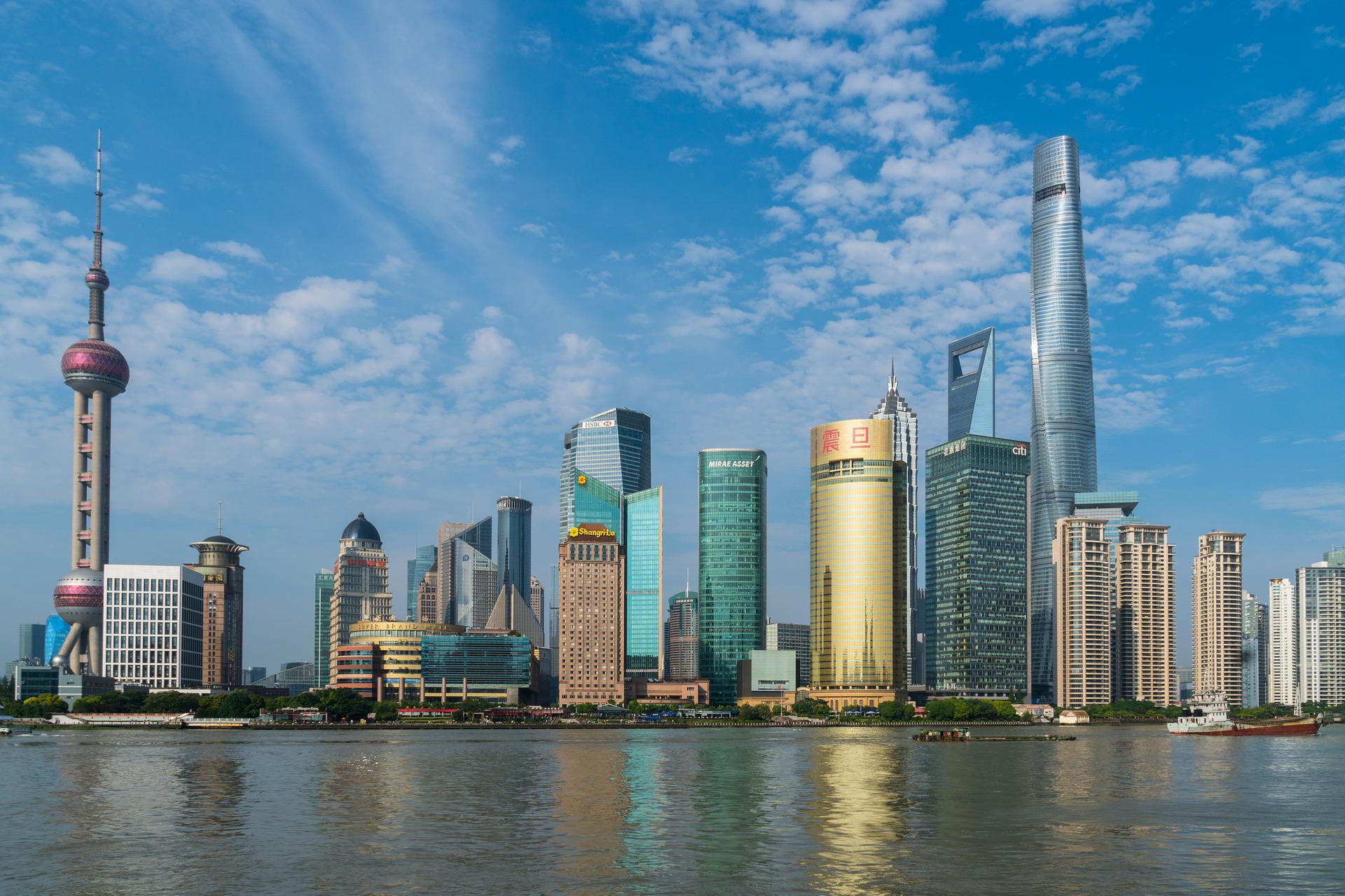
The most iconic and most photographed urban panorama in China — The Bund (外滩, Waitan), a 1.5km waterfront promenade along the western bank of the Huangpu River, presents on one side the greatest surviving ensemble of colonial commercial architecture in Asia: 52 neoclassical, Art Deco, Baroque, and Gothic Revival buildings built by the British, French, American, and Japanese trading houses of the International Settlement between 1846 and 1941, their stone facades now housing luxury hotels, banks, and restaurants of the highest calibre. On the opposite bank of the Huangpu, the futuristic towers of Pudong — the Oriental Pearl TV Tower, the bottle-opener silhouette of the Shanghai World Financial Center, the twisting Shanghai Tower (632m, China's tallest), and the Jin Mao Tower — create the most dramatic juxtaposition of colonial past and 21st-century ambition available in any city in the world. The Bund at night, lit by the warm glow of the colonial facades facing the blue-and-white LED spectacle of Pudong across the river, is one of the great urban spectacles of the modern world.
Shanghai's Iconic Panorama🏘️ Former French Concession
The most beautiful and most liveable urban district in Shanghai and the finest concentration of early 20th-century residential architecture in China — the Former French Concession (法租界), the area of central Shanghai administered by France from 1849 to 1943, retains its distinctive character in the shaded plane-tree-lined avenues of Huaihai Road, the Art Deco villas and garden compounds of Fuxing Road and Xinhua Road, the preserved shikumen lane houses of Tianzifang and Xintiandi, and the finest concentration of independent restaurants, boutiques, wine bars, and coffee shops in East Asia. The French Concession is where Shanghai's creative class lives and works, where the city's best chefs have opened their restaurants, and where the accumulated architectural richness of a century of cosmopolitan prosperity is most visibly and most pleasurably preserved. A morning walk from Fuxing Park down Shaoxing Road to Tianzifang is the finest urban walk in Shanghai.
Most Beautiful District🏛️ Shanghai Museum
The finest museum in China and one of the great art museums of the world — the Shanghai Museum (上海博物馆) on People's Square houses the most comprehensive collection of Chinese art and antiquities outside the Palace Museum in Beijing: over 140,000 objects spanning 5,000 years of Chinese civilisation, displayed in 11 permanent galleries of the highest curatorial quality. The Ancient Chinese Bronze Gallery — the finest collection of Shang and Zhou dynasty ritual bronzes in existence, including vessels of extraordinary beauty and technical accomplishment made 3,000 years ago — and the Chinese Ceramics Gallery — with the most comprehensive survey of Chinese porcelain from Neolithic painted pottery to Qing dynasty imperial wares — are the two collections of greatest international significance. The museum's Chinese Calligraphy and Seal Gallery provide the finest introduction to the distinctively Chinese art forms of brush calligraphy and stone seal engraving. Free admission (booking required); one of the world's great free museums.
China's Finest Museum🕌 Yu Garden & the Old City
Shanghai's most important surviving pre-colonial heritage and a masterpiece of classical Chinese garden design — Yu Garden (豫园, Yuyuan), a 2-hectare private garden built by the Pan family between 1559 and 1577 during the Ming dynasty, is one of the finest examples of the southern Chinese scholar's garden tradition: rockeries of extraordinary artificial topography, pavilions reflected in still ponds, covered walkways with lattice windows framing calculated views, and the famous zigzag bridge (its angular geometry designed to confuse evil spirits, which can only travel in straight lines) leading to the Mid-Lake Pavilion Teahouse — the oldest teahouse in Shanghai (1855) and a building of great architectural beauty. The surrounding Old City Bazaar (城隍庙, Chenghuangmiao) — a dense commercial district of traditional Chinese architecture, street food stalls, souvenir shops, and the City God Temple — provides the most intense and most characteristically Chinese sensory experience available within easy reach of the Bund.
Ming Dynasty Garden🌆 Pudong Skyline & Shanghai Tower
The most dramatic urban skyline in the world and the most visible symbol of China's extraordinary economic transformation — Pudong (浦东), the financial and commercial district on the eastern bank of the Huangpu River, was almost entirely agricultural land in 1990; today it contains China's tallest building (Shanghai Tower, 632m, 128 floors), the second-tallest (Shanghai World Financial Center, 492m — the "bottle opener"), and the iconic Oriental Pearl TV Tower (468m, now somewhat overshadowed by its neighbours but still Shanghai's most recognisable silhouette). The observation deck of Shanghai Tower (floors 118–119, at 546m — the highest observation deck in China) provides the most extraordinary urban panorama available in Asia: on clear days, the entire Yangtze Delta sprawl extends to the horizon, with the colonial roofline of the Bund directly below. The Lujiazui financial district around the three towers is best experienced on foot at street level — the scale of the architecture is most comprehensible from ground level, where the towers disappear entirely into the sky above you.
World's Most Dramatic Skyline🎨 West Bund Art District & M50
The finest contemporary art district in China and one of the most important in the world — Shanghai's West Bund Art District (西岸艺术区) along the southern Huangpu waterfront has emerged in the past decade as the most significant concentration of contemporary art institutions in Asia: the Long Museum West Bund, the Yuz Museum, the Tank Shanghai (five repurposed aviation fuel tanks converted into a spectacular performance and exhibition space), and the recently opened West Bund Museum (a partnership with the Centre Pompidou in Paris) collectively present the most ambitious and most consistently excellent contemporary art programme available in mainland China. The M50 Creative Park (莫干山路50号) in Putuo district — 50 converted textile mill buildings housing over 100 galleries, artist studios, and design spaces — provides the most accessible and most affordable introduction to Shanghai's independent contemporary art scene.
World-Class Contemporary Art🍜 Tianzifang & Xintiandi
The two finest adaptive reuse heritage districts in Shanghai and the most visited cultural-commercial precincts in the city — Tianzifang (田子坊) in the Former French Concession is a labyrinthine network of preserved shikumen lane houses (the distinctive Shanghai residential typology of stone-gate courtyard houses) now housing the finest concentration of independent boutiques, design studios, art galleries, and small café-restaurants in the city: intimate, human-scaled, and completely different in character from the grand boulevards of Huaihai Road a few blocks away. Xintiandi (新天地), a few minutes' walk north, presents a more polished and more commercial version of the same shikumen heritage — the restored 1920s lane houses now containing upscale restaurants, international fashion brands, and the Site of the First National Congress of the Chinese Communist Party (1921), where China's ruling party was founded in a French Concession townhouse in a moment of world-historical significance.
Heritage Lane Houses🚄 Shanghai Maglev & Transport Wonders
Shanghai's extraordinary transport infrastructure is itself one of the city's most remarkable attractions — a showcase of Chinese engineering ambition at its most spectacular. The Shanghai Maglev (磁浮列车) — the world's first and fastest commercially operated magnetic levitation train, connecting Pudong International Airport to Longyang Road metro station in 7 minutes 20 seconds at a top speed of 431 km/h — is an experience of visceral technological excitement that no other city on earth can provide: the train accelerates with a silkiness that makes conventional rail feel antiquated, and the speedometer display in the carriage reaching 430+ km/h provides a genuinely extraordinary moment. Shanghai's Metro system — 20 lines, 508 stations, and over 10 million daily passengers — is the largest metro network in the world by total line length and provides fast, cheap, air-conditioned access to every corner of the city for CNY 3–8 per journey.
World's Fastest TrainLocal Food Recommendations
Shanghai's food scene is the most sophisticated and most diverse in China — a city where the refined, subtly sweet cooking of the Jiangnan tradition coexists with the world's most exciting concentration of international restaurants, and where street food of extraordinary quality is available 24 hours a day.
🍽️ Must-Try Shanghai Dishes
- Xiaolongbao (soup dumplings) — the dish most closely identified with Shanghai's culinary identity worldwide and a masterpiece of Chinese dumpling craft: xiaolongbao (小笼包, literally "small basket buns"), thin-skinned steamed dumplings filled with a precise combination of minced pork (or crab and pork in the premium version) and a jellified stock that liquefies during steaming, creating a pocket of rich, scalding soup inside the delicate wrapper. The correct technique for eating xiaolongbao — place the dumpling on a spoon, bite a small hole in the wrapper to release a drop of steam, sip the soup carefully, add vinegar and ginger, then eat the dumpling whole — is one of the most pleasurably ritualistic eating experiences in Chinese food culture. The finest xiaolongbao in Shanghai: Din Tai Fung (Taiwanese chain, impeccable consistency), Jia Jia Tang Bao (Huanghe Road — the most beloved local institution), and Nanxiang Steamed Bun Restaurant in Yu Garden (since 1900).
- Hairy crab (dazha xie) — the most celebrated and most seasonal delicacy in Shanghai's culinary calendar: the Chinese mitten crab (大闸蟹, dazha xie), harvested from Yangcheng Lake near Suzhou between late September and early December, is a small but intensely flavoured freshwater crab prized above all for the rich, creamy roe (female crabs with golden roe from mid-October; male crabs with white roe from late October) that fills the carapace. Eating hairy crab in Shanghai during the season — the ritual of opening the crab with the specially designed eight-piece crab tool set, extracting the roe, mixing it with rice vinegar and ginger, and drinking warm Shaoxing rice wine alongside — is the most distinctively Shanghainese dining experience available at any price. Premium Yangcheng Lake crabs are expensive (CNY 150–400 per crab depending on size and gender); imitations from other lakes are cheaper. Season strictly October–November.
- Hong shao rou (red-braised pork belly) — the most important and most beloved dish of Shanghai's home cooking tradition and the finest expression of the benbang (本帮, "local gang") Shanghainese cuisine style: thick slices of pork belly braised for 2–3 hours in soy sauce, Shaoxing rice wine, rock sugar, and aromatics until the skin gelatinises to a trembling, glossy richness and the fat melts into the meat in layers of extraordinary tenderness and complex sweet-savoury depth. Red-braised pork belly is the food that every Shanghainese person associates with their grandmother's kitchen — the dish that defines local cooking the way cassoulet defines Toulouse or ragu defines Bologna. Available at every traditional Shanghainese restaurant in the city; the finest versions from Jesse Restaurant (Tianping Road), Lao Shanghai, and the Sunday lunch at the Crystal Jade chain.
- Shengjianbao (pan-fried pork buns) — Shanghai's most addictive street food and the dumpling that rivals xiaolongbao for local affection: shengjianbao (生煎包) — larger, doughier, and pan-fried to a crispy golden bottom with a soft, steamed top, filled with pork and soup in the same principle as xiaolongbao but with a richer, more satisfying chew and the incomparable combination of crispy base and silky interior — are sold from specialist shops throughout Shanghai from early morning. The correct accompaniment is a bowl of clear beef tendon soup or sesame-paste congee; the correct location is a small plastic stool on the pavement outside a shengjian shop at 7am while the city begins to move around you. Xiayang Shengjianbao on Wujiang Road and Da Hu Chun on Sichuan Road are the most respected specialists.
- Scallion oil noodles (congyou banmian) — the simplest and most technically demanding dish in the Shanghai home kitchen: thin wheat noodles tossed with the finest possible scallion oil (made by slowly frying spring onions in oil until caramelised and deeply fragrant, then straining) and soy sauce in a dish whose quality depends entirely on the freshness of the noodles and the patience with which the scallion oil was made. Scallion oil noodles are the test of a Shanghai noodle shop's seriousness — a bowl that costs CNY 15–25 at a good local shop and that provides a clarity and depth of flavour entirely disproportionate to its apparent simplicity. Available at the small noodle shops of the French Concession and the Old City; the finest versions from Yi Mian (Nanjing Road) and the hole-in-the-wall shops of Wujiang Road pedestrian snack street.
- Crab shell pastry (xiepiqing) — one of the finest and least internationally known pastries in Chinese cooking: xiepiqing (蟹壳黄, literally "crab shell yellow") — a small, flaky, sesame-encrusted pastry baked in a clay-lined barrel oven (the same technique as the Central Asian tandoor), filled with either sweetened red bean paste or salted pork and spring onion — emerges from the oven with a crunch and a buttery flakiness that rivals anything produced in a French boulangerie, at a price of CNY 3–5 per pastry from the specialist shops of Huanghe Road and the Old City. The combination of the sesame crust, the flaky wheat pastry layers, and the intensely flavoured filling is one of the great simple pleasures of Shanghai street food.
🍷 Drinks & Nightlife
- Rooftop bars of the Bund — the finest cocktail experience in Asia and the most spectacular bar setting in the world: the rooftop bars perched above the Bund's colonial facades with a direct view across the Huangpu River to the illuminated Pudong skyline provide a setting for a drink that no other city on earth can match. Bar Rouge on the 7th floor of Bund 18, CHAR Bar at the House of Roosevelt, and the Vue Bar at the Hyatt on the Bund command premium cocktail prices (CNY 120–200 per drink) but deliver a view that is beyond price. The rooftop bars are at their most spectacular after 9pm when the Pudong light show is at full intensity.
- Craft cocktail bars of the French Concession — the finest cocktail culture in mainland China, concentrated in the shaded streets of the Former French Concession: Speak Low (consistently ranked among Asia's 50 best bars) on Fuxing Road, Union Trading Company on Danshui Road, and the extraordinary speakeasy-style bars hidden in basement and second-floor spaces throughout Yongkang Road, Xinle Road, and the lanes of Tianzifang. Shanghai's bartenders are among the most technically accomplished in Asia, and the city's cocktail scene has an originality and ambition that reflects the city's broader creative energy. Cocktail prices in the French Concession (CNY 80–160) are significantly lower than comparable venues in Tokyo, Singapore, or Hong Kong.
- Baijiu (Chinese white spirits) — China's national spirit and the world's most-consumed category of distilled alcohol by volume: baijiu (白酒, literally "white alcohol"), a clear distillate made from sorghum, wheat, or rice at strengths of 40–65% alcohol, is the dominant spirit of Chinese social and business culture. The finest baijiu — Moutai (茅台, from Guizhou Province, China's most prestigious and most expensive spirit), Wuliangye, and Luzhou Laojiao — develops extraordinary complexity through long fermentation and aging in clay pits, with flavour profiles that range from the intensely funky and fermented jiang-xiang style to the cleaner, more approachable nong-xiang style. For the adventurous, a ganbei (dry glass) toast at a Shanghai banquet is one of the most genuinely Chinese social experiences available.
- Chinese tea culture in Shanghai — the Wuyutai Tea House, the specialist tea shops of the Old City's Fuyou Road, and the refined tea rooms of the French Concession offer the finest introduction to Chinese tea culture available in a major city: from the tieguanyin oolong of Fujian to the longjing green tea of nearby Hangzhou (widely considered China's finest green tea) and the aged pu'er fermented teas of Yunnan. The Mid-Lake Pavilion Teahouse in Yu Garden — the oldest teahouse in Shanghai — provides the most atmospheric traditional tea experience in the city, sitting above the zigzag bridge as the tourist crowds below create an unexpected sense of elevated calm.
🍽️ Where to Eat — Local Tips
- Jia Jia Tang Bao (Huanghe Road) — the most beloved xiaolongbao specialist in Shanghai and the best single introduction to the city's most iconic dish: a spartan, high-turnover shop on the pedestrian snack street of Huanghe Road that produces xiaolongbao of extraordinary quality — the skin gossamer-thin, the soup plentiful, the pork filling subtly seasoned — at prices (CNY 20–35 for a steamer basket) that represent some of the finest food value in Shanghai. Arrive early (opens 7am) — queues form immediately and the best baskets sell out. No frills, no English menu, maximum authenticity.
- Jesse Restaurant (Tianping Road, French Concession) — the finest and most celebrated traditional Shanghainese restaurant in the city for visitors seeking authentic benbang cuisine: Jesse (吉士酒家) on Tianping Road serves the definitive versions of Shanghai's greatest home-cooking dishes — red-braised pork belly, smoked fish, fried eel with garlic, bamboo shoots with pork, and the city's finest drunken chicken — in a warm, informal atmosphere that represents the best of Shanghai's traditional restaurant culture. Reserve ahead; English menu available; mains CNY 60–150.
- Wujiang Road Pedestrian Street (Jing'an) — Shanghai's finest concentration of street food and casual food stalls within a single short pedestrianised block: shengjianbao, xiaolongbao, fried rice cakes (niangao), stinky tofu, grilled skewers, and the full range of Shanghai's most beloved street foods at prices of CNY 5–25 per item, consumed standing up or on plastic stools in the most genuinely local food atmosphere available in central Shanghai. Best experienced for breakfast (7–9am) or the late-night snack circuit (after 10pm).
- Lost Heaven (Bund) — the finest upscale dining experience for visitors seeking both extraordinary food and the most beautiful restaurant interior in Shanghai: Lost Heaven on Yan'an Road East, housed in a spectacular three-storey colonial mansion with Yunnan folk-art decoration and the finest bar terrace view of the Bund, serves the most acclaimed Yunnan (southern Chinese minority) cuisine available in the city — the rainbow of flavours from Yunnan's 26 ethnic minorities, including the extraordinary mushroom dishes, the rice-wine-marinated meats, and the exotic spice combinations of the Dai and Bai traditions — at mid-to-upper range prices (CNY 180–380 per person with drinks).
- Yongkang Road bar and café strip (French Concession) — the finest and most characteristic street-level food and drink experience in the Former French Concession: a short, tree-lined lane between Jiashan Road and Dongping Road lined with small restaurants, craft beer bars, espresso cafés, and wine bars whose outdoor tables spill onto the pavement under the plane trees on warm evenings, creating one of the most convivial and most beautiful outdoor dining environments in Asia. The food ranges from excellent French bistro cooking to Japanese ramen to Taiwanese bing subing (shaved ice) — the quality across the street is consistently high and the atmosphere is the finest available for an evening in the French Concession.
🎭 Art, Culture & Creative Scene
- Shanghai's contemporary arts scene is the most active and most internationally connected in mainland China — the city hosts more international gallery branches, more art fairs, and more museum openings than any other city in the Asia-Pacific region. The West Bund Art & Design Fair (November) and ART021 Shanghai Contemporary Art Fair (November, at the Shanghai Exhibition Centre) together constitute the most important art week in Asia, drawing collectors, gallerists, and art world figures from across the globe for a November programme that has made Shanghai the unchallenged Asian art market rival to Hong Kong. The Long Museum (both West Bund and Pudong locations), the Yuz Museum, and the Rockbund Art Museum on the Bund present the finest and most ambitious exhibition programmes available in mainland China.
- The Shanghai Grand Theatre (人民广场) — a spectacular glass-roofed contemporary building by Jean-Marie Charpentier on People's Square — is the premier performing arts venue in China, hosting international opera companies, ballet troupes, and orchestras of the highest world standard in a 1,800-seat main auditorium of excellent acoustics and considerable architectural beauty. The Shanghai Symphony Orchestra (founded 1879 — the oldest professional orchestra in Asia) performs at its dedicated Shanghai Symphony Hall (designed by Renzo Piano) in the Former French Concession in a season of outstanding quality; single tickets for most concerts are available from CNY 80–480. The Shanghai International Film Festival (June) is the most important film festival in China and the most significant in Asia.
- The Rockbund Art Museum on the Bund — housed in a beautifully restored 1930s Art Deco building — and the Power Station of Art (上海当代艺术博物馆, PSA) in Xuhui — China's first state-run contemporary art museum, housed in a converted power station with a spectacular chimney stack — are the two most prestigious and most consistently excellent contemporary art institutions in Shanghai. The PSA hosted the Shanghai Biennale (biennial, typically October–March) — the most important international contemporary art exhibition in China. Both institutions are free or low-cost admission and represent the most accessible entry points into Shanghai's world-class contemporary art offer.
- Shanghai's live music scene — concentrated in the French Concession's clubs and live music venues — is the finest in mainland China: the JZ Club on Fuxing Road (the best jazz club in China, with live performances nightly by the finest Chinese and international jazz musicians available in Shanghai), the MAO Livehouse and Yuyintang (the two most important indie rock and electronic music venues in China, consistently hosting the most significant touring international acts available in the mainland market), and the extraordinary electronic music and nightclub scene of TAXX, Arkham, and the West Bund's warehouse venues provide a nightlife of genuine world-class ambition that few cities outside New York, London, and Berlin can match.
Day Trip Itineraries from Shanghai
Shanghai's position at the heart of the Yangtze Delta — one of the most historically and culturally rich regions of China — and its exceptional high-speed rail connections make it the finest base for day trips in mainland China:
🌸 Day Trip: Suzhou
Travel time: 25–30 minutes by high-speed rail (G-train from Shanghai Hongqiao) | Cost: From CNY 35 return; garden entry CNY 70–90 each
Suzhou — the "Venice of the East," 90km west of Shanghai — is the most beautiful and most historically significant city in the Yangtze Delta: its network of canals (older than Venice's), UNESCO-listed classical gardens (the finest in China — the Humble Administrator's Garden, the Master of the Nets Garden, and the Lion Grove Garden are among the world's greatest landscapes), preserved Ming and Qing dynasty streets, and the finest silk production and embroidery tradition in China combine to make Suzhou the most rewarding and most beautiful single day trip from Shanghai. Take the first morning G-train, spend the day in the gardens and the canal quarter, return on the last evening service.
Classical Gardens & Canals🍵 Day Trip: Hangzhou
Travel time: 45–60 minutes by high-speed rail (G-train from Shanghai Hongqiao) | Cost: From CNY 75 return; West Lake scenic area free
Hangzhou — capital of Zhejiang Province and one of China's most celebrated cities — is dominated by the legendary West Lake (西湖), a UNESCO World Heritage Site and one of the most beautiful and most painted landscapes in Chinese history: the willow-fringed lake with its causeways, islands, pagodas, and the reflection of the surrounding hills has inspired Chinese poets, painters, and emperors for 1,500 years. Hangzhou is also the home of Longjing (Dragon Well) tea — the finest green tea in China, grown on the hillsides above the lake and available to taste and purchase at the tea plantations of the Meijiawu Tea Village. The China National Tea Museum and the Leifeng Pagoda complete an outstanding full-day itinerary.
West Lake & Longjing Tea🏔️ Day Trip: Huangshan (Yellow Mountain)
Travel time: 2 hours by high-speed rail (G-train from Shanghai Hongqiao to Huangshan North) | Cost: From CNY 180 return; mountain entry CNY 190 + cable car CNY 80
Huangshan — the Yellow Mountain range in southern Anhui Province — is the most celebrated and most visually extraordinary mountain landscape in China: the bizarre granite peaks rising through clouds of mist, the ancient contorted pine trees clinging to the cliff faces, and the sea of cloud that fills the valleys below the summits combine to create the landscape that has defined Chinese ink painting for 1,500 years. A UNESCO World Heritage Site, Huangshan is most spectacular in the early morning when the mist clears to reveal the full panorama of peaks. A day trip is possible but an overnight stay on the mountain (several hotels operate on the upper trails) provides the dawn and dusk experiences that constitute the finest Huangshan moments.
China's Sacred Mountain🌊 Day Trip: Zhoushan & Putuo Island
Travel time: 1.5 hours by high-speed ferry from Wusong Wharf | Cost: Ferry from CNY 120 return; island entry CNY 160
Putuo Island (普陀山) in the Zhoushan archipelago — one of China's four sacred Buddhist mountains and the island most associated with Guanyin, the bodhisattva of compassion — provides the most atmospheric and most spiritually distinctive day trip available from Shanghai: the ferry journey across the East China Sea, the ancient Buddhist temples and monasteries set among forested hillsides above the sea (the Puji Temple, the Fayu Temple, and the remarkable Nanhai Guanyin bronze statue on the southern headland), and the island's beaches and coastal walks create a day of extraordinary variety and spiritual beauty. The island is crowded on Chinese public holidays; visit on a weekday for the most contemplative experience.
Sacred Buddhist IslandTourist Tips for Shanghai
🚌 Getting Around
- Shanghai Metro — the world's largest metro network (20 lines, 508 stations) is by far the fastest, cheapest, and most reliable way to navigate Shanghai: trains run every 2–5 minutes during peak hours, air conditioning is excellent, and all stations are signed in both Chinese and English. A single journey costs CNY 3–8 depending on distance; a Shanghai Metro Day Pass (CNY 18) provides unlimited travel for 24 hours. The metro connects all major tourist districts: People's Square (hub), the Bund (East Nanjing Road station), Yu Garden (Yuyuan station), the French Concession (South Shaanxi Road, Changshu Road), and Pudong (Lujiazui). Use the Metro App or Apple/Google Maps for navigation.
- Didi (滴滴) — China's dominant rideshare app (equivalent to Uber) — is the strongly recommended taxi option for all journeys not served directly by the metro: safe, metered, and accepting international credit cards in the app. Download and register before arrival. A typical Didi journey within the city costs CNY 25–60; from Pudong Airport to the French Concession approximately CNY 120–160. Didi also operates a premium English-language service (DiDi Premier) with English-speaking drivers for airport transfers.
- Shanghai Maglev connects Pudong International Airport (PVG) to Longyang Road metro station (Line 2, 7 and Line 16) in 7 minutes 20 seconds at 431 km/h — CNY 50 single, CNY 40 with same-day flight boarding pass. From Longyang Road, Line 2 continues directly into the city centre (People's Square in approximately 30 minutes). Total journey from Pudong Airport to People's Square approximately 45 minutes — the most extraordinary airport transfer available in any city on earth.
- Shanghai Hongqiao Airport (SHA) — the domestic and regional airport 15km west of the city centre — is directly connected to the central metro network (Lines 2 and 10); journey to People's Square approximately 30 minutes, CNY 5–7. Hongqiao Station (adjacent to the airport) is also the main high-speed rail terminus for all G-trains to Suzhou, Hangzhou, Nanjing, and Beijing.
- Cycling and e-bikes — Shanghai's flat terrain and extensive network of bike lanes make cycling one of the most enjoyable ways to explore the French Concession, the Bund waterfront, and the West Bund at a leisurely pace. Meituan Bike and Hello Bike (formerly Hellobike) provide dockless bike-share throughout the city via their apps; CNY 1.5 per 30 minutes — excellent value for the French Concession lane exploration that is best done by bicycle.
💡 General Safety & Travel Tips
- The Chinese Yuan (CNY/RMB) is the only accepted currency in virtually all Shanghai shops, restaurants, and services. ATMs accepting international Visa and Mastercard cards are available at all major bank branches (ICBC, Bank of China, China Construction Bank) and in the lobbies of international hotels. WeChat Pay and Alipay are the dominant payment methods for virtually everything in Shanghai — from the metro to street food to luxury retail. Set up WeChat Pay with an international Visa/Mastercard before arrival (the app now accepts international cards) for the most frictionless payment experience. Carry CNY 200–300 in cash as a backup for small vendors and markets that may not accept cards.
- VPN is essential — China's Great Firewall blocks Google (including Maps, Gmail, and Translate), WhatsApp, Instagram, Facebook, Twitter/X, YouTube, and most Western news sites. Install a reliable VPN (ExpressVPN, NordVPN, or Astrill are the most reliable in China) on all devices before departure — it is difficult to download VPN apps once inside China. Alternatives: use Baidu Maps (Chinese maps, excellent coverage, some English), WeChat (the dominant Chinese messaging app, used for everything), and Didi (transport) as your primary Chinese-market apps.
- The Shanghai Tourist Information and Service Centre operates at multiple locations throughout the city (main office at 561 East Nanjing Road) providing free city maps, English-language event listings, and tourism assistance. The Visit Shanghai official website and app provide comprehensive English-language visitor information, event calendars, and restaurant recommendations updated by the Shanghai Municipal Tourism Administration.
- Shanghai is a city of enormous distances — the urban area is larger than many countries. Allow significantly more transit time between attractions than map distances suggest: the French Concession to Pudong, for example, appears close on a map but involves a 30-minute metro journey. Plan itineraries by district rather than by attraction to minimise transit time and maximise walking exploration within each neighbourhood.
- The China 144-hour visa-free transit policy allows citizens of 53 countries (including all EU member states, the United States, United Kingdom, Canada, and Australia) to visit Shanghai and other designated areas for up to 144 hours (6 days) without a Chinese visa, provided they are in transit between two non-Chinese countries and hold confirmed onward tickets. This policy makes Shanghai one of the most accessible cities in China for short visits and provides a significant extension on the previous 72-hour window. Verify current eligibility and conditions on the Chinese embassy website before travel.
Apply for Tourist Visa
Most visitors to Shanghai require a Chinese Tourist Visa (L Visa), applied for through the Chinese embassy or consulate in their home country before travel. Citizens of certain countries benefit from the 144-hour visa-free transit policy (see Tourist Tips above) for stays of up to 6 days in Shanghai and designated areas without a visa, provided they hold confirmed onward tickets to a third country. China's visa application process typically requires a completed application form, passport photos, flight and hotel confirmation, and proof of financial means. Processing time is usually 4–7 business days. Check the most current requirements with the Chinese embassy in your country, as visa policies change periodically. China Visa Information
Important Emergency Numbers
🇨🇳 Shanghai Emergency Contacts
- 🚑 Ambulance: 120
- 🔥 Fire Brigade: 119
- 👮 Police: 110
- 🏥 Huashan Hospital Foreigner Clinic: +86 21 5288 9999
International Emergency Phone Numbers
Find Flights to Shanghai
Airport Codes: PVG — Pudong International Airport (40km east, all international flights) | SHA — Hongqiao International Airport (15km west, domestic & regional)
Airport Transfer: From Pudong (PVG): Shanghai Maglev to Longyang Road then Metro Line 2 to city centre (45 min total, CNY 55); or Didi to French Concession (50–70 min, CNY 120–160). From Hongqiao (SHA): Metro Lines 2/10 direct to city centre (30 min, CNY 5–7). Airlines serving Shanghai include Air China, China Eastern, China Southern, Cathay Pacific, Singapore Airlines, Emirates, Lufthansa, British Airways, Air France, Japan Airlines, ANA, United Airlines, and Delta, with direct connections to all major global hubs.
International Airport FinderCurrency in Shanghai
The currency of China is the Chinese Yuan (CNY), also known as Renminbi (RMB). ATMs accepting international Visa and Mastercard are available at major bank branches throughout Shanghai. WeChat Pay and Alipay are the dominant payment methods for virtually all transactions — setting up WeChat Pay with an international card before arrival is strongly recommended.