

Country's codes
International phone code for Solomon Islands: +677
3 letters: SLB
2 letters (internet domain): .SB
Digital country code: 090
Standard EAN-13 (country barcode): -
 Olympic country code: SOL

Solomon Islands Travel Guide: Top Attractions & Best Time to Visit
A remote paradise in the South Pacific, the Solomon Islands offer crystal‑clear lagoons, ancient traditions, WWII relics, lush rainforests, and some of the best diving on Earth. A perfect destination for nature lovers, divers, and travelers seeking untouched beauty.
Best Time to Visit Solomon Islands
The Solomon Islands experience a warm tropical climate year‑round. Your ideal travel season depends on whether you are diving, hiking, or exploring islands.
These months offer dry weather, calm seas, and excellent visibility for diving.
- May–October: Dry season — perfect for snorkelling, diving, and trekking.
- November–April: Wet season, more humid, occasional tropical storms, but vibrant nature.
- Year‑round: Consistent water temperatures and lush green scenery.
Top Attractions in the Solomon Islands
Honiara
The capital offers bustling markets, museums, cultural villages, and access to WWII historical sites including Henderson Field and coastal memorials.
CityHistoryCultural
Marovo Lagoon
One of the world’s largest saltwater lagoons — a haven of turquoise water, coral reefs, and peaceful island communities. Top spot for diving and kayaking.
DivingNatureRelaxation
Gizo & Western Province
Known for its tropical islands, world‑class coral reefs, underwater WWII relics, and friendly local culture.
BeachesDiving
Skull Island
A cultural heritage site featuring preserved ancestral skull shrines — a deep insight into Melanesian traditions and island history.
CulturalHeritage
Rennell Island & Lake Tegano
A UNESCO‑recognized ecosystem featuring limestone cliffs, dense forests, and the vast Lake Tegano. Ideal for birdwatching and eco‑travel.
UNESCONature
Bonegi Beach
A black‑sand beach near Honiara famous for shallow WWII wreck dives accessible directly from the shore.
DivingAdventure
Mataniko & Tenaru Falls
Stunning waterfalls surrounded by dense jungle, offering unforgettable day hikes and refreshing pools.
HikingNature
Uepi Island
A small paradise island perfect for snorkeling, underwater photography, and relaxing eco‑lodges.
Eco‑TravelWater Activities
Travel Tips for Solomon Islands
Local Culture: Traditional Melanesian customs remain strong. Respect local customs, especially in rural and tribal areas.
Transportation: Ferries and small planes connect the main islands. A boat is essential for reaching remote lagoons and beaches.
With untouched landscapes, rich traditions, and spectacular underwater worlds, the Solomon Islands are one of the Pacific’s last truly wild destinations — ideal for explorers seeking nature and authenticity.
Online Travel Visa Check.
Find Visa information for your destination.Useful country information
Land area: 10,633 sq mi (27,539 sq km); total area: 10,985 sq mi (28,450 sq km)
Population (2022 est.): 703,995
Capital and largest city (2022 est.): Honiara (on Guadalcanal), 92,344
Honiara: Capital City Profile
Monetary unit: Solomon Islands dollar
Languages: English 1%?2% (official), Melanesian pidgin (lingua franca), 120 indigenous languages
Ethnicity/race: Melanesian 95.3%, Polynesian 3.1%, Micronesian 1.2%, other 0.3% (2009 est.)
Religions: Protestant 73.4% (Church of Melanesia 31.9%, South Sea Evangelical 17.1%, Seventh Day Adventist 11.7%, United Church 10.1%, Christian Fellowship Church 2.5%), Roman Catholic 19.6%, other Christian 2.9%, other 4%, none 0.03%, unspecified 0.1% (2009 est.)

Background:
The Solomon Islands consist of six major and approximately 900 smaller volcanic islands, coral atolls and reefs, more than 300 of them are inhabited. They stretch about 900 miles in a south-easterly direction from Papau New Guinea toward Fiji. The former UK protectorate, established in the 1890s, is one of the poorest countries in the South Pacific; 85 percent of the country's population live in isolated rural villages on undeveloped outer islands.
Self-government was achieved in 1976 followed by independence in 1978.
Government malfeasance, etnic armed conflicts and civil unrest left the country in danger of a total collapse. Following an urgent request from the Solomons government for help, Australian-led regional forces landed in the capital Honiara on July 2003 to rescue the Solomon Islands from collapse. After one year of the Regional Assistance Mission (RAMSI) in 2004 the law and order situation and indeed the fiscal situation remains fragile.
Other Melanesian islands: Fiji, New Caledonia, Papua New Guinea, Vanuatu.
Country Map
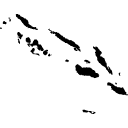
COUNTRY MAP WITH STATES/PROVINCES BOUNDARIES CLICK HERE

Source of Information:


