

Country's codes
International phone code for South Korea: +82
3 letters: KOR
2 letters (internet domain): .KR
Digital country code: 410
Standard EAN-13 (country barcode): 880
 Olympic country code: KOR
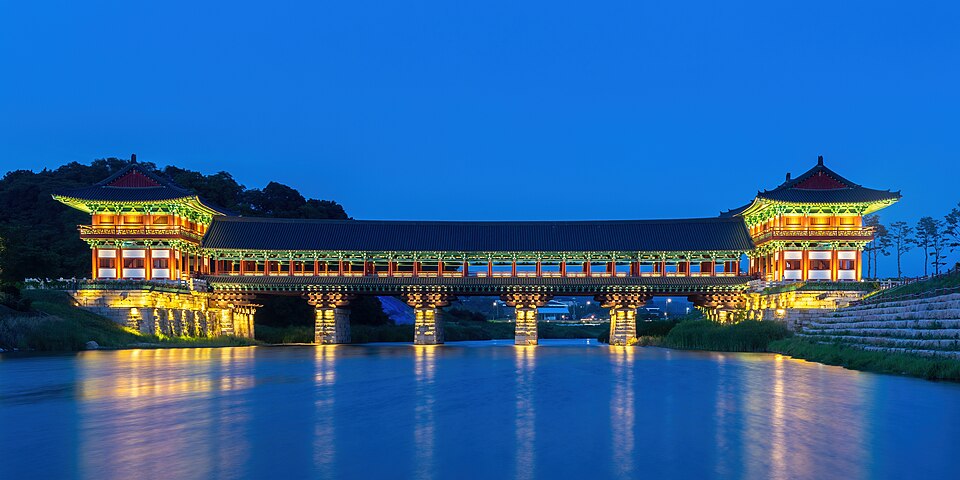
South Korea Travel Guide: Top Attractions & Best Time to Visit
South Korea blends futuristic cities with ancient palaces, vibrant markets, volcanic islands, and world-famous cuisine. It’s a destination where technology, tradition, nature, and culture meet — offering something for every traveler.
Best Time to Visit South Korea
South Korea has four distinct seasons. The best time to visit depends on whether you want cherry blossoms, autumn foliage, festivals, or mild temperatures.
Pleasant weather, clear skies, and the country at its most beautiful.
- Spring (Mar–May): Cherry blossoms, mild weather, and outdoor festivals.
- Summer (Jun–Aug): Hot and humid; best for beaches and island trips.
- Autumn (Sep–Nov): Colorful foliage, perfect hiking, cool temperatures.
- Winter (Dec–Feb): Snowy landscapes and ski resorts in the mountains.
Top Attractions in South Korea
Seoul
A dynamic capital blending skyscrapers, markets, royal palaces, and K‑culture. Visit Gyeongbokgung Palace, Bukchon Hanok Village, Myeongdong, and Seoul Tower.
CityCulturalIconic
Busan
A vibrant coastal city known for sandy beaches, seafood markets, cliffside temples, and colorful neighborhoods such as Gamcheon Culture Village.
BeachCulture
Jeju Island
A volcanic island famous for emerald coasts, lava tubes, Hallasan Mountain, and wellness resorts. Ideal for hiking, beaches, and nature retreats.
NatureAdventure
Gyeongju
Known as the “Museum Without Walls,” Gyeongju is filled with ancient tombs, temples, and relics from the Silla Dynasty — a must for history lovers.
HistoryCultural
DMZ (Demilitarized Zone)
A unique historical site offering observation platforms, tunnels, and exhibitions that narrate the peninsula’s past and present divisions.
HistoricEducational
Andong Hahoe Folk Village
A preserved traditional village offering folk culture, masked dances, and hanok homes — showcasing Korea’s rural life and heritage.
HeritageCulture
Suwon Hwaseong Fortress
A majestic fortress featuring impressive walls, gates, and viewpoints — a blend of military engineering and Korean craftsmanship.
UNESCOArchitecture
Seoraksan National Park
A dramatic mountain region with hiking trails, temples, waterfalls, and wildlife. Extremely popular in autumn when the foliage turns brilliant colors.
HikingNature
Travel Tips for South Korea
Food & Culture:
Korean cuisine is rich in flavor — try bibimbap, kimchi, Korean BBQ, and local street food.
Respect for elders and politeness are key cultural values.
Whether you’re exploring Seoul’s futuristic skyline, hiking volcanic landscapes in Jeju, or discovering centuries-old temples, South Korea offers an exciting mix of modern living, nature, and cultural richness — ideal for all types of travelers.
Useful country information
- Land area: 100,210 sq km (38,691 sq mi)
- Population (2024 est.): 51.7 million
-
Capital and largest city: Seoul (approx. 9.7 million)

Seoul: Capital City Profile - Other major cities: Busan ~3.3 million; Incheon ~2.9 million; Daegu ~2.4 million; Daejeon ~1.5 million; Gwangju ~1.4 million
- Monetary unit: South Korean won (KRW)
- National name: Daehan Minguk (Republic of Korea)
- Current government officials
- Languages: Korean (official), English widely taught and understood
- Ethnicity/race: Predominantly Korean, with growing multicultural population
- Religions: Christianity ~30%, Buddhism ~15–20%, no religion ~50%+, others (including Confucian traditions)
National Holiday: Liberation Day, August 15

Background:
The Korean Peninsula stretches southward from the northeastern edge of the Asian continent, forming a land rich in history, culture, and natural beauty. For centuries, Korea has cultivated a strong national identity shaped by the enduring influences of Buddhism and Confucianism, which continue to guide its social values and traditions today.
Koreans are an ethnically homogeneous people with a distinct language, culture, and customs that set them apart from neighboring China and Japan. This unique heritage has played an important role in preserving national unity and cultural continuity over generations.
In recent decades, South Korea has undergone a remarkable transformation. Once predominantly agrarian, it has emerged as one of the world’s leading industrial and technological powerhouses. Rapid advancements in education, science, technology, and social welfare have significantly improved the quality of life for its citizens.
Following the end of World War II, the Korean Peninsula was divided into two separate states. The Republic of Korea (South Korea) was established in the south on August 15, 1945, while a communist government took hold in the north. This division led to the Korean War (1950–1953), during which United Nations forces supported South Korea against northern aggression. The conflict ended in an armistice, creating a demilitarized zone (DMZ) near the 38th parallel that still separates the two Koreas today.
Despite the devastation of war, South Korea achieved extraordinary economic growth, with living standards rising dramatically over time. Although the country faced a severe financial crisis in 1997, it demonstrated resilience and recovered strongly, continuing to advance its democratic institutions and global economic standing.
In 2000, a historic milestone was reached when leaders from North and South Korea held their first summit, signaling hope for reconciliation on the peninsula. That same year, South Korean President Kim Dae-jung was awarded the Nobel Peace Prize for his commitment to democracy, human rights, and peaceful engagement with the North—the first Korean to receive this honor.
South Korea also gained international recognition when it co-hosted the 2002 FIFA World Cup™, showcasing its modern infrastructure, vibrant culture, and warm hospitality to the world.


Source of Information:


