

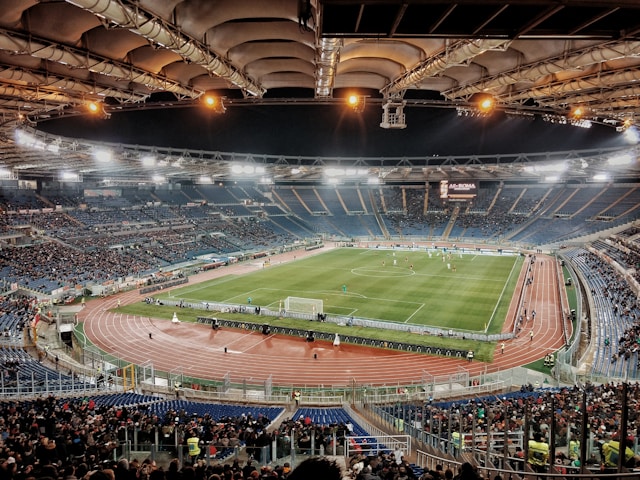
Stadio Olimpico
Rome’s legendary arena — home to AS Roma and SS Lazio, and one of Europe’s most iconic big-match venues.
City: Rome

Discover Rome — the Eternal City of ancient landmarks, piazzas, food culture, and unforgettable street life. It’s also a top football destination, especially on derby weekends and European nights.
Visit Rome GuideCountry: Italy

Explore Italy — world famous for history, art, cuisine, and dramatic landscapes, with a deep football tradition spanning Serie A giants, passionate fan culture, and iconic stadiums across the country.
Visit Italy GuideIntroduction
Stadio Olimpico is Rome’s premier stadium, located inside the historic Foro Italico sports complex. Opened in the 1950s and renovated for major tournaments, it hosts AS Roma and SS Lazio matches, cup finals, international football, and major rugby events. The Olimpico is famous for its scale, dramatic curves (Curva Sud and Curva Nord), and the electric atmosphere that defines big games in the capital.
History of Stadio Olimpico
- 1953: Stadium officially opens in Rome.
- 1960: Hosts major events during the Rome Olympic Games era.
- 1988–1990: Extensive refurbishment ahead of the 1990 FIFA World Cup.
- 2007–2008: Further upgrades to modernize seating, facilities, and matchday standards.
- Continues to host domestic derbies, European fixtures, and international showcase matches.
EU Stadiums Map
Location
Stadio Olimpico sits in northwest Rome within Foro Italico, near the Tiber and Monte Mario. There’s no metro station directly at the stadium, but it’s easy to reach using Metro + tram/bus connections, with clear matchday routes and crowd management.
- Flaminio (Metro A) + Tram 2 toward Piazza Mancini
- Ottaviano (Metro A) + Bus 32 toward Piazzale della Farnesina
- Piazza Mancini (Tram 2 terminus) + walk to the stadium
- Foro Italico & Stadio dei Marmi (sports complex + architecture)
- Ponte Milvio (riverside area with bars and restaurants)
- Vatican City & St. Peter’s (short ride away)
- Villa Borghese & Piazza del Popolo (easy from Flaminio)
Home of AS Roma & SS Lazio
Stadio Olimpico is shared by two of Italy’s biggest clubs — AS Roma and SS Lazio. Matchdays range from family friendly league fixtures to explosive derby atmospheres, with choreographed displays, intense singing, and a genuine “Roman football” identity that’s hard to match anywhere else in Europe.
Design & Modern Features
The Olimpico combines classic stadium scale with modern upgrades to seating, access routes, and event facilities. Its bowl design creates strong acoustics, while the Foro Italico setting gives the matchday experience a unique “monumental” feel.
The stadium’s historic names included “Stadio dei Centomila” — reflecting how huge the venue once was before modern seating and safety standards reduced capacity.
- Derby della Capitale atmosphere (Roma vs Lazio)
- Curva Sud / Curva Nord choreography and singing
- Foro Italico architecture and “monumental” matchday approach
- Major finals and internationals hosted throughout the year
Travel Tips for Visiting Stadio Olimpico
Tour availability can vary by season and event schedule. If tours aren’t running, it’s still worth visiting the Foro Italico area for photos and architecture — especially the Stadio dei Marmi nearby.
Best Times to Visit
Non-match weekdays are best for a calm visit. For atmosphere, aim for a derby weekend or a European night — but plan extra time for travel and security checks.
Booking Tips
Big games can sell out quickly. Use official club ticket channels and avoid unofficial resellers. For high-demand fixtures, official hospitality can be the most reliable option.
The easiest routes are Metro A to Flaminio (then Tram 2) or Metro A to Ottaviano (then Bus 32). After full-time, expect queues — consider waiting briefly before heading to the stops, or walking part of the way to reduce crowd pressure.
Explore the Stadium
Click a marker to view photos, city guides, and stadium directions.

 PL
 England

 LaLiga
 Spain

 Bundesliga
 Germany

 Ligue 1
 France

 Serie A
 Italy

 Liga PT
 Portugal


