

Country's codes
International phone code for Vietnam: +84.
3 letters: VNM
2 letters (internet domain): .VN
Digital country code: 704
Standard EAN-13 (country barcode): 893
 Olympic country code: VIE
Online Travel Visa Check.
Find Visa information for your destination.Vietnam Travel Guide

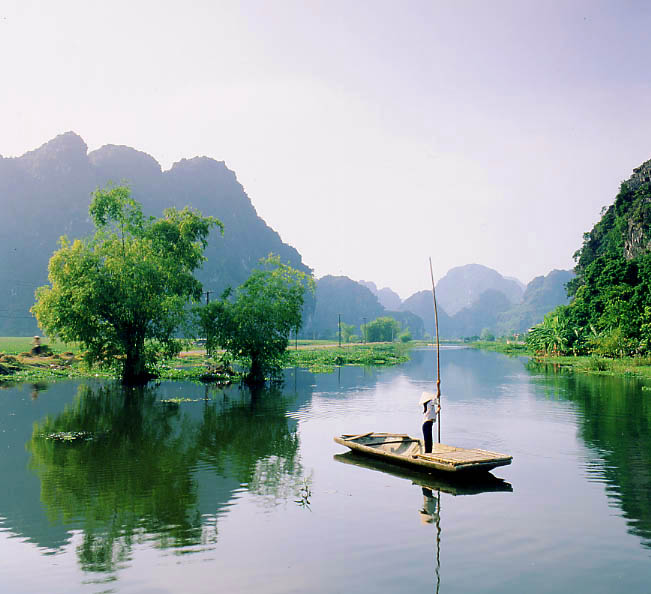
Vietnam is famous for breathtaking landscapes, historic temples, colonial architecture, and vibrant markets. Travelers can explore mountain villages, cruise through emerald bays, and experience some of Asia’s most celebrated cuisine.
Top Attractions in Vietnam
Ha Long Bay
A UNESCO World Heritage Site, Ha Long Bay is famous for thousands of limestone islands rising from emerald waters. Boat cruises through the bay are among the most popular experiences in Vietnam.
Hoi An Ancient Town
This charming historic town is known for lantern-lit streets, traditional architecture, and riverside cafés. Hoi An is also famous for tailoring and local cuisine.
Phong Nha–Ke Bang National Park
Home to some of the world’s largest caves, including Son Doong Cave, this national park offers spectacular underground landscapes and adventure tourism.
Mekong Delta
The fertile Mekong Delta region is famous for floating markets, rice fields, and traditional river life.
Best Places to Visit
- Hanoi – Vietnam’s historic capital known for lakes, temples, and colonial architecture.
- Ho Chi Minh City – The country’s largest city with vibrant nightlife and historic landmarks.
- Da Nang – A coastal city with beautiful beaches and modern attractions.
- Hue – Former imperial capital with palaces and historic citadel walls.
- Sapa – Mountain region famous for rice terraces and ethnic minority villages.
Things to Do in Vietnam
- Cruise among limestone islands in Ha Long Bay.
- Explore lantern-lit streets in Hoi An.
- Trek through rice terraces in Sapa.
- Visit historic war museums and tunnels in Ho Chi Minh City.
- Experience floating markets in the Mekong Delta.
Travel Tips for Visitors
- The climate varies by region; check weather conditions before planning your trip.
- Street food is safe and delicious when eaten at busy local stalls.
- Motorbikes are the most common form of transport in cities.
- Domestic flights are convenient for long-distance travel.
Useful Country Information
| Total Area | 331,699 km² (128,070 sq mi) — stretching over 1,650 km from north to south |
| Population | ~100 million (2023 est.) — 15th most populous country in the world |
| Capital City | Hanoi — metropolitan area population approximately 8 million; Vietnam's political, cultural, and historical heart |
| Major Cities | Ho Chi Minh City (largest city, ~10M metro) | Da Nang (central coast hub) | Hai Phong (northern port city) | Can Tho (Mekong Delta capital) |
| Currency | Vietnamese đồng (VND) — approx. 25,000 VND per 1 USD (2025) |
| Languages | Vietnamese (official) | English (widely used as second language, especially in tourism and business) | French (historical legacy) | Chinese | Various minority languages including Tay, Hmong, and Khmer |
| Ethnicity | Kinh (Viet) ~85.7% — the majority group | Significant ethnic minorities including Tay, Thai, Muong, Khmer, Hmong, Nung, and 48 other recognized groups, many concentrated in the northern highlands and central plateau |
| Religions | Buddhism (largest group) | Catholicism | Cao Dai | Hoa Hao | Protestantism | Islam | Non-religious (a significant share of the population identifies as non-religious or follows traditional ancestor veneration practices) |
| National Holiday | National Day — September 2 (commemorating Ho Chi Minh's Declaration of Independence, 1945) | Reunification Day — April 30 |
| Government | One-party socialist republic — governed by the Communist Party of Vietnam (CPV) | Current government officials |
| Electricity | 220V / 50Hz — Type A, C, and F plugs (a universal adapter is recommended) |
| Time Zone | ICT — Indochina Time (UTC+7) | No daylight saving time |
 Hanoi: Capital City Profile
Background
Vietnam has one of the longest and most layered histories in Southeast Asia. For over a thousand years, the country was under Chinese rule before gaining independence in 938 AD after the Battle of Bạch Đằng River — a foundational moment in Vietnamese national identity. Over subsequent centuries, a series of Vietnamese dynasties expanded southward, eventually reaching the Mekong Delta and transforming Vietnam into the long, narrow S-shaped country it is today.
French colonial rule began in earnest in the mid-19th century, and by 1887 Vietnam was incorporated into French Indochina alongside Cambodia and Laos. French influence left a lasting mark on the country's cuisine, architecture, and urban design — most visibly in the colonial-era streets of Hanoi and Ho Chi Minh City (then Saigon). Japanese occupation during World War II accelerated the independence movement, and Ho Chi Minh declared independence on September 2, 1945 — the date still celebrated as National Day.
A prolonged period of conflict followed: first the First Indochina War against France (1946–1954), which ended with the country temporarily divided at the 17th parallel into a communist North and a US-backed South. The Vietnam War (1955–1975) — known in Vietnam as the American War — ended with the fall of Saigon on April 30, 1975, and the reunification of the country under communist rule in 1976. The war left deep scars on both the country and the wider region, and its legacy continues to shape Vietnamese society and international relations.
Since the introduction of Đổi Mới economic reforms in 1986, Vietnam has transformed into one of Southeast Asia's fastest-growing economies — lifting tens of millions of people out of poverty and emerging as a major manufacturing hub and tourist destination. Today, Vietnam draws millions of international visitors each year to its UNESCO World Heritage Sites, dramatic landscapes from Halong Bay to the rice terraces of Sapa, and one of the world's great culinary traditions.


