Country's codes
International phone code for Wales: +44
ISO 3166-1 Alpha-3 (Country): GBR (United Kingdom)
ISO 3166-2 (Subdivision/Region): GB-WLS (Wales)
2 letters (internet domain): .GB
Digital country code: 826
Standard EAN-13 (country barcode): 500–509
 Wales competes under Great Britain in Olympics
Wales: Land of Castles, Dragons, and Dramatic Coastlines
Getting to Wales
Wales is easily accessible from across the UK and beyond. Cardiff Airport serves a range of European destinations, while Bristol Airport — just across the border in England — offers broader international connections within easy reach. Fast rail services connect Cardiff to London Paddington in under two hours, and trains also run directly to Swansea, Newport, and north Wales coastal towns.
Driving is the most practical way to explore Wales's rural interior and coastline. The M4 motorway connects London and Bristol to Cardiff and Swansea, while the A55 expressway links north Wales to Manchester and Liverpool. Scenic train routes through Snowdonia offer a spectacular alternative to the car for reaching the north.
Tip: For North Wales, trains from Manchester and Birmingham reach Llandudno, Bangor, and Conwy directly. Book rail tickets well in advance for the best fares — advance singles can be significantly cheaper.
Best Time to Visit Wales
Wales rewards visitors in every season, but May–June and September offer the best combination of mild weather, long daylight hours, and thinner crowds. Summer (July–August) brings the warmest temperatures and is ideal for coastal walks along the Wales Coast Path, hiking in Snowdonia, and the famous Hay Festival of literature and arts in May.
Autumn brings stunning foliage across the valleys and national parks, while winter — though wetter and shorter on daylight — transforms castles and mountain passes into dramatic moody landscapes perfect for photography. Welsh weather is famously changeable; pack layers and a waterproof at all times of year.
Tip: August is peak season — popular spots like the Pembrokeshire Coast and Snowdonia get very busy. May and September offer most of the same experiences with far fewer crowds.
Top Attractions in Wales
Wales has more castles per square mile than anywhere else in Europe — over 600 in total, with four holding UNESCO World Heritage status. Caernarfon Castle, Conwy Castle, Harlech Castle, and Beaumaris Castle are among the finest examples of medieval military architecture in Europe.
Snowdonia National Park (Eryri) is home to Yr Wyddfa (Mount Snowdon) — the highest peak in England and Wales — reachable by foot or by the historic mountain railway. The Pembrokeshire Coast offers spectacular beaches, and the Brecon Beacons (Bannau Brycheiniog) deliver lush waterfalls and open moorland.
Tip: The world's fastest zip line is found at ZipWorld in North Wales, flying over the Penrhyn Quarry at up to 100mph — a thrilling way to experience the Snowdonia landscape.
A Glimpse into Wales's History
Wales has one of the oldest continuous cultural identities in Europe. Its Celtic roots stretch back thousands of years, and the Welsh language — spoken today by around 17.8% of the population — is one of the oldest living languages on the continent. The country resisted Roman and Anglo-Saxon domination for centuries before the Norman conquest brought waves of castle-building across the land.
In 1282, Edward I of England conquered Wales and constructed his famous chain of Iron Ring castles to enforce control. Despite the Laws in Wales Acts of 1535 and 1542 formally uniting Wales with England, Welsh identity, language, and culture endured. The 19th-century coal and iron industries transformed South Wales, making it one of the world's great industrial powerhouses and leaving a profound legacy still visible today.
Tip: The National Museum Cardiff offers a superb, free introduction to Welsh history, art, and natural science — an essential first stop in the capital.
Practical Tips for Visiting Wales
Wales uses pound sterling (£), the same currency as the rest of the UK. Contactless payments and Apple/Google Pay are widely accepted in cities and tourist areas, though smaller rural pubs and shops may still prefer cash. Tipping in restaurants is customary at 10–15% where no service charge is included.
Welsh and English are both official languages — road signs are bilingual throughout the country, and in areas like Gwynedd and Anglesey you'll hear Welsh spoken widely. Budget travellers can get by on around £60–80 per day using hostels and free museums; mid-range visitors should budget £100–180 per day. Many of Wales's finest museums, including the National Museum Cardiff, are free to enter.
Tip: Under Wales's right to roam laws, walkers have broad access to open countryside — making Wales one of Europe's finest destinations for hiking and wild exploration.
Wales's Political Landscape
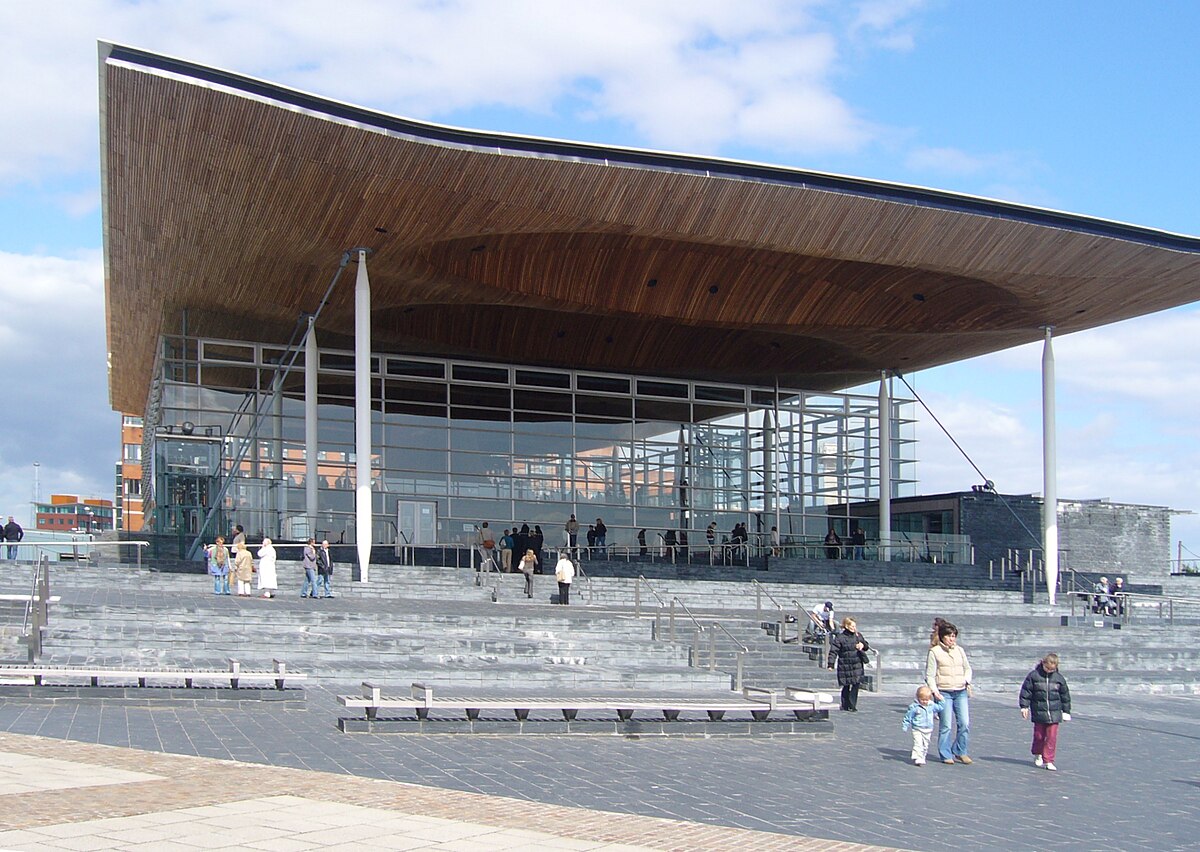
Wales operates under a devolved parliamentary system, with the Senedd Cymru (Welsh Parliament) in Cardiff Bay controlling domestic matters including health, education, transport, and housing. The UK Parliament at Westminster retains authority over defence, foreign affairs, and macroeconomic policy. Devolution has been in place since 1999, and the Senedd's powers have expanded steadily since then.
The May 2026 Senedd election — the first held under a new proportional representation system with an expanded 96-seat parliament — produced a dramatic result: Plaid Cymru became the largest party with 43 seats, ending 27 years of Labour dominance. Reform UK made a historic breakthrough with 34 seats, while Welsh Labour collapsed to just 9 seats. Plaid Cymru leader Rhun ap Iorwerth was elected First Minister, leading a minority government — a landmark shift in Welsh political history.
Tip: Welsh politics and national identity are deeply intertwined topics — locals are warm and proud, and happy to share their perspective with curious visitors who approach it with genuine interest.
Useful country information
Land Area: Approximately 8,023 square miles (20,779 square kilometers)
Population: Around 3.1 million people (2021 census)
Languages: English and Welsh (Cymraeg) are both official languages. Around 17.8% of the population speak Welsh fluently.
Ethnicity/Race:
- White: ~94%
- Asian: ~3%
- Mixed or Multiple ethnic groups: ~1.6%
- Black: ~0.9%
Religions:
- No religion: ~46.5%
- Christian: ~43.6%
- Muslim: ~2.2%
- Other religions: <1% each
Capital and largest city: Cardiff

Cardiff: Capital City Profile
Get Travel Insurance Quote