

Discover Washington
Washington State is a place of extraordinary natural drama and modern innovation in equal measure. In the west, the glacier-capped volcanic cone of Mount Rainier presides over ancient temperate rainforests, while the wild Olympic Peninsula shelters one of the wettest places in the contiguous United States and some of its most pristine coastline. To the east, beyond the imposing wall of the Cascades, the landscape transforms entirely into the sun-drenched wheat fields and vineyards of the Columbia Basin and the Palouse. "The Evergreen State" is also home to Seattle — a world-class city of coffee culture, tech giants, and a thriving arts scene perched between Puget Sound and the mountains. From whale watching in the San Juan Islands to skiing on crystal powder at Crystal Mountain, Washington rewards every kind of traveller with something genuinely unforgettable.
Best Time to Visit Washington
- July–September: The undisputed peak season — Mount Rainier's wildflower meadows are in full bloom, the San Juan Islands are perfect for kayaking, and Seattle enjoys long sunny days with temperatures in the low-to-mid 70s°F.
- April–June: Spring brings the famous tulip fields of the Skagit Valley into explosion, cherry blossoms to the University of Washington campus, and waterfalls at their most powerful throughout the Cascades.
- December–March: World-class skiing and snowboarding at Crystal Mountain, Stevens Pass, and Snoqualmie Pass, with Seattle's cosy café culture at its most inviting.
Tip: Mount Rainier's Paradise area receives more snowfall than almost anywhere on Earth — even in July, bring layers and check NPS road conditions before heading up!
History
Washington's history stretches back thousands of years through the remarkable cultures of Indigenous peoples including the Coast Salish, Chinook, Yakama, and Nez Perce nations, who built sophisticated societies around the salmon-rich rivers and coastal waters of the Pacific Northwest. Lewis and Clark reached the mouth of the Columbia River in 1805, and the establishment of Fort Vancouver in 1825 by the Hudson's Bay Company made the region a hub of the fur trade. American settlement accelerated through the mid-1800s as waves of pioneers arrived along the Oregon Trail, and Washington achieved statehood in 1889. The completion of the transcontinental railroad, the Klondike Gold Rush, and the rise of the timber and fishing industries drove rapid growth in Seattle and across the state. In the 20th century, the catastrophic 1980 eruption of Mount St. Helens reshaped the landscape, while the rise of Boeing, Microsoft, Amazon, and Starbucks transformed Washington into one of the world's most economically dynamic regions.
Top Attractions in Washington
Mount Rainier National Park
An active stratovolcano rising 14,411 feet above sea level, surrounded by ancient old-growth forest and the most elaborate system of glaciers on any U.S. peak outside Alaska.
Olympic National Park
A UNESCO World Heritage Site encompassing three distinct ecosystems — rugged Pacific coastline, temperate rainforest, and glacier-topped alpine peaks — all within one park.
Pike Place Market, Seattle
One of America's oldest and most beloved farmers' markets, where fishmongers famously throw salmon, and the original Starbucks has stood since 1971.
San Juan Islands
An archipelago of over 170 islands in Puget Sound offering outstanding orca whale watching, sea kayaking, cycling, and a wonderfully unhurried pace of life.
Mount St. Helens
The site of the catastrophic 1980 eruption that reshaped 230 square miles of landscape, now a fascinating National Volcanic Monument with dramatic lava fields and a rebuilt crater dome.
Leavenworth & the Wenatchee Valley
A charming Bavarian-themed village in the Cascades foothills, surrounded by apple orchards, white-water rivers, and world-class rock climbing at Tumwater Canyon.
Tourist Tips for Washington
- Rain Gear is Essential: Western Washington is famously rainy from October through May. A good waterproof jacket is non-negotiable — locals rarely use umbrellas, but visitors will be grateful for one.
- Ferry System: Washington State Ferries is the largest ferry system in the U.S. and the most scenic way to reach the Olympic Peninsula and the San Juan Islands. Book vehicle spaces in advance during summer.
- No Sales Tax on Groceries: Washington has no state income tax but does levy sales tax — however, groceries and prescription drugs are exempt, useful to know when stocking up for camping trips.
- Volcano Awareness: Washington sits on the Pacific Ring of Fire. Mount Rainier is considered one of the most dangerous volcanoes in the world due to its proximity to populated areas — though the risk of an eruption in any given year is very low.
- Coffee Culture: Seattle takes its coffee extraordinarily seriously. Explore independent roasters beyond Starbucks — try Victrola, Lighthouse, or Caffe Vita for a true Seattle coffee experience.
Largest City: Seattle
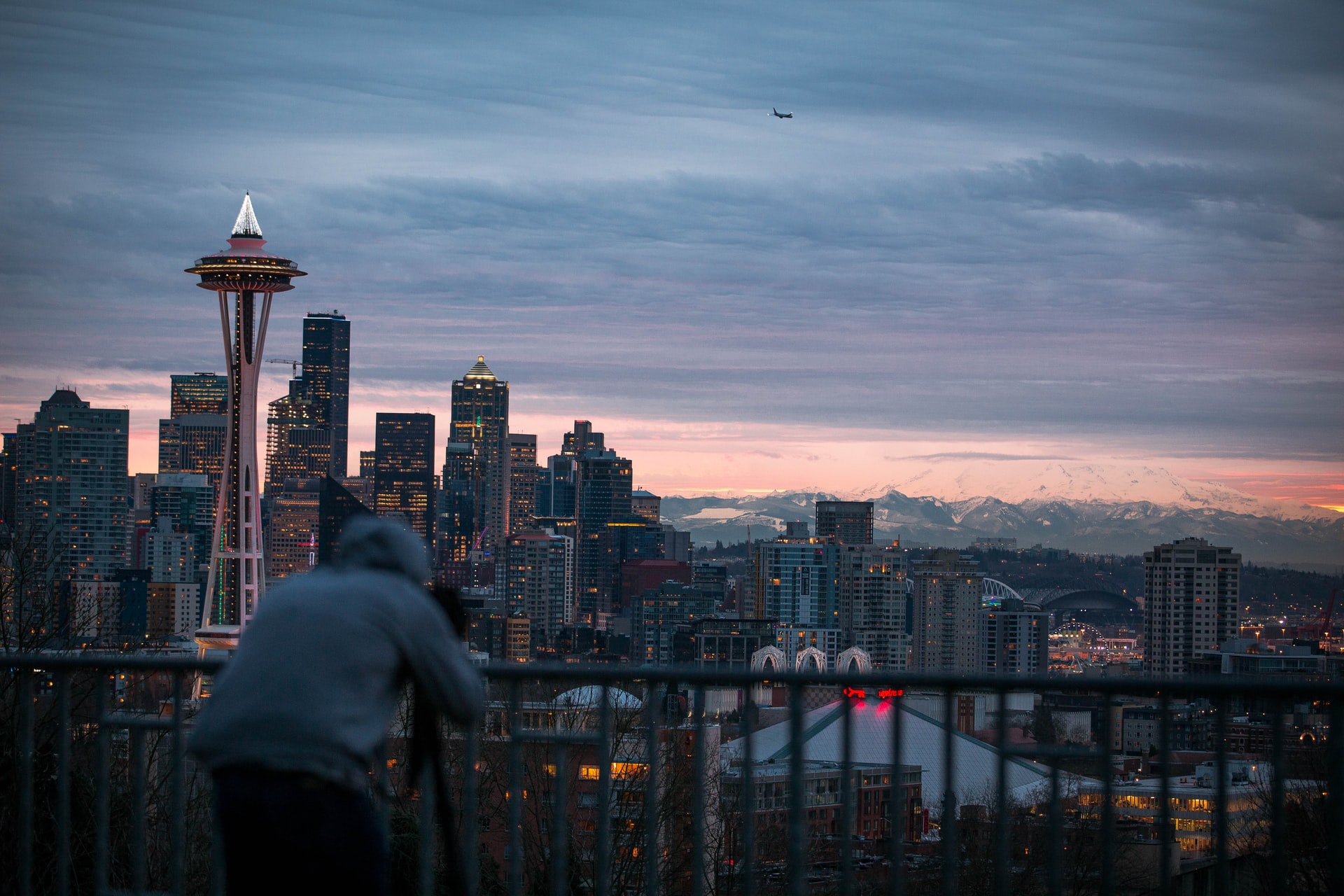
Seattle is one of America's most dynamic and scenically situated cities, rising between Puget Sound and Lake Washington with Mount Rainier gleaming on the horizon. Visit the iconic Space Needle, lose yourself in Pike Place Market, explore the cutting-edge Museum of Pop Culture (MoPOP), stroll the waterfront, and day-trip to the Cascades or the San Juan Islands — Seattle is an endlessly rewarding base for exploring the Pacific Northwest.
Explore Seattle Travel GuideState Facts
| State Capital | Olympia |
|---|---|
| State Size | Total: 71,298 sq miles; Land: 66,456 sq miles |
| Number of Counties | 39 |
| Time Zone | Pacific Time Zone (observes Daylight Saving Time) |
| Bordering States | Oregon, Idaho; borders Canada to the north and the Pacific Ocean to the west |
| Highest Point | Mount Rainier (14,411 ft) |
| National Parks/Sites | Mount Rainier NP, Olympic NP, North Cascades NP, Mount St. Helens NVM |
| State Population (2020) | 7,705,281 |
| Population Density | 115.9 people per sq mile |
| Area Codes | 206, 253, 360, 425, 509, 564 |
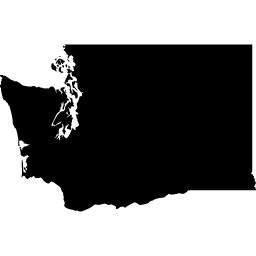
Washington State Map

