
Willemstad Weather
WILLEMSTAD WEATHERAbout Willemstad
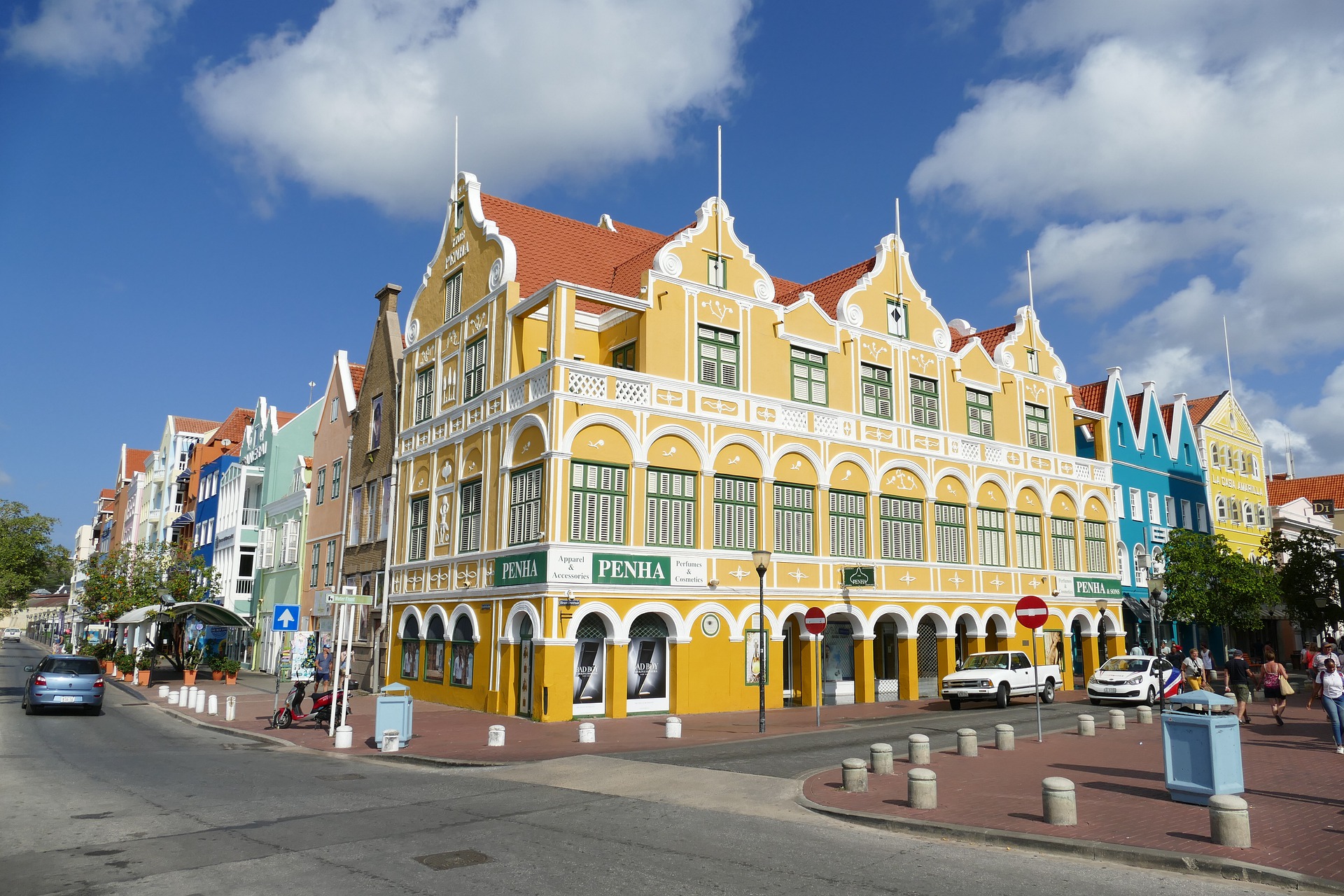
Willemstad — the capital of Curaçao and one of the most visually extraordinary cities in the entire Caribbean — is a UNESCO World Heritage city whose historic waterfront is the most photographed and most architecturally distinctive urban landscape in the Dutch Caribbean: a dense assembly of 17th and 18th-century Dutch colonial merchant buildings painted in vivid tropical colours (butter yellow, coral pink, sky blue, lime green, burnt orange) reflected in the waters of the Sint Annabaai (Saint Anna Bay), the natural harbour inlet that divides the city into the two historic districts of Punda and Otrobanda — connected by the famous Queen Emma Bridge, a 213-metre pontoon bridge that swings open to allow the passage of ships entering and leaving the harbour. The combination of the Dutch colonial architectural heritage, the extraordinary chromatic intensity of the building facades, the turquoise waters of the harbour, and the multicultural Afro-Caribbean, Dutch, and Latin American social character of its 150,000 inhabitants makes Willemstad one of the most distinctive and most rewarding small capitals in the world.
Curaçao's history is inseparable from the history of the Atlantic trade — and from its darkest chapters. The island was settled by the Dutch West India Company in 1634, and Willemstad's natural deep-water harbour rapidly made it the most important trading port in the Dutch Caribbean: a hub for the slave trade (Curaçao was one of the most important slave transit points in the Western Hemisphere, with an estimated 100,000–150,000 enslaved Africans passing through the island), for sugar, salt, and dyes, and for the commercial networks that connected Amsterdam to the Americas. The Kura Hulanda Museum — housed in a restored 18th-century plantation complex in Otrobanda — is the most comprehensive and most important museum dedicated to the history of the Atlantic slave trade in the Caribbean, and an essential visit for understanding the full depth of Willemstad's historical significance. Today's Willemstad is a peaceful, welcoming, and extraordinarily photogenic city where the legacy of that layered history — Dutch, African, Latin American, Sephardic Jewish, and indigenous Arawak — has produced one of the most genuinely multicultural and most harmonious societies in the Caribbean.
Best Time to Visit Willemstad & Weather Guide
Curaçao sits just 65km north of Venezuela, well south of the Caribbean hurricane belt — making it one of the most reliably sunny and most weather-consistent tourist destinations in the Caribbean. The island has a semi-arid tropical climate with year-round warmth (average temperatures of 27–32°C throughout the year), low humidity compared to other Caribbean islands, and a notably short rainy season. The trade winds that blow consistently from the east keep the heat comfortable even in summer.
☀️ Dry Season (January–May)
The finest and most popular season for visiting Willemstad and Curaçao — the dry season (January through May) brings the longest stretches of clear sunshine, the lowest rainfall, the calmest seas, and the most comfortable temperatures for exploring the city's UNESCO waterfront and the island's extraordinary beaches and coral reefs. February and March are the peak of the dry season and arguably the finest months to visit: average temperatures of 27–30°C, cool northeast trade winds keeping the heat pleasant, and the seas at their clearest for the world-class snorkelling and scuba diving that Curaçao is internationally celebrated for. The Curaçao Carnival (February, following the Caribbean carnival calendar) is the social highlight of the year — a week of costumed parades, steel pan music, and extraordinary street energy in the streets of Willemstad's Punda and Otrobanda districts. High season pricing applies January through April.
Best Time to Visit🌦️ Shoulder Season (June–July)
Curaçao's shoulder season — early in the Caribbean hurricane period but generally still fine for the island due to its southerly position outside the main hurricane track. June and July bring slightly higher humidity and the occasional brief rain shower, but the sunshine remains abundant (typically 8–9 hours daily), the seas are warm and clear for diving and snorkelling, and the prices at hotels and resorts drop significantly (30–50%) from the high season peaks. The Curaçao North Sea Jazz Festival (August — one of the most prestigious jazz and world music festivals in the Caribbean, held at the World Trade Center Curaçao) is the major cultural event of the summer season, drawing international acts and music lovers from across the region. June–July offers the best combination of good weather, lower prices, and smaller crowds for the island's beaches and the Willemstad waterfront.
Good Value🌧️ Rainy Season (October–December)
Curaçao's rainy season is the least favoured time to visit — but it is important to understand that "rainy season" in Curaçao's semi-arid climate means something quite different from the prolonged monsoon rains of other tropical destinations. The island receives an average of only 550mm of annual rainfall (far less than other Caribbean islands), and the rainy season typically produces short, intense afternoon rain showers followed by sunshine rather than prolonged grey days. November–December sees the most consistent rainfall but even at its wettest the island typically receives only 70–90mm per month. Hotels and resort rates are at their lowest of the year in October–November. The dramatic skies and lush green of the island's semi-arid landscape after rain produce particularly striking photography conditions for Willemstad's colourful waterfront.
Low Season🎊 Carnival & Festivals (February)
Curaçao's Grand Carnival — held in February in the weeks before Ash Wednesday — is the most important and most spectacular cultural event of the island's year, and one of the finest Caribbean carnival celebrations: a two-week programme of tumba music competitions (the indigenous Curaçaoan musical genre, a hybrid of African rhythms, calypso, and Latin elements), costumed parade processions through the streets of Willemstad, the Children's Carnival, the elaborate Gran Marcha (Grand March) through the UNESCO waterfront streets with thousands of costumed participants, and the burning of King Momo (the spirit of carnival) on the final night. The social energy of Willemstad's carnival — with the city's characteristic multicultural exuberance expressed in the most vivid possible form — is one of the most joyful and most distinctive travel experiences available in the Caribbean. Book accommodation many months in advance for the carnival period.
Carnival SeasonYear-round essentials: Curaçao's climate is warm and sunny throughout the year, so lightweight, breathable clothing in natural fibres (linen, cotton) is the baseline for all seasons. The trade winds keep the heat more comfortable than the temperature suggests — but sun protection is essential: SPF 50+ sunscreen, a wide-brimmed hat, and UV-protective sunglasses are must-carries for extended outdoor time in Willemstad and on the beaches. A light cardigan or wrap for the sometimes aggressively air-conditioned restaurants, bars, and shops.
For diving and snorkelling (which should be on every visitor's itinerary): a well-fitting rash guard for UV protection in the water, and a set of snorkelling fins if you prefer your own. Curaçao's dive shops provide all necessary equipment but quality varies — serious divers may prefer their own mask and regulator.
Footwear: comfortable walking sandals for the cobbled streets of Punda and Otrobanda (the UNESCO district's original Dutch paving stones are uneven and slippery when wet), and water shoes for the rocky entry points at some of the island's best snorkelling beaches. Smart-casual attire is appropriate for Willemstad's finer restaurants — the island has no formal dress code requirements but the quality of dining in the city centre merits dressing up slightly.
Top Attractions in Willemstad & Curaçao
Willemstad's attractions combine the UNESCO heritage of the Dutch colonial waterfront, a remarkable depth of Caribbean cultural and historical significance, and the extraordinary natural assets of the island's coral reefs, beaches, and semi-arid interior landscape.
🌈 Punda & Handelskade — The Iconic Waterfront
The most photographed and most architecturally extraordinary streetscape in the Caribbean — the Handelskade (Trading Quay), on the Punda side of Sint Annabaai, is the row of 17th and 18th-century Dutch colonial merchant buildings whose brilliant tropical colour facades (painted in vivid shades of yellow, pink, blue, orange, and green — a tradition dating from the early colonial period, when the glare of white-painted buildings was reportedly causing headaches for a Dutch governor) reflected in the harbour waters constitute the defining image of Willemstad and one of the most visually arresting urban landscapes in the world. The adjacent Punda district — a dense network of colonial-era streets, covered arcades, and the Floating Market (Venezuelan vendors selling fresh produce and fish from their boats moored along the waterfront since the 18th century) — rewards extensive exploration on foot and is one of the finest examples of intact Caribbean colonial urban fabric anywhere in the region.
UNESCO Icon🌉 Queen Emma Bridge (Koningin Emmabrug)
One of the most memorable and most endearing urban experiences in the Caribbean — the Queen Emma Bridge (Koningin Emmabrug), a 213-metre pontoon bridge of 16 wooden pontoons connected by a walking deck, swings open on its single fixed pivot point to allow the passage of ships through Sint Annabaai: a process of unhurried, graceful maritime ballet — the bridge detaching from both shores and rotating across the harbour mouth in a slow arc — that local pedestrians (who wait at the bank for the passage to complete) accept with the entirely nonchalant equanimity of people for whom this has been a twice-daily feature of city life since 1888. Watching the bridge open from the Otrobanda waterfront — ideally with a cold Polar beer in hand from one of the harbour-side bars — and then walking across when it closes is one of the essential Willemstad experiences.
Moving Bridge🕍 Mikvé Israel-Emanuel Synagogue — Oldest in the Western Hemisphere
The most historically significant religious building in the Caribbean and one of the most important Jewish heritage sites in the Americas — the Mikvé Israel-Emanuel Synagogue (known locally as Snoa), in the heart of Punda, was built in 1732 by the Sephardic Jewish community that had established itself in Curaçao from the 1650s onwards, following expulsion from Portugal, Spain, and Brazil. The synagogue — whose sand-covered floor, tebah (reading platform), and 18th-century silver ritual objects make it one of the most beautiful and most atmospherically preserved historic synagogues in the world — has been in continuous religious use since 1732, making it the oldest active Jewish synagogue in the Western Hemisphere. The adjacent Jewish Cultural Historical Museum documents the extraordinary history of the Curaçao Jewish community, which by the 18th century numbered over 2,000 people and constituted the most important Jewish community in the Caribbean.
Americas' Oldest Synagogue🏛️ Kura Hulanda Museum — Caribbean's Finest Slavery History Museum
The most important museum in Curaçao and one of the most significant cultural institutions in the Caribbean — the Kura Hulanda Museum, housed in a beautifully restored 18th-century plantation complex of 19 historic buildings in the Otrobanda district, presents the most comprehensive exhibition dedicated to the history of the Atlantic slave trade available anywhere in the Caribbean: from the African cultures and kingdoms from which enslaved people were taken, through the horror of the Middle Passage (transatlantic crossing in slave ships) to the history of slavery in Curaçao and the Caribbean, and finally to the culture of resistance, emancipation, and the Afro-Caribbean heritage that has shaped the island's contemporary identity. The museum was established by Dutch philanthropist Jacob Gelt Dekker in the 1990s and is built on the site of a former slave yard in Otrobanda — the most historically resonant possible location for an institution of this importance.
Essential Visit🤿 Coral Reefs & World-Class Diving
Curaçao is one of the finest scuba diving and snorkelling destinations in the entire Caribbean — and arguably the most accessible: the island's fringing coral reefs begin within metres of the shoreline at dozens of beach entry points around the coast, with no boat required for outstanding reef diving. The island's position outside the main hurricane belt has allowed the reefs to develop without the repeated storm damage that has devastated reef systems elsewhere in the Caribbean — Curaçao's underwater topography features dramatic underwater walls dropping to 60+ metres (including the celebrated Mushroom Forest, Watamula, and Klein Curaçao wall dives), outstanding coral diversity (more than 50 coral species), and excellent visibility of 20–30 metres. The Curaçao Sea Aquarium in Willemstad offers surface-level reef encounters and marine education. The tiny uninhabited island of Klein Curaçao — 2 hours by boat from Willemstad — is the finest day-trip snorkel and dive site in the region.
World-Class Diving🎨 Otrobanda & Pietermaai — The Creative Districts
Willemstad's most atmospheric and most rapidly evolving neighbourhoods — Otrobanda ("the other side"), the district on the west bank of Sint Annabaai directly connected to Punda by the Queen Emma Bridge, is a neighbourhood of 18th and 19th-century colonial houses whose painted facades, winding alleyways, and creative community have transformed it into the most vibrant arts, design, and restaurant quarter in the city. The adjacent Pietermaai district — a formerly derelict row of grand 19th-century mansions now meticulously restored into boutique hotels, cocktail bars, restaurants, and galleries — is the centrepiece of Willemstad's ongoing urban renaissance and the most international and most photogenic bar and restaurant quarter in Curaçao. Pietermaai on a Saturday night — with its restored colonial architecture lit against the Caribbean sky and the mix of local and international visitors at the outdoor tables — is the finest evening scene available in the city.
Arts & Nightlife🏖️ Knip Beach & West Coast Beaches
Curaçao's most beautiful beaches are concentrated on the sheltered west coast of the island — away from the prevailing trade winds and offering calm, clear, turquoise waters perfect for swimming, snorkelling, and the general tropical languor that beach holidays in the Caribbean are meant to provide. Knip Beach (Kenepa Grandi) — 35km west of Willemstad — is consistently voted among the finest beaches in the Caribbean: a sheltered bay of crystalline turquoise water, white-gold sand, shading palms and sea grape trees, and a dramatic cliff backdrop, accessible via a short walk from the car park. Grote Knip and the adjacent Kleine Knip are both outstanding. Closer to Willemstad, the Jan Thiel Beach and the resort beaches of the Blue Bay area offer full facilities (beach bars, sun loungers, water sports equipment hire) within 20 minutes of the city centre.
Best Beaches🌵 Shete Boka National Park & Interior
Curaçao's most dramatic natural landscape and a UNESCO Biosphere Reserve candidate — Shete Boka National Park (Seven Inlets) on the wild, exposed northeast coast of the island is a landscape of extraordinary geological power: the relentless force of the Atlantic has carved the island's raised coral limestone coastline into a series of dramatic wave-battered inlets (bokas), caves, and blowholes, with the Boka Tabla sea cave (where Atlantic waves surge into a large underground grotto — the crashing water audible before the cave entrance is visible) and the Boka Pistol blowhole (where incoming waves compress through a narrow channel and explode 10+ metres into the air) being the most dramatic highlights. The park's semi-arid interior — covered in cactus forest, divi-divi trees permanently bent by the trade wind, and the extraordinary watapana (divi-divi) that is the island's national tree — is home to sea turtle nesting beaches and an endemic subspecies of white-tailed deer.
Natural WonderLocal Food Recommendations
Curaçaoan cuisine is one of the most genuinely multicultural and most interesting cooking traditions in the Caribbean — a complex blend of African, Dutch, Latin American (particularly Venezuelan and Colombian), Sephardic Jewish, and indigenous Arawak influences that has produced a culinary vocabulary of considerable originality. The island's signature language, Papiamentu, is reflected in the food culture: a creole synthesis that is entirely its own.
🍽️ Must-Try Curaçaoan Dishes
- Keshi Yena — Curaçao's most celebrated and most distinctive national dish, and one of the finest expressions of culinary ingenuity born from the practical constraints of colonial-era cooking: a hollowed-out round of Edam or Gouda cheese (the most prestigious imported food in the Dutch colony), stuffed with a richly spiced filling of minced chicken or beef braised with onion, tomato, peppers, olives, raisins, and capers in a sweet-savoury sauce, then baked in the oven until the cheese melts into the filling. Keshi yena — literally "stuffed cheese" in Papiamentu — originated in the colonial period when enslaved people used the hollow wax rinds of Dutch cheeses (discarded after the cheese was consumed by the colonists) as cooking vessels for the meat stews they prepared. The resulting dish — the cheese casing melting into the spiced meat filling to create a uniquely sweet-savoury, sticky, entirely distinctive flavour — is one of the most original and most historically layered dishes in Caribbean cooking.
- Kabritu stoba (goat stew) — the most deeply traditional and most widely consumed meat dish in Curaçao: braised goat cooked slowly with onion, tomato, cumin, garlic, and the local prika (sweet pepper) until fork-tender and richly flavoured. Goat has been raised on Curaçao's semi-arid terrain since the earliest Dutch settlement and stoba (stew) is the cooking method that best suits the tougher, more flavourful meat of free-range island goat. Kabritu stoba is served at virtually every traditional Curaçaoan restaurant — the benchmark by which authentic local cooking is measured — alongside funchi (a firm cornmeal porridge similar to polenta, the island's carbohydrate staple) and fresh pan bolo (island bread).
- Sòpi di piska (fish soup) — the signature soup of Curaçaoan home cooking: a fragrant, clear broth of fresh Caribbean fish (typically grouper, snapper, or wahoo) simmered with plantain, potato, yam, onion, celery, and the island's distinctive seasoning blend of garlic, madame Jeanette pepper, and fresh herbs. The fish soup of the old Willemstad restaurants — made with fish bought directly from the Venezuelan fishing boats of the Floating Market that morning — is one of the freshest and most cleanly flavoured soups in Caribbean cooking.
- Funchi and Tutu — the two fundamental carbohydrate preparations of the Curaçaoan table: funchi is a firm cornmeal porridge (similar to polenta or Nigerian tuwo) cooked in water until stiff and served as a side dish with stews and grilled fish; tutu is funchi mixed with black-eyed peas and sometimes coconut milk — a dish with clear West African roots, brought to the island by enslaved Africans and now embedded in the island's food culture as one of its most distinctive preparations. Both are available at traditional Curaçaoan restaurants as the authentic accompaniment to the meat and fish dishes that form the centre of the island's culinary identity.
- Pan bati — the most beloved street bread of Curaçao: a small, round cornmeal pancake griddled until slightly puffed and just charred on the edges, eaten warm with butter and honey as a breakfast or snack, or as an accompaniment to soups and stews. Pan bati is sold at market stalls throughout Willemstad and eaten at all times of day — the most immediate and most universally enjoyed taste of authentic Curaçaoan daily life.
- Venezuelan arepas and cachapas — the proximity of Venezuela (65km to the south) and the significant Venezuelan immigrant community in Curaçao has made Venezuelan street food a fully integrated part of the island's culinary landscape: arepas (grilled or fried cornmeal patties split and stuffed with cheese, shredded chicken, black beans, or pabellón fillings) and cachapas (fresh sweet corn pancakes wrapped around white cheese) are available at Venezuelan food stalls and restaurants throughout Willemstad and the island. The combination of Curaçaoan and Venezuelan street food cultures makes the island's casual food scene one of the most interesting in the Caribbean.
🍹 Drinks & Social Culture
- Blue Curaçao liqueur — the island's most internationally famous product and the defining ingredient of dozens of cocktails worldwide: a bright blue (or orange, or clear) liqueur made from the dried peel of the laraha citrus fruit, a naturally bitter orange cultivar that adapted to Curaçao's semi-arid climate after Spanish orange varieties were introduced in the 16th century and developed an intensely aromatic, intensely bitter skin of unique quality. The Senior & Co. distillery at Landhuis Chobolobo (a restored 17th-century plantation house 10 minutes from Willemstad) is the original and most celebrated producer of authentic Curaçao liqueur — the distillery tour and tasting is one of the finest food and drink experiences on the island, offering the opportunity to taste the fresh laraha peel, the neutral spirit, and the finished liqueur in its natural, artificially uncoloured form (clear — the famous blue colour is added purely for aesthetic effect).
- Polar beer — the most universally consumed drink in Curaçao and the social accompaniment to virtually every Caribbean moment on the island: Polar, the Venezuelan lager that has dominated the Curaçaoan beer market for decades, is available ice-cold at every beach bar, splav equivalent, street stall, and restaurant on the island. Cold, clean, and perfectly calibrated to the Caribbean heat. The local Amstel Bright (brewed in Curaçao itself — the only Caribbean brewery producing Amstel under licence) is the finest locally produced lager: a light, refreshing 3.2% ABV beer specifically designed for the tropical climate.
- Rum and Caribbean cocktails — Curaçao's bar culture naturally gravitates toward rum-based cocktails: the Blue Curaçao Rum Punch (rum, Blue Curaçao, lime, pineapple juice, grenadine) is the island's signature cocktail and the most photographed drink in Willemstad's bars; the Curaçao Sling and various rum-based tropical concoctions are prepared with considerable creativity at the Pietermaai district's craft cocktail bars. The island's bar scene has grown significantly in sophistication over the past decade — the bartenders of the best Pietermaai establishments work with fresh local citrus, the authentic Senior Curaçao liqueur, and artisan rums from across the Caribbean to produce cocktails of genuine quality.
- Fresh fruit juices and batidos — the Venezuelan and Colombian influence on Curaçao's food culture is nowhere more evident than in the island's fresh juice and batido (blended fruit drink) culture: passion fruit, mango, tamarind, soursop, coconut, and the extraordinary variety of tropical fruits available at the Floating Market and Willemstad's fresh produce stalls are blended daily into drinks of extraordinary freshness and flavour intensity at the island's juice bars and breakfast stalls.
🍽️ Where to Eat — Local Tips
- Gouverneur de Rouville Restaurant (Otrobanda waterfront) — the most atmospheric restaurant in Willemstad: a restored 18th-century mansion directly on the harbour wall opposite the Handelskade, with a terrace that provides the most dramatic view of the colourful Punda facades from across the water. Serves Caribbean and international cuisine with an emphasis on fresh seafood. The front terrace table at sunset — watching the Handelskade glow in the evening light reflected in the harbour — is the finest dining setting in Curaçao. Budget $35–55 per person.
- Pietermaai district restaurant row — the finest concentration of quality restaurants in Curaçao, housed in the beautifully restored 19th-century mansions of the Pietermaai neighbourhood. Restaurants including Mundo Bizarro, Pietermaai 15, and The Village serve creative interpretations of Caribbean and international cuisine in settings of considerable architectural charm. Budget $30–55 per person.
- Floating Market (Sha Caprileskade, Punda) — the most authentic and most historically continuous food market in Willemstad: Venezuelan fishing boats and produce vendors moored along the Punda quay, selling fresh fish, tropical fruits, vegetables, and the ingredients of Curaçaoan daily cooking since the 18th century. The best destination for experiencing the Venezuelan-Curaçaoan cultural exchange that has shaped the island's food culture — budget $5–15 for fresh fruit, fish, or a quick breakfast.
- Zanzibar Beach Bar (Jan Thiel Beach) — the finest casual beach dining on the island: fresh grilled fish and seafood, cold Polar beer, and the general paradise of eating at a picnic table with your feet in the sand and the Caribbean stretching to the horizon. Budget $20–35 per person.
- Traditional Curaçaoan home restaurants (locally called lunch rooms) — the finest and most affordable authentic local cooking in Willemstad is found in the neighbourhood lunch rooms that serve daily-changing menus of keshi yena, kabritu stoba, sòpi di piska, funchi, and pan bati to local workers and families at prices of $8–15 per full meal. Ask your hotel or guesthouse owner for the current neighbourhood favourite — these establishments are not always listed online and locals guard their favourites closely.
🎨 Curaçaoan Crafts & Cultural Heritage
- Curaçao's most distinctive craft tradition is the production of authentic Blue Curaçao liqueur and the related laraha citrus products — the Senior & Co. distillery shop at Landhuis Chobolobo sells the original Curaçao liqueur in its natural (clear), blue, orange, and green colour variants, as well as laraha-infused chocolates, jams, and body products. A bottle of authentic Senior Curaçao Triple Sec or the premium Curaçao Royale expression is the most genuinely island-specific and most internationally recognisable gift from Willemstad.
- Papiamentu language and culture books — the island's extraordinary creole language (Papiamentu or Papiaments, depending on the spelling convention of the three ABC islands — Aruba, Bonaire, Curaçao — where it is spoken) is one of the most historically fascinating and most linguistically complex languages in the Americas: a creole that blends Portuguese, Spanish, Dutch, English, West African, and Arawak elements in roughly equal measure. Books on Papiamentu culture, history, and language are available at the bookshops of the Punda district.
- Raku and local pottery — the island's craft artists produce ceramics, jewellery, and woven goods inspired by the distinctive colour palette of the Handelskade and the natural materials of the island's semi-arid landscape. The best craft galleries are concentrated in Otrobanda and Pietermaai.
- Curaçao aloe products — the island's semi-arid climate is ideal for aloe vera cultivation, and Curaçao produces a range of aloe-based skin care, sunburn relief, and cosmetic products using island-grown aloe. Available at pharmacies and gift shops throughout Willemstad — the most practical and most genuinely local health and beauty purchase available.
Day Trip Itineraries from Willemstad
Curaçao's small size (65km long, 14km wide) means that the entire island is accessible as a day trip from Willemstad — a significant advantage for city-based visitors wanting to combine urban cultural exploration with Caribbean beach and reef experiences:
🤿 Day Trip: Klein Curaçao — Uninhabited Island Snorkel
Travel time: 2 hours by catamaran from Willemstad | Cost: Day trip $70–100 per person including snorkel gear and lunch
Klein Curaçao (Little Curaçao) — the tiny, flat, uninhabited coral island 24km east of the main island — is the finest snorkelling and diving day trip destination in the region, and one of the most pristine natural environments in the entire Caribbean: white sandy beaches on the western shore, a rusted lighthouse, a partly collapsed colonial-era building, and the most spectacular coral reef fringing the island on three sides, with clarity of 25–30 metres and a richness of marine life (including sea turtles, which nest on the eastern beach) that makes it among the finest snorkel sites in the Lesser Antilles. The catamaran journey out — open sea, trade wind, flying fish breaking the surface ahead of the bow — is itself an experience of considerable joy.
Snorkel Paradise🌵 Day Trip: Shete Boka National Park & West Coast Beaches
Travel time: 45 minutes by road to Shete Boka; 35 minutes to Knip Beach | Cost: Shete Boka entry $3; Knip Beach free
A self-drive circuit combining the island's most dramatic natural landscapes: begin at Shete Boka National Park on the wild northeast coast (Boka Tabla sea cave, Boka Pistol blowhole, sea turtle beach), then drive across the island to the west coast for the finest beaches — Grote Knip and Kleine Knip for the finest swimming and snorkelling from shore, Playa Lagun for the most reliable sea turtle encounters while snorkelling in shallow water, and a late-afternoon beer at the beach bar of whichever bay still has space. Car hire in Willemstad ($35–55 per day) allows complete flexibility for this circuit — public transport to the western beaches and Shete Boka is limited.
Nature Circuit🥃 Day Trip: Senior Distillery & Landhuis Chobolobo
Travel time: 10 minutes by car from Willemstad city centre | Cost: Distillery tour free; tasting included
The Senior & Co. distillery at Landhuis Chobolobo — a beautifully preserved 17th-century Dutch plantation house set in the residential suburbs of Willemstad — is the original producer of authentic Blue Curaçao liqueur and one of the most charming and most informative distillery experiences in the Caribbean. The self-guided tour explains the history of the laraha citrus fruit, the drying of the peel, and the distillation and blending process that produces the world's most famous Caribbean liqueur. The tasting room offers samples of the natural (colourless), blue, orange, and other variants alongside the premium Curaçao Royale aged expression — and the gift shop is the finest place on the island to buy authentic liqueur to take home. Combine with lunch at one of the Willemstad waterfront restaurants for a perfect morning excursion.
Blue Curaçao Origin🏝️ Multi-Day: Aruba or Bonaire — the ABC Islands
Travel time: 30 minutes by air to Aruba; 30 minutes to Bonaire | Cost: Inter-island flights from $80–150 return; Bonaire diving packages from $150/day
Curaçao's position at the centre of the ABC islands (Aruba, Bonaire, Curaçao) — the three Dutch Caribbean islands lying just north of Venezuela — makes a multi-island excursion highly practical: Aruba (the most developed and most resort-oriented of the three, with world-famous white sand beaches including Eagle Beach and Palm Beach) and Bonaire (the least developed and most conservation-oriented, home to what is widely regarded as the finest shore diving in the entire Caribbean — Bonaire's entire coastline is a Marine Park — and the largest pink flamingo colony in the Americas) are both reached in under 30 minutes by daily inter-island flights. A two or three-night extension to Bonaire in particular significantly enhances the diving and natural heritage experience of any Curaçao trip.
ABC IslandsTourist Tips for Willemstad
🚗 Getting Around
- Willemstad's UNESCO heritage core (Punda, Otrobanda, Pietermaai) is compact and best explored entirely on foot — but reaching the island's beaches, Shete Boka National Park, and the distillery requires private transport.
- Car hire — the most practical and most recommended transport option for exploring the island. Car hire is available at the airport and from multiple city-centre operators at $35–55 per day for a small car. Roads are well-maintained and clearly signed; driving is on the right. Parking in the Punda/Otrobanda historic core is limited — use the Rif Fort parking area on the Otrobanda side.
- Taxis — available throughout Willemstad with fixed zone rates (displayed in all licensed taxis). Always confirm the fare before departure. The taxi rank on the Punda side of the Queen Emma Bridge is the most reliable pick-up point. Willemstad city centre to the airport costs approximately $25–35; to Jan Thiel Beach $15–20.
- Buses (Konvoi) — the Autobus Bedrijf Curaçao (ABC) public bus service operates routes from the Punda terminal to the main residential areas and some beach destinations, but service is infrequent and not reliable for the island's most popular tourist destinations. Practical for budget-conscious visitors staying near the city centre but not recommended for island exploration.
- Curaçao International Airport (CUR — Hato) is 12km north of Willemstad city centre — approximately 20–25 minutes by taxi ($25–35) or rental car. The airport serves direct routes to Amsterdam (KLM, TUI), Miami, New York (JFK), Bogotá, and a network of Caribbean inter-island connections.
💡 General Safety & Travel Tips
- Willemstad is generally safe for tourists in the central districts, the Pietermaai entertainment quarter, and the main beach areas. As with any city, normal urban awareness (avoid displaying expensive jewellery and cameras conspicuously, use hotel safes for valuables, avoid poorly lit side streets after midnight) is appropriate. The UNESCO heritage core and Pietermaai are well-policed and heavily frequented by locals and visitors alike.
- The Netherlands Antillean Guilder (ANG) is the official currency of Curaçao — but the US Dollar is widely accepted alongside the guilder at virtually every hotel, restaurant, shop, and tourist facility on the island. ATMs dispense both currencies. Credit cards (Visa, Mastercard) are accepted at most establishments. The guilder is pegged to the US dollar at a fixed rate of 1.79 ANG = 1 USD.
- Curaçao is significantly more expensive than mainland Latin America but broadly comparable to other Caribbean resort destinations — budget $80–120 per day for accommodation, meals, and local activities at a comfortable level; $150–200 for a more resort-oriented experience. Car hire, diving and snorkelling excursions, and restaurant meals in Pietermaai are the primary expenditure categories.
- Curaçao uses 110–130V/50Hz electricity with US-style Type A and B sockets (two flat pins or two flat pins plus a round earth) — North American visitors can use their devices directly; European and other visitors need adaptors. The island has good mobile coverage (Digicel and Flow networks); international roaming works normally and local prepaid SIMs are available at the airport.
- English is widely spoken throughout the tourist and hospitality sectors — alongside Dutch (the official administrative language), Papiamentu (the island's creole native language), and Spanish. Visitors with any Spanish will find it useful for communicating with the significant Venezuelan community and at the Floating Market.
Apply for Tourist Visa
Curaçao is a constituent country within the Kingdom of the Netherlands — EU citizens and citizens of most Western countries including the USA, Canada, the UK, Australia, and New Zealand do not require a visa for tourist visits of up to 90 days. Citizens of some countries must obtain a short-stay visa through the nearest Royal Netherlands Embassy or Consulate before travel. Verify current entry requirements for your nationality through your country's foreign affairs ministry before booking. Note: Curaçao is not part of the Schengen Area — entry to Curaçao does not constitute entry to the Schengen zone. Curaçao Visa Information
Important Emergency Numbers
🇨🇼 Willemstad Emergency Contacts
- 🚑 Ambulance: 912
- 🔥 Fire Brigade: 913
- 👮 Police: 911
International Emergency Phone Numbers
Find Flights to Willemstad
Airport Code: CUR — Curaçao International Airport (Hato), 12km north of Willemstad city centre (20–25 minutes by taxi)
Direct connections: Amsterdam (KLM, TUI), Miami (American Airlines), New York JFK (JetBlue), Bogotá (Avianca), Caracas, and extensive Caribbean inter-island network (Aruba, Bonaire, Sint Maarten, Trinidad, Barbados). KLM operates the principal transatlantic service from Schiphol Amsterdam with onward European connections.
Cities Around the World with IATA Airport CodesCurrency in Willemstad
The official currency of Curaçao is the Netherlands Antillean Guilder (ANG), pegged to the US Dollar at a fixed rate of 1.79 ANG = 1 USD. The US Dollar is widely accepted alongside the guilder at virtually every hotel, restaurant, shop, and tourist facility on the island. ATMs dispense both ANG and USD. Credit cards (Visa, Mastercard) are accepted at most establishments. Change from USD transactions is typically given in ANG — retain or exchange before departure as the guilder is not easily exchangeable outside the ABC islands.


