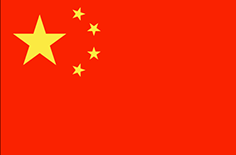
Beijing is the capital city of China. The city has a population of 20.897 million people (2021).

Beijing is one of the world's great cities — a sweeping metropolis of 3,000 years of continuous history where imperial palaces and ancient hutong alleyways coexist with futuristic skyscrapers and bullet train networks. As China's political, cultural, and historical capital, it is home to more UNESCO World Heritage Sites than almost any other city on Earth. A visit here is nothing less than an encounter with the full arc of human civilisation — monumental, complex, and completely unforgettable.
Best Time to Visit Beijing
🌸 April – May (Spring – Excellent)
Spring is one of the best times to visit. Temperatures rise from 10°C to 25°C (50–77°F), cherry and peach blossoms bloom in the city's parks, and the skies are relatively clear before summer haze sets in. May is particularly pleasant — warm, dry, and bright. The main risk is occasional sandstorms blown in from the Mongolian plateau in March and April, but these are usually brief.
🍁 September – October (Autumn – Best Season)
Widely considered Beijing's finest season. The summer heat and haze have cleared, leaving crisp, blue-sky days with temperatures between 8°C and 22°C. Golden ginkgo trees and red maples transform the city's parks and temple grounds. October 1st is National Day — the city is festively decorated but accommodation books out weeks in advance, so plan ahead if visiting then.
❄️ November – February (Cold Winter)
Beijing winters are cold and dry — temperatures regularly drop below -5°C and can reach -15°C in January. Snow dusts the Forbidden City's golden rooftops, creating extraordinary photographs but requiring serious layering. Spring Festival (Chinese New Year, Jan/Feb) is deeply cultural — temple fairs, lantern festivals, and fireworks — but the city empties as millions travel home and many businesses close.
☔ June – August (Hot & Hazy Summer)
Summers are hot (30–38°C), humid, and prone to heavy rain in July and August (Beijing's rainy season). Air quality and haze can be significant, and the Great Wall and Forbidden City are at their most crowded. That said, prices are lower, parks are lush and green, and the city's rooftop bars and outdoor entertainment are in full swing. Early morning sightseeing is essential.
Top Attractions in Beijing
🏯 The Forbidden City (Palace Museum)
The world's largest and best-preserved imperial palace complex — 980 buildings spread across 72 hectares at the very centre of Beijing. Home to 24 emperors of the Ming and Qing dynasties over 500 years, it is a UNESCO World Heritage Site of staggering grandeur. The Hall of Supreme Harmony, the imperial gardens, and the vast collection of imperial artefacts inside the Palace Museum demand at least half a day. Book timed entry tickets online well in advance — daily visitor numbers are strictly capped.
🧱 The Great Wall of China
No visit to Beijing is complete without walking the Great Wall — one of humanity's most extraordinary architectural achievements, stretching over 21,000 km across northern China. The closest and most visited sections are Badaling (1 hour from Beijing, fully restored, very busy) and Mutianyu (1.5 hours, less crowded, dramatic scenery, cable car available). For a more adventurous experience, the unrestored Jiankou section offers wild, photogenic scenery for experienced hikers.
🛕 Temple of Heaven (Tiantan)
A masterpiece of Ming dynasty architecture and one of Beijing's most iconic images — the triple-roofed circular Hall of Prayer for Good Harvests, set in a vast ceremonial park. Built in 1420, emperors conducted elaborate annual harvest rituals here. The surrounding park is equally unmissable: every morning it fills with elderly Beijingers practising Tai Chi, playing erhu, dancing in formation, and flying kites. Arrive before 8 AM for the most atmospheric experience.
🌅 Tiananmen Square & Gate
The world's largest public square — a vast, symbolic expanse flanked by the Great Hall of the People, the National Museum of China, and Chairman Mao's Mausoleum, with the iconic Gate of Heavenly Peace and its portrait of Mao Zedong at the northern end. The flag-raising ceremony at dawn (exact time varies with sunrise) draws large crowds. Security screening is required for entry — allow time and carry your passport.
🏘️ Beijing Hutongs & Drum Tower
Beijing's ancient hutong alleyways — narrow lanes connecting traditional courtyard homes (siheyuan) — are the city's most intimate and atmospheric neighbourhoods. The Shichahai and Nanluoguxiang areas are the most visitor-friendly. Explore by foot, rickshaw, or rented bicycle. The nearby Drum Tower and Bell Tower (14th century) give panoramic rooftop views over the hutong roofscape — one of Beijing's finest urban panoramas.
🌿 Summer Palace (Yiheyuan)
The finest imperial garden in China — a breathtaking landscape of Kunming Lake, Longevity Hill, covered walkways, marble bridges, and ornate pavilions covering 290 hectares. Built as a summer retreat for the Qing emperors, the Long Corridor (728 metres of painted galleries) and the Marble Boat are the most famous sights. Beautiful in every season but particularly magical in early morning mist or winter snow.
🐼 Beijing Zoo & National Aquarium
Home to China's most beloved giant pandas, the Beijing Zoo is one of Asia's largest and most important, housing over 450 species. The Giant Panda House is always the centrepiece — arrive early for the most active feeding sessions. Adjacent Beijing National Aquarium is an excellent complement for families, featuring beluga whales, dolphins, and a spectacular coral reef section.
🎨 798 Art District
A thriving contemporary arts and culture district established in decommissioned Bauhaus-style factory buildings from the 1950s. Over 200 galleries, studios, design shops, and independent cafés occupy the former industrial spaces — showcasing cutting-edge Chinese and international contemporary art. The weekend crowds are creative and cosmopolitan, with excellent street art throughout the compound. A fascinating counterpoint to Beijing's ancient heritage.
Day Trip Itineraries from Beijing
🗓️ Day 1 – Imperial Beijing
- 6:30 AM – Tiananmen Square dawn flag-raising ceremony
- 8:30 AM – Forbidden City — enter through Meridian Gate, explore the central axis and imperial gardens (3–4 hours)
- 1:00 PM – Lunch at a nearby restaurant — Peking duck at a traditional Beijing roast duck house
- 2:30 PM – Jingshan Park — hilltop pavilion directly north of the Forbidden City for the definitive aerial view
- 4:00 PM – Hutong rickshaw tour around the Shichahai lake area
- 5:30 PM – Drum Tower climb for sunset panorama over the hutong roofscape
- 7:30 PM – Dinner on Nanluoguxiang — street snacks and craft beer in a converted courtyard bar
🗓️ Day 2 – Temples & Parks
- 7:30 AM – Temple of Heaven park at dawn — Tai Chi, music, and kite flying with locals
- 9:30 AM – Temple of Heaven main halls tour
- 11:30 AM – Silk Street or Panjiayuan Antique Market for shopping and browsing
- 1:00 PM – Lunch in Wangfujing area — try the famous snack street (scorpions on sticks optional!)
- 2:30 PM – National Museum of China on Tiananmen Square (world's largest museum, free entry)
- 5:00 PM – 798 Art District for contemporary galleries and coffee
- 7:30 PM – Rooftop dinner in Sanlitun — Beijing's international dining and nightlife hub
🧱 Day Trip: The Great Wall – Mutianyu Section
The Mutianyu section (90 km north of Beijing) offers the best balance of authenticity, scenery, and manageable crowds. A cable car ascends to the wall; a toboggan ride is available for the descent. The restored section runs for over 2 km with watchtowers and dramatic mountain views in every direction. Book a private transfer or join a small group tour from your hotel.
- Distance: ~90 km (1.5 hrs by private car or tour bus)
- Best on weekdays to avoid weekend crowds
- Combine with a visit to the Red Snail Driving Range or local farmhouse lunch
🌿 Day Trip: Summer Palace & Old Summer Palace
Spend a full day in Beijing's imperial garden district in the city's northwest. Begin at the Summer Palace (Yiheyuan) in the morning — boat on Kunming Lake, walk the Long Corridor, and climb Longevity Hill for panoramic views. In the afternoon, visit the evocative Old Summer Palace (Yuanmingyuan) next door — a vast landscape of ruins left by British and French troops in 1860, now a haunting garden of broken marble colonnades.
- Both sites are in Haidian District — reachable by metro (Line 4)
- Morning at Summer Palace, afternoon at Old Summer Palace works perfectly
🏯 Day Trip: Chengde Mountain Resort
The Qing dynasty imperial summer retreat, 250 km northeast of Beijing — the largest imperial garden in China, ringed by 12 extraordinary temples built in Tibetan, Mongolian, and Han architectural styles. A high-speed train from Beijing North Station reaches Chengde in under 2 hours. The Putuo Zongcheng Temple (modelled on the Potala Palace in Lhasa) alone is worth the journey.
- Distance: ~250 km (2 hrs by high-speed train from Beijing North)
- Day trip possible; overnight recommended to do it full justice
🏺 Day Trip: Tianjin (Historic Port City)
China's fourth-largest city and one of its most architecturally diverse — just 30 minutes from Beijing by bullet train. Tianjin's waterfront "Five Great Avenues" neighbourhood preserves hundreds of European-style villas and concession-era buildings (British, French, Italian, German, and Japanese) alongside traditional hutong streets and excellent street food. The Ancient Culture Street is a lively bazaar of traditional crafts and local snacks.
- Distance: ~120 km (30 min by high-speed train from Beijing South Station)
- Half-day or full-day trip — easily done independently
Local Food Recommendations for Tourists
Beijing's culinary tradition is one of China's "Eight Great Cuisines" — robust, hearty, and deeply flavoured, shaped by centuries of imperial court cooking and the cold northern climate. The city also absorbs the cuisines of every Chinese province, making it one of the world's most diverse eating destinations.
🦆 Peking Roast Duck (Beijing Kaoya)
Beijing's most celebrated dish and one of the world's great culinary traditions — a whole duck air-dried, lacquered with maltose syrup, and roasted in a closed oven until the skin is a crackling, mahogany-glazed masterpiece. Served tableside by a skilled carver, eaten in thin pancakes with spring onion, cucumber, and hoisin sauce. The duck's bones are made into soup served at the end. An authentic Peking duck dinner is a ritual, not just a meal.
🥟 Jiaozi (Dumplings)
The cornerstone of northern Chinese home cooking — crescent-shaped dough parcels filled with combinations of pork and cabbage, lamb and leek, prawn, or three-mushroom. Boiled (shuijiao), pan-fried (guotie/potstickers), or steamed (zhengijao) — each method creates a different texture. Eaten with black vinegar and chilli oil, they are universally loved, inexpensive, and available on virtually every street in Beijing.
🥩 Mongolian Hot Pot (Shuan Yangrou)
Beijing's most beloved communal dining experience — paper-thin slices of lamb (and other meats) swirled in a bubbling clear broth at a copper pot set into the table, then dipped into a rich sesame paste sauce. A direct legacy of Mongolian influence on northern Chinese cuisine. Jing-style hot pot uses a brass fire pot with a charcoal-heated chimney — an elegant and warming experience perfect for Beijing's cold winters.
🌮 Zhajiangmian (Beijing Noodles)
Beijing's own noodle dish — thick, hand-pulled wheat noodles topped with a rich, slow-cooked fermented black bean and ground pork sauce (zhajiang), garnished with julienned cucumber, radish, bean sprouts, and edamame. Simple, deeply satisfying, and uniquely Beijingese. The texture of the noodles — chewy and substantial — is the key to a great bowl. One of the most authentic lunches you can have in the capital.
🥞 Jianbing (Street Crepe)
Beijing's iconic breakfast street food — a thin mung bean and wheat flour crepe cooked on a circular griddle, spread with egg, hoisin and chilli sauces, topped with crispy wonton crackers, spring onion, and fresh coriander, then folded into a warm, crunchy, messy parcel. Eaten on the go from breakfast carts across the city. Cost: around ¥8–15. Learning to order a jianbing is a Beijing rite of passage.
🍢 Tanghulu (Candied Hawthorn)
Strings of bright red hawthorn berries (or strawberries, grapes, or mandarin segments) skewered on bamboo sticks and dipped in a hard, glassy sugar shell — the sweet-sour taste is addictive and immediately recognisable as Beijing street food. Sold by vendors throughout the hutong areas and outside temples, they are particularly associated with winter and Chinese New Year. The hawthorn version is the original and still the most beloved.
🫕 Mapo Tofu & Regional Chinese Cuisine
As China's capital, Beijing absorbs the cuisines of all 34 provinces — and eating your way through them is one of the city's great pleasures. Seek out fiery Sichuan hot pot and mapo tofu (silken tofu in chilli bean paste), Xinjiang lamb skewers (yangrou chuan) and pulled noodles, Yunnan rice noodle soups, and Cantonese dim sum. The Ghost Street (Gui Jie) restaurant strip in Dongcheng is a kilometre of non-stop eating open until 3 AM.
🍵 Chinese Tea & Teahouse Culture
Beijing's teahouse tradition is an art form — participating in a formal gongfu tea ceremony, where a host brews successive small cups of oolong, pu'er, or green tea with exacting precision, is one of China's most civilised pleasures. The Maliandao Tea Street in Xuanwu District has over 1,000 tea shops — ideal for buying authentic leaves to take home. Many traditional teahouses also offer Peking Opera performances alongside the tea service.
- Mobile payments (WeChat Pay and Alipay) dominate in Beijing — many restaurants and even street vendors no longer accept cash. Set up an international payment method on WeChat before arrival if possible. Most tourist-facing restaurants also accept cards.
- Wangfujing Snack Street offers adventurous options (scorpions, silkworms, seahorses on sticks) — these are primarily tourist entertainment rather than traditional Beijing food. The real local eating happens in the hutong side streets.
- Restaurant menus often have no English — use Google Translate's camera mode or the Pleco app to scan and translate Chinese characters directly.
- Avoid tap water — bottled water is inexpensive and available everywhere. Major hotel restaurants use filtered water but always confirm when in doubt.
Essential Tips for Tourists
🚇 Getting Around
Beijing's subway network is one of the world's largest — clean, fast, English-signposted, and the most efficient way to get around the city. The Beijing Transit IC Card (loaded at any station) covers subway, buses, and some taxis. Didi (China's Uber) is indispensable for reaching attractions not served by metro — download and register before arrival. Traditional taxis are metered but drivers rarely speak English; have your destination written in Chinese characters.
📱 Internet & VPN
Google, Facebook, Instagram, WhatsApp, and most Western apps are blocked in China. Download and subscribe to a reputable VPN service (ExpressVPN, NordVPN) before arriving — VPNs cannot be downloaded from within China. Use WeChat for messaging (widely used by locals). Baidu Maps (Chinese language) works better than Google Maps offline; download both before arrival.
🛂 Visa & Entry Requirements
Most nationalities require a visa to enter China. Apply at your nearest Chinese embassy or consulate well in advance. Citizens of several countries qualify for visa-free or 144-hour transit without visa (TWOV) programmes — check current eligibility at the Chinese Ministry of Foreign Affairs website. Always carry your passport in Beijing — you'll need it for hotel check-in, museum entry, train tickets, and security checks.
🙏 Cultural Etiquette
Dress modestly at temples and religious sites. Avoid politically sensitive topics in conversation. Photographing military installations, government buildings, and security personnel is strictly prohibited. Queue-jumping is common — patience is a virtue. Bargaining is expected at markets (Silk Street, Panjiayuan) but not in proper shops. Learning a few words of Mandarin ("xièxiè" — thank you; "nǐ hǎo" — hello) earns immediate goodwill.
Apply for tourist visa
Important Numbers:
In case of emergency, please contact:
- AMBULANCE: 120
- FIRE: 119
- POLICE: 110
Find Flights to Beijing
What is the currency in use in the city of Beijing? Yuan / Renminbi
Beijing Streets Map
BOOK THE BEST TOURS
Beijing is the capital city of China.