Belgrade Weather
BELGRADE WEATHERAbout Belgrade
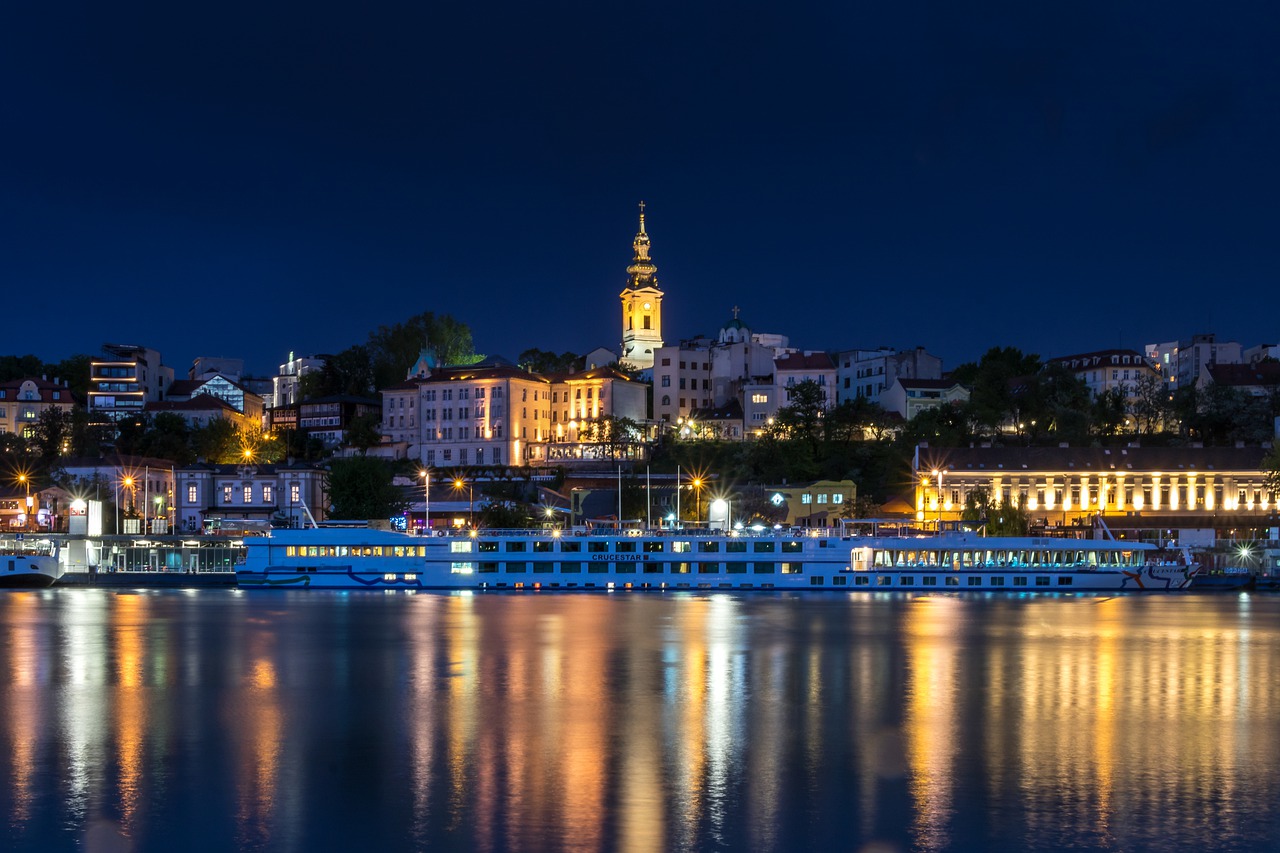
Belgrade — Beograd, the White City — is the capital and largest city of Serbia, and one of the oldest continuously inhabited cities in Europe: a fortress city set on a dramatic limestone bluff at the confluence of the Sava and Danube rivers, at the precise geographical point where the Pannonian Plain meets the Balkans, and where the river routes connecting Central Europe to the Black Sea have been controlled, contested, and fought over for more than 7,000 years of recorded human history. Belgrade has been destroyed and rebuilt more than 40 times — by Romans, Byzantines, Bulgarians, Hungarians, Ottomans, Austrians, and in the wars of the 20th century — making it a city of extraordinary historical layering and a character forged in the furnace of some of the most dramatic events in European history.
Today's Belgrade is one of the most exciting, most affordable, and most underrated capital cities in Europe — a city that combines a ferociously energetic nightlife (consistently ranked among the top three nightlife destinations in the world by international travel media), a café culture of extraordinary intensity and social warmth, a culinary scene of growing international recognition, and a people whose combination of Balkan directness, generosity, and resilience has produced a city with a character unlike anywhere else in Europe. The city's Kalemegdan Fortress, the Skadarlija bohemian quarter, the Savamala creative district, and the vast Ada Ciganlija river island beach make Belgrade a destination of genuine depth — a European capital where the tourist infrastructure exists to serve the visitor, but where the city's energy is primarily generated by and for its own 1.4 million inhabitants, producing an authenticity rare in a continent of over-touristed capitals.
Best Time to Visit Belgrade & Weather Guide
Belgrade has a humid continental climate — four distinct seasons, with warm summers, cold winters, and the finest travel weather in spring and autumn. The city's position in the northern Balkans means it experiences genuine seasonal variation: hot, sunny summers perfect for the riverfront and outdoor café culture, cold winters with occasional snow that transform Kalemegdan into a dramatic frost-covered landscape, and the spectacular spring and autumn seasons that are generally agreed to be the finest time to visit.
🌸 Spring (April–June)
The finest season for visiting Belgrade — temperatures of 15–26°C, increasingly warm sunshine, the city's parks and fortress gardens in full bloom, and the outdoor café and restaurant season beginning in earnest from mid-April. May and June are particularly outstanding: long days of warm sunshine, the chestnut trees of Knez Mihailova Street in flower, the Kalemegdan park at its most lush and beautiful, and the outdoor terraces of Skadarlija's mehanas filling with the sound of Serbian music and conversation. Spring also brings the finest cultural calendar — the Belgrade Beer Fest (June, one of the largest beer festivals in Southeast Europe) and the Nišville Jazz Festival preparations animate the city's cultural life. The Danube and Sava are at good levels for the river beach and floating restaurant (splavovi) season just beginning.
Best Time to Visit☀️ Summer (July–August)
Belgrade's most energetic and most festive season — temperatures of 28–36°C, long evenings of extraordinary social vitality, and the full flowering of the city's legendary nightlife and riverfront culture. The splavovi (floating clubs and restaurants on the Sava and Danube) are at peak operation from June through September — an entirely unique Belgrade institution: dozens of permanently moored river barges converted into bars, restaurants, and clubs ranging from sophisticated wine bars to the thundering techno clubs that have made Belgrade a pilgrimage destination for European clubbers. Ada Ciganlija — the river island beach — becomes the social heart of the city in summer, with tens of thousands of Belgraders swimming, cycling, and picnicking on the 4km shingle beach. The heat (occasionally reaching 38–40°C) can be intense but the riverfront provides relief. The EXIT Festival in nearby Novi Sad (July — one of Europe's great music festivals) is the summer cultural highlight accessible from Belgrade.
Nightlife & Beaches🍂 Autumn (September–October)
Arguably the finest season of all for Belgrade — temperatures of 14–24°C in September dropping to 8–16°C in October, the city's parks turning gold and amber, the summer crowds dispersing, and the cultural season (theatre, opera, concerts) opening with a full programme. The autumn light on the Danube and Sava confluence — the rivers bronze and flat in the low September sun, the fortress silhouetted above — is one of the finest landscape views in European urban geography. October is particularly special: the last warm outdoor dining days at the Skadarlija mehanas, the Belgrade International Film Festival and the Belgrade Jazz Festival (October) bringing international cultural energy to the city, and the first of the season's roasted chestnuts appearing on Knez Mihailova Street. The autumn harvest season brings the finest šljivovica (plum brandy), fresh kajmak, and the new-season rakija to the city's restaurants.
Golden Season❄️ Winter (November–March) & Festivals
Belgrade's winter is cold (−2 to 6°C in December–February), occasionally snowy, and shorter on daylight — but the city's café culture, indoor market life, and winter festival calendar make it a rewarding destination even in the coldest months. The Belgrade Christmas Market (November–January) transforms the city centre and Kalemegdan into a festive landscape of lights and craft stalls. Orthodox Christmas (January 7 — Serbia follows the Julian calendar for religious observances) is the most important family festival of the Serbian year: the distinctive tradition of burning the badnjak (oak branch bundle) in front of churches across Belgrade on Christmas Eve morning creates scenes of extraordinary atmospheric beauty, with bonfires blazing in the frost outside every Orthodox church in the city. The winter café culture — warming yourself with domaći čaj (home-made herbal tea) and šljivovica in a candlelit Belgrade kafana — is one of the most convivial and most characteristically Balkan experiences available in Europe.
Winter & ChristmasSpring (Apr–Jun): Layers for the variable temperatures — a light jacket for cool mornings and evenings, lighter clothing for warm afternoons. Comfortable walking shoes for Belgrade's varied terrain: the cobbled streets of Skadarlija and Kalemegdan, the smooth pedestrian boulevard of Knez Mihailova, and the fortress paths. A compact umbrella for the occasional spring shower.
Summer (Jul–Aug): Lightweight clothing for the heat (28–36°C). Sunscreen and sunglasses. A light layer for the sometimes aggressively air-conditioned restaurants and cafés. Comfortable sandals for the splav riverfront bars and Ada Ciganlija beach.
Autumn (Sep–Oct): A medium-weight jacket or smart coat — September evenings cool quickly and October requires warm layers. Smart-casual clothing is appropriate for Belgrade's restaurant and cultural venues.
Winter (Nov–Mar): A proper winter coat, warm layers, waterproof boots. Belgrade winters are genuine Central European cold — temperatures regularly below zero and occasional snow. The city's indoor café and restaurant culture means winter visitors spend most social time warmly sheltered, but outdoor Kalemegdan walks require proper preparation. Basic Serbian phrases (hvala — thank you; dobar dan — good day; živeli — cheers) are warmly appreciated; English is widely spoken throughout the tourist and hospitality sectors.
Top Attractions in Belgrade
Belgrade's attractions span seven millennia of continuous habitation — from the Neolithic settlements of the Vinča Culture to the brutalist socialist monuments of the 20th century, with Roman fortifications, Byzantine churches, Ottoman mosques, and Austro-Hungarian palaces in between.
🏰 Kalemegdan Fortress & Belgrade Fortress
The defining symbol of Belgrade and the most historically significant site in Serbia — Kalemegdan Fortress (Beogradska Tvrđava), on the limestone bluff above the confluence of the Sava and Danube, is a 2,300-year-old fortification complex whose current form reflects Roman, Byzantine, medieval Serbian, Ottoman, and Austro-Hungarian construction phases accumulated over two millennia of continuous military use. The fortress has been the site of more than 115 battles and has changed hands 40 times in recorded history — making it one of the most fought-over strategic positions in European military history. The Upper Town (with the Despot's Gate, the Clock Tower, and the restored Zindan Gate) and Lower Town (with the Roman well, the Stambol Gate, and the riverside fortifications) together form the largest urban park complex in Belgrade — 65 hectares of parkland, ruins, museums, and the incomparable panoramic viewpoint above the river confluence. The sunset view from the fortress walls — the Danube and Sava spreading wide below, the plains of Vojvodina and Srem stretching to the horizon — is the finest panorama available from any Central European fortress.
City's Heart🎭 Skadarlija — Belgrade's Bohemian Quarter
Belgrade's most atmospheric and most celebrated neighbourhood and the finest destination for traditional Serbian food, music, and the kafana culture that defines the city's social soul — Skadarlija, a cobbled pedestrian street and surrounding neighbourhood in the central Stari Grad district, was the bohemian quarter of 19th and early 20th century Belgrade: the street where Serbia's greatest poets, painters, and musicians gathered in the mehanas and kafanas that still line both sides of the cobblestones. The neighbourhood's mehanas (traditional Serbian taverns) — Tri Šešira (Three Hats), Dva Jelena (Two Deer), Šešir Moj — serve the full repertoire of traditional Serbian food (roasted meats, grilled sausages, meze) accompanied by live tamburitza and sevdah music from resident musicians. The combination of cobblestones, vine-covered walls, musicians moving table to table, and the warm, unhurried atmosphere of Serbian hospitality makes Skadarlija the most quintessentially Belgrade evening experience available.
Bohemian Soul⚡ Nikola Tesla Museum
The finest museum dedicated to any scientist in the world and one of the most extraordinary science museums in Europe — the Nikola Tesla Museum, in a 1927 villa in the Vračar neighbourhood, houses the only collection of Tesla's original personal belongings anywhere in the world: his ashes (in a golden sphere), his personal library of 1,500 volumes, 150,000 original documents including notebooks and correspondence, 125 personal objects (including his favourite hat, walking stick, and dinner suit), and a significant collection of original models and equipment used in his experiments. The guided tours — which include live demonstrations of Tesla coil electricity and wireless energy transmission using original Tesla equipment — are among the most thrilling science education experiences in Europe. The museum's rotating 3D hologram of Tesla and the demonstration of the transmission of electricity through the body to illuminate a fluorescent bulb are the two most memorable moments. Advance booking is strongly recommended.
Science Marvel🕍 Temple of Saint Sava — World's Largest Orthodox Church
One of the largest Orthodox Christian churches in the world and the most architecturally impressive building in Belgrade — the Temple of Saint Sava (Hram Svetog Save), on the Vračar plateau where Saint Sava's relics were burned by the Ottoman Grand Vizier Sinan Pasha in 1595, is a neo-Byzantine church of extraordinary scale: 91 metres high, with a main dome of 40 metres diameter, a total interior floor area of 8,000 square metres, and capacity for 10,000 worshippers. Construction began in 1935 and — interrupted by two World Wars and the communist period — the exterior was completed in 1989 and the interior mosaic decoration (one of the most ambitious mosaic programmes undertaken anywhere in the world in the 21st century) completed in 2020. The completed interior — 1,500 square metres of gold mosaic ceiling depicting the life of Saint Sava and the history of the Serbian Orthodox Church, combined with the vast space of the main nave — is one of the most breathtaking interiors in European religious architecture.
Orthodox Masterpiece🌊 Savamala — Belgrade's Creative District
Belgrade's most dynamic creative neighbourhood and the engine of the city's internationally recognised arts and nightlife scene — Savamala, the former industrial riverfront district on the Sava below the old town, has been transformed over the past 15 years from a derelict warehouse zone into the most vibrant arts quarter in the Western Balkans: a dense concentration of galleries, design studios, independent cinemas, craft cocktail bars, street art installations, and the clubs and music venues that have made Belgrade's nightlife famous throughout Europe. The KC Grad (cultural centre in a former factory), Mikser House (design and culture hub), the Belgrade Design Week (June) events, and the clubs of the Sava riverfront (Drugstore, 20:44, Freestyler) represent the full spectrum of Savamala's creative energy. The neighbourhood is at its most alive on Friday and Saturday nights — and at its most photogenic in the early morning light when the street art catches the dawn.
Creative Quarter🚶 Knez Mihailova Street & Stari Grad
Belgrade's most important pedestrian boulevard and the finest urban promenade in the city — Knez Mihailova Street (Knez Mihailova ulica), stretching 600 metres from Republic Square to the Kalemegdan Fortress gates, is a grand 19th-century neoclassical boulevard of Austro-Hungarian civic buildings now occupied by bookshops, galleries, cafés, and international brands — the social spine of the city, through which every Belgrade resident passes daily and where the city's street life reaches its most concentrated and most enjoyable expression. The adjacent Stari Grad (Old Town) neighbourhood — with its mix of 19th-century merchants' houses, Ottoman-era hans (inns), communist-era apartment blocks, and the colourful street life of the city centre's most densely inhabited area — rewards extended exploration. The Republic Square (Trg Republike) — dominated by the National Museum, the National Theatre, and the equestrian statue of Prince Mihailo — is the social and civic heart of central Belgrade.
City Promenade🏖️ Ada Ciganlija — Belgrade's River Beach
Belgrade's most beloved recreational asset and the finest urban river beach in Europe — Ada Ciganlija (Beogradsko More — Belgrade's Sea), a 4km-long river island in the Sava connected to the mainland at both ends, creating an artificial lake of calm, swimmable water alongside the wild Sava riverbank, is where the entire city retreats on summer weekends: tens of thousands of Belgraders swimming, sunbathing, cycling the 7km lake perimeter path, playing beach volleyball and basketball, and eating and drinking at the beach-side restaurants and bars. The Ada Ciganlija experience — the combination of Belgrade's summer heat, the cool Sava water, the relaxed social energy of a city at leisure, and the improbably Mediterranean atmosphere achieved at the confluence of Central European rivers — is one of the most distinctive and most enjoyable things to do in any European capital in summer. Admission is free; water sports equipment hire (kayaks, SUP boards, pedalos) and sports courts available.
River Beach🚢 Splavovi — Belgrade's Floating Bars & Clubs
Belgrade's most unique and most internationally celebrated contribution to nightlife culture — the splavovi (floating bars, restaurants, and clubs permanently moored on the Sava and Danube riverbanks) are a phenomenon entirely without equivalent in any other European capital: dozens of converted river barges, pontoons, and floating platforms stretching along the Sava from the Brankov Bridge to Ada Ciganlija, each with its own character ranging from rustic riverside restaurant to full-scale nightclub with international DJ line-ups. The splav culture was born in the 1980s as an unofficial, unlicensed response to the restrictions of the socialist period and has grown into a defining institution of Belgrade social life — the Sava riverfront on a summer Saturday night, with music from competing splavovi mixing across the water and thousands of Belgraders moving between venues, is one of the most extraordinary urban nightlife spectacles in Europe. The finest splav restaurants (particularly along the Zemun waterfront) serve excellent grilled river fish and traditional Serbian food in a riverside setting of great charm.
Unique to BelgradeLocal Food Recommendations
Serbian cuisine is among the most hearty, most generous, and most meat-centric in Europe — a cooking tradition shaped by the Balkan livestock-herding heritage, Ottoman and Austro-Hungarian influences, and a national love of grilled meat, fresh dairy, and the social ritual of the long table. Belgrade is the finest place in the world to eat Serbian food.
🍽️ Must-Try Serbian Dishes
- Ćevapi (ćevapčići) — Serbia's most universally beloved street food and the dish most immediately associated with Balkan food culture in the world: small, finger-shaped grilled sausages of seasoned minced beef and pork (or lamb, in the Bosnian style), grilled over charcoal and served in a warm, puffy lepinja flatbread with raw chopped onion, ajvar (roasted red pepper relish), and kajmak (a clotted cream-like dairy product of extraordinary richness, made from scalded milk and one of the defining flavours of Serbian cuisine). Ćevapi are available at every ćevabdžinica (ćevapi restaurant) throughout Belgrade and eaten at all times of day — a late-night portion of ćevapi after the splavovi is one of the most deeply satisfying experiences in Belgrade food culture. The finest in the city are generally found at the traditional Skadarlija mehanas and at specialist ćevabdžinicas in the Zemun district.
- Roštilj (Serbian mixed grill) — the great Serbian barbecue tradition and the centrepiece of every Serbian celebration, family gathering, and outdoor occasion: a mixed grill of pljeskavica (a large, flat, heavily seasoned beef-pork patty — the Serbian hamburger, available in standard, stuffed with cheese and/or kajmak, and the enormous hajdučka pljeskavica weighing 300–400g), ražnjić (pork or chicken skewers), and various sausages, all grilled over hardwood coals. The Serbian roštilj — particularly the leskovački roštilj tradition from the southern city of Leskovac, which has elevated the pljeskavica to an art form of considerable complexity — is the most important culinary tradition in the country. Available at every roštilj restaurant and at the Kalemegdan and Ada Ciganlija outdoor grills.
- Kajmak — Serbia's most prized dairy product and the flavour most instantly recognisable as Serbian to anyone who has eaten in the Balkans: a thick, creamy, slightly soured clotted cream made by slowly simmering fresh milk, skimming the cream skin repeatedly, and salting it lightly in layers. Kajmak — which has no precise equivalent in Western European dairy culture, being richer than crème fraîche, less sharp than sour cream, and more savoury than clotted cream — accompanies virtually every meat dish on the Serbian table, is spread generously on bread, and is stirred into hot proja (corn bread) at breakfast. The finest kajmak in Belgrade comes from the western Serbian highlands around Zlatibor and Zlatar — served fresh at the traditional mehanas of Skadarlija.
- Sarma — Serbia's most important and most ceremonially significant traditional dish: minced pork and rice seasoned with paprika, onion, and herbs, rolled tightly in fermented cabbage leaves (kiseli kupus) and slow-cooked for hours in a clay pot with smoked ribs, bacon, and bay leaves. Sarma is the definitive Serbian winter and holiday dish — the food that appears on the table at Christmas, Easter, slava (the Serbian patron saint feast), and every important family occasion. The slow-cooked sarma of a Belgrade grandmother's kitchen — rich, intensely flavoured, impossibly tender — is one of the great comfort foods of European cooking. Available at traditional kafanas and mehanas throughout the city, particularly in winter.
- Gibanica — Serbia's most beloved pastry and the definitive Serbian breakfast: a flaky, layered pastry of filo dough filled with fresh white cheese (sir) and eggs, baked until golden and crisp on top and yielding within, eaten warm with kiselo mleko (cultured buttermilk) or yogurt. Gibanica is available at every pekara (bakery) in Belgrade from 6am — the city's morning pastry, eaten standing at the pekara counter by office workers, students, and market traders with the same ritual certainty that Parisians eat croissants. The combination of warm gibanica and cold kiselo mleko is the most characteristically Serbian breakfast experience available.
- Pasulj (bean soup) — Serbia's great everyday soup and one of the finest bean preparations in European cooking: a thick, smoky, deeply flavoured white bean soup slow-cooked with smoked pork ribs, onion, paprika, and bay leaves for several hours until the beans break down into a silky, richly savoury broth. Pasulj — the most democratically consumed dish in Serbia, eaten by every social class and in every household — is one of those simple preparations of such extraordinary depth and comfort that it reveals everything about a food culture: the Serbian love of slow cooking, smoked meat, and dishes that warm from the inside out. Available at every kafana and traditional restaurant in Belgrade for RSD 350–600 ($3.25–5.55).
🍺 Drinks & Social Culture
- Šljivovica (slivovitz) — Serbia's national spirit and one of the great fruit brandies of the world: a clear, unaged or wood-aged brandy distilled from fermented plum mash (šljiva — Serbian plum), produced in farmhouse distilleries throughout Serbia's plum-growing regions with an intensity of flavour and a cultural significance unmatched by any other European spirit in its home country. Serbia is the world's largest producer of plums and slivovitz — the spirit has been produced on Serbian farms for at least 700 years and holds UNESCO Intangible Cultural Heritage status. The finest slivovitz expressions — particularly the aged stara šljivovica (old slivovitz, matured 5–15 years in oak barrels) from the western Serbian highlands — achieve a complexity of dried fruit, vanilla, and spice comparable to the finest Cognac or Armagnac. Offered as a welcome drink, a digestif, and a constant social lubricant throughout Serbian social life; refusing šljivovica is considered mildly impolite.
- Rakija — the broader category of Serbian fruit brandies of which šljivovica is the most celebrated: every fruit grown in Serbia produces its own rakija — kajsijevača (apricot), kruška (pear), lozovača (grape), dunjevača (quince), jabukovača (apple) — each with its own character and regional tradition. The Serbian rakija culture — in which every family with a fruit tree produces its own spirit and the quality of one's rakija is a matter of profound personal pride — is one of the most characteristically Serbian cultural practices and one of the most genuine expressions of hospitality: to be offered homemade rakija in a Serbian home is to be admitted to the family circle.
- Serbian wine — Serbia's wine regions (particularly Župa in the south, Fruška Gora in Vojvodina, and the Timok valley) produce wines of growing international recognition: the indigenous Prokupac grape produces robust, cherry-scented reds of considerable character; Tamjanika (related to Muscat) produces aromatic whites; and international varieties (Cabernet Sauvignon, Merlot, Chardonnay) are produced by modern wineries of excellent quality. Serbian wine is dramatically underpriced by Western European standards — an excellent bottle from a top producer costs RSD 600–1,500 ($5.55–13.90) in Belgrade's wine shops and restaurants.
- Domaći čaj (home herbal tea) — the Serbian herbal tea tradition produces some of the most medicinally complex and most aromatically distinctive teas in Europe: blends of mountain herbs (majčina dušica — thyme, hajdučka trava — yarrow, neven — marigold, lipa — linden, divlja ruža — wild rose), gathered from the Serbian highlands and brewed with honey in the kafanas and mountain restaurants of the country. The winter cup of domaći čaj with a teaspoon of šumski med (forest honey) in a candlelit Belgrade kafana is one of the most comforting and most evocative sensory experiences available in the city.
🍽️ Where to Eat — Local Tips
- Skadarlija mehanas — the definitive Belgrade dining experience: Tri Šešira (Three Hats, est. 1864), Dva Jelena (Two Deer), and Šešir Moj are the three most celebrated traditional mehanas on the cobbled street, each serving the full Serbian menu (meze platters, roasted meats, kajmak, gibanica, sarma) with live traditional music. The atmosphere — vine-covered courtyard, candlelight, musicians circulating between tables — is the finest expression of traditional Belgrade hospitality. Budget RSD 2,500–4,000 ($23–37) per person with drinks.
- Pekara (Serbian bakeries) — the finest and most affordable breakfast in Belgrade: every neighbourhood has multiple pekare open from 5–6am, serving fresh gibanica, kifle (crescents), burek (flaky pastry filled with meat, cheese, or spinach), and coffee for RSD 150–300 ($1.40–2.80). The classic Belgrade breakfast — warm burek sa sirom (cheese börek) and a coffee at the standing counter of a neighbourhood pekara — costs under RSD 250 ($2.30) and is one of the finest-value food experiences in Europe.
- KafanaQuestion Mark (Kafana ?) — Belgrade's oldest surviving kafana, in Stari Grad near the Cathedral: open since 1823 under various names (the question mark was adopted after the Orthodox Church objected to the original name referencing the adjacent cathedral), serving traditional Serbian food and drinks in an atmosphere of genuine 19th-century authenticity — the wooden benches, the portraits on the walls, and the ancient menu have barely changed in two centuries. Essential for any visitor interested in the depth of Belgrade's café culture.
- Splav restaurants on the Sava (Zemun Kej) — the finest river fish in Belgrade: the floating restaurants along the Zemun waterfront serve grilled šaran (carp), som (catfish), smuđ (pike-perch), and pastrmka (trout) from the Danube and Sava in an open-air riverside setting of great charm. A grilled river fish dinner with local wine at a Zemun splav restaurant — watching the Danube flow past in the evening light — costs RSD 1,800–3,000 ($16.65–27.75) per person and is among the finest value dining experiences in Europe.
- Zeleni Venac market and surrounding food stalls — Belgrade's central open-air market and the best destination for fresh Serbian produce: seasonal vegetables, homemade cheeses, cured meats, and the extraordinary variety of Serbian pickled and fermented vegetables (turšija) that form the backbone of the winter Serbian table. The market's surrounding street food vendors sell fresh corn cobs, roasted chestnuts (autumn), and the finest burek in the city.
🎨 Serbian Crafts & Cultural Heritage
- Serbia's most distinctive craft tradition is the production of šljivovica and rakija — homemade fruit brandies of extraordinary variety and quality, available at Belgrade's speciality spirit shops and at the Etnografski Muzej (Ethnographic Museum) shop in a range of expressions from artisan producers throughout the country. A bottle of aged stara šljivovica from a quality Serbian producer is the finest and most distinctively Serbian gift or souvenir available.
- Serbian Orthodox iconography — the Serbian Orthodox tradition of painted religious icons, produced by iconographers trained in the Byzantine technique using egg tempera and gold leaf on wood panels, is one of the most active and most technically accomplished surviving icon-painting traditions in Europe. Contemporary icons of outstanding quality are available at specialist shops near the Temple of Saint Sava and in the Stari Grad antique dealers of Knez Mihailova Street.
- Pirot kilims — the extraordinary hand-woven flatweave carpets (ćilimi) produced in the southern Serbian city of Pirot, in continuous production since the 15th century, using geometric patterns of unique complexity and natural wool dyes of remarkable colour fastness. Pirot kilims are UNESCO-listed as an Intangible Cultural Heritage of Serbia and are among the finest examples of Balkan textile arts — available at specialist craft shops in Belgrade's Stari Grad.
- Serbian filigree silver jewellery — the filigran technique (intricate jewellery made from fine twisted silver or gold wire soldered into lace-like patterns) has been practiced in Serbian goldsmith workshops since the medieval period and remains a living craft tradition. Belgrade's finest filigree jewellers are concentrated in the covered Čaršija (market area) near the pedestrian zone, producing earrings, brooches, and pendants of exceptional delicacy at prices dramatically lower than equivalent craftsmanship in Western Europe.
Day Trip Itineraries from Belgrade
Belgrade's central position in the Western Balkans makes it an outstanding base for exploring Serbia's extraordinary natural and cultural landscapes — all within 1–3 hours by road:
🍷 Day Trip: Fruška Gora — Vojvodina's Wine Mountain
Travel time: 1 hour by road | Cost: Bus from RSD 600 ($5.55); organised wine tour $50–80 per person
Fruška Gora — the low mountain range rising from the Pannonian Plain in Vojvodina, 70km northwest of Belgrade — is Serbia's most important wine region and one of the most historically significant religious landscapes in the country: a mountain whose south-facing slopes contain a continuous chain of 16 active Serbian Orthodox monasteries (founded between the 13th and 18th centuries as refuges from Ottoman expansion — collectively one of the most remarkable concentrations of medieval Balkan religious art in existence) and whose vineyards produce the finest examples of the indigenous Graševina, Tamjanika, and Neoplanta grape varieties. A day combining monastery visits (Grgeteg, Novo Hopovo, Krušedol) with wine tastings at the Kovačević, Dulka, or Kiš wineries is one of the finest and most distinctively Serbian day excursions available from any Balkan capital.
Wine & Monasteries🏘️ Day Trip: Zemun — The Austro-Hungarian Quarter
Travel time: 20 minutes by road or tram | Cost: Tram from RSD 90 ($0.83); free to walk
Zemun — now technically a municipality within greater Belgrade but historically a separate city on the opposite side of the Sava, under Austro-Hungarian administration until 1918 — preserves a character quite distinct from the Serbian-Ottoman-socialist blend of the rest of Belgrade: a well-maintained Austro-Hungarian town of pastel-coloured baroque facades, cobbled streets rising to the Gardoš Tower (a 1896 millennium tower built by the Austro-Hungarians with sweeping views across the Danube and the Serbian plain), and a waterfront promenade (Zemun Kej) lined with riverside fish restaurants of exceptional quality. The combination of the architectural contrast with central Belgrade, the tower views, and the finest river fish dining in the metropolitan area makes Zemun a near-essential half-day excursion from the city centre.
Riverside Town⛪ Day Trip: Studenica Monastery — Serbia's Jerusalem
Travel time: 2.5 hours by road | Cost: Organised tour $45–70; car hire recommended
Studenica Monastery — founded in 1190 by Stefan Nemanja, the founder of the medieval Serbian state, and declared a UNESCO World Heritage Site — is the most sacred and most historically significant monastery in Serbia: the mausoleum of the Nemanjić dynasty (the medieval Serbian royal family from which Saint Sava descended), containing frescoes of extraordinary beauty from the 13th–14th centuries that represent the pinnacle of Byzantine-influenced medieval Serbian art. The monastery's two principal churches — the Church of the Virgin (with its remarkable Romanesque marble portal carved by Greek craftsmen) and the King's Church (with the finest 14th-century fresco cycle in Serbia) — are surrounded by a fortified enclosure in a mountain valley of considerable natural beauty. The drive south from Belgrade through the Šumadija region and the Ibar river valley is itself a scenic highlight.
UNESCO Heritage🎵 Multi-Day: Novi Sad & EXIT Festival
Travel time: 1.5 hours by road or train | Cost: Train from RSD 550 ($5.10); EXIT Festival tickets from €60 (July)
Novi Sad — Serbia's second city, 90km northwest of Belgrade on the Danube — is one of the most beautiful and most culturally rich cities in the Western Balkans: a well-preserved Austro-Hungarian city centre, the magnificent Petrovaradin Fortress (the "Gibraltar of the Danube" — an 18th-century Austrian fortress of extraordinary scale and complexity on a limestone bluff above the Danube), and a cultural life of unusual sophistication for a city of 300,000. The annual EXIT Festival (July) — held within the Petrovaradin Fortress and consistently voted among Europe's top three music festivals — brings 200,000 visitors to Novi Sad over four days for an international programme of electronic, rock, hip-hop, and world music on multiple stages within the fortress walls. An overnight visit combining the city's cultural heritage with the festival is the finest single summer excursion from Belgrade.
Festival & CultureTourist Tips for Belgrade
🚌 Getting Around
- Belgrade is a compact and walkable capital for its central districts — Stari Grad, Savamala, Skadarlija, Vračar, and Kalemegdan are all within comfortable walking distance of each other. The outer districts (Zemun, New Belgrade, Ada Ciganlija) require public transport or taxi.
- Taxis and Bolt/CarGo — Belgrade has reliable taxi services and the Bolt rideshare app operates throughout the city. Always use app-based rideshare or call a certified radio taxi (Pink Taxi, Naxis Taxi) to avoid the overcharging that occasionally targets visitors hailing taxis on the street near tourist sites. Typical fares: Stari Grad to Savamala RSD 250–400 ($2.30–3.70); airport to city centre RSD 1,500–2,500 ($13.90–23.15).
- Public trams, buses, and trolleybuses — Belgrade's public transport network is extensive, cheap (RSD 90 / $0.83 per journey with a BusPlus card), and covers all central districts and outer areas. Tram line 2 connects Kalemegdan to the city centre and Vračar; bus lines connect New Belgrade and Zemun to the centre. The BusPlus card (contactless) is the most convenient payment method.
- Cycling — the BeoVoz public bike-sharing system and private hire shops operate in the central districts and along the Ada Ciganlija circuit; cycling along the Sava and Danube riverfronts and the Ada Ciganlija 7km perimeter path are the finest cycling experiences in the city.
- Belgrade Nikola Tesla Airport (BEG) is 18km northwest of the city centre — approximately 30–40 minutes by taxi or Bolt (RSD 1,500–2,500 / $13.90–23.15). Direct flights connect Belgrade to London (Air Serbia, Wizz Air), Paris (Air Serbia, Air France), Frankfurt (Lufthansa, Air Serbia), Amsterdam (KLM), Vienna (Austrian, Air Serbia), Rome, Zürich, Istanbul, Dubai, and all major European and Middle Eastern destinations.
💡 General Safety & Travel Tips
- Belgrade is one of the safest capital cities in Europe for visitors — violent crime targeting tourists is extremely rare and the city's central districts are safe to walk at all hours. Normal urban awareness (pickpocket vigilance in crowded markets and public transport) is sufficient. The nightlife districts of Savamala and the splav riverfront are very safe and well-frequented by local residents at all hours.
- The Serbian Dinar (RSD) is the official currency — euros are not officially accepted (though some tourist restaurants and hotels may informally accept them at unfavourable rates). ATMs are widely available throughout the city centre and dispense dinars. Credit cards (Visa, Mastercard) are accepted at most hotels, restaurants, and shops, but many kafanas, markets, and smaller establishments are cash-only. Exchange offices (menjačnice) throughout the city offer competitive rates — better than airport exchange desks.
- Belgrade offers outstanding value by Western European standards — budget €30–50 per day for food, drink, and local transport at a comfortable level; €60–100 per day for a more indulgent experience including fine dining and cocktail bars. Accommodation ranges from excellent hostels at €15–25 per night to boutique hotels at €50–120. The combination of high quality and low prices makes Belgrade one of the finest value city break destinations in Europe.
- Serbia uses 220V/50Hz electricity with Type C and F (European round-pin) sockets — standard European plugs. UK and US visitors need adaptors.
- Serbia is not currently a member of the EU or Schengen Area — most Western passport holders enter visa-free for up to 30 days (extendable). Check current entry requirements for your nationality. The Serbian mobile network offers good 4G coverage throughout Belgrade and major towns; international SIM cards and eSIMs work normally.
Apply for Tourist Visa
Citizens of most Western countries including the USA, Canada, EU member states, the UK, Australia, and New Zealand can enter Serbia visa-free for tourist stays of up to 30 days (some nationalities up to 90 days). A tourist entry stamp is issued on arrival at Belgrade Nikola Tesla Airport or land border crossings. Citizens of some countries must obtain a visa in advance through the nearest Serbian embassy or consulate. Verify current entry requirements through your country's foreign affairs ministry or the official Serbian Ministry of Foreign Affairs before travel. Serbia Visa Information
Important Emergency Numbers
🇷🇸 Belgrade Emergency Contacts
- 🚑 Ambulance: 112
- 🔥 Fire Brigade: 112
- 👮 Police: 112
International Emergency Phone Numbers
Find Flights to Belgrade
Belgrade Airport Code: BEG — Belgrade Nikola Tesla International Airport, 18km northwest of the city centre (30–40 minutes by taxi or Bolt)
Airport Transfer: Use Bolt or a certified radio taxi for airport transfers — agree the fare in the app or at the official taxi desk in arrivals. Direct connections include London (Air Serbia, Wizz Air), Paris (Air Serbia, Air France), Frankfurt (Lufthansa, Air Serbia), Amsterdam (KLM), Vienna (Austrian Airlines), Zürich (Swiss), Rome, Istanbul (Turkish Airlines), Dubai (flydubai), and all major European and regional destinations. Air Serbia (the national carrier) operates an extensive hub network from Belgrade.
Cities Around the World with IATA Airport CodesCurrency in Belgrade
The official currency of Serbia is the Serbian Dinar (RSD). ATMs are widely available throughout central Belgrade. Credit cards (Visa, Mastercard) are accepted at hotels, larger restaurants, and shops, but many kafanas, markets, pekare, and smaller establishments are cash-only. Exchange offices (menjačnice) throughout the city offer competitive rates. Belgrade is among the most affordable capital cities in Europe — outstanding quality at prices that make Western European visitors feel conspicuously wealthy.