Bern Weather
BERN WEATHERAbout Bern
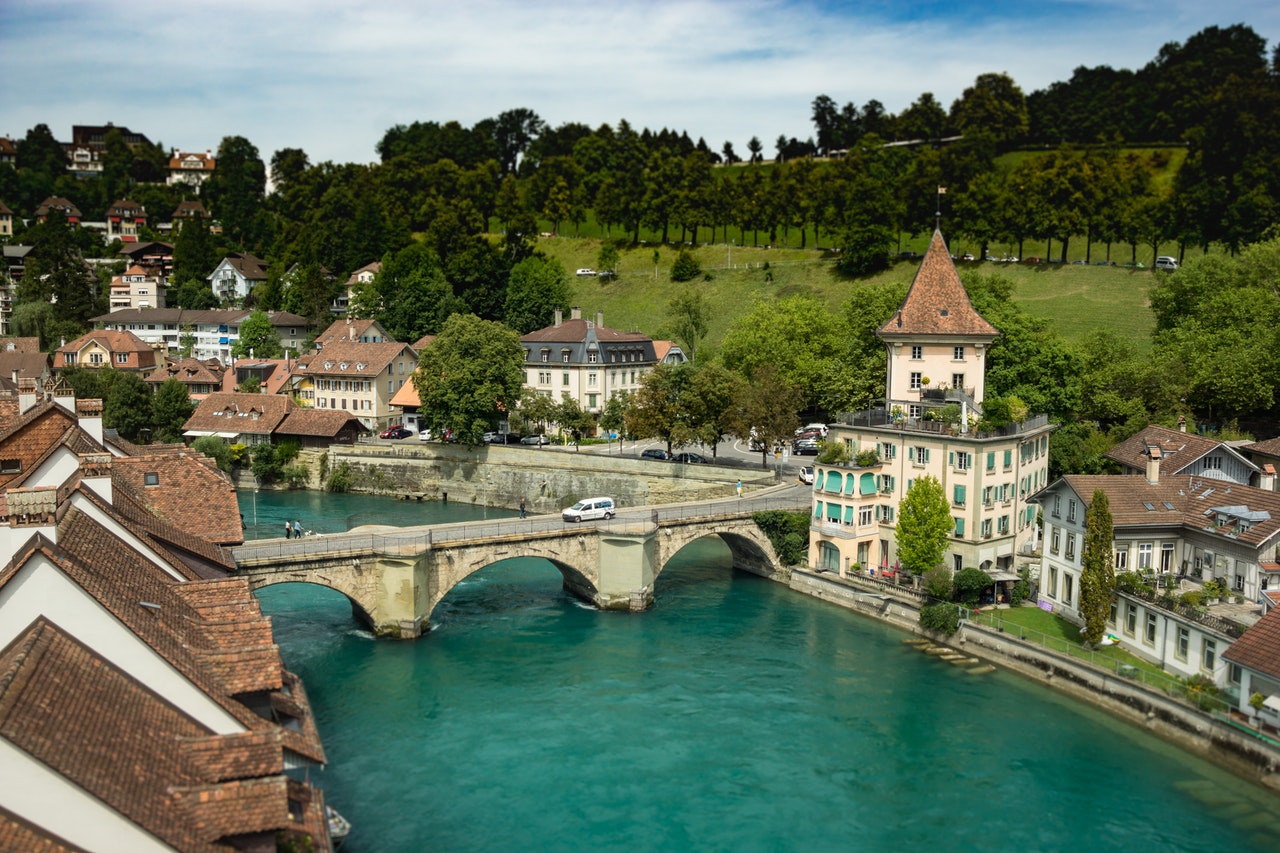
Bern is the federal capital of Switzerland and one of the best-preserved medieval cities in Europe — a compact, walkable city of sandstone arcades, fountains, clock towers, and cobbled lanes set in a dramatic horseshoe bend of the River Aare, declared a UNESCO World Heritage Site in 1983 for its extraordinarily intact medieval townscape. With a population of approximately 434,000 in the greater urban area, Bern is Switzerland's fourth-largest city — far smaller than Zurich or Geneva — but it carries the full weight of federal government: the Federal Palace (Bundeshaus), the supreme court, the embassies of the world, and the ministries that govern one of the most prosperous and politically stable nations on earth are all here, in a city that wears its capital status with characteristic Swiss understatement. Founded in 1191 by Duke Berchtold V of Zähringen — who, legend holds, named the city after the bear (Bär) he killed on the site of the first settlement — Bern has displayed a bear as its civic emblem ever since, and live bears are still kept in the BärePark on the banks of the Aare as a living symbol of the city's identity. The old town's 6 kilometres of continuous sandstone arcaded walkways (Lauben), built from the 13th century onwards to shelter pedestrians from Alpine weather, form one of the longest covered shopping promenades in the world and give the city its most distinctive physical character — a city designed for walking at any time of year, in any weather, with the unhurried pace that comes from knowing that the architecture around you has endured, largely unchanged, for 800 years.
Best Time to Visit Bern & Weather Guide
Bern has a temperate oceanic climate with significant Alpine influence — warm, sometimes hot summers with afternoon thunderstorms, cold and frequently snowy winters, and spring and autumn seasons of considerable beauty. The city's position at 542 metres elevation and its proximity to the Bernese Alps means weather can change rapidly at any time of year.
☀️ Summer (June–August)
The finest season for exploring Bern's old town and the surrounding Swiss countryside — temperatures of 20–28°C, long days of brilliant light (sunset after 9pm in June), and the outdoor café culture that transforms the arcaded streets and the Aare riverfront into the most pleasant urban walking environment in Central Europe. July and August are the warmest months; afternoon thunderstorms develop over the Alps on hot days — dramatic, brief, and followed by crystalline air. The Aare swimming culture — Bern residents swimming in the fast-flowing Aare River from the Marzili public lido, drifting downstream and walking back up — is the most distinctively Bernese summer experience and one of the most joyful urban swimming traditions in Europe. The Gurten Festival (July) on the hill above the city and the Buskers Bern street music festival (August) are the highlights of the summer cultural calendar.
Best Time to Visit🎄 Winter (December–February)
Bern in winter is one of the most atmospheric capital cities in Europe — the medieval sandstone arcades, the illuminated Christmas markets, and the snow-dusted rooflines of the old town create a scene of exceptional beauty. The Bern Christmas Market on Waisenhausplatz and the Münster platform is one of the most charming in Switzerland, set against the Gothic cathedral and the panorama of snow-covered Bernese Alps. Temperatures range from -2°C to 6°C in January–February; snowfall in the city is moderate but reliable most winters. The proximity of the Bernese Oberland ski resorts — Grindelwald, Wengen, Mürren, and the Jungfrau region — all within 60–90 minutes by train — makes Bern an excellent base for alpine skiing combined with city sightseeing. The winter cultural season brings the finest opera, theatre, and chamber music programmes of the year.
Christmas Market Season🌸 Spring (March–May)
Spring in Bern unfolds gradually and beautifully — the cherry blossom in the Rosengarten above the old town (one of the finest rose and iris gardens in Switzerland, with a panoramic view over the medieval city and the Alps) is at its peak in April, and the wildflower meadows of the surrounding Mittelland countryside blaze with colour from March onwards. Temperatures rise from 8°C in March to 18°C in May; the long winter grey gives way to the luminous quality of Alpine spring light. The Zibelemärit (Onion Market) — Bern's most beloved traditional festival — takes place on the fourth Monday of November, but the spring months bring the reopening of outdoor terraces and the Aare swimming season in late May. Shoulder season prices make spring an excellent value option.
Garden & Blossom Season🍂 Autumn (September–November)
Arguably Bern's most beautiful season for photography — the golden autumn light on the sandstone arcades, the vineyards of the Bielersee and Thunersee lake districts turning amber and crimson, and the first snow on the Bernese Alps appearing in October against a clear blue sky create a visual richness that surpasses even summer. September temperatures of 16–20°C are perfect for walking the old town and the Aare riverfront without summer crowds. The Bernese wine harvest festival and the Zibelemärit onion market (November) are the autumn cultural highlights. November brings the pre-Christmas period, the opening of the Christmas markets, and the transition into the winter season with its own distinctive atmospheric beauty.
Golden Autumn SeasonSummer (Jun–Aug): Light layers — warm days but cool evenings in the arcades; a light jacket for alpine excursions and the Aare evenings. Comfortable walking shoes for the cobblestoned old town streets (avoid heels on the uneven medieval paving). Sunscreen for the strong Alpine UV at altitude. A swimsuit for the Aare river swimming — Bern's most essential summer experience.
Winter (Dec–Feb): Warm winter clothing — a proper coat, scarf, hat and gloves for temperatures that regularly drop to -5°C on cold nights. Waterproof boots for the snow-cleared but occasionally icy cobblestones. Layers for the transition between heated interiors (very warm in Swiss buildings) and the cold outside.
Year-round: Switzerland uses the Type J Swiss three-pin plug (230V/50Hz) — a unique Swiss standard compatible with Type C (European two-pin) plugs but requiring a Swiss-specific adaptor for UK and US devices. Adaptors available at the airport and supermarkets. The Swiss public transport system (SBB trains, trams, and buses) is among the finest and most punctual in the world — the Swiss Travel Pass provides unlimited travel on the national network and is strongly recommended for visitors spending more than two days in Switzerland. Tap water is excellent throughout Bern and Switzerland — among the finest drinking water in Europe, sourced from Alpine springs.
Top Attractions in Bern
Bern rewards slow exploration — a city where the greatest pleasures are found not in a checklist of monuments but in the accumulated sensory experience of walking the sandstone arcades, watching the clock tower perform, and swimming in the Aare on a summer afternoon.
🏛️ Federal Palace (Bundeshaus)
The most impressive government building in the Alpine world and the symbolic heart of Swiss federal democracy — the Federal Palace (Bundeshaus), completed in 1902 on a sandstone bluff above the Aare with a commanding view of the Bernese Alps, houses both chambers of the Swiss Federal Assembly (the National Council and the Council of States) in a domed, frescoed interior of considerable grandeur. Free guided tours of the parliamentary chambers are available when parliament is not in session — one of the best and most accessible parliament tours in Europe, revealing the extraordinary richness of the building's historical paintings and symbolic decoration. The Bundesplatz in front of the palace hosts the twice-weekly Bern farmer's market (Tuesday and Saturday mornings) — the finest outdoor food market in the Swiss capital — and in summer a popular water fountain installation where jets of water rise from the paving stones to the delight of children and adults alike.
Seat of Swiss Democracy⏰ Zytglogge (Clock Tower)
The most famous medieval clock in Switzerland and the most recognisable symbol of Bern — the Zytglogge (Bernese German for "time bell"), a 12th-century tower that served successively as a city gate, a prison for adulterous women, and the civic clock tower of the medieval city, performs its celebrated astronomical show four minutes before every hour: mechanical figures of a jester, a procession of bears, a knight in armour, and Father Time emerge from the clock face in a choreographed sequence that has been running continuously since 1530. Albert Einstein famously contemplated the Zytglogge from his tram while developing his theories of special relativity and the nature of time — a clock tower that prompted the most consequential thought experiment in the history of physics. The tower's interior astronomical clock mechanism can be visited on guided tours from the Bern tourism office, revealing the extraordinary medieval engineering of the original clockwork.
Medieval Icon⛪ Bern Münster (Cathedral)
The finest Gothic cathedral in Switzerland and one of the most impressive medieval churches in Central Europe — Bern Münster, begun in 1421 and not completed until 1893 (when its 100-metre tower was finally finished — making it the last great Gothic spire to be completed in Europe), stands at the edge of the old town's sandstone plateau above the Aare in a position of commanding beauty. The cathedral's Last Judgement tympanum above the main portal — 234 painted stone figures representing the most complete and best-preserved late-Gothic sculptural programme in Switzerland — is a masterpiece of 15th-century art; the interior's stained glass (spanning five centuries of Swiss glass-painting), the ornate choir stalls, and the magnificent pipe organ are each outstanding. The Münster platform alongside the cathedral, perched on the city's southern escarpment, provides the most celebrated view of Bern — the medieval roofscape, the Aare horseshoe, and the full panorama of the Bernese Alps on a clear day.
Gothic Cathedral🐻 BärePark (Bear Park)
Bern's most beloved and most distinctively Swiss attraction — the BärePark (Bear Park), a 6,000-square-metre naturalistic enclosure on the banks of the Aare at the eastern end of the old town, is home to a family of European brown bears who have been kept in Bern as living symbols of the city's heraldic emblem since the 16th century (with the exception of the Napoleonic occupation, when the bears were taken to Paris). The current park — opened in 2009 to replace the previous cramped bear pit — gives the bears a forested hillside, a natural stream, and access to the Aare river, providing a humane and naturalistic environment that has become a model for urban wildlife facilities in Europe. The park is free to visit and forms part of the Rosengarten–BärePark–Nydeggbrücke walking loop that is the finest riverside walk in Bern.
Bern's Living Symbol🌹 Rosengarten (Rose Garden)
The finest viewpoint in Bern and one of the most beautiful public gardens in Switzerland — the Rosengarten (Rose Garden), terraced on the north-facing hillside above the Nydegg quarter with a direct view across the Aare to the old town's roofscape and, on clear days, the full panorama of the snow-covered Bernese Alps beyond, contains over 200 varieties of rose, 200 varieties of iris, and 28 varieties of rhododendron in a formal Swiss-garden setting of great beauty. The roses are at their peak in June–July; the irises in May. The Rosengarten Restaurant and café terrace — with the finest outdoor view in Bern — is the most sought-after table in the city for a summer lunch or an evening aperitif as the light turns golden on the medieval sandstone. The walk up from the BärePark to the Rosengarten through the Nydegg quarter's lanes is the best short walk in the Swiss capital.
Finest View in Bern🏊 Aare River Swimming
Bern's most beloved and most uniquely Swiss urban experience — swimming in the River Aare, the fast-flowing glacial river that loops around the medieval peninsula of the old town in its distinctive horseshoe bend. The Marzili public lido at the foot of the Federal Palace gardens is the most popular swimming venue — a free, open-air lido on the riverbank where Bern's population converges on hot summer days to swim in the Aare's cool, crystal-clear Alpine water. The classic Aare swimming experience involves entering the river upstream at the Dalmazibad or Lorraine bridge, drifting at speed downstream in the 18–20°C current (the river moves at 6–8 km/h) past the medieval sandstone walls of the old town, and exiting at the Marzili — a distance of approximately 1.5km that takes 15–20 minutes and provides one of the most extraordinary perspectives on the medieval city available from any angle. This is what Bern does in summer; joining the thousands of locals in the river is the most authentic local experience the city offers.
Uniquely Bernese Experience🎨 Zentrum Paul Klee
One of the finest single-artist museums in Europe and the most architecturally spectacular building in Bern — the Zentrum Paul Klee, designed by Renzo Piano and opened in 2005, is a wave-shaped steel and glass complex of extraordinary elegance set in the meadows east of the city, housing the world's largest collection of works by the Swiss-German artist Paul Klee (1879–1940): over 4,000 paintings, drawings, and graphic works that represent the most comprehensive overview of one of the 20th century's most original and most beloved artistic imaginations. Klee was born in Münchenbuchsee near Bern and the museum traces his entire career from early symbolist drawings through the geometric abstractions of the Bauhaus period to the late works of his final, illness-constrained years. The museum's Kindermuseum Creaviva makes Paul Klee's work accessible to children through hands-on creative workshops — one of the finest family art programmes in Switzerland.
World-Class Art Museum🛍️ The Arcaded Streets & Markets
The defining physical and social feature of Bern and the experience that most distinguishes the city from every other European capital — Bern's 6 kilometres of continuous arcaded walkways (Lauben), built progressively from the 13th century as the city expanded westward along its sandstone ridge, shelter some 100 independent boutiques, watchmakers, chocolate shops, antiquarian bookshops, cheese merchants, jewellers, and coffee houses beneath the sandstone arches. The arcades make Bern uniquely pleasurable to explore in rain, snow, or sun — the weather becoming irrelevant as you walk the length of Gerechtigkeitsgasse, Kramgasse, and Marktgasse without ever stepping outside. The Bundesplatz market (Tuesday and Saturday, year-round) and the Bärenplatz market are the finest outdoor food markets in the Swiss capital; the Zibelemärit (Onion Market, fourth Monday of November) — where farmers from across the canton bring 50–100 tonnes of plaited onion garlands to sell in the old town streets — is the most traditional and most colourful street market in German-speaking Switzerland.
Medieval ArcadesLocal Food Recommendations
Bern's food scene reflects the city's character — solid, unpretentious, deeply traditional in its Swiss-German foundations, but with a cosmopolitan sophistication that befits a capital city where the embassies and international organisations of the world bring their cooking cultures. Swiss food is not showy; it is, at its best, extraordinarily good.
🍽️ Must-Try Bern Dishes
- Bernese Platter (Berner Platte) — the most emblematic dish of Bern and one of the great cold-weather peasant dishes of Central Europe: a generous platter of boiled and smoked meats — Zungenwurst (tongue sausage), smoked pork ribs, Gnagi (salted pig's trotters), smoked bacon, Siedfleisch (boiled beef), and various sausages — served alongside a mound of sauerkraut, green beans, and boiled potatoes on a single large platter designed to be shared between two or more diners. The Berner Platte is the food of winter, of outdoor markets, of the Zibelemärit — a warming, deeply satisfying dish of considerable character that requires a robust appetite and a cold day to fully appreciate. Found at traditional Beizen (Swiss informal restaurants) throughout the old town, typically from October to March.
- Rösti — Switzerland's most internationally recognised dish and the foundational preparation of Swiss-German cooking: shredded, parboiled potatoes fried in butter in a flat iron pan until golden and crispy on the outside, soft and yielding within. Rösti is eaten at every meal in Bern — at breakfast with a fried egg, at lunch alongside braised meat, at dinner with Spiegelei (fried eggs) and apple sauce in the classic Rösti mit Spiegelei. The divide between German-speaking Switzerland (where rösti is eaten) and French-speaking Switzerland (where it is not) is so culturally significant that it has given rise to the term Röstigraben ("rösti ditch") for the linguistic-cultural fault line running through the Swiss Confederation. Bern sits squarely in rösti territory.
- Fondue and Raclette — the two great communal cheese dishes of Switzerland that are most associated in the international imagination with the country's culinary identity, and which are consumed with genuine enthusiasm (not merely for tourist performance) in Bern's restaurants throughout the autumn and winter months. Fondue — melted Gruyère and Emmental cheeses (or the classic moitié-moitié half-and-half blend) dissolved in white wine in a communal pot over a small flame, into which diners dip cubes of crusty bread on long forks — is the essential Swiss social meal; Raclette — a half-wheel of Valais raclette cheese melted under a grill and scraped (racler) onto boiled new potatoes with gherkins and pearl onions — is its equally satisfying cousin. Both are available year-round in Bern's traditional restaurants but at their most appropriate and most atmospheric in winter.
- Swiss chocolate — Switzerland produces the finest milk chocolate in the world and Bern, as the federal capital and the home of several of Switzerland's most distinguished chocolatiers, is the best single city in which to experience the full range of Swiss chocolate culture: from the classic Toblerone (invented in Bern in 1908 by Theodor Tobler — the triangular shape representing the silhouette of the Matterhorn, the nougat-honey filling a Swiss-Italian tradition) to the handmade pralines and ganaches of the old town's artisan chocolate ateliers. The finest chocolate shops in Bern — Confiserie Tschirren (1919), Abegglen, and Eichenberger — produce truffles, pralines, and seasonal specialities of a quality that justifies Switzerland's global reputation for chocolate excellence.
- Emmental cheese — the most famous Swiss cheese in the world — the large-hole yellow cheese that everyone outside Switzerland calls "Swiss cheese" — is produced in the Emmental valley 30km east of Bern, and the Bern region is the best place in the world to eat it at its source: young, fresh, slightly sweet, and nutty in a way that the exported product never quite captures. The Emmental Show Dairy (Schaukäserei) in Affoltern im Emmental, 30 minutes from Bern, is the finest and most comprehensive presentation of Swiss cheese-making available anywhere.
- Meringue with double cream — a Swiss dessert of beguiling simplicity and extraordinary richness: large, crispy, snowy-white meringues paired with Berner Nidel (Bernese double cream — the richest, most unctuous dairy cream produced anywhere in Europe, with a fat content of 45–48%) in a combination of crunchy sweetness and silky richness that is the definitive sweet conclusion to a meal in the Swiss capital. The meringues and Berner Nidel served at the Café Lerchenfeld and the traditional tea rooms of the Kramgasse arcades are among the finest simple desserts available in Central Europe.
🍷 Drinks & Café Culture
- Swiss wine in Bern — Switzerland produces wine of surprising quality and character that is almost entirely consumed domestically (less than 2% is exported), making a visit to Switzerland the primary opportunity to taste wines that are genuinely difficult to find outside the country. The wine regions most accessible from Bern are the Bielersee (Lake Biel) white wine district — producing excellent Chasselas (Gutedel) of mineral clarity and the finest Pinot Noir in German-speaking Switzerland — and the Thunersee lakeside vineyards. The specialist wine bars of Bern's old town and the cave-like wine cellars of the Gerechtigkeitsgasse serve the full range of Swiss cantons' wines in a setting of considerable atmosphere.
- Swiss coffee culture — Bern's café culture is one of the finest in Central Europe: the traditional Café-Konditorei (coffee house and pastry shop) — a distinctly Swiss institution combining excellent espresso and filter coffee with handmade pastries, cakes, and the famous Swiss bread rolls (Gipfeli, the Swiss croissant; Züpfe, the plaited butter bread baked on Saturday mornings) — is the social institution around which Bernese life is organised. The finest examples — Café du Commerce, Confiserie Tschirren, and the terraced cafés of the Münster platform — serve coffee of genuine quality in settings of considerable architectural beauty. Swiss café culture rewards lingering: it is considered entirely normal to nurse a single café crème for an hour while reading the newspaper.
- Swiss beer — Switzerland's beer culture is centred on fresh, well-made lagers of good quality rather than the craft-beer intensity of neighbouring Germany and Belgium, but Bern has a lively independent brewery scene: the Felsenau Brewery (in the Aare gorge below the old town, founded 1881) produces Bern's most beloved local beers in a range of styles from the flagship lager to seasonal specialities; the Altes Tramdepot Brewery — a brewpub restaurant in a converted tram depot above the BärePark, with a large terrace overlooking the Aare and the old town — is the most atmospheric brewery restaurant in the Swiss capital and produces four house beers of reliable quality.
- Schnapps and Swiss distillates — Switzerland produces outstanding fruit spirits: Kirsch (cherry brandy, the essential ingredient of fondue and Schwarzwälder Kirschtorte), Williams (pear spirit of particular elegance, the finest produced in the Valais and Bernese Mittelland orchards), and Pflümli (plum schnapps) are available at the specialist spirit shops of the old town and as digestifs at traditional restaurants. The post-fondue Kirsch — a small glass of cold cherry brandy following the cheese course — is as much a ritual as the fondue itself.
🍽️ Where to Eat — Local Tips
- Kornhauskeller (Kornhausplatz) — the most spectacular restaurant setting in Bern and one of the finest dining rooms in Switzerland: the Kornhauskeller, housed in the vaulted baroque cellar of the 18th-century granary on Kornhausplatz, is a monumental space of soaring arches, frescoed walls, and dramatically atmospheric lighting that serves Swiss and Mediterranean cuisine of high quality. The scale and beauty of the room — the finest example of baroque civic architecture in Bern — makes it the most memorable restaurant experience in the Swiss capital regardless of what is on the plate. Mains CHF 35–65; book in advance for weekend dinners.
- Altes Tramdepot (above BärePark) — the most popular and most beloved restaurant in Bern for a long summer lunch with a view: the Altes Tramdepot, a converted 19th-century tram depot perched on the hillside above the Bear Park with a large terrace overlooking the Aare gorge and the medieval roofscape, brews four house beers on the premises and serves hearty Swiss-German food (rösti, Berner Platte, grilled sausages, seasonal specials) at mid-range prices (CHF 22–38 for a main) in an atmosphere of cheerful informality. The terrace is the finest outdoor eating venue in the Swiss capital on a summer afternoon.
- Bundesplatz Farmer's Market (Tuesday & Saturday) — the finest single introduction to Swiss food culture available in Bern: the twice-weekly market on the Federal Palace square brings farmers, cheesemakers, sausage producers, bread bakers, and vegetable growers from across the Bernese Mittelland to sell their produce at prices only slightly above supermarket levels and at a quality dramatically superior. The Saturday market (7am–1pm) is the larger and more atmospheric; arrive early for the finest Emmental cheese, Bernese butter, Züpfe bread, and seasonal vegetables of the Swiss agricultural year. Free to browse; budget CHF 20–40 for a generous shopping basket of outstanding Swiss produce.
- Gerechtigkeitsgasse & Kramgasse restaurants — the most characterful restaurant strip in Bern runs along the old town's two central arcaded streets: a sequence of traditional Beizen (informal Swiss taverns), wine bars, and French-influenced bistros housed in medieval ground floors beneath the sandstone arches. The best options for a traditional Bernese lunch — Berner Platte, rösti, Emmental fondue — at fair prices (CHF 22–40 for a main) in an authentically medieval atmosphere: Restaurant Harmonie, Zum Zähringer, and Lötschberg are the most consistently excellent of the traditional options.
- Rosengarten Restaurant (terrace) — the finest view in Bern and a very decent kitchen: the Rosengarten Restaurant café terrace above the old town, with its panorama of medieval rooflines, the Aare horseshoe, and the Bernese Alps, is the most sought-after outdoor table in the Swiss capital from May to September. The food (seasonal Swiss café fare — soup, salad, rösti, cake, coffee) is straightforward but well-executed; the view and the rose-garden setting more than compensate for any lack of gastronomic ambition. Arrive before noon on weekends for the best chance of a terrace table.
🎭 Art, Culture & Creative Scene
- Bern's cultural scene punches significantly above the weight suggested by its modest size — the city hosts an extraordinary concentration of world-class museums and performing arts institutions for a capital of 130,000 in the old town. The Kunstmuseum Bern (Museum of Fine Arts), founded in 1879, holds the oldest permanent art collection in Switzerland, with particular strength in Paul Klee (a substantial secondary collection complementing the Zentrum Paul Klee), Hodler's monumental Alpine landscapes, and contemporary Swiss art; the Bernisches Historisches Museum (Bern Historical Museum) is the second-largest historical museum in Switzerland and houses the finest collection of medieval artefacts from the Burgundian wars alongside an extensive Einstein museum. Both are within easy walking distance of the old town.
- The Bern Symphony Orchestra (Berner Symphonieorchester) — one of Switzerland's finest — performs at the Kultur Casino on Herrengasse, a neo-baroque concert hall of great acoustic excellence and considerable architectural beauty. The BSO season (September–June) includes a subscription series of international soloists and conductors of the highest calibre; single tickets are available at Swiss prices that seem extraordinarily reasonable by London or New York standards. The Stadttheater Bern opera and ballet company performs at the Theater am Käfigturm and the Grand Casino Bern in a season of 10–12 opera productions combining international repertoire with Swiss premières.
- Bern's gallery scene — concentrated in the streets around the Gerechtigkeitsgasse and the Lorrainebrücke district — is the most active in German-speaking Switzerland outside Zurich: the Galerie Bernhard Bischoff & Partner, Galerie Hilt, and numerous independent project spaces provide a serious contemporary art programme that connects Bernese artists to the international market. The Berner Kunsthalle on Helvetiaplatz is the most adventurous exhibition venue for international contemporary art in the Swiss capital, with a programme of ambitious shows that regularly generates national debate.
- The Gurten Festival (July) — held on the forested hill directly above Bern, accessible by funicular from the Gurten station — is the finest outdoor music festival in German-speaking Switzerland: a two-day programme of international and Swiss artists across four stages, combining world-class headliners with the extraordinary backdrop of the illuminated medieval city below and the Alpine panorama above. The festival's characteristic combination of excellent music, superb Swiss food (fondue trucks, bratwurst stands, local wine), and the unique setting of the Gurtenpark make it one of the most distinctive festival experiences in Europe. The Buskers Bern street music festival (August) transforms the arcaded streets of the old town into the finest free outdoor music event of the Swiss summer.
Day Trip Itineraries from Bern
Bern's central position in Switzerland, served by one of the world's finest rail networks, makes it an outstanding base for day trips to some of the most extraordinary Alpine landscapes and medieval towns in Europe:
🏔️ Day Trip: Jungfrau Region
Travel time: 1.5–2.5 hours by train (Bern → Interlaken → Grindelwald/Wengen/Lauterbrunnen) | Cost: Swiss Travel Pass or from CHF 50 return
The most dramatic Alpine scenery in Europe and the most visited mountain region in Switzerland — the Jungfrau region of the Bernese Oberland, accessible from Bern in under 2 hours on the SBB train to Interlaken and then the cog railways into the mountains, offers the full range of Alpine experiences within a single day: the glacier village of Grindelwald beneath the Eiger's north face, the car-free valley of Lauterbrunnen with its 72 waterfalls, and the Jungfraujoch (3,454m — the highest railway station in Europe, year-round snow, glacier views to the horizon) for those who wish to ascend to the roof of Europe. The Swiss Travel Pass covers all trains to Interlaken and provides significant discounts on the mountain railways above.
Alpine Masterpiece🏰 Day Trip: Château de Chillon & Lake Geneva
Travel time: 1.5 hours by train (Bern → Montreux) | Cost: Swiss Travel Pass; Chillon entry CHF 13.50
The finest medieval castle in Switzerland and one of the most beautifully situated fortresses in Europe — Château de Chillon, rising from a rock in Lake Geneva at the foot of the Alps near Montreux, was immortalised by Byron in The Prisoner of Chillon (1816) and remains the most visited historic monument in Switzerland. The castle's dramatic interior — dungeons, great halls, Gothic chapels — and its position on the lake with the Alps reflected in the water make it one of the most photogenic heritage sites in Central Europe. Combine with a lake steamer excursion on Lac Léman, the vineyards of the Lavaux UNESCO Wine Terraces, and the jazz-festival town of Montreux for a day of extraordinary variety.
Medieval Castle & Lake🏙️ Day Trip: Lucerne
Travel time: 1 hour by train | Cost: Swiss Travel Pass; most attractions free or low-cost
Lucerne — Switzerland's most photogenic small city and the most visited tourist destination in the country — combines a perfectly preserved medieval old town (the Chapel Bridge and its painted ceiling, the Musegg Wall towers, and the arcaded Weinmarkt) with a world-class cultural offer (the KKL Luzern concert hall, designed by Jean Nouvel, one of the finest concert halls in the world) and an extraordinary mountain backdrop (the Rigi and Pilatus peaks accessible by cable car and historic cog railway within 30 minutes of the city). Lucerne's Lion Monument — a dying lion carved into a cliff face to commemorate the Swiss Guards who died defending the French royal family in 1792 — moved Mark Twain to call it "the most mournful and moving piece of stone in the world."
Switzerland's Gem🍷 Day Trip: Emmental & Lake Thun
Travel time: 30–45 minutes by car or train | Cost: Emmental Show Dairy CHF 8; Lake Thun steamer from CHF 12
The most quintessentially Swiss day trip from Bern — combining two of the most beautiful and most distinctively Bernese landscapes within easy reach of the capital. The Emmental valley (30 minutes east) — rolling hills of intensely green pasture, wooden farmhouses with massive overhanging roofs, the gentle sound of cowbells, and the Schaukäserei (show dairy) at Affoltern where Emmental cheese is made according to the original recipe — is a deeply restorative Swiss countryside experience. Lake Thun (30 minutes south) — a glacial lake at the foot of the Bernese Alps with the perfectly preserved Thun Castle above the lake town and the steam paddle-wheelers of the lake company — offers one of the most beautiful lake-and-mountain combinations in the Alpine arc.
Swiss CountrysideTourist Tips for Bern
🚌 Getting Around
- Bern's old town is compact and extraordinarily walkable — all the major attractions (Zytglogge, Federal Palace, Münster, BärePark, Rosengarten) are within 20 minutes of each other on foot along the arcaded streets. The 6km of arcades make walking the preferred and most pleasurable transport mode in any weather.
- Bern Public Transport (BERNMOBIL) operates an excellent network of trams and buses covering the greater urban area; a single ticket within zone 1 (covering all old town attractions) costs CHF 2.20; a day pass CHF 8.80. Free city transport is included with the Bern Ticket, provided automatically by all Bern hotels and hostels with your room booking — showing this card gives free unlimited travel on all BERNMOBIL services during your stay.
- The Swiss Federal Railways (SBB) high-speed and regional network connects Bern to Zurich (56 minutes), Basel (55 minutes), Geneva (1 hour 45 minutes), Interlaken (50 minutes), and Lucerne (1 hour) with trains typically running every 30 minutes. Bern Hauptbahnhof (main station) is one of Switzerland's most important rail hubs and is entirely underground in the centre of the old town. The Swiss Travel Pass (available for 3, 4, 8, or 15 days) is strongly recommended for visitors — it covers all SBB trains, most mountain railways, and all city transport.
- Bern-Belp Airport (BRN), 9km southeast of the city centre, handles limited domestic and European routes. Most international visitors arrive at Zurich Airport (ZRH) (1 hour by direct SBB train from Bern) or Geneva Airport (GVA) (1 hour 45 minutes); both airports have direct platform train connections to Bern Hauptbahnhof without the need for a bus or taxi transfer.
- Taxis in Bern are very expensive by international standards (CHF 20–40 for a journey within the city); use the Bernmobil tram network or walk within the old town for all practical purposes. Uber operates in Bern at rates somewhat below conventional taxi levels. Cycling is excellent throughout the flat Aare floodplain west of the old town — Bernroll provides free bike hire from the main station (deposit required).
💡 General Safety & Travel Tips
- Switzerland uses the Swiss Franc (CHF) — currently roughly at parity with the USD (fluctuates). Bern is an expensive city by international standards: budget CHF 20–35 for a café lunch, CHF 35–60 for a restaurant dinner main course, CHF 7–9 for a coffee, CHF 150–300+ for a mid-range hotel night. ATMs (Bancomat) are available throughout the city; Visa and Mastercard are accepted almost everywhere. Tipping is not obligatory in Switzerland — the service charge is included in Swiss restaurant prices by law — but rounding up the bill is customary for good service.
- Switzerland uses the Type J three-pin plug (230V/50Hz) — a unique Swiss standard (SEV 1011) that is not found in any other country. Type C (European two-pin) plugs fit Swiss sockets; UK Type G and US Type A/B plugs require adaptors. Buy a Swiss adaptor at the airport or at supermarkets (Migros, Coop) throughout the city.
- Bern's old town is entirely pedestrianised — private vehicles are prohibited from the historic core between 7:30am and 6pm. The arcaded streets are level and well-maintained, making the old town accessible for wheelchairs and pushchairs on the main routes, though the steeper lanes towards the Münster and the Nydegg quarter involve steps.
- The Bern Tourism office at Bern Hauptbahnhof (main station, street level) provides free city maps, hotel booking assistance, and excellent English-language visitor information; the staff are knowledgeable and helpful. The Bern Welcome Card (available from the tourism office) provides discounts on museum entry alongside the free public transport of the Bern Ticket.
- Swiss shops observe strict opening hours by international standards: most close at 6:30pm on weekdays, 5pm on Saturdays, and are completely closed on Sundays (except in the main station shopping area and some tourist-area boutiques). Plan shopping trips for weekday afternoons. Supermarkets (Migros, Coop) are the best-value option for picnic supplies, Swiss chocolate, wine, and cheese at prices dramatically lower than restaurants.
Apply for Tourist Visa
Switzerland is a member of the Schengen Area — citizens of EU/EEA member states and many other countries (including the United States, Canada, Australia, United Kingdom, Japan, and South Korea) may enter Switzerland without a visa for stays of up to 90 days within any 180-day period. Citizens of countries not covered by Schengen visa-free arrangements must apply for a Schengen visa through the Swiss embassy or consulate in their country of residence before travel. Switzerland is not a member of the European Union despite being surrounded by EU countries — the Swiss Franc is the only currency; euros are generally not accepted. Verify your country's current entry requirements on the official Swiss visa information portal. Swiss Visa Information
Important Emergency Numbers
🇨🇭 Bern Emergency Contacts
- 🚑 Ambulance: 144
- 🔥 Fire Brigade: 118
- 👮 Police: 117
- 🆘 General Emergency (mobile): 112
International Emergency Phone Numbers
Find Flights to Bern
Airport Codes: BRN — Bern-Belp Airport (9km southeast, limited European routes) | ZRH — Zurich Airport (1 hour by direct SBB train — primary international gateway)
Airport Transfer: From Zurich Airport (ZRH): direct SBB train to Bern Hauptbahnhof (1 hour, from CHF 40, trains every 30 minutes — no taxi or bus required). From Geneva Airport (GVA): direct SBB train to Bern (1 hour 45 minutes, from CHF 50). From Bern-Belp (BRN): taxi or bus (30 minutes, approximately CHF 35–45). Airlines serving Zurich and Geneva with connections to Bern include Swiss International Air Lines, Lufthansa, British Airways, Air France, KLM, Emirates, Qatar Airways, United Airlines, and American Airlines.
International Airport FinderCurrency in Bern
The currency of Switzerland is the Swiss Franc (CHF). ATMs (Bancomat) are available throughout the city — use those at bank branches and the main station for security. Visa and Mastercard are accepted almost everywhere. Note that euros are generally not accepted in Swiss shops and restaurants. Switzerland is among the most expensive countries in the world — plan budgets accordingly.