

Country's codes
International phone code for Bhutan: +975
3 letters: BTN
2 letters (internet domain): .BT
Digital country code 064
Standard EAN-13 (country barcode): N/A
 Olympic country code: BHU
🇧🇹 Bhutan Travel Guide
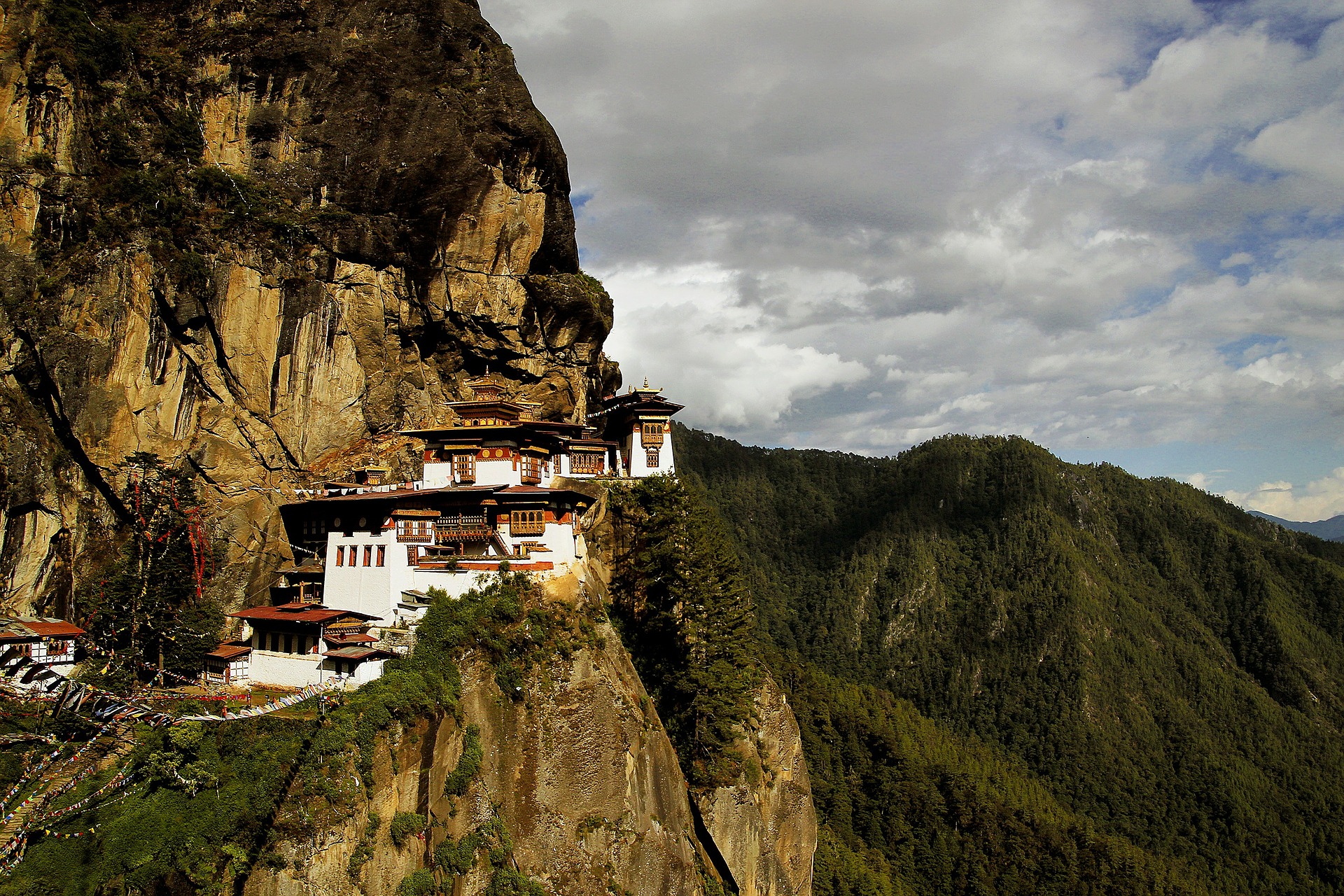
Bhutan is unlike anywhere else on earth. This tightly protected Himalayan kingdom measures progress by happiness rather than GDP, has remained carbon-negative for decades, and limits tourism to preserve its pristine environment and culture. Dramatic dzong fortresses, fluttering prayer flags, sacred monasteries clinging to cliffsides, and some of the world's last untouched wilderness make Bhutan a truly once-in-a-lifetime destination.
Top Attractions in Bhutan
🏔️ Tiger's Nest Monastery (Paro Taktsang)
Bhutan's most iconic landmark — a sacred Buddhist monastery dramatically perched on a sheer 900-metre cliffside, reachable by a breathtaking mountain hike above the Paro Valley.
🏯 Punakha Dzong
The most beautiful dzong in Bhutan, set at the confluence of two rivers and serving as the winter residence of the Je Khenpo — Bhutan's chief abbot — adorned with stunning murals and intricate woodwork.
🛕 Thimphu's Buddha Dordenma
A colossal 51-metre gilded Buddha statue overlooking the capital, housing over 100,000 smaller Buddha statues and offering sweeping panoramic views of the Thimphu Valley.
🌿 Phobjikha Valley
A pristine glacial valley and protected wildlife sanctuary, famous as the winter home of the rare black-necked crane — sacred to Bhutanese Buddhists and a haven for birdwatchers and trekkers.
Best Places to Visit
- 🏙️ Thimphu – The world's only capital without traffic lights; home to dzongs, monasteries, and vibrant weekend markets.
- 🌄 Paro – Gateway to Tiger's Nest, ancient temples, and Bhutan's only international airport set in a lush valley.
- 🌊 Punakha – Former capital, warm lower valley, and home to the magnificent Punakha Dzong.
- 🌳 Bumthang – The spiritual heartland of Bhutan, dotted with ancient temples, sacred valleys, and organic buckwheat farms.
- 🏔️ Haa Valley – A remote, rarely visited valley of untouched beauty, traditional villages, and rich folklore.
Things to Do in Bhutan
- Hike to the sacred Tiger's Nest Monastery for an unforgettable sunrise view over the Paro Valley.
- Attend a traditional Tsechu festival — a vibrant celebration of masked dances, colour, and Buddhist ritual.
- Trek the Druk Path or Snowman Trek through pristine Himalayan wilderness and remote villages.
- Explore Punakha Dzong and take a white-water rafting trip on the Mo Chhu river.
- Visit a traditional farmhouse in Bumthang to experience authentic Bhutanese rural life and cuisine.
Travel Tips for Visitors
- ✈️ Druk Air and Bhutan Airlines are the only carriers serving Paro International Airport — book well in advance.
- 🧘 Respect Buddhist customs: dress modestly at dzongs and monasteries, and always walk clockwise around stupas.
- 💳 Cash (BTN or Indian rupees) is preferred; ATMs are limited outside Thimphu and Paro.
- 🏔️ Altitude awareness is essential — Bhutan ranges from 300m to over 7,500m; acclimatise gradually.
📌 Useful Country Information
Quick Facts
Total area: 14,824 sq mi (38,394 sq km)
Population (2023 est.): ~790,000
Capital: Thimphu (~115,000)
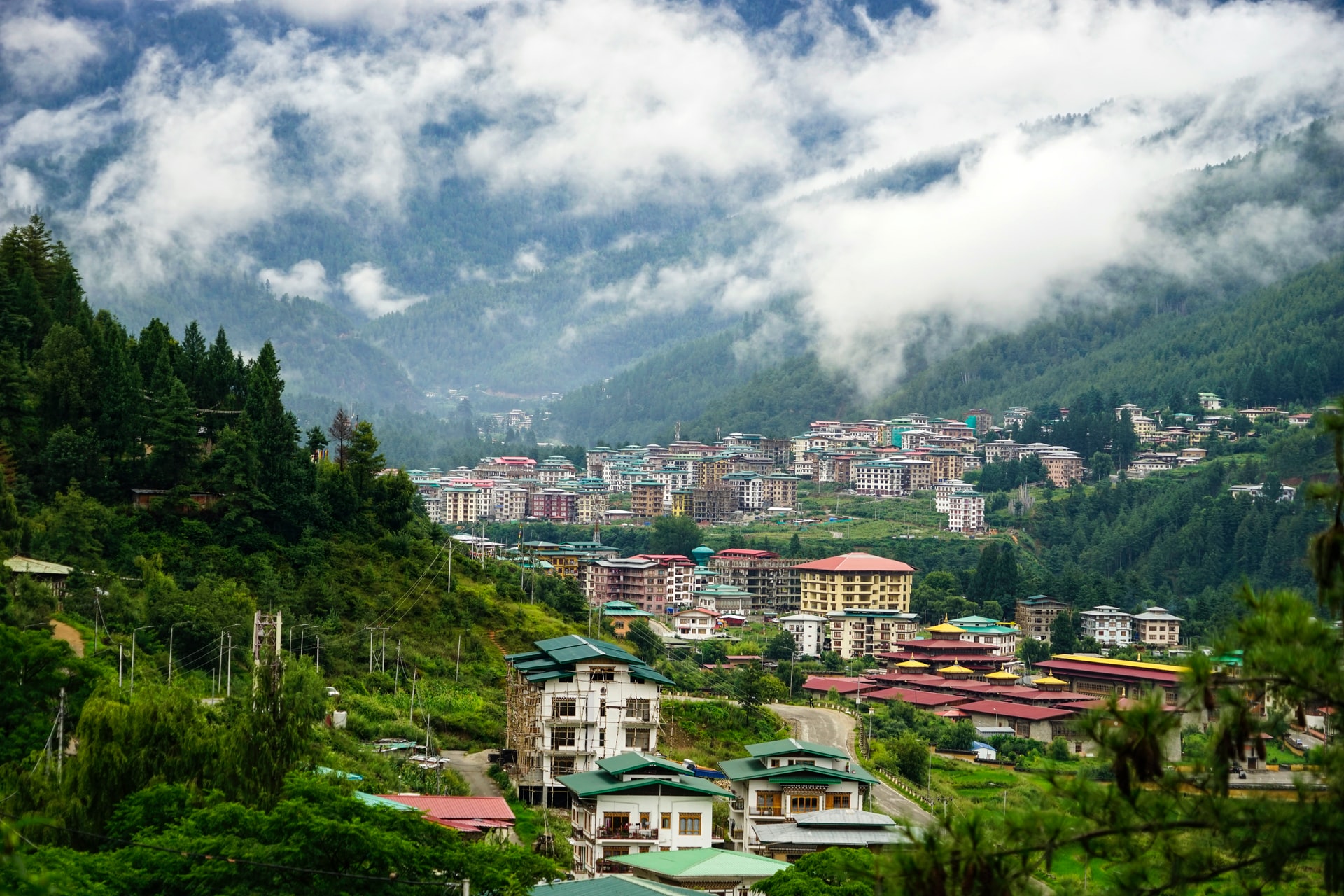
🇧🇹 Thimphu: Capital City Profile
Other major cities: Paro, Punakha, Bumthang, Phuntsholing, Wangdue Phodrang
Currency: Bhutanese Ngultrum (BTN) — pegged 1:1 to Indian Rupee (INR)
National name: Druk Gyal Khap (Kingdom of the Thunder Dragon)
Language: Dzongkha (official); Tshangla, Nepali, and other regional dialects widely spoken
Ethnicity/race: Ngalop (Bhutia) 50%, Sharchop 25%, Lhotshampa (Nepali) 22%, other 3%
Religions: Vajrayana Buddhism 74.7%, Hinduism 22.6%, other/none 2.7%
National Holiday: December 17, National Day (Proclamation of the Kingdom, 1907).
Background
🙏 Buddhism permeates every aspect of Bhutanese life, from the dzong fortresses that anchor every valley to the prayer flags that flutter from mountain passes and the sacred rituals observed in daily routines across the country.
🌱 Bhutan is the world's only carbon-negative country, absorbing more CO₂ than it produces. Its constitution mandates that at least 60% of the land remain forested in perpetuity — a commitment it has consistently exceeded, with forests currently covering over 70% of the country.
👑 In 2008, Bhutan transitioned from an absolute monarchy to a constitutional monarchy and held its first democratic elections. Today it is governed as a parliamentary democracy under the beloved King Jigme Khesar Namgyel Wangchuck, while the philosophy of Gross National Happiness continues to guide all national policy.

Online Travel Visa Check.
Find Visa information for your destination.Get Travel Insurance Quote


