Thimphu Weather
THIMPHU WEATHERAbout Thimphu
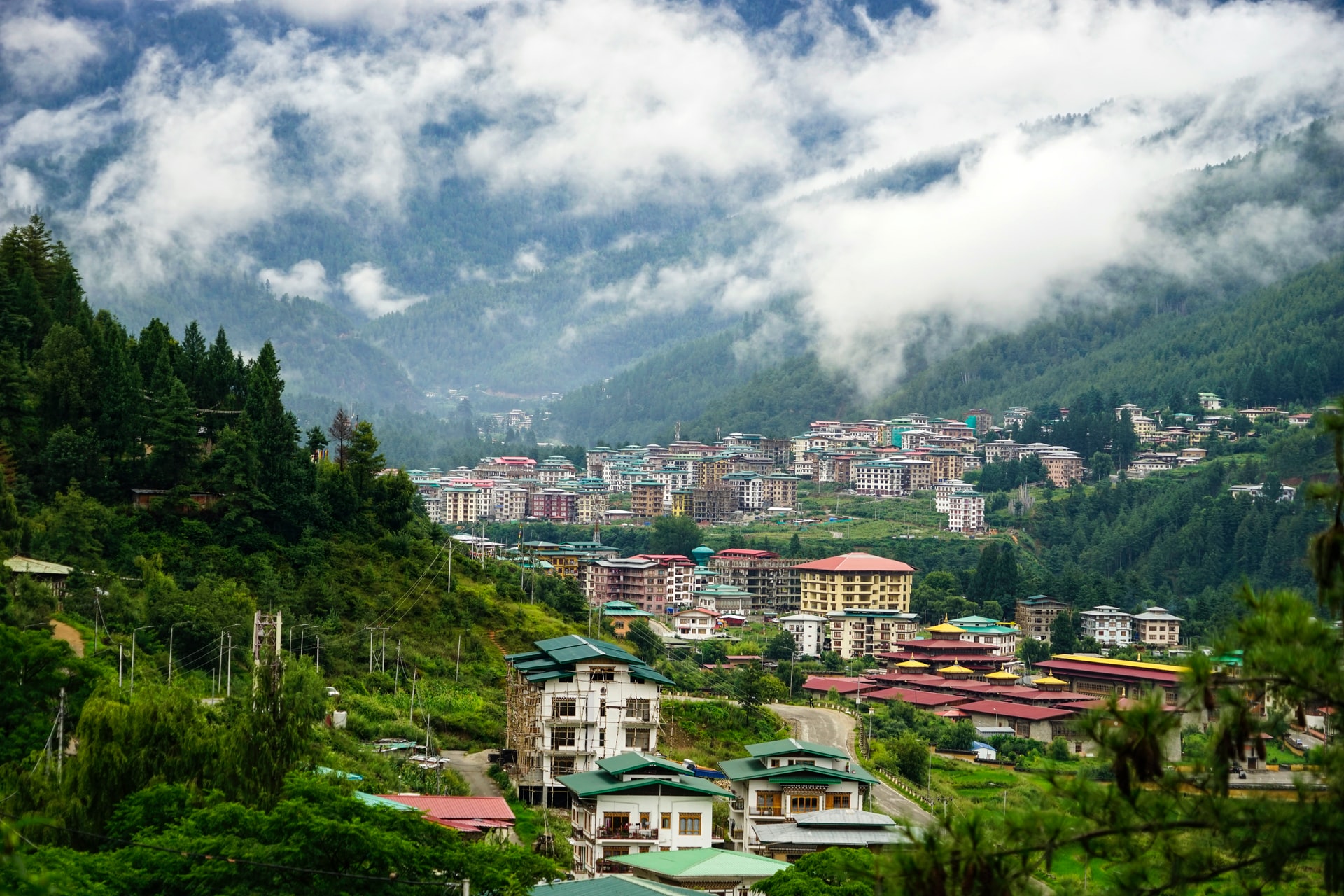
Thimphu is one of the world's most extraordinary capital cities — a small, serene Himalayan town that serves as the political, economic, and cultural heart of Bhutan, the legendary "Land of the Thunder Dragon." Nestled in a broad valley of the Wang Chhu river at an altitude of 2,334 metres, Thimphu is one of the few capital cities in the world without a single traffic light — instead, white-gloved police officers direct traffic at the main intersections, a detail that perfectly captures Bhutan's singular approach to modernity. The country is world-famous for measuring its progress not by GDP but by Gross National Happiness — a philosophy that prioritises the wellbeing of citizens and the preservation of culture, environment, and tradition above pure economic growth. Visiting Thimphu and Bhutan is, for many travellers, among the most profound and memorable experiences of a lifetime.
Best Time to Visit Thimphu & Weather Guide
Thimphu's Himalayan location gives it four distinct seasons with dramatic temperature variations — choosing the right time to visit makes an enormous difference to the experience, particularly for trekking and festival attendance.
🌸 Spring (March–May)
One of the two best times to visit Bhutan. Temperatures in Thimphu range from 10–20°C, rhododendrons and wildflowers bloom across the hillsides in extraordinary colour, and the mountain views are often at their clearest before the monsoon haze arrives. March and April are particularly spectacular for trekkers and nature lovers. The Paro Tsechu — one of Bhutan's most important and visually stunning religious festivals — takes place in spring (usually March or April) and draws visitors from across the world.
Best Time to Visit🍂 Autumn (September–November)
The other peak season — and many experienced travellers' preferred time. After the monsoon, the skies clear to reveal Bhutan's mountain scenery in stunning definition. Temperatures are crisp and comfortable (8–18°C in Thimphu), trekking conditions are ideal, and autumn hosts some of Bhutan's most spectacular festivals including the Thimphu Tsechu (September/October) — the capital's own grand religious festival with masked dances, sacred thangka unfurlings, and traditional performances in the Tashichho Dzong courtyard.
Also Excellent🎭 Tsechu Festival Season
Bhutan's tsechus — annual religious festivals celebrated at each dzong (fortress-monastery) — are among the most visually extraordinary cultural events in Asia. Masked cham dances performed by monks in elaborate costumes and towering masks enact stories from Tantric Buddhist tradition. The sacred thongdrel (giant thangka painting) is unfurled at dawn to bless all who see it. The most visited are Paro Tsechu (spring) and Thimphu Tsechu (autumn). Book accommodation many months in advance for these periods.
Special Event🌡️ Climate Notes for the City
Thimphu at 2,334m has a cool, temperate mountain climate — summers (June–August) are mild (15–25°C) but wet, as the monsoon brings heavy rainfall and misty conditions. Winters (December–February) are cold, with temperatures dropping to -5°C at night and occasional snowfall — beautiful but requiring warm clothing. Spring and autumn offer the ideal balance of clear skies, comfortable temperatures, and accessible roads. Always pack layers regardless of season — Himalayan weather changes rapidly throughout the day.
Mountain ClimateSpring / Autumn (peak seasons): Layered clothing is essential — warm mornings and evenings (fleece or down jacket), comfortable daytime temperatures for walking. Sturdy, comfortable walking shoes or hiking boots for the uneven terrain of dzongs and trekking paths. A rain layer for spring showers or sudden autumn afternoon rain.
Summer (monsoon): Waterproof jacket, quick-dry clothing, and waterproof footwear are essential. Leeches are common on forest trails during monsoon — tuck trousers into socks and carry salt as a deterrent.
Winter: Warm down jacket, thermal base layers, warm hat and gloves, and waterproof boots for potential snow. Indoor spaces are rarely heated — dress in warm layers for dzong and museum visits.
Top Attractions in Thimphu
Thimphu is a compact, walkable city where ancient Buddhist monasteries, royal palaces, and dzongs sit alongside vibrant markets, excellent restaurants, and a sophisticated arts scene — all framed by spectacular Himalayan scenery.
🏯 Tashichho Dzong
The most magnificent and important building in Thimphu — a vast, gleaming white fortress-monastery on the banks of the Wang Chhu river, serving as the seat of Bhutan's government and the summer residence of the Je Khenpo (the Chief Abbot of Bhutan). The dzong's soaring white towers, golden roofs, and elaborately painted interiors are breathtaking in the afternoon light. Visitors may enter outside government hours — late afternoon visits, when the courtyards glow in the golden Himalayan light, are particularly memorable. The Thimphu Tsechu festival is held here each autumn.
Iconic Landmark🐉 Buddha Dordenma Statue
Perched on a hilltop overlooking the entire Thimphu valley, the Buddha Dordenma is one of the largest Buddha statues in the world — a magnificent 51.5-metre bronze figure, gilded in gold and seated on a throne that itself contains over 125,000 smaller Buddha statues. The site was prophesied by Guru Rinpoche in the 8th century as a place where a great statue would bring peace to the world. The views over the Thimphu valley from the hilltop are extraordinary — one of the finest panoramas in the Himalayas. Best visited at sunrise or sunset.
World Class🦌 Motithang Takin Preserve
Home to the takin — Bhutan's extraordinary national animal, a large and peculiar-looking mammal that appears to be a cross between a gnu and a mountain goat. According to Bhutanese legend, the takin was created by the "Divine Madman" Drukpa Kunley, who assembled it from the bones of a cow and a goat. The preserve allows close encounters with these remarkable animals in a semi-wild hillside setting above the city. A visit is both charming and genuinely informative about Bhutan's unique relationship with wildlife and mythology.
Must See🏛️ National Museum of Bhutan (Ta Dzong)
Housed in the stunning circular watchtower of Paro's Ta Dzong — a 17th-century fortress above the famous Paro Dzong — the National Museum holds Bhutan's finest collection of traditional art, religious artefacts, thangka paintings, ancient weapons, textiles, and natural history exhibits. The museum provides the deepest and most comprehensive introduction to Bhutanese culture and history available to visitors. Set in the beautiful Paro valley (one hour from Thimphu), it is best combined with a visit to Paro Dzong and the Tiger's Nest monastery in a full-day excursion.
Historic🛒 Centenary Farmers Market
The most authentic and colourful market experience in Thimphu — open on weekends (Friday–Sunday), when farmers from across the surrounding valleys descend on the city to sell seasonal vegetables, dried chillies, fresh cheese (datsi), buckwheat products, dried fish, medicinal herbs, handwoven textiles, and traditional handicrafts. The organic produce reflects Bhutan's commitment to sustainable farming, and the market is a wonderful window into everyday Bhutanese rural life. The sight of women in traditional kira dress selling bright red chillies is one of Thimphu's most photogenic scenes.
Local Experience🎨 National Institute for Zorig Chusum
The school where Bhutan's thirteen traditional arts and crafts (Zorig Chusum) are taught to the next generation of artisans — painting, woodcarving, embroidery, weaving, lacquerwork, pottery, and more. Visitors are welcome to observe students at work in the various workshops — a fascinating and humbling glimpse into the extraordinary skill and dedication that goes into preserving Bhutan's artistic heritage. The adjacent Handicrafts Emporium sells authentic, high-quality examples of all the traditional crafts at fixed prices — the best place to buy quality Bhutanese souvenirs.
Arts & Culture🏔️ Tiger's Nest Monastery (Paro Taktsang)
Bhutan's most iconic landmark and one of the most spectacular religious sites in all of Asia — the Paro Taktsang monastery clings to a sheer cliff face 900 metres above the Paro valley floor, appearing to defy gravity entirely. According to legend, Guru Rinpoche flew here on the back of a tigress in the 8th century to meditate in the caves and subdue local demons. The 3–4 hour hike up through pine and rhododendron forest is one of the most rewarding walks in the Himalayas, with increasingly spectacular views of the monastery at every turn. Located 65km from Thimphu (one hour by road to Paro).
Unmissable🌿 Changangkha Lhakhang
The oldest and most spiritually significant temple in Thimphu — a 12th-century hilltop monastery perched above the old town, dedicated to Chenrezig (the Bodhisattva of Compassion) and one of the most beloved places of worship in the city. Bhutanese parents traditionally bring their newborns here to be blessed and named by the resident monks. The temple's prayer flags, prayer wheels, and panoramic views over Thimphu make it one of the most atmospheric and authentic religious sites in the capital. Best visited in the early morning when monks gather for prayers.
Sacred SiteLocal Food Recommendations
Bhutanese cuisine is bold, hearty, and fiercely distinctive — built around red and white rice, chillies (used as a vegetable, not just a spice), cheese, and meat. It is one of the world's most unique national cuisines and a genuine highlight of any visit to Thimphu.
🌶️ Must-Try Bhutanese Dishes
- Ema datshi — Bhutan's national dish and the most beloved food in the country: whole green or red chillies cooked with locally made soft cheese (datshi) in a rich, creamy sauce. It is fiercely hot — the chilli is the main ingredient, not a flavouring. Every Bhutanese family eats ema datshi almost daily. Served over red rice, it is one of the most distinctive and addictive dishes in all of Asia.
- Kewa datshi — a milder and equally delicious variation: potatoes and cheese in the same creamy datshi sauce, often with the addition of chillies. The everyday comfort food of Bhutan, particularly enjoyed in the colder months.
- Jasha maru — a spicy minced chicken stew with tomatoes, ginger, garlic, and fresh chillies — deeply flavoured and warming, served over Bhutanese red rice. One of the most popular non-vegetarian dishes in Thimphu's restaurants.
- Phaksha paa — pork cooked with dried red chillies, radishes, and spinach — a rich, intensely flavoured stew that showcases the Bhutanese love of both pork and chilli in perfect combination.
- Buckwheat pancakes (Khapu) — Bhutan's highland tradition of buckwheat cultivation produces extraordinarily flavourful pancakes served with honey and butter — the definitive Bhutanese breakfast in the colder valleys.
- Red rice — Bhutan's indigenous semi-milled red rice has a uniquely nutty, earthy flavour and chewy texture that is quite unlike any other rice variety in the world. It is the staple grain of Bhutan and pairs perfectly with the bold flavours of datshi-based dishes.
🍵 Drinks & Street Food
- Butter tea (suja) — made from tea, yak butter, and salt, churned in a traditional wooden churn until emulsified. Thick, warming, slightly salty, and deeply nourishing — the traditional drink of the Himalayas consumed in enormous quantities throughout the day. An acquired taste for many visitors but worth trying for the cultural experience.
- Ara — Bhutan's traditional home-brewed spirit, distilled from rice, wheat, or millet. Served warm, often with egg, butter, and spices mixed in. Enormously strong, deeply local, and an important part of Bhutanese social ceremony.
- Druk 11000 — Bhutan's own locally brewed lager, named after the thunder dragon. Cold, refreshing, and surprisingly good — the standard beer in Thimphu's restaurants and bars.
- Herbal teas — Bhutan produces excellent wild herbal teas from plants gathered in the pristine mountain forests. Look for lemongrass, nettle, and the extraordinary tsheringma (Helichrysum) tea, believed to promote longevity.
- Ezay — not a drink but an essential accompaniment to everything: a fresh Bhutanese chilli and cheese condiment, served alongside almost every meal. Fiery, fragrant, and completely addictive.
🏪 Where to Eat — Local Tips
- Folk Heritage Museum Restaurant — one of the most atmospheric restaurants in Thimphu, set in a traditional Bhutanese farmhouse and serving an excellent selection of authentic Bhutanese dishes in a beautifully preserved setting. The ema datshi here is outstanding — a reliable first encounter with Bhutan's national dish.
- Ambient Café (Clock Tower Square) — the most popular café in Thimphu with both locals and visitors, offering excellent coffee, Bhutanese and international food, and a warm, welcoming atmosphere. The best place in the city for breakfast and people-watching.
- Babesa Village Restaurant — a short drive south of the city, this restaurant is set in a traditional farmhouse surrounded by fields and offers the most authentic Bhutanese dining experience in the Thimphu valley — traditional dishes, local wine, and superb Himalayan views.
- Thimphu night market — on weekend evenings, a small but lively night market near the Centenary Farmers Market sells momos (Bhutanese dumplings), thukpa (noodle soup), and grilled snacks at very low prices. The social hub of Thimphu's evening street food culture.
🌶️ The Chilli Story
- In most of the world, chilli is a spice — a flavouring added to food. In Bhutan, chilli is a vegetable — the main ingredient of many dishes, eaten in quantities that would be unthinkable elsewhere. The average Bhutanese person consumes more chilli per capita than almost anyone else on Earth.
- Bhutan grows numerous varieties of chilli — fresh green, dried red, smoked, and pickled — each with its own flavour profile and intensity. The most prized are the large, mildly hot green chillies of the Paro valley, which are considered the finest in the country.
- The combination of chilli and datshi (a soft, salty, fresh cheese made from cow or yak milk) is the defining flavour pairing of Bhutanese cuisine — appearing in dozens of variations across the national menu.
- Visitors who cannot handle extreme heat should always inform restaurants in advance — most good restaurants in Thimphu can prepare milder versions of traditional dishes without losing their essential character.
Day Trip Itineraries from Thimphu
Thimphu is the perfect base for exploring the surrounding Paro and Punakha valleys — home to some of the most spectacular and significant sites in the entire Himalayas:
🏔️ Day Trip: Tiger's Nest Monastery (Paro Taktsang)
Travel time: 1 hour by road to Paro + 3–4 hour hike | Cost: included in Bhutan daily tourist fee
The most iconic and unmissable excursion from Thimphu — a full day combining the drive to Paro with the legendary hike up to the Tiger's Nest Monastery. The trail ascends through fragrant pine and rhododendron forest, with the monastery appearing and disappearing behind cliff faces as you climb. The final approach crosses a waterfall and a suspension bridge before reaching the monastery's ornate entrance. Inside, ancient lhakhangs (chapels) filled with butter lamps and sacred art await. The descent offers different perspectives of the monastery against the cliff face. An utterly unforgettable day.
Most Popular🌸 Day Trip: Punakha Valley & Punakha Dzong
Travel time: 1.5–2 hours by road over Dochula Pass | Cost: included in Bhutan daily tourist fee
A spectacular road journey over the Dochula Pass (3,100m) — crowned by 108 memorial chortens and offering (on clear days) a breathtaking panorama of the Eastern Himalayas — leads down to the warm, subtropical Punakha valley. Here stands the Punakha Dzong, considered the most beautiful dzong in Bhutan — a perfectly proportioned fortress-monastery at the confluence of two rivers, surrounded by blooming jacaranda trees in spring. The dzong served as Bhutan's capital until 1955 and remains the winter residence of the Je Khenpo.
Breathtaking🦅 Day Trip: Dochula Pass & Rhododendron Trails
Travel time: 30 minutes by road from Thimphu | Cost: included in Bhutan daily tourist fee
The Dochula Pass at 3,100m is one of the most scenic spots in all of Bhutan — 108 white chortens arranged in concentric circles around the hilltop, surrounded by billowing prayer flags and, on clear winter and spring days, a jaw-dropping panorama of over 20 Himalayan peaks including Gangkhar Puensum (7,570m) — the world's highest unclimbed mountain. The surrounding forest is spectacular for rhododendron trekking in April, when dozens of species bloom simultaneously in extraordinary colour.
Scenic🏯 Day Trip: Paro Valley & Paro Dzong
Travel time: 1 hour by road from Thimphu | Cost: included in Bhutan daily tourist fee
The beautiful Paro valley — home to Bhutan's only international airport — is one of the most scenic and culturally rich valleys in the country. The imposing Rinpung Dzong (Paro Dzong) guards the valley from its hilltop position above the old town, connected to the valley floor by a traditional covered bridge. The nearby National Museum (Ta Dzong) holds Bhutan's finest cultural collection. The valley's traditional farmhouses, terraced fields, and apple orchards create a landscape of extraordinary beauty, particularly in spring blossom season and autumn harvest.
Cultural HeritageTourist Tips for Thimphu
🚌 Getting Around
- Thimphu is a small, compact city — most central attractions including Tashichho Dzong, the Centenary Market, and the city centre are within comfortable walking distance of each other during daylight hours.
- Taxis are widely available in Thimphu and very affordable by international standards. Metered taxis operate in the city; agree on the fare for longer out-of-town trips. Your guide or hotel can arrange reliable drivers.
- Almost all visitors to Bhutan travel with a licensed Bhutanese guide — a requirement for most nationalities under Bhutan's tourism regulations. Your guide will arrange all transport, coordinate entry to dzongs and temples, and provide invaluable cultural context throughout your stay.
- For day trips to Paro and Punakha, private vehicles arranged through your licensed tour operator are the standard — the roads are spectacular and the journey is as much of the experience as the destination.
- Thimphu has no traffic lights — the main junction at Clock Tower Square is managed by white-gloved traffic police officers, one of the most charming and distinctive features of the city.
💡 General Safety & Travel Tips
- Bhutan is one of the safest countries in Asia for tourists — crime against visitors is extremely rare and the country has a well-deserved reputation for honesty and warmth. Standard travel precautions are largely unnecessary beyond basic common sense.
- Altitude awareness: Thimphu at 2,334m is high enough for some visitors to experience mild altitude adjustment symptoms on arrival — headaches, fatigue, or shortness of breath. Drink plenty of water, avoid strenuous activity on your first day, and limit alcohol intake until acclimatised.
- Dress respectfully when visiting dzongs and temples — cover shoulders and knees, remove shoes when indicated, and always walk clockwise around religious structures, stupas, and prayer wheels. Photography inside temples is often restricted — always ask permission.
- Bhutan's tourism model: All tourists (except Indian, Bangladeshi, and Maldivian nationals) must book through a licensed Bhutanese tour operator and pay a Sustainable Development Fee (currently $100/day). This fee funds free education, healthcare, and infrastructure — and ensures that tourism directly benefits Bhutanese citizens.
- The Bhutanese Ngultrum is pegged at parity with the Indian Rupee, which is also widely accepted throughout the country. ATMs are available in Thimphu but take your bank card fees into account — bring sufficient cash in US dollars or Euros for exchange.
- Tipping is not a strong tradition in Bhutan but is genuinely appreciated by guides and drivers — $5–10 per person per day for guides and $3–5 for drivers is a reasonable benchmark.
Apply for Tourist Visa
All tourists visiting Bhutan (except Indian, Bangladeshi, and Maldivian nationals) must obtain a visa in advance through a licensed Bhutanese tour operator. Visas are processed by the Tourism Council of Bhutan after a licensed operator confirms your booking and pays your Sustainable Development Fee. The visa is issued electronically — a visa clearance letter is sent to your operator, and the visa stamp is placed in your passport on arrival at Paro International Airport. Independent travel without a licensed operator is not permitted for most nationalities. Bhutan Visa & Entry Information
Important Emergency Numbers
🇧🇹 Thimphu Emergency Contacts
- 🚑 Ambulance: 113
- 🔥 Fire Brigade: 112
- 👮 Police: 110
International Emergency Phone Numbers
Find Flights to Thimphu
Thimphu Airport Code: PBH — Paro International Airport (located in the Paro valley, 65km / 1 hour by road from Thimphu)
Airport Transfer: Paro International is one of the world's most dramatic airports — landing requires special certification due to the steep surrounding mountain terrain. Your licensed tour operator will arrange all transfers from the airport to Thimphu as part of your package. The 65km drive over a mountain road takes approximately 1–1.5 hours and offers spectacular Himalayan scenery.
International Airport FinderCurrency in Thimphu
The currency of Bhutan is the Bhutanese Ngultrum (BTN), pegged at parity with the Indian Rupee — which is also widely accepted throughout the country. US dollars and euros can be exchanged at banks and the airport. ATMs are available in Thimphu but are not always reliable — bring sufficient foreign currency in cash for your stay. Most tourist-facing hotels and restaurants accept credit cards, but cash is essential for markets, street food, and local transport.