🕌 Casablanca — The White City & Morocco's Commercial Capital
Commercial Capital of Morocco | Population: ~4.27 million (2024 est.) | UTC+1 (WET — no DST)
About Casablanca
Casablanca — الدار البيضاء (Ad-Dār al-Bayḍāʾ), meaning "the White House" — is Morocco's largest city, principal seaport, and undisputed commercial and financial capital: a city of over four million people that generates approximately 50% of Morocco's industrial output and 30% of its GDP, yet remains far less visited by international tourists than Marrakech, Fez, or even Chefchaouen, a profound underestimation of one of North Africa's most rewarding, most architecturally distinguished, and most authentically urban destinations. Situated on a broad Atlantic plain at sea level on the western Moroccan coast, Casablanca enjoys a Mediterranean climate of extraordinary mildness — warm, clear summers tempered by Atlantic sea breezes that prevent the inland heat extremes of Marrakech, and mild, gentle winters of comfortable travelling weather that make the city a year-round destination of consistent appeal.
Known internationally primarily through the 1942 Humphrey Bogart film that bears its name (and which was not, in fact, filmed there), Casablanca is far more — and far more interesting — than its celluloid reputation suggests: a city shaped by successive layers of Phoenician trading post, Arab medina, Portuguese fortification, French protectorate modernity, and post-independence Moroccan metropolitan ambition, all visible simultaneously in its extraordinary architectural landscape of Art Deco boulevards, Mauresque civic buildings, traditional white-walled medina quarters, and contemporary high-rise commercial districts. Founded in its modern form by the French protectorate administration after 1907 — when the French bombardment of the city in retaliation for attacks on workers building a new port facility effectively destroyed much of the old settlement and provided the opportunity for a wholesale redesign — Casablanca was rebuilt as the showpiece of French colonial urbanism: wide Haussmann-influenced boulevards, generous public squares, rational street grids, and the extraordinary Mauresque architectural style that synthesised European Art Deco modernism with traditional Moroccan decorative arts in buildings of astonishing beauty and originality.
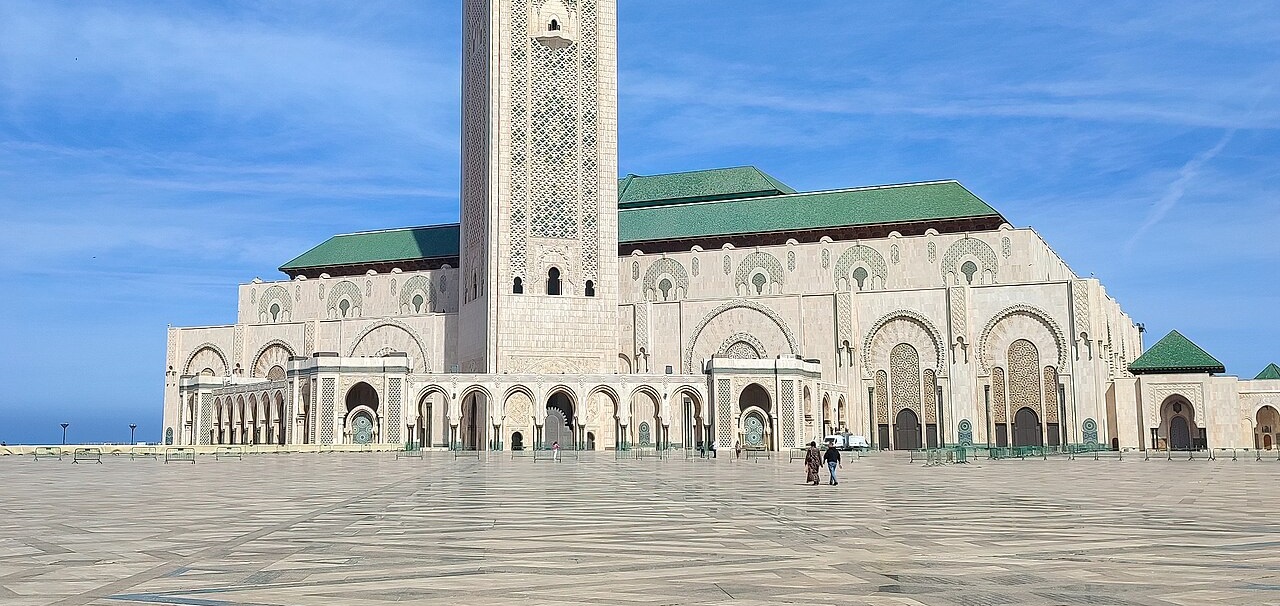
Today, Casablanca is simultaneously Morocco's most modern city and the guardian of its most magnificent Islamic monument: the Hassan II Mosque — completed in 1993 on a rocky promontory over the Atlantic Ocean at a cost of over $800 million, with a 210-metre minaret that is the world's tallest religious tower and a prayer hall that can accommodate 25,000 worshippers indoors and 80,000 on its esplanade — is not merely the greatest building in Morocco but one of the most extraordinary works of religious architecture completed anywhere in the world in the 20th century, and the single most compelling reason to visit Casablanca.
Best Time to Visit Casablanca & Weather Guide
Casablanca's Atlantic Mediterranean climate — characterised by warm, dry summers and mild, occasionally rainy winters — makes it one of the most consistently comfortable major cities in Africa for year-round travel, with no season harsh enough to discourage a visit and a clear optimum window between October and April when conditions combine mild temperatures, manageable rainfall, and the lowest tourist pressure of any comparable Moroccan destination.
☀️ Spring (March–May)
The finest all-round season for Casablanca — temperatures of 18–24°C, low rainfall, clear Atlantic skies, and the wild-flower season of the surrounding Moroccan countryside at its most beautiful. March and April are the ideal months for combining a Casablanca city visit with day trips to El Jadida, Rabat, or the Atlas foothills: mild enough for extended sightseeing and cool enough for comfortable urban walking. May brings the first warmth of summer — temperatures approaching 25°C — without the wind that occasionally marks the winter months. The spring season is the least crowded of any time of year in Casablanca: the city's tourist infrastructure operates at full capacity with hotel rates significantly below the summer peak.
Ideal for Sightseeing🌊 Summer (June–September)
Casablanca's warmest and most socially vibrant season — temperatures of 24–30°C, virtually no rainfall, and the Atlantic sea breeze that makes the city's summer significantly more comfortable than inland Moroccan cities (Marrakech regularly exceeds 42°C when Casablanca is at 27°C). The Corniche beach clubs at Ain Diab are at their most popular from June through September, with Casablancans filling the beachfront restaurants, promenade cafés, and open-air venues in an atmosphere of great energy. July and August bring the highest temperatures and the largest crowds — hotel rates rise and the Corniche becomes very busy at weekends. For beach culture and Atlantic water temperatures of 20–22°C, this is the ideal season; for monument visiting and city walking in comfort, spring or autumn is preferable.
Beach Season🍂 Autumn (October–November)
An excellent shoulder season combining the warmth of summer's end (22–27°C in October, 17–22°C in November) with falling tourist numbers and hotel prices dropping from summer peaks. October is the last reliably warm month for Corniche beach visits; November brings the first rains of the season — occasional Atlantic showers that rarely last more than a day and leave the city's white architecture gleaming in the post-rain Atlantic light. The Casablanca Art Week and the city's major cultural calendar (October–November) coincides with excellent visiting conditions. The Mediterranean coast's famous golden autumn light — long, low, and extraordinarily photogenic — makes October and November the finest months for photographing Casablanca's Art Deco architecture and the Hassan II Mosque esplanade.
Golden Autumn Light🌧️ Winter (December–February)
Casablanca's coolest and rainiest season — temperatures of 12–17°C, frequent Atlantic cloud cover, and the rainfall that provides Morocco's water table. December and January are the wettest months — an average of 8–10 rainy days per month — but rain typically comes in short, sharp Atlantic fronts followed by clearing; extended grey periods are uncommon, and the winter Atlantic light on clear days has a distinctive crystalline quality. Winter is the lowest season for tourism and the best for hotel value: luxury properties available at half the summer rate, the medina and monuments virtually empty of other tourists, and the cafés, restaurants, and cultural institutions of the city operating at their most authentic and unhurried. Minimum temperatures rarely fall below 8°C.
Best Value SeasonSpring/Autumn (Oct–May): Light layers for the mild days and cooler evenings — a light jacket or cardigan is essential after dark from November through March. Comfortable walking shoes for the medina's uneven streets and the Hassan II Mosque esplanade. Modest clothing for mosque visits (shoulders and knees covered; women may wish to carry a light scarf for the head). High-factor sunscreen year-round — Casablanca's Atlantic latitude does not reduce UV intensity significantly compared to inland Morocco.
Summer (Jun–Sep): The lightest possible breathable clothing; high-factor sunscreen; comfortable sandals for the Corniche and beach clubs. A light layer for air-conditioned interiors — Moroccan restaurants and hotels are often heavily air-conditioned.
Year-round essentials: Morocco uses the European Type C two-pin plug (220V/50Hz) — North American and British visitors require adaptors. The Moroccan Dirham is a controlled currency — exchange at the airport, your hotel, or a bank (Bureau de Change); ATMs widely available at Mohammed V Airport and all major shopping centres. Tap water in Casablanca hotels is safe but most visitors prefer bottled water. A portable power bank is useful for navigation apps in the medina. Download an offline map (Google Maps or Maps.me Casablanca area) before travelling — WiFi in the medina is unreliable.
Top Attractions in Casablanca
Casablanca rewards unhurried exploration across its extraordinary range of attractions — from the world's most spectacular mosque to Art Deco boulevards of Parisian ambition, from a compact and authentic medina to Atlantic seafront promenades — alongside some of the finest day-trip destinations available from any North African city.
🕌 Hassan II Mosque
The greatest building in Morocco and one of the most extraordinary religious monuments of the 20th century — the Hassan II Mosque, completed in 1993 on a rocky promontory over the Atlantic Ocean, was commissioned by King Hassan II and designed by the French architect Michel Pinseau with Moroccan craftsmen who spent six years hand-carving the cedar ceilings, zellij tilework, marble floors, and ornamental plasterwork of its cavernous interior. The statistics are extraordinary: a prayer hall for 25,000 worshippers; an esplanade accommodating 80,000 more; a 210-metre minaret (the world's tallest) topped by a laser pointing towards Mecca; a retractable roof that slides open to reveal the Atlantic sky; and a glass floor through which worshippers can see the ocean below at high tide. For non-Muslim visitors, guided tours run Saturdays through Thursdays at 09:00, 10:00, 11:00, and 14:00 — an experience that is genuinely among the finest things available in all of North Africa.
World's Tallest Minaret🏛️ Art Deco Quarter & Boulevard Mohammed V
Casablanca's most distinctive and most photographed heritage — the extraordinary collection of over 400 Art Deco and Mauresque buildings constructed during the French protectorate period (1912–1956) that lines the city's main boulevards in an urban ensemble of exceptional coherence and beauty. The finest concentrations are along Boulevard Mohammed V (the main commercial spine, with the magnificent Central Post Office — a masterpiece of Mauresque Art Deco in creamy white stone — at its western end), Rue du Prince Moulay Abdallah, and the area around Place des Nations Unies. The Villa des Arts — a restored 1930s Art Deco villa in the Anfa district — hosts the finest programme of contemporary Moroccan art exhibitions in the city alongside a thoughtful renovation that preserves the original decorative details. Free walking tour maps available from the Casablanca tourist office on Rue Mohammed V.
Architectural Heritage🕌 Old Medina (Ancienne Médina)
Casablanca's compact and authentically lived-in Old Medina — enclosed by its surviving sections of 18th-century Portuguese-era walls, entered through the Bab Marrakech gate on the southern side — is one of the most underrated medina experiences in Morocco precisely because it is small enough (roughly 400 metres across) to explore completely without getting irretrievably lost, densely occupied by genuine residential and commercial activity rather than tourist infrastructure, and free of the aggressive tout culture that mars the first-time experience of Marrakech or Fez. The medina's market streets (souks) sell spices, textiles, household goods, traditional Moroccan clothing, and street food at prices calibrated for local residents rather than tourists. The nearby Sqala de la Ville — the restored 18th-century Portuguese sea fortress with its cannon-lined ramparts overlooking the Atlantic — is one of the finest free viewpoints in the city.
Authentic Souk Life🌊 La Corniche — Ain Diab
Casablanca's Atlantic seafront and the city's most popular leisure destination — the Corniche d'Aïn Diab, a 5-kilometre promenade along the Atlantic coast west of the city centre, is lined with beach clubs (the finest are the full-service lidos such as Miami Beach Club, Tahiti Beach Club, and La Sqala Plage), open-air seafood restaurants, rooftop cocktail bars, and the Morocco Mall — one of Africa's largest shopping centres — at its western extremity. The Corniche is at its most atmospheric on summer evenings, when the promenade fills with Casablancans of every social class enjoying the Atlantic breeze, the smell of grilling fish, and the extraordinary quality of the Moroccan Atlantic sunset. The rocky coastline south of the Hassan II Mosque offers excellent sunrise and sunset photography of the mosque with the Atlantic behind it.
Atlantic Waterfront🏛️ Place Mohammed V & Civic Centre
The grandest public space in Casablanca and the finest example of Mauresque civic architecture anywhere in Morocco — Place Mohammed V (formerly Place des Nations Unies) is enclosed on three sides by the magnificent ensemble of the Wilaya (Prefecture), the Palais de Justice, and the Bank Al-Maghrib, all built in the distinctive Mauresque style that fuses European Beaux-Arts planning with Moroccan ornamental vocabulary in buildings of extraordinary presence and beauty. The central fountain illuminates the square on summer evenings; the surrounding café terraces are the finest people-watching venues in the city. The adjacent Parc de la Ligue Arabe — a formal French garden of palm-lined allées and ornamental fountains — provides the green breathing space of the city centre and the finest setting for the Mahkama du Pacha, a 1940s administrative building whose reception rooms contain over 60 crafted plaster panels representing the pinnacle of Moroccan decorative art of the 20th century.
Finest Civic Square🎬 Rick's Café & Habous Quarter
Two of Casablanca's most distinctive and most contrasting visitor experiences — Rick's Café (Rue Sidi Belyout, just off the Corniche) is the faithful recreation of the fictional bar from the 1942 film: a beautifully designed riad-style interior of Moroccan arches, mosaic floors, a working piano bar, and Moroccan-international food of genuine quality, all managed with understated elegance by its American founder Kathy Kriger and her Moroccan team. An atmospheric and unapologetically theatrical evening venue. The Habous Quarter (Quartier des Habous or "New Medina") — built by the French protectorate in the 1930s as a planned native quarter — is a charming and architecturally coherent neighbourhood of low-rise Moroccan-vernacular buildings around a central market that today contains the finest concentration of traditional craft shops (pastry shops, bookbinders, babouche cobblers, and honey merchants) in the city, and the Royal Palace of Casablanca (exterior only) at its southern edge.
Film & Craft Heritage🌿 Anfa District & Luxury Hotels
The most opulent and architecturally spectacular residential district of Casablanca — the Anfa hill, west of the city centre overlooking the Atlantic, was developed from the 1920s onwards as the preferred address of Casablanca's wealthy Moroccan and European elite: a neighbourhood of extraordinary Art Deco, Mauresque, and mid-century modernist villas behind high walls and Mediterranean gardens, now interspersed with the luxury hotels, embassy residences, and upmarket restaurants that serve the city's business and diplomatic community. The Hyatt Regency, Four Seasons, and Sofitel Tour Blanche (Casablanca's most architecturally distinctive hotel — a white 26-storey tower on the Corniche) provide the finest accommodation in the city. The Anfa neighbourhood's quiet residential streets, particularly around Boulevard d'Anfa, contain some of the finest private Art Deco architecture in Morocco, best explored by taxi or bicycle.
Upmarket & Historic🐟 Central Market (Marché Central)
The finest daily market in Casablanca and one of the most vivid and most photogenic urban experiences in Morocco — the Marché Central, in the heart of the downtown commercial district off Rue Chaouia, is a covered market hall of the French colonial era where the city's finest fish, meat, vegetables, and fruit are sold to restaurant buyers and domestic shoppers in an atmosphere of extraordinary vitality and colour. The Atlantic fish market section — where the overnight catch from Casablanca's commercial fishing fleet arrives each morning — is the finest display of Moroccan Atlantic seafood available anywhere: Atlantic lobster, prawns, sole, sea bass, red mullet, sardines, swordfish, and octopus laid on ice beds of startling freshness at prices dramatically below European equivalents. The upstairs restaurant section offers the city's finest value-for-money fresh fish lunch.
Finest Fresh MarketLocal Food Recommendations
Casablanca's food scene is the most cosmopolitan and most diverse in Morocco — a reflection of its role as the country's commercial capital, its large French-speaking bourgeoisie, its immigrant communities from across Morocco and sub-Saharan Africa, and its Atlantic fishing tradition of extraordinary richness. The city offers everything from UNESCO-calibre traditional Moroccan cooking to world-class French bistros, from harbour-fresh seafood restaurants to the finest street food in North Africa.
🍽️ Must-Try Casablanca Dishes
- Tajine — Morocco's most emblematic slow-cooked dish and the foundation of Casablanca's restaurant culture: a conical earthenware vessel whose geometry captures steam and returns it to the ingredients as moisture, producing a depth of flavour — from lamb with preserved lemon and olives, from chicken with ras el hanout and dried fruit, from kefta meatballs with egg and fresh tomato — that no other cooking vessel can replicate. The finest tajines in Casablanca are served at La Sqala (inside the Portuguese fortress) and the traditional restaurants of the Habous quarter, where the clay vessels arrive at the table still sealed from the kitchen fire, their fragrant steam released at the table in a moment of theatre that is one of the great pleasures of Moroccan dining.
- Couscous — Morocco's national dish and the summit of its culinary ambition: semolina grains hand-rolled to perfect uniformity, steamed three times over a broth of meat and vegetables in the couscoussier, and served on a vast communal platter with the broth poured separately and the meat — lamb shank, chicken, or merguez — arranged at the peak of the grain mountain with its seasonal vegetables around the base. Couscous in Casablanca reaches its finest expression on Fridays — the traditional day of family couscous throughout Morocco — at the city's traditional family restaurants, where the Friday couscous has been prepared from the first steaming since early morning.
- Grilled sardines (sardines grillées) — Casablanca's most characteristic and most beloved street food, and the most direct expression of its Atlantic fishing tradition: fresh Atlantic sardines, split and marinated in chermoula (a paste of fresh coriander, cumin, paprika, garlic, and preserved lemon) and grilled over charcoal until the skin blackens and crisps while the flesh stays moist and intensely flavoured. Available at the fish restaurants of the Corniche for approximately MAD 40–60 per portion — extraordinary quality at exceptional value, and the single most authentically Casablancan meal available to a visitor.
- Harira — Morocco's great national soup and the dish that breaks the fast at iftar during Ramadan throughout the country: a richly spiced tomato and lentil broth with chickpeas, vermicelli noodles, fresh coriander, and a thickening of flour and lemon juice that gives it a characteristic velvety consistency and a complex, warming depth of flavour. Available at street stalls throughout the medina and Old Medina for MAD 10–15 per bowl at any time of day, not only Ramadan. The correct accompaniment is chebakia (a fried sesame pastry glazed with honey) and sfenj (Moroccan doughnuts).
- B'stilla (Pastilla) — one of the great dishes of the medieval Moroccan culinary tradition and Casablanca's most celebrated special-occasion food: a large circular pie of paper-thin warqa pastry layered with spiced pigeon or chicken, a sweetened egg and almond filling, and a dusting of cinnamon and icing sugar on the top crust — a combination of savoury and sweet, flaky and rich, that seems impossible until you eat it and understand that Moroccan cooking operates on a different flavour continuum from European traditions. Found at traditional Fassi (Fez-style) restaurants in the Habous quarter and at specialist b'stilla shops in the medina.
- Mechoui — whole slow-roasted lamb, traditionally pit-roasted in a mechoui oven for 4–6 hours until the meat falls from the bone at the gentlest pull and the skin has crisped to a golden shell: the grandest expression of Moroccan hospitality and the centrepiece of any significant celebration — a wedding, a religious festival, a Royal occasion. Available at specialist mechoui restaurants in the Habous quarter on weekends, sold by weight (MAD 120–180 per 500 grams) with khobz (flat bread), cumin, and salt.
☕ Drinks & Café Culture
- Mint tea (atay) — the defining ritual of Moroccan social life and the most characteristic of all Moroccan drinks: green gunpowder tea steeped with fresh spearmint leaves and an amount of sugar that varies from generous to extraordinary, poured from a height into small glass cups to create a froth, and served as the inevitable accompaniment to every business meeting, every medina shopping negotiation, every family visit, and every idle hour in a café. In Casablanca's traditional cafés — the maisons de thé of the medina and Habous quarter — tea is prepared with ceremony and unhurry at a small charcoal brazier, and the act of drinking it is understood as a social commitment of at least 30 minutes. The correct response to an invitation to mint tea in Morocco is always yes.
- Moroccan coffee culture — Casablanca has developed the most sophisticated coffee culture in Morocco, reflecting its French-educated professional class and its longstanding European café tradition: the city's independent specialty coffee shops — concentrated in the Gauthier district, the Maarif commercial area, and the Corniche — serve excellent single-origin Moroccan and East African coffees in a culture of genuine third-wave ambition. The traditional Casablanca café experience — café cassé (espresso with a little milk) or café au lait in a large glass, taken standing at a zinc bar counter — remains the most authentic and the best value coffee in the city at MAD 8–15.
- Fresh orange juice — Morocco produces some of the world's finest eating oranges (the Moroccan navel and the Pineapple orange of the Souss valley) and Casablanca's street juice stalls — found at every major intersection, market entrance, and tourist site — press them to order for MAD 8–12 per large glass: a sweetness and freshness that the pasteurised products of Northern Europe cannot approach. A glass of fresh-pressed Moroccan orange juice at a street stall, in the morning sun with a pain au chocolat from the adjacent French bakery, is among the simplest and most satisfying pleasures of travelling in Casablanca.
- Moroccan wine — Morocco produces wines of genuine quality from vineyards in the Meknes, Benslimane, and Doukkala regions, and Casablanca's upmarket restaurants serve a well-curated selection: the Domaine de la Zouina reds (Syrah-Cabernet blends of considerable structure), the Médaillon rosé (pale, dry, and consistently well made), and the whites of Volubilia offer very good quality at prices of MAD 120–250 per bottle in a restaurant. Alcohol is served freely in Casablanca's licensed restaurants, hotels, and bars — it is Morocco's most liberal city in this regard — but is absent entirely from the medina's traditional establishments.
🍽️ Where to Eat — Local Tips
- La Sqala (Old Medina ramparts) — Casablanca's most atmospherically situated restaurant and the finest introduction to traditional Moroccan cooking for a first-time visitor: a rambling, lushly planted garden restaurant set inside the restored 18th-century Portuguese sqala fortress, with vine-covered pergolas, fountain courtyards, and a menu of exemplary tajines, couscous, and pastilla served at mid-range prices (MAD 90–180 per main course). The garden terrace on a warm evening — candlelit tables, jasmine in the air, the sound of the nearby Atlantic — is one of the most romantic dining settings in Morocco. Book ahead on weekends.
- Le Cabestan (Corniche) — Casablanca's most prestigious and most panoramic seafood restaurant: a sleek, glass-fronted cliffside establishment on the rocky coast south of the Hassan II Mosque, with Atlantic views of extraordinary drama and a menu built on the finest of Casablanca's daily catch — Atlantic lobster, grilled whole sea bass, steamed mussels in saffron cream, and a bouillabaisse of Moroccan inspiration that draws regulars from across the city. The Sunday brunch at Le Cabestan — fresh oysters, smoked salmon, and tagines on the ocean terrace — is considered by many Casablancans to be the finest meal in the city. Budget MAD 350–600 per person with wine.
- Central Market upstairs restaurants — the finest value fresh fish lunch in Casablanca and the most authentic midday meal available in the city centre: choose your fish downstairs at the Marché Central fish market (point to the catch you want, agree a price), pay the small preparation fee to one of the upstairs restaurant stalls, and return 20 minutes later to a grilled or fried fish of extraordinary freshness served with Moroccan bread, olives, and harissa. Budget MAD 50–80 per person including bread and soft drink — the best value seafood meal in North Africa.
- Habous Quarter pastry shops — the finest traditional Moroccan pastries in Casablanca are produced by the specialist pâtisseries marocaines of the Habous quarter: cornes de gazelle (crescent-shaped almond paste cookies dipped in orange blossom water), griouech (fried sesame-dough spirals soaked in honey), briouat (fried pastry triangles filled with almond paste or kefta), and the extraordinary halwa chebakia (the Ramadan pastry of sesame, anise, and honey that is among the most addictive confections in world baking). Sold by weight at MAD 60–120 per kilogram — buy a mixed 500g selection as an afternoon snack or take-home gift of outstanding quality.
🎨 Art, Culture & Creative Scene
- Casablanca's arts and cultural scene reflects its identity as Morocco's most modern and most internationally connected city — the Grand Théâtre de Casablanca, designed by the Pritzker Prize-winning architect Zaha Hadid and completed in 2019, is the most architecturally spectacular contemporary performance venue in Africa, seating 1,800 in a building of liquid, wave-like forms clad in white stone on the Boulevard Al Wataniya; it stages opera, ballet, Moroccan contemporary dance, and international touring productions of the highest quality.
- The Villa des Arts (Boulevard Brahim Roudani, Anfa) — a restored 1930s Art Deco villa of the Moroccan collector Abderrahman Slaoui — presents the finest programme of contemporary Moroccan and international art exhibitions in the city alongside a permanent collection of exceptional quality spanning Moroccan painting from the 1950s to the present. The adjacent Fondation Abderrahman Slaoui holds the finest collection of vintage Moroccan tourism posters and Art Deco illustrated books available anywhere — a visual history of Morocco's encounter with modernity of extraordinary charm and rarity.
- The Casablanca Art Week (typically October–November) brings together the city's independent galleries, studios, and cultural institutions for an annual programme of exhibitions, open studios, and public art installations that constitutes the most significant contemporary art event on the Moroccan calendar. The independent gallery scene of the Gauthier, Racine, and Maarif neighbourhoods represents the most dynamic commercial contemporary art market in Morocco — work by Moroccan painters, sculptors, and photographers of international standing available at prices that remain a fraction of equivalent work in European galleries.
- Morocco's extraordinary musical heritage is represented in Casablanca by the Gnawa Music Festival events (the main Gnawa festival is in Essaouira, but Casablanca concerts occur throughout the year), the annual Mawazine festival (May–June, one of the largest music festivals in the world by attendance — free stages throughout Rabat and Casablanca drawing audiences of millions for international and Moroccan pop, jazz, and world music), and the thriving live music scene of the Corniche and the Gauthier district's jazz bars and late-night music venues.
Day Trip Itineraries from Casablanca
Casablanca's position at the heart of Morocco's Atlantic coast — connected by excellent rail and road infrastructure to the country's other major cities and natural attractions — makes it one of the finest bases for day-trip exploration available anywhere in North Africa:
🏰 Day Trip: Rabat
Travel time: 45 min by train (ONCF, MAD 35–55) | Cost: Train + sites ~MAD 100–150
Morocco's elegant capital — a UNESCO World Heritage city of understated sophistication and considerable historical depth — is the finest and most accessible day trip from Casablanca: 45 minutes by ONCF express train from Casa-Voyageurs station (trains every 30 minutes from 06:00), depositing you at Rabat-Agdal station a 15-minute walk from the Hassan Tower (the 12th-century minaret of an unfinished Almohad mosque — the largest in the Islamic world had it been completed), the magnificent Mausoleum of Mohammed V, the walled UNESCO Medina, and the Kasbah of the Udayas — a fortified riverside kasbah of Andalusian charm with a garden of extraordinary peace. Allow a full day; return by evening train.
UNESCO Capital🏰 Day Trip: El Jadida (Mazagan)
Travel time: 1.5 hrs by bus or car (99 km south) | Cost: Bus MAD 30; entry free
One of the finest and most overlooked UNESCO World Heritage Sites in Morocco — the Portuguese city of Mazagan (El Jadida's old town), a complete 16th-century fortified settlement of extraordinary preservation, with its bastioned walls, cobbled streets of Portuguese-colonial buildings, and the celebrated Portuguese cistern — a vaulted underground chamber whose Gothic columns are reflected in the shallow water that still fills it, creating one of the most hauntingly beautiful interior spaces in North Africa. El Jadida itself is a pleasant Atlantic town of wide beaches and excellent fresh fish restaurants. The drive south from Casablanca along the coastal N1 road passes the finest Atlantic surf beaches in Morocco — including the legendary surf point of Safi further south.
Portuguese Heritage🏔️ Day Trip: Marrakech (extended)
Travel time: 2h 45min by train (ONCF, MAD 90–130) | Cost: Train + sites ~MAD 200–300
Morocco's most famous city — the Red City of the Atlas foothills — is most conveniently reached from Casablanca by the daily ONCF express train service (2h 45min, departures from Casa-Voyageurs 06:00 to 21:00) and makes an outstanding long day trip or overnight combination: the UNESCO Jemaa el-Fna square (the world's finest outdoor street theatre, at its most spectacular from 18:00 as the food stalls, storytellers, and Gnawa musicians take over the square), the labyrinthine Medina souks, the 12th-century Koutoubia Mosque minaret, the extraordinary 14th-century Medersa Ben Youssef Quranic school, and the Jardin Majorelle (Yves Saint Laurent's indigo-painted garden) are all within walking distance of each other and the railway station.
The Red City🌊 Day Trip: Essaouira
Travel time: ~3.5 hrs by bus or car (365 km south) | Cost: Bus MAD 80–100; entry free
The most beautifully preserved Atlantic fortified town in Morocco and one of the finest UNESCO World Heritage cities in Africa — Essaouira (the former Portuguese and then Moroccan trading port of Mogador) is a whitewashed, blue-shuttered walled city of extraordinary photogenic quality: rampart bastions overlooking the Atlantic, a compact medina of arched alleyways and artisan workshops, a protected UNESCO skala sea fortress of considerable drama, and beaches of white sand stretching south for kilometres in the constant Atlantic wind that has made the town the kite-surfing capital of Africa. The Gnawa music heritage of Essaouira — the annual Gnaoua World Music Festival (June) draws 500,000 visitors — makes it the most musically significant small city in Morocco.
Atlantic Walled CityTourist Tips for Casablanca
🚌 Getting Around
- Petit taxis (beige) — Casablanca's licensed metered small taxis (cream-beige coloured) are the most practical and most affordable urban transport for tourists: metered, air-conditioned (in newer vehicles), and regulated by the city authority. Fares within the city centre are typically MAD 15–40 for journeys under 5 kilometres. Ensure the meter is running (ask "le compteur, s'il vous plaît" if it is not started); a small supplement is added after 20:00. Do not share with unknown passengers as some drivers accept multiple fares going in the same direction — if you prefer a private journey, say "course directe."
- Casablanca Tramway (RATC) — the city's modern tramway network (Lines T1 and T2) connects the major central districts including the train stations (Casa-Voyageurs and Casa-Port), Place Mohammed V, and the university areas, at a flat fare of MAD 7 per journey. Clean, modern, and safe for daytime use throughout the central routes. The tramway does not serve the Corniche or the Hassan II Mosque — for these, use petit taxis or the RATC bus network (less convenient for tourists).
- ONCF Train to Airport — the Mohammed V Airport Express Train (ONDA/ONCF) runs between Casa-Voyageurs station and the airport every 30 minutes from approximately 06:00 to 23:00, taking 35 minutes and costing MAD 43 per person — the safest, most reliable, and most affordable airport transfer available, eliminating the risk of unofficial taxi overcharging that can affect arrivals unfamiliar with the city. The train from the airport also stops at Casa-Port station (for the medina area) and Casa-Voyageurs (for the main hotel and business districts).
- Car hire is recommended for day trips to El Jadida, Essaouira, and the Atlantic coast. All major international rental companies (Hertz, Avis, Europcar, Budget) operate from Mohammed V Airport Arrivals. Casablanca's urban driving is challenging by European standards — aggressive, fast, and with parking extremely limited in the city centre; consider car hire only for out-of-city excursions and use taxis within the city. Morocco drives on the right; signage is in Arabic and French throughout.
💡 General Travel Tips
- Morocco uses the Moroccan Dirham (MAD) — a partially convertible currency that cannot legally be imported or exported in significant quantities. Exchange at the airport (BMCE and Wafacash bureaux in Arrivals), your hotel, or one of the many licensed Bureau de Change in the city centre. ATMs are widely available throughout Casablanca — use machines inside shopping centres (Morocco Mall, Anfa Place) for greatest security. Major credit cards accepted at hotels, upmarket restaurants, and formal shops; the medina, street food stalls, and traditional markets are cash-only.
- Morocco uses the Type C European two-pin plug (220V/50Hz). North American visitors require a voltage converter for 110V appliances in addition to a plug adaptor; British visitors require only a Type G to Type C adaptor. Universal travel adaptors are available at the airport and in city centre electronics shops.
- The Hassan II Mosque requires advance planning: guided tours for non-Muslims run Saturday through Thursday (closed Friday mornings), with departures at 09:00, 10:00, 11:00, and 14:00. In high season (June–September and school holidays) tours sell out — book at the mosque ticket office on arrival in the city or online where available. Dress code is strictly enforced: no shorts, no sleeveless tops for any gender; women are not required to cover their heads but many choose to as a gesture of respect.
- Casablanca is at sea level — the Mediterranean and Atlantic latitude places it at significantly lower UV intensity than the Moroccan interior, but sunscreen (SPF 30+) is still essential in summer. The Atlantic humidity makes the heat more tolerable than in Marrakech but can be oppressive in July–August; stay hydrated and plan outdoor sightseeing in the morning before 11:00.
- Learning a few phrases of Darija (Moroccan Arabic) generates immediate and genuine warmth from Casablancan residents: as-salamu alaykum (peace be upon you — standard greeting), shukran (thank you), la shukran (no thank you — essential in the medina), bslama (goodbye), and bhal bhal (it's fine / no problem) cover most social situations. French is widely understood and spoken by the educated urban population — combining French with a few Darija words is the most effective communication strategy in Casablanca.
Apply for Tourist Visa
Morocco offers visa-free entry to citizens of most Western countries including the United States, United Kingdom, European Union member states, Canada, Australia, GCC nations, and most Commonwealth countries — for stays of up to 90 days without a visa. Citizens of countries not on the visa-free list must apply for a Moroccan tourist visa through their nearest Moroccan embassy or consulate before travel; Morocco does not offer a general visa-on-arrival programme for most nationalities. All visitors require a passport valid for at least 6 months beyond the intended departure date. Verify your country's specific entry requirements with the Moroccan Ministry of Foreign Affairs website before travel — requirements are reviewed periodically. Morocco Visa Information
Important Emergency Numbers
🇲🇦 Casablanca Emergency Contacts
- 🚑 SAMU Ambulance: 15
- 🔥 Fire Brigade (Pompiers): 15
- 👮 Police (Sûreté Nationale): 19
- 🚔 Gendarmerie Royale: 177
- 🆘 General Emergency (mobile): 112
International Emergency Phone Numbers
Find Flights to Casablanca
Airport Code: CMN — Mohammed V International Airport (30 km south-east of city centre, 35 min by ONCF Airport Express train, MAD 43)
Airport Transfer: ONCF Airport Express Train (35 min, MAD 43, departures every 30 minutes 06:00–23:00) to Casa-Voyageurs or Casa-Port stations. Petit taxi from the official taxi stand at Arrivals (MAD 200–300, metered, 30–45 min). International airlines serving Casablanca include Royal Air Maroc, Air France, British Airways, Ryanair, easyJet, Iberia, Lufthansa, Emirates, Turkish Airlines, and Qatar Airways, with direct connections to Europe, the Middle East, West Africa, and North America (Royal Air Maroc flies New York JFK to Casablanca non-stop).
International Airport FinderCurrency in Casablanca
The currency of Morocco is the Moroccan Dirham (MAD). ATMs are widely available throughout Casablanca — at Mohammed V Airport Arrivals, all major shopping centres (Morocco Mall, Anfa Place, Maarif), and bank branches throughout the city. Exchange at BMCE, Attijariwafa Bank, and licensed Bureau de Change; avoid unofficial exchange offers on the street. Major credit cards (Visa, Mastercard) are accepted at hotels, upmarket restaurants, and formal retail. The medina, street food vendors, and traditional markets are cash-only.