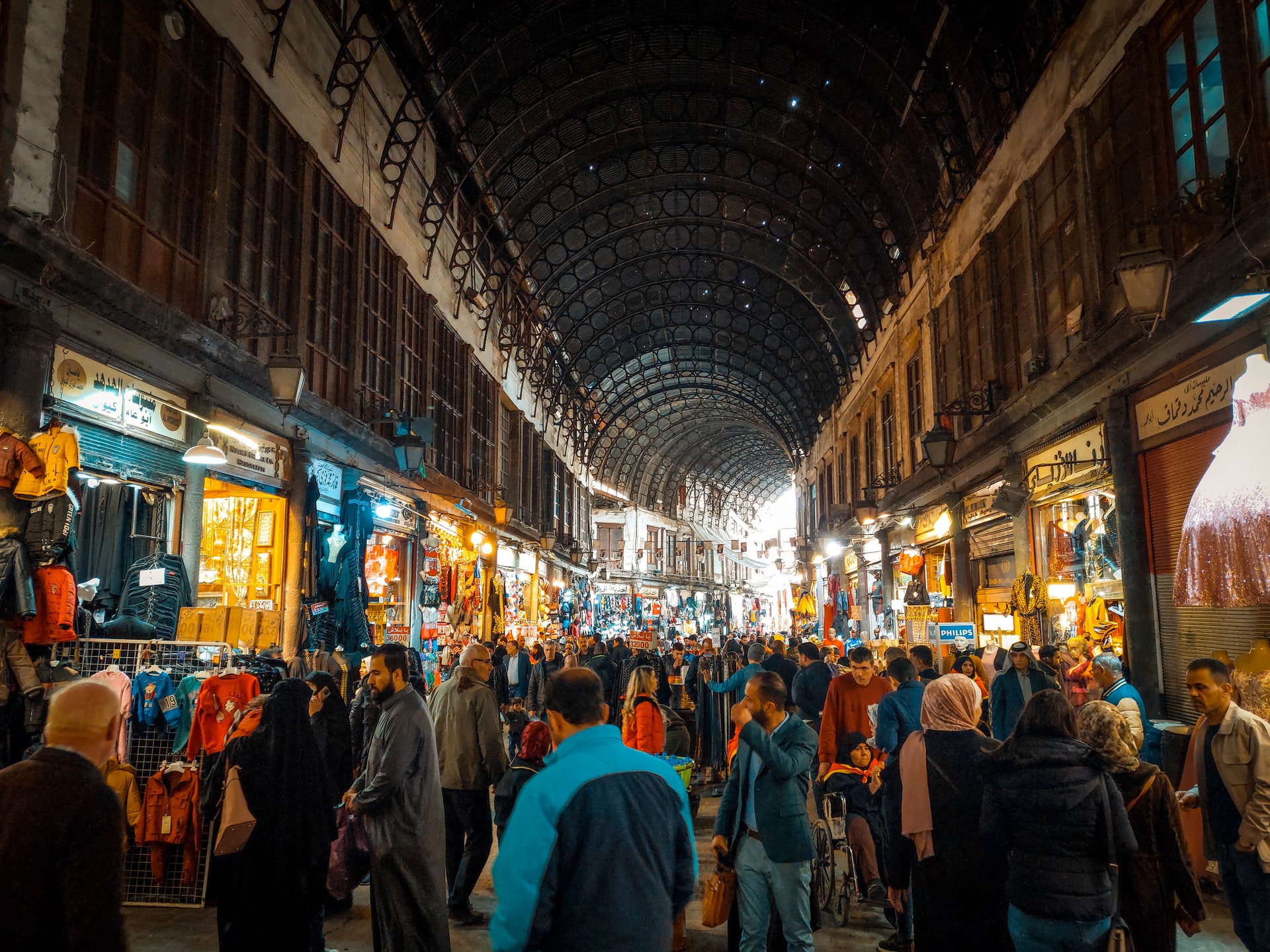
Photo by Mahmoud Sulaiman on Unsplash
Damascus Weather
DAMASCUS WEATHERAbout Damascus
Damascus is the capital of Syria and one of the oldest continuously inhabited cities on earth — a living monument to human civilisation that has been occupied without interruption for over 11,000 years and that has served as a seat of power for the Arameans, the Assyrians, the Achaemenid Persians, the armies of Alexander the Great, the Romans, the Byzantines, the Umayyad Caliphate, the Abbasids, the Crusaders, the Ayyubids, the Mamluks, and the Ottomans before becoming the capital of the modern Syrian state. The name Damascus appears in ancient Egyptian texts as early as the 15th century BC and in the annals of the Assyrian empire as a major commercial and political centre; in the Abrahamic traditions, it is the city where Saul of Tarsus was blinded on the road and converted to become the Apostle Paul, where the head of John the Baptist is housed in the great Umayyad Mosque, and where the streets of the Via Recta (Straight Street, mentioned in the Acts of the Apostles) still run through the Old City of Damascus — a UNESCO World Heritage Site of extraordinary depth, whose labyrinthine lanes of cobblestone and ancient stone conceal Roman gateways, Byzantine foundations, medieval caravanserais, Mamluk mosques, and Ottoman courtyard houses of breathtaking beauty. Known to its inhabitants as the City of Jasmine (Madinat al-Yasmin), Damascus has long been celebrated for the fragrant jasmine that climbs the walls of its old residential courtyards, and for the refined and deeply hospitable culture — the Damascene culinary tradition, the brocade and glass-blowing crafts, the coffee-house conversation culture — that has developed in this ancient oasis city at the foot of Mount Qasioun, fed by the waters of the Barada River rising in the Anti-Lebanon mountains to the west. Syria entered a new and uncertain political era in December 2024, when the government of Bashar al-Assad was overthrown after a rapid offensive by opposition forces — an event that brought an end to the decade-long civil war but inaugurated a period of transition whose ultimate shape remains unresolved at time of writing. Damascus itself suffered relatively little physical damage compared to Aleppo, Homs, and other Syrian cities devastated by the conflict, and the Old City remains largely intact — a city of staggering historical depth that is, for adventurous and properly prepared travellers, one of the most rewarding destinations in the entire Middle East.
Best Time to Visit Damascus & Weather Guide
Damascus has a semi-arid Mediterranean highland climate — warm, dry summers and cool, occasionally wet winters — shaped by its position at 690 metres elevation on the eastern slopes of the Anti-Lebanon mountain range, in the rain shadow that makes the Damascus plain one of the driest inhabited areas in the Levant while the city itself enjoys a climate far more temperate than the low deserts of the Middle East.
🌸 Spring (March–May)
The finest and most recommended season for Damascus — temperatures rise gently from 14°C in March to a warm 24°C by May, the air is clear, the surrounding countryside is briefly and brilliantly green from the winter rains, and the city's famous jasmine begins its bloom, scenting the courtyards and alleyways of the Old City with a perfume that is the most characteristic sensory experience Damascus offers. The Damascus Rose Festival in May celebrates the harvest of the Damascene rose — used for centuries in the production of rose water and essential oil — with a cultural programme of considerable charm. Spring is the most comfortable season for exploring the Old City on foot: the walking is easy, the light is golden and atmospheric, and the narghile cafés of the Old City courtyards are at their most convivial. Spring is also the season of Ramadan in some years — a period that transforms the city's rhythm completely, with the Old City's restaurants and cafés coming to vibrant life after the sunset iftar in a festive atmosphere of particular cultural richness.
Best Season🔥 Summer (June–August)
The hottest and driest season in Damascus — temperatures reach 33–38°C in July and August, the sky bleaches to a white haze in the early afternoon, and the city's famously abundant fruit markets overflow with the extraordinary summer produce of the Ghouta oasis: plums, cherries, apricots, figs, grapes, and the famous Syrian pomegranates in varieties of incomparable sweetness. Summer is a challenging season for sightseeing in the Old City during the midday hours, but the early mornings (6–10am) and evenings (after 6pm) are perfectly comfortable. The evening culture of Damascus — the outdoor restaurants of the Old City courtyards, the narghile smoke drifting through jasmine-scented lanes, the Bakdash ice cream queue snaking down the Al-Hamidiyah Souq — is at its most animated and most atmospheric in summer. The annual Damascus International Fair (historically one of the most important trade events in the Arab world) has been held in late July–August when political conditions permit.
Hot Summer Season🍂 Autumn (September–November)
The second-finest season for visiting Damascus — temperatures cooling from the summer highs to a perfect 20–26°C through September and October, the city's markets filling with the autumn harvest of pomegranates, figs, persimmons, and the extraordinary late-season grapes of the Syrian interior, and the quality of light over the Old City reaching a particular richness and warmth that is ideal for photography and for the simple pleasure of walking the ancient streets in the cool of the afternoon. October is the prime season for day trips to the outstanding sites of the Syrian interior accessible from Damascus — the Roman city of Bosra, the desert ruins of Palmyra, and the Christian villages of Maaloula and Sednaya — when the heat of the desert summer has abated and the roads are at their most passable. Autumn evenings in Damascus — the call to prayer echoing over the rooftops, the lanterns lit in the Old City restaurants, the smell of grilled lamb and cardamom coffee on the cool air — are among the most atmospheric urban evenings available anywhere in the Arab world.
Excellent Autumn Season❄️ Winter (December–February)
Damascus winters are genuinely cold by Middle Eastern standards — temperatures drop to 4–10°C in January and February, occasional snowfall dusts the Old City rooftops and the slopes of Mount Qasioun in a transformation of considerable beauty, and the rain-cleared air produces extraordinary clarity of light that reveals the Anti-Lebanon mountains on the western horizon with crystalline precision. The winter rain — usually falling in brief, intense episodes — fills the courtyard fountains of the Old City's Damascene houses and khans and gives the ancient stone a lustrous warmth. Winter is the low season for tourism, producing the quietest and most intimate experience of the Old City's souqs and monuments. The Christmas period is celebrated with particular energy in the Christian quarter of Bab Tuma — Damascus has one of the oldest Christian communities in the world, and the neighbourhood's church bells, Christmas decorations, and festive restaurants in restored Damascene houses make December a period of considerable charm.
Cool & Quiet SeasonSpring & Autumn: Light layers for the warm days and cool evenings; a light jacket or cardigan for after dark when temperatures drop. Comfortable walking shoes with good grip for the uneven cobblestones of the Old City — flat, worn-smooth ancient paving can be slippery, particularly after rain. Modest clothing throughout — Syria is a predominantly Muslim country and conservative dress is both respectful and socially expected: women should cover shoulders, upper arms, and knees at a minimum; headscarves should be carried for mosque visits (available to borrow at the Umayyad Mosque entrance). Men should wear long trousers throughout. Both sexes should avoid sleeveless or very short clothing in the Old City, religious sites, and markets.
Summer: The lightest breathable cotton clothing — loose-fitting and modest. A hat and high-factor sunscreen essential for daytime. The heat of the Old City streets in summer is moderated by the shade of the narrow lanes and the cool of the stone buildings; air-conditioned restaurants and museums provide afternoon refuge.
Winter: Warm coat, scarf, and gloves — Damascus winter evenings can be bitterly cold. Layering is essential. Waterproof footwear for the rain-slicked cobblestones of the Old City.
Year-round: Syria uses the Type C/E European two-pin plug (220V/50Hz). Cash (Syrian Pounds) is essential — international banking and card payment is extremely limited. Bring all necessary currency in USD or EUR and exchange on arrival. A local SIM card provides the most reliable internet access (3G or variable 4G). A local guide is strongly recommended — both for safety orientation and for the incomparable depth of cultural context a knowledgeable Damascene guide provides in a city of this historical complexity.
Top Attractions in Damascus
Damascus rewards the patient and open-minded visitor with a concentration of historical depth, architectural magnificence, and living cultural richness that is available in very few other cities on earth. The Old City of Damascus — the finest surviving medieval Arab city in the world — is the essential experience, and its monuments, souqs, caravanserais, and courtyard houses can absorb days of unhurried exploration without exhausting their revelations.
🕌 Umayyad Mosque (Grand Mosque of Damascus)
The most important and most magnificent Islamic monument in Syria and one of the greatest religious buildings in the world — the Umayyad Mosque (Jami' Bani Umayyah al-Kabir), completed in 715 AD under the Umayyad Caliph al-Walid I on the site of a Roman temple to Jupiter and a Byzantine basilica dedicated to John the Baptist, is one of the oldest surviving mosques in the Islamic world and a monument of such architectural and spiritual authority that it has shaped the development of Islamic religious architecture across three continents for thirteen centuries. The mosque's vast courtyard — its white marble paving reflecting the sky and the three minarets that punctuate the Damascus skyline — is one of the most serene and most beautiful public spaces in the Arab world: a place where students, families, pilgrims, and stray cats share the cool shade of the arcades in a timeless social democracy that perfectly reflects the Umayyad vision of the mosque as the centre of community life. The prayer hall's extraordinary golden mosaics — depicting an Umayyad paradise of lush trees and flowing rivers, among the finest surviving examples of Byzantine mosaic art — and the shrine said to contain the head of John the Baptist give the interior a spiritual intensity of remarkable power. Non-Muslim visitors are warmly welcome; modest dress (robes available at the entrance) and the removal of shoes are required.
Islamic Architectural Masterpiece🏛️ Old City of Damascus (UNESCO World Heritage Site)
The most intact and most historically rich medieval Arab city in existence and the defining experience of any visit to Damascus — the Old City of Damascus (al-Madina al-Qadima), enclosed within its ancient walls and entered through gates that mark the boundaries of the Roman city of the 1st century AD, is a UNESCO World Heritage Site of extraordinary density and depth: a labyrinth of narrow cobblestone lanes where the Roman street grid (including the famous Via Recta — Straight Street, mentioned in the Acts of the Apostles — which still runs across the width of the Old City on its original 2,000-year-old axis) underlies a medieval overlay of Ayyubid mosques, Mamluk madrasas, Ottoman khans and hammams, and the exquisite Damascene courtyard houses (bayt Dimashqi) whose plain stone exteriors conceal interiors of extraordinary refinement: tiled fountains, marble paving, carved plasterwork arcades, and the fragrance of jasmine and citrus from the inner garden. The Old City's eight principal gates — including the Bab Sharqi (Eastern Gate, Roman, 1st century AD), the finest surviving Roman gateway in the Levant — are all worth seeking out. Allow at minimum a full day; two days barely scratches the surface.
UNESCO World Heritage🛍️ Al-Hamidiyah Souq
The most famous, most visited, and most atmospherically extraordinary covered market in Syria and one of the great souqs of the Arab world — the Al-Hamidiyah Souq (Souq al-Hamidiyya), running the full width of the Old City from the Citadel in the west to the Umayyad Mosque in the east beneath a vaulted 19th-century iron roof punctured by bullet holes (from the French bombardment of 1925) that admit shafts of dramatic light onto the market below, is a kilometre-long corridor of extraordinary sensory richness: the glitter of gold and silver jewellery, the shine of traditional Damascene brocade fabric hanging in thick bolts of crimson and gold, the barrels of Aleppo soap and sacks of sumac and dried herbs, the stalls of traditional sweets (baklava, ma'amoul, halawet el-jibn), and the vendors of fresh pomegranate juice pressing their fruit in hand-cranked presses to produce the most intensely flavoured and most deeply coloured juice in the world. At the far end, the sudden emergence into the brilliant sunlight of the Umayyad Mosque courtyard is one of the great architectural reveals in the Arab world.
Ancient Covered Market🏰 Azem Palace
The finest example of 18th-century Damascene domestic architecture in existence and the most beautifully restored great house of the Syrian capital — the Azem Palace (Qasr al-Azm), built in 1749 for the Ottoman Governor of Damascus As'ad Pasha al-Azm, is a masterwork of the classical Damascene palatial style: a series of interconnected reception rooms, private apartments, and garden courtyards arranged around central fountains and arranged in the strict Damascene hierarchy of salamlik (public male reception rooms) and haramlik (private family quarters), all decorated in the characteristic alternating black and white stone banding (ablaq) of Syrian medieval architecture and enriched with carved plasterwork, painted wooden ceilings of extraordinary complexity, and the finest collection of traditional Damascene furnishings and household objects available anywhere. The palace now houses the Museum of Arts and Popular Traditions, with exhibits on Damascene craft, costume, and daily life displayed in their original palatial setting. One of the most beautiful museum buildings in the entire Arab world.
Ottoman Palace🏺 National Museum of Damascus
One of the most important archaeological museums in the world and the finest introduction to the staggering depth of Syrian civilisation available anywhere — the National Museum of Damascus (al-Mathaf al-Watani bi-Dimashq), entered through the transplanted façade of the 8th-century desert palace of Qasr al-Hayr al-Gharbi (an extraordinary piece of Umayyad architecture relocated stone by stone from the desert to serve as the museum's ceremonial entrance), holds the most significant collection of Syrian antiquities ever assembled: Neolithic figurines from the earliest human settlements of the Syrian interior; cuneiform tablets from the great Bronze Age palace libraries of Ebla and Mari; Hellenistic and Roman sculpture of the first order; and — most extraordinarily — the fully reconstructed Dura-Europos Synagogue interior (2nd century AD), with its complete cycle of wall paintings depicting scenes from the Hebrew Bible in a visual style that bridges the Hellenistic and Byzantine traditions, constituting the most important surviving example of ancient Jewish representational art in the world. An essential half-day visit before exploring the Old City.
World-Class Museum⛪ Bab Tuma — Christian Quarter & Straight Street
The most culturally layered and most historically resonant neighbourhood in the Old City — the Bab Tuma (Gate of Thomas) district in the northeastern Old City is the historic heart of Damascus's Christian community, one of the oldest unbroken Christian communities on earth, whose churches, monasteries, and residential lanes have been continuously occupied since the earliest centuries of the faith. The Church of Saint Ananias — a 1st-century subterranean chapel traditionally identified as the house of Ananias, who baptised Saul of Tarsus and gave him back his sight — is among the oldest Christian places of worship in existence. Straight Street (Tariq al-Mustaqim, the Via Recta of the Acts of the Apostles, chapter 9) — the great east-west axis of the Roman city, still running on its original 2,000-year-old alignment across the width of the Old City — passes through Bab Tuma, lined with Ottoman-era khans, medieval caravanserais, and the boutique hotels and courtyard restaurants that have colonised the restored Damascene houses of this district. The Khan Asaad Basha (1752) — the finest remaining Ottoman caravanserai in Damascus, its great octagonal dome rising above a central courtyard of extraordinary grandeur — is a short walk from Straight Street.
Historic Christian Quarter⛰️ Mount Qasioun
The mountain that watches over Damascus and provides the finest panoramic view of the city available anywhere — Mount Qasioun (Jabal Qasiyun), rising to 1,151 metres above the city to the northwest, holds a special place in Damascene sacred geography: identified in the Abrahamic tradition as the location where Cain killed Abel (one of a remarkable number of sacred sites concentrated in and around Damascus), and as the location from which the Prophet Muhammad, on his journey to Jerusalem, saw the city of Damascus and — according to tradition — declined to enter because he did not wish to enter paradise twice. A road to the summit provides easy access by car or taxi; the view over Damascus from the summit — the entire ancient city spread below in a panorama of minarets, rooftops, and the silver thread of the Barada River valley — is one of the most beautiful and most historically resonant urban vistas in the entire Arab world, particularly at sunset when the light turns the ancient stone of the city to gold.
City Panorama🛕 Sayyida Ruqayya Mosque & Saladin's Mausoleum
Two of the most significant and most atmospherically charged religious sites in Damascus beyond the Umayyad Mosque — the Sayyida Ruqayya Mosque (one of the most revered Shia pilgrimage sites in Syria, built over the tomb of Ruqayya bint al-Husayn, granddaughter of the Prophet Muhammad, in a style of extraordinary Persian-influenced tile and mirror-work beauty that rivals the great shrines of Iran in visual impact) and the Mausoleum of Saladin (Salah ad-Din al-Ayyubi — the 12th-century Kurdish general and Sultan who united the Muslim world and recaptured Jerusalem from the Crusaders in 1187, and whose tomb in a small chamber adjoining the northern wall of the Umayyad Mosque has been maintained as a place of veneration since his death in Damascus in 1193 — the original walnut cenotaph, a gift from Kaiser Wilhelm II during his 1898 visit, stands beside the marble tomb in a chamber of simple, moving dignity). Both are within short walking distance of the Umayyad Mosque and the Al-Hamidiyah Souq.
Sacred SitesLocal Food Recommendations
Syrian cuisine is widely regarded as the most sophisticated, most varied, and most historically deep of all the Arab culinary traditions — a cuisine shaped by 5,000 years of Silk Road commerce (which brought spices, herbs, and techniques from Persia, India, Central Asia, and the Mediterranean into the Levantine kitchen) and by the agricultural richness of the Syrian interior, whose orchards, fields, and pastures produce some of the finest fruit, vegetables, and livestock available anywhere in the Middle East. Damascene cooking occupies the pinnacle of this tradition.
🍽️ Must-Try Damascus Dishes
- Kibbeh (Kubbeh) — the national dish of Syria and the most important single item in the Damascene culinary repertoire: a preparation of finely ground lean lamb or beef mixed with bulgur wheat (burghul), onion, and the characteristic warm spice blend of cinnamon, allspice, and dried mint, formed into oval shells stuffed with a coarser filling of pine nuts, onion, and minced meat, then deep-fried to a crisp mahogany crust with a molten, fragrant interior. The kibbeh hamdaniyeh — a uniquely Damascene variant simmered in a tart sauce of pomegranate molasses and sour cherry — is one of the most sophisticated meat dishes in Middle Eastern cooking. Available at traditional restaurants throughout the Old City and at the specialist kibbeh shops of the Al-Hamidiyah Souq area; a complete plate costs approximately USD 3–6 at a traditional local restaurant.
- Mezze — the great social eating format of the Levantine tradition and the finest introduction to the breadth and depth of Syrian cuisine: a spread of small shared dishes covering the full range of the Syrian pantry — hummus (the Lebanese and Syrian chickpea purée of extraordinary creaminess, made here with fine olive oil and lemon in proportions rather different from the commercial versions familiar in the West); mutabbal (fire-roasted aubergine with tahini, garlic, and lemon — smokier and more complex than baba ganoush); muhammara (a brilliant red spread of walnuts, roasted red peppers, pomegranate molasses, and cumin — the most characteristically Syrian of all the mezze dips, of extraordinary depth of flavour); fattoush (the Levantine bread salad of toasted flatbread with tomatoes, cucumber, radishes, pomegranate seeds, and sumac dressing); tabbouleh; warak enab (stuffed vine leaves in olive oil with lemon); and an assortment of pickles, olives, and fresh flatbread (khubz) that arrives continuously throughout the meal. A complete mezze spread for two at a traditional Old City restaurant costs approximately USD 15–25 and represents the most generous and most culturally resonant food experience Damascus offers.
- Shawarma — the most beloved and most widely eaten street food in Damascus and arguably the dish that has done most to introduce Syrian flavours to the wider world: a rotating spit of thinly stacked, marinated lamb, chicken, or mixed meat, shaved directly onto a flatbread with garlic sauce (toum — a Lebanese-Syrian emulsion of garlic, lemon, and olive oil of extraordinary intensity), pickled turnip, tomato, and fresh parsley in the Damascene style. The finest shawarma in Damascus is found in the Al-Midan district south of the Old City, where specialist shawarma shops have operated for generations, and at the street stands of the Al-Hamidiyah Souq entrance. Budget approximately USD 1.50–3 for a complete shawarma wrap — among the finest street food values in the Middle East.
- Fatteh — one of the most beloved and most satisfying everyday dishes of Damascus and a breakfast or lunch staple of incomparable comfort: layers of toasted flatbread at the base, covered with a fragrant lamb or chicken broth, topped with chickpeas, a yoghurt and tahini sauce of silky richness, and finished with toasted pine nuts, crispy fried bread, chopped parsley, and a drizzle of olive oil. The combination of textures — the softened bread absorbing the spiced broth, the creaminess of the yoghurt, the crunch of the pine nuts — makes fatteh one of the most satisfying dishes in the Levantine repertoire. Found at traditional Damascene breakfast restaurants throughout the Old City from early morning until midday, when the fatteh typically runs out.
- Bakdash Booza (Syrian Ice Cream) — one of the most famous and most theatrical food experiences in all of Damascus: the Bakdash ice cream parlour at the entrance to the Al-Hamidiyah Souq, founded in 1895 and operating continuously in the same location for over 130 years, produces the most celebrated version of booza — the traditional Syrian ice cream made with orchid-root powder (salep) and mastic resin (mastika), which give it its extraordinary elastic, chewy, stretchy texture and its resistance to melting in the Syrian summer heat — pounded to smoothness in marble mortars by the shop's turbaned attendants, then rolled in chopped pistachios and served in a cone. The spectacle of the Bakdash booza-makers performing their traditional pounding and stretching routine while customers queue six deep along the Souq's main axis is one of the most beloved and most photographed street scenes in Damascus. Budget approximately 5,000 SYP per serving — one of the finest and most distinctive food souvenirs available in Syria.
- Maqloubeh — the great celebratory dish of Damascene home cooking and the food most deeply associated with Syrian hospitality and family life: a layered pot of rice, meat (lamb or chicken), and vegetables (fried aubergine, cauliflower, or potato) slow-cooked together in fragrant broth and then inverted (maqloubeh means "upside down" in Arabic) onto a large communal serving platter with a dramatic ceremony that reveals the perfectly formed cake of rice and meat. The Damascene version leans into warm spices — cinnamon, allspice, and a hint of turmeric — that perfume the entire dish and leave a fragrance in the kitchen that recalls every meal ever cooked there. Found at traditional family restaurants in the Old City and at the Damascene courtyard restaurants of the Bab Tuma district.
☕ Coffee, Tea & Narghile Culture
- Arabic coffee (Qahwa arabiyya) — the most socially important beverage in Syrian culture and the foundation of Damascene hospitality: qahwa in its two Syrian forms — qahwa sada (black, unsweetened, prepared with cardamom and sometimes saffron or cloves in the Bedouin tradition, served in a small handleless cup (finjan) and replenished until the guest signals satisfaction by tilting the cup) and qahwa helwa (sweet, heavily sugared coffee in the Turkish style, served in similar small cups) — is offered at every social encounter in Damascus, from business meetings to family visits to encounters with strangers in the market. Accepting coffee from a Syrian host is a fundamental social courtesy; refusing it is a significant slight. The coffee-houses (maqha) of the Old City — in the vaulted cellars, the courtyard houses, and the open-air terraces of the Bab Tuma district — serve coffee alongside strong black tea (shai) with fresh mint in a social atmosphere of unhurried conversation that is one of the most characteristically Damascene experiences available.
- Narghile (Hookah/Shisha) culture — the social smoking culture of the Damascene coffee-houses is one of the most deeply embedded and most visually atmospheric aspects of Old City life: the narghile (water pipe, known in English variously as hookah, shisha, or hubble-bubble) loaded with apple-scented or double-apple (tuffahtayn) tobacco, prepared and maintained by the coffee-house attendant and presented to the seated guest with a fresh mouthpiece of aluminium foil, is the quintessential accessory of the Damascene evening — a social object of considerable ceremony, deeply embedded in the coffee-house tradition that has shaped the intellectual and social life of this city since the 16th century. Sitting in a candlelit courtyard coffee-house in the Old City of Damascus, drinking strong Arabic coffee and smoking a narghile while conversation drifts around you in the complex music of Levantine Arabic, is among the most sensory-rich and most historically resonant social experiences available in the Arab world.
- Fresh fruit juices — Damascus in the fruit seasons (spring cherry and apricot, summer plum and fig, autumn pomegranate and grape) is one of the finest cities in the Middle East for fresh-pressed juices: the juice stands of the Al-Hamidiyah Souq serve hand-pressed pomegranate juice (the Syrian pomegranate — its juice deep crimson, tart-sweet, and intensely perfumed — is among the finest in the world), fresh lemon slushies (limonada with crushed ice and sugar), cherry juice in season, and the brilliant orange squeeze of Syrian blood oranges in the winter months. Budget approximately 1,000–3,000 SYP for a large glass — some of the finest value refreshment available anywhere in the Arab world.
- Arak — the anise-flavoured spirit of the Levant, produced from grape distillate and anise in a tradition that predates the Islamic era and remains the favourite alcoholic beverage of the Christian and secular communities of Damascus: arak is mixed with cold water (which turns it milky white — a transformation that has given rise to the Arabic phrase halib al-ussud, "the lion's milk") and poured over ice, then sipped slowly alongside a mezze spread in a social ritual of considerable pleasure. Available at the Christian-quarter restaurants of Bab Tuma and at upmarket establishments throughout the modern city. Visitors should note that Syria is a majority-Muslim country and public alcohol consumption should be conducted discreetly and confined to appropriate venues.
🍽️ Where to Eat — Local Tips
- Naranj Restaurant (Old City) — consistently cited as the finest traditional Syrian restaurant in Damascus by both international visitors and Damascene diners: located in the historic Old City with a stunning view of the Orthodox Patriarchate of Antioch, Naranj serves the complete canon of Damascene cuisine — kibbeh, hummus, cherry kebab, freekeh dishes, and an extraordinary mezze spread — in an elegantly restored Damascene house setting of considerable atmosphere. The cherry kebab (lamb kebabs in a sauce of sour Damascene cherries) and the freekeh (young green wheat, slow-roasted over straw — one of the most ancient grains of the Fertile Crescent, with a smoky, nutty flavour of extraordinary character) are the standout orders. Budget approximately USD 20–40 per person for a full meal.
- Beit Jabri Restaurant (Old City) — one of the most atmospheric and most beloved courtyard restaurant experiences in Damascus: a beautifully restored Damascene house with a courtyard shaded by orange trees, serving traditional Syrian mezze and grills in a setting of unhurried elegance. The courtyard's central fountain, the carved plasterwork of the surrounding arcades, and the dappled light filtering through the citrus canopy create a dining environment of extraordinary beauty and historical resonance. The mixed mezze followed by mixed grills (mashawi) represents the restaurant at its best.
- Beit Sitti (Old City) — the most interesting and most personally engaging dining experience in Damascus for visitors who want to understand Syrian food from the inside: a culinary institution in the Jewish Quarter of the Old City that offers cooking classes alongside restaurant dining, with Damascene grandmothers teaching guests to prepare muhammara, kibbeh, and traditional Damascene sweets in a restored courtyard house of considerable charm. The cooking class experience — typically 2–3 hours, culminating in a shared meal of what has been prepared — is one of the most highly rated visitor experiences in Syria.
- Bakdash Ice Cream (Al-Hamidiyah Souq) — not a full restaurant but the single most iconic food experience in Damascus and a stop that no visitor should miss: the entrance of Al-Hamidiyah Souq, where the white-uniformed attendants pound the booza in their marble mortars to the rhythmic accompaniment of wooden pestles, is one of the most photographed and most sensory-rich street food scenes in the Arab world. Queue, order, and eat standing on the street amid the flow of the Souq: this is Damascus at its most vivid and most alive.
- Abu al-Ezz Shawarma (Old City) — the most celebrated and most popular shawarma stand in the Old City, operating from a tiny premises near the Al-Hamidiyah Souq for decades and serving what many Damascenes consider the finest shawarma in the city: a thinly shaved, perfectly marinated combination of lamb and chicken with the most intensely flavoured toum (garlic sauce) in Damascus. Budget approximately USD 1.50–2.50 per wrap. Expect a queue at lunchtime; it moves fast.
🎨 Arts, Crafts & Cultural Heritage
- Damascus is one of the great craft cities of the Arab world — the accumulated skills of 5,000 years of sophisticated urban culture are preserved in the workshops and artisan souqs of the Old City, where craftspeople continue to produce the traditional arts of Syrian civilisation using techniques and designs unchanged in their fundamentals for centuries. The most important Damascene crafts include: Damascene brocade (damask — the richly patterned silk fabric that gave the English language the word "damask"), woven on traditional hand-operated Jacquard looms in the souqs of the Old City in the characteristic interlocking floral and geometric patterns of golden thread on crimson or indigo ground; inlaid woodwork (marqueterie) — the extraordinary decorative tradition of inlaying walnut, cherry, and lemon-tree wood with intricate geometric patterns of mother-of-pearl, abalone, and contrasting wood species to produce the furniture, decorative panels, and small objects that fill the workshops of the Old City; and the hand-blown Damascus glass workshops, where craftsmen produce the traditional coloured and gilded glass vessels that are among the most beautiful and most distinctively Damascene of all Syrian craft objects.
- The Khan Asaad Basha (1752) — the greatest surviving Ottoman caravanserai in Damascus, its nine domed bays arranged around a vast central court beneath the great octagonal central dome — now serves as an exhibition and cultural events venue, hosting temporary exhibitions of Syrian art, photography, and craft throughout the year. One of the most magnificent and most atmospheric interiors in the Old City.
- The Damascus International Film Festival (when political conditions permit) and the annual Damascus Music Festival in the Citadel courtyard bring Syrian and Arab cultural programming to the Old City in a setting of extraordinary historical atmosphere. The cultural life of Bab Tuma — with its restaurants, galleries, and the small arts spaces that have survived the difficult years of the Syrian conflict — represents the most vibrant contemporary arts scene available in Damascus.
- The Damascene rose (Rosa damascena) — cultivated in the villages of the Ghouta oasis surrounding Damascus for over a thousand years as the source of the world's finest rose water and rose oil — is distilled in May during the brief two-week harvest season at family-operated distilleries in the villages of Maaroun and Qanawat south of Damascus. Rose water from these distilleries — used in Syrian cooking (in sweets, syrups, and the scenting of foods), in religious ritual, and in cosmetics throughout the Arab world — is one of the most fragrant and most evocative souvenirs available from Syria, and the May rose harvest is one of the most beautiful and most sensory-rich seasonal experiences available from Damascus.
Day Trip Itineraries from Damascus
Damascus is the gateway to some of the most extraordinary ancient sites on earth — Roman cities, Crusader castles, early Christian communities, and the remarkable desert ruins of Palmyra are all accessible from the Syrian capital (subject to current security conditions, which should be verified before any excursion outside the city):
🏛️ Day Trip: Maaloula & Sednaya
Travel time: 1–1.5 hours north of Damascus by car | Cost: Car hire with driver USD 60–100; entry to sites nominal
Maaloula — a Christian village in the Anti-Lebanon mountains 56km north of Damascus — is one of only three places on earth where Aramaic, the language spoken by Jesus Christ, is still a living daily language of the community. The village's church of Saints Sergius and Bacchus (Dar Mar Sarkis), built on the site of a pagan temple in the 4th century AD and containing altars of remarkable antiquity, and the convent of Saint Thecla (Mar Takla), carved into the rock face above the village, are among the most important early Christian sites in existence. The combined visit of Maaloula and the nearby Monastery of Sednaya — one of the most important pilgrimage destinations in Syria, housing an icon of the Virgin Mary traditionally attributed to Saint Luke — constitutes the most important Christian heritage day trip available from Damascus.
Living Aramaic Village🏟️ Day Trip: Bosra — Roman Theatre
Travel time: 3 hours south of Damascus by car | Cost: Car hire USD 80–120; entry USD 3–5
Bosra (a UNESCO World Heritage Site) — the ancient capital of the Roman province of Arabia Petraea, 140km south of Damascus in the basalt Hauran plain — contains the finest surviving Roman theatre in the world: a perfectly preserved 2nd-century AD theatre of black basalt with a seating capacity of 15,000, protected for centuries within the walls of a medieval Arab citadel that enclosed it entirely and preserved it from the destruction that has claimed most comparable Roman monuments. Emerging through the citadel's medieval corridors into the ancient Roman orchestra is one of the most dramatic architectural reveals in the world of classical archaeology. The ancient city of Bosra surrounding the theatre — with its Roman colonnaded streets, triumphal arch, baths, and the great cathedral built over the tomb of Saint Bahira (a 4th–6th century complex of considerable interest) — is one of the finest and most intact Roman urban ensembles in the entire Middle East.
UNESCO Roman Wonder🏜️ Extended Trip: Palmyra (Tadmur)
Travel time: 3.5–4 hours northeast of Damascus by car | Best as overnight | Verify security conditions before visiting
Palmyra (Tadmur) — the ancient desert oasis city that controlled the Silk Road caravan routes between Rome and Mesopotamia and rose in the 3rd century AD to challenge the Roman Empire itself under Queen Zenobia — is one of the most magnificent and most romantically situated archaeological sites in the world: a vast complex of Greco-Roman temples, a colonnaded street 1.2km long, a Roman amphitheatre, tower tombs, and the great Temple of Bel (dedicated 32 AD) set against the backdrop of the Syrian desert in a landscape of extraordinary desolation and beauty. The site suffered devastating damage at the hands of ISIS between 2015 and 2017 — including the deliberate destruction of the Temple of Bel, the Arch of Triumph, and numerous funerary towers — but much of the site remains and the ongoing programme of international archaeological restoration is gradually restoring what can be recovered. Verify current security and access conditions carefully before any visit.
Ancient Desert City🌊 Day Trip: Beirut, Lebanon
Travel time: 2–3 hours west by road via the Masnaa border crossing | Verify border conditions before travel
The most accessible international day trip or overnight excursion from Damascus — Beirut, the cosmopolitan Lebanese capital on the Mediterranean coast, is 120km west of Damascus across the Anti-Lebanon mountains via the Bekaa Valley and the Masnaa border crossing. Historically, the Damascus–Beirut axis was the most important commercial and cultural corridor in the Levant, and many Damascenes use Beirut as their international transit point (Lebanon's Rafic Hariri Airport providing far more international connections than Damascus International Airport). The combination of Beirut's vibrant restaurant scene, Mediterranean beaches, and nightlife with Damascus's ancient heritage makes the two cities natural complements; however, the Masnaa border crossing conditions should be verified carefully before travel as procedures have been in flux following the December 2024 political transition in Syria.
Mediterranean LebanonTourist Tips for Damascus
🚖 Getting Around
- The Old City of Damascus is best explored entirely on foot — its narrow lanes, sudden courtyards, and hidden architectural revelations are only accessible to the pedestrian. The entire Old City can be crossed in approximately 20–30 minutes at a brisk walk, but its full depth requires days of unhurried exploration. Comfortable, flat-soled shoes with good grip are essential for the uneven ancient paving; sandals are not recommended for extended Old City walking.
- Taxis are the primary transport for moving between the Old City, the modern city, and outlying attractions including Mount Qasioun, the National Museum, and the Damascus International Fair grounds. Yellow taxis are widely available; negotiate the fare before boarding or insist on the meter. A typical Old City to modern city journey costs approximately 2,000–5,000 SYP. Pre-booked private drivers — arranged through your hotel or tour operator — are the most comfortable and most practical option for day trips outside Damascus.
- Damascus International Airport (DAM) is located approximately 29km southeast of the city centre. Cham Wings Airlines, Syrian Air, and Middle East Airlines (Lebanon) serve the airport, along with a limited number of regional carriers. International connections are currently limited compared to pre-conflict levels; most Western visitors approaching Damascus do so overland via the Lebanon–Syria border from Beirut. Verify current airline routes and airport operational status before travel.
- The Beirut–Damascus road (via Masnaa border crossing) remains the most commonly used approach for Western visitors — Beirut's Rafic Hariri International Airport has better connections to Europe and the Gulf than Damascus. The road journey takes approximately 2–3 hours depending on border formalities. Hire a private driver or take an organised group transfer rather than attempting independent navigation of the border crossing without local assistance.
- Within the Old City, local tuk-tuks and bicycle rickshaws can navigate some of the wider lanes but most of the Old City's finest areas are accessible only on foot. A knowledgeable local guide is one of the best investments available in Damascus — the historical depth of the Old City and the cultural context of what is visible require expertise and language that no printed guidebook or walking app can replace.
💡 General Safety & Travel Tips
- Syria uses the Syrian Pound (SYP). The Syrian Pound has experienced extreme devaluation due to the conflict and sanctions; exchange rates fluctuate significantly and the gap between official and informal exchange rates has historically been large. Cash (USD or EUR) is essential — international banking, ATMs, and credit card payment are effectively non-functional for foreign visitors. Bring all cash needed for your stay and exchange it as needed with reputable money changers in the city centre. Do not carry large amounts of cash visibly.
- Syria uses the Type C/E European two-pin plug (220V/50Hz). UK visitors need a UK-to-European adaptor; US visitors need adaptor and transformer. Power supply in Damascus has historically been intermittent — a power bank is strongly recommended. Mobile network (3G/variable 4G) is available through Syrian operators; a local SIM card provides the most reliable internet access.
- Visa requirements for Syria are currently in flux following the December 2024 political transition. Previously, most nationalities required a visa in advance, obtained through a Syrian tour operator or embassy (the process involved a security clearance letter). The new transitional authorities may have changed these requirements. Verify the current visa process with the Syrian embassy or a reputable Syrian tour operator before making any travel plans. Holders of Israeli passports or passports with Israeli stamps have historically been refused entry — verify current policy.
- Cultural sensitivity is essential throughout Damascus: Syria is a predominantly Muslim country and conservative dress, respectful behaviour around prayer times and in religious sites, and sensitivity to the trauma and complexity of Syria's recent history are all important. Do not photograph military or security installations, government buildings, or personnel without explicit permission. Always ask before photographing individuals, particularly women. Accept hospitality (coffee, tea, food) graciously — Syrian hospitality is among the most generous in the Arab world and refusing it is a social slight.
- The finest souvenirs from Damascus: Damascene brocade fabric from the Old City weavers; inlaid woodwork (a small box or mirror frame from the Old City marquetry workshops); Damascus rose water from the Ghouta oasis distilleries; a bag of Syrian spices (sumac, za'atar, Aleppo pepper, dried rose petals, and Syrian cumin) from the Al-Hamidiyah Souq; and a bottle of Syrian arak from the Christian-quarter off-licences if appropriate for the visitor's home country.
Apply for Tourist Visa
Visa requirements for Syria are currently subject to change following the political transition of December 2024. Previously, most nationalities required a Syrian tourist visa, obtained either in advance through a Syrian embassy or via a security clearance letter arranged through a registered Syrian tour operator. The new transitional government may have changed or is in the process of changing these requirements. Travellers should verify current entry requirements through their nearest Syrian embassy or consulate, or through a reputable Syrian tour operator, before making any travel plans. Additionally, most Western governments currently advise against travel to Syria — visitors should consult their government's official travel advisory before planning any trip. Citizens of various nationalities may face additional restrictions. US Syria Visa Information
Important Emergency Numbers
🇸🇾 Damascus Emergency Contacts
- 🚑 Ambulance: 112
- 🔥 Fire Brigade: 110
- 👮 Police: 113
- 🆘 General Emergency: 112
International Emergency Phone Numbers
Find Flights to Damascus
Airport Code: DAM — Damascus International Airport (29km southeast of city centre)
Airport & Access Note: Damascus International Airport's operational status and available routes should be verified before travel — international flight connections to Damascus have been limited since the conflict began and continue to evolve. Cham Wings Airlines and Syrian Air operate domestic and some regional routes. Most Western visitors currently approach Damascus overland via the Masnaa border crossing from Beirut, Lebanon — Beirut's Rafic Hariri International Airport offers significantly better international connections. Airlines that have historically served Damascus include Middle East Airlines, Royal Jordanian, Turkish Airlines, Iran Air, and Flydubai. Verify current routes and availability before booking.
International Airport FinderCurrency in Damascus
The currency of Syria is the Syrian Pound (SYP). International banking and ATM access are effectively unavailable for foreign visitors in Syria; all transactions require cash in Syrian Pounds, US dollars, or euros. Bring all necessary currency before entering Syria and exchange to Syrian Pounds as needed at licensed money changers in Damascus. The Syrian Pound has experienced severe devaluation and rates fluctuate significantly — verify current exchange rates before travel.