Malé Weather
MALÉ WEATHERAbout Malé
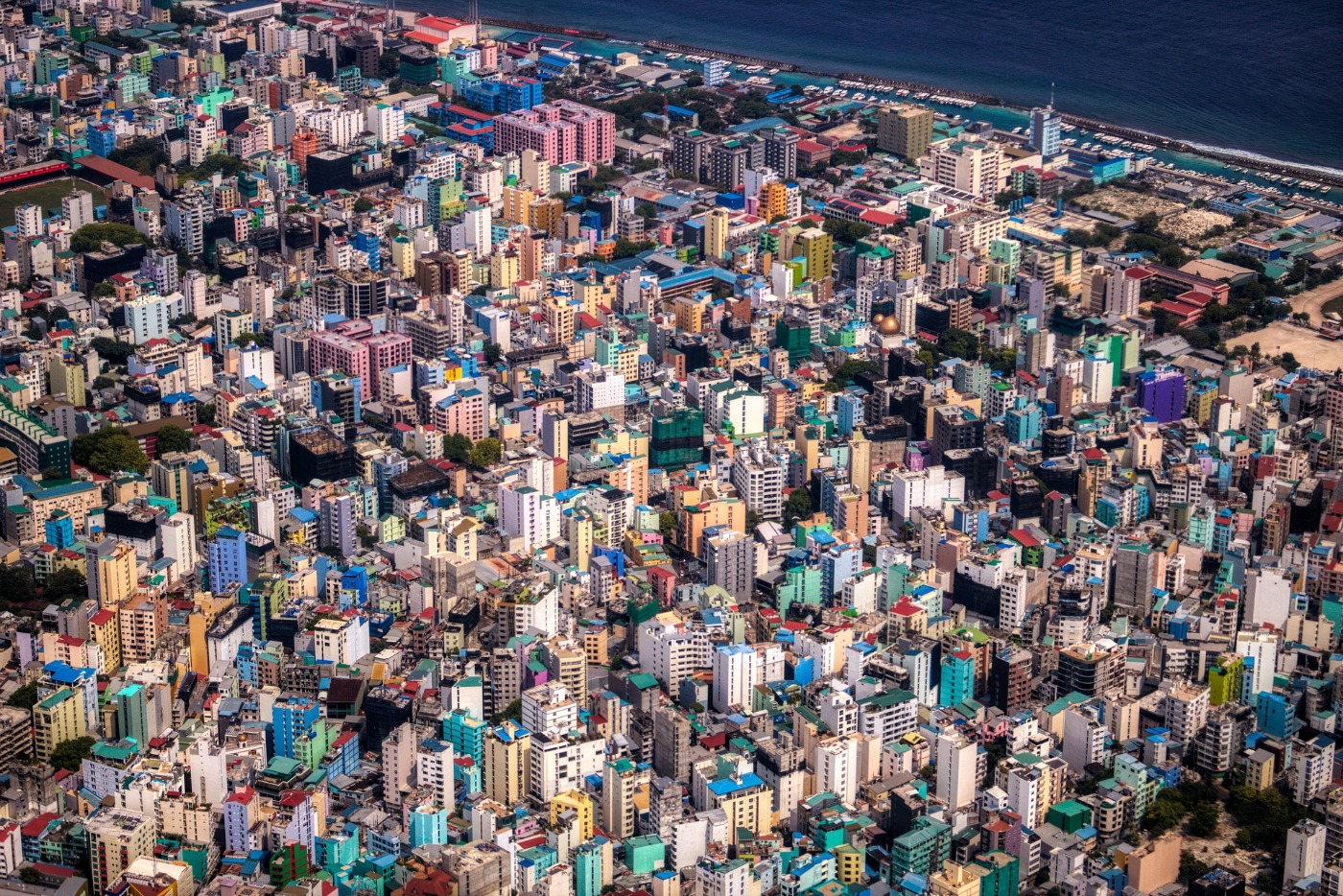
Malé is the extraordinary capital of the Maldives — one of the most densely populated cities on Earth and one of the most visually striking, a compact island metropolis of gleaming mosques, colourful buildings, and bustling streets packed onto a coral island just 2km long and 1km wide, rising barely a metre above the surface of the Indian Ocean. Home to over a third of the entire Maldivian population on an island smaller than many city parks, Malé is a city of extraordinary energy and contradiction — a modern, Islamic, South Asian capital surrounded on every side by the turquoise lagoons and pristine coral reefs that have made the Maldives one of the most famous and coveted travel destinations on Earth. For most visitors, Malé is the gateway to the resort atolls — but the city itself rewards those who take the time to explore its mosques, markets, waterfront, and cultural institutions with a genuinely fascinating and authentic Maldivian experience.
Best Time to Visit Malé & Weather Guide
The Maldives has a classic tropical monsoon climate, divided between a dry northeast monsoon season and a wet southwest monsoon season — both warm year-round, but with dramatically different conditions for diving and outdoor activities.
☀️ Dry Season / NE Monsoon (November–April)
The best and most popular time to visit the Maldives. The northeast monsoon brings dry, sunny weather, calm seas, lower humidity, and the best underwater visibility of the year — perfect for diving and snorkelling. Temperatures average a comfortable 26–30°C. December through March are the driest and calmest months and coincide with peak European winter holidays — book accommodation many months in advance for this period. Water visibility can exceed 30 metres during the dry season, making it the finest time for reef diving.
Best Time to Visit🌧️ Wet Season / SW Monsoon (May–October)
The southwest monsoon brings more rain, rougher seas, and reduced visibility — but the Maldives remains warm and beautiful, and significant discounts (30–50%) make this an attractive season for budget-conscious visitors. June and July see the most consistent rain. The wet season is actually the best time to see manta rays feeding at certain atolls, and whale shark encounters are also excellent. Many resorts offer their best rates and the islands are far less crowded.
Budget Travel🦈 Whale Shark & Manta Season
The Maldives offers some of the world's most reliable and accessible encounters with whale sharks and manta rays — both year-round, but with distinct seasonal peaks. Whale sharks are most reliably encountered in South Ari Atoll year-round, with peak activity during the northeast monsoon. Manta rays aggregate at cleaning stations throughout the atolls — the southwest monsoon (May–November) brings the largest aggregations of reef mantas at sites like Hanifaru Bay in Baa Atoll, a UNESCO Biosphere Reserve. Swimming with mantas at Hanifaru is one of the greatest wildlife encounters in the ocean.
Wildlife🌡️ Climate Notes for the City
Malé's equatorial location keeps temperatures warm and remarkably consistent year-round — between 26°C and 31°C in every month, with ocean breezes providing natural cooling. The city is significantly more humid and less resort-like than the outer atolls — but the ocean is always within sight and a cooling swim is always moments away. Sea surface temperatures remain between 27–30°C year-round, making the water perfect for swimming and snorkelling in any month without a wetsuit.
Tropical OceanDry season: Lightweight swimwear and beach clothing, a light cover-up for modesty when visiting mosques and local islands (shoulders and knees covered is required outside resort islands), reef-safe sunscreen (mandatory — conventional sunscreen damages Maldivian coral reefs), UV-protective rash vest for snorkelling and diving, comfortable sandals and lightweight footwear.
Wet season: A compact waterproof jacket for rain showers, quick-dry clothing, waterproof bag for electronics. The rain is typically intense but brief — it rarely disrupts water activities for long. A thin wetsuit (3mm) can improve comfort during extended diving or snorkelling sessions in the wettest months.
Top Attractions in Malé & the Maldives
Malé rewards a day or two of genuine exploration before heading out to the atolls — its historic mosques, vibrant fish market, and cultural institutions offer a fascinating window into authentic Maldivian life far from the resort bubble.
🕌 Hukuru Miskiy (Old Friday Mosque)
The most important and beautiful historic building in the Maldives — the Hukuru Miskiy, built in 1656 from coral stone, is the oldest mosque in the Maldives and one of the finest examples of traditional Maldivian craftsmanship in existence. The mosque's interior walls, ceiling, and courtyard are covered in extraordinarily intricate carved lacquerwork, Arabic calligraphy, and coral stone carving — a UNESCO-nominated masterpiece of Indian Ocean Islamic architecture. The adjacent cemetery contains elaborately carved coral tombstones dating back centuries. One of Malé's most extraordinary and unmissable sights.
Historic Landmark🐟 Malé Fish Market
One of the most spectacular and authentic fish markets in Asia — an open-air market on the waterfront where Maldivian fishermen bring in their daily catch of yellowfin tuna, skipjack, barracuda, grouper, and an extraordinary variety of Indian Ocean fish, sold whole or cut to order on the spot. The market is at its most vibrant and photogenic in the late afternoon when the fishing boats return. The sight of massive yellowfin tuna being hauled ashore, cleaned, and sold by knife-wielding fishmongers in minutes is one of the great raw spectacles of Indian Ocean city life.
Must See🏛️ National Museum of Maldives
Housed in the restored Sultan's Palace — the only remaining building of the former royal palace complex — the National Museum holds the Maldives' most important collection of historical and cultural artefacts: royal regalia, coral stone sculptures, pre-Islamic Hindu and Buddhist objects from the islands' pre-Islamic past, traditional jewellery, weapons, and navigational instruments. The collection includes priceless coral stone Buddha heads and Hindu deity figures from the ancient Maldivian Buddhist period (pre-12th century) — evidence of a remarkable cultural history that predates the Islamic conversion. An essential visit for understanding the depth of Maldivian civilisation.
World Class🌊 Coral Reef Snorkelling & Diving
The Maldives' 26 natural atolls contain some of the most pristine and biodiverse coral reef systems in the world — over 2,000 species of fish, 200 species of coral, five species of sea turtle, whale sharks, manta rays, hammerhead sharks, and an abundance of colourful reef life. The reefs around Malé itself (particularly Banana Reef — one of the Maldives' first dive sites) offer excellent diving and snorkelling accessible within 20–30 minutes by speedboat from the capital. Day trip snorkelling and diving excursions depart regularly from Malé's marina.
World-Class Diving🌆 Malé Waterfront & Jumhooree Maidan
The Malé Waterfront — the Marine Drive promenade along the northern coast — is the social heart of the city, where locals gather in the evenings to walk, socialise, and watch the constant procession of speedboats, ferries, and dhonis (traditional Maldivian wooden boats) crossing the lagoon. Jumhooree Maidan (Republic Square), the city's main public square, is flanked by the Presidential Palace (Muleeaage), the Supreme Court, and the striking Islamic Centre with its golden dome — one of the most recognisable landmarks in Malé.
City Life🏝️ Hulhumalé — The Reclaimed Island
One of the most remarkable urban projects in the world — Hulhumalé is an entirely artificial island created by dredging coral sand from the lagoon floor, built to address Malé's extreme overcrowding and rising sea level risk. Now home to over 50,000 people, Hulhumalé has wider streets, parks, and a more relaxed atmosphere than the original Malé island. Connected to Malé by the China-Maldives Friendship Bridge (the first bridge in Maldivian history, opened 2018), Hulhumalé and the adjacent airport island of Hulhulé are easily visited by a memorable walk or cycle across the bridge.
Unique🦈 Whale Shark Encounters — South Ari Atoll
The South Ari Atoll, accessible by seaplane (25 minutes) or speedboat (2–3 hours) from Malé, is the world's most reliable destination for year-round whale shark encounters — the atoll's nutrient-rich waters support a resident population of whale sharks that can be snorkelled with on almost any day of the year. The encounters here are legendary — the whale sharks are habituated to human presence and can be approached closely underwater. For many visitors, swimming alongside the world's largest fish in the crystal-clear waters of the Maldives is the single most powerful wildlife experience of their lives.
Bucket List🌅 Bioluminescent Beach — Vaadhoo Island
One of the most magical natural phenomena in the world — the beach of Vaadhoo Island in Raa Atoll glows electric blue at night with the bioluminescence of Noctiluca scintillans (sea sparkle) phytoplankton. The waves breaking on the sand leave trails of cold blue light, and the shallow water shimmers with bioluminescent fire — creating a scene so otherworldly it appears to be from another planet. The phenomenon is most intense during the southwest monsoon season (May–October) and is one of the most photographed natural spectacles in the entire Indian Ocean region.
MagicalLocal Food Recommendations
Maldivian cuisine is built almost entirely around the ocean — tuna is the foundation of virtually every traditional dish, combined with coconut, chilli, and aromatic spices in a cuisine of surprising depth and character.
🐟 Must-Try Maldivian Dishes
- Mas huni — the definitive Maldivian breakfast: shredded smoked tuna mixed with freshly grated coconut, onion, chilli, and lime — served with roshi (flatbread) and eaten by hand. Simple, deeply flavourful, and utterly addictive — the dish that every Maldivian child grows up eating and that captures the essence of Maldivian cuisine in a single bowl. Found at every local café and home kitchen in Malé from early morning.
- Garudhiya — the most fundamental dish of Maldivian cooking: a clear, fragrant tuna broth made by boiling fresh tuna with salt and water. Served with rice, lime, chilli, and onion — simple, deeply savoury, and the base from which much of Maldivian cuisine derives its character. Every family has its own recipe, and the quality depends entirely on the freshness of the tuna.
- Rihaakuru — a thick, intensely flavoured tuna paste made by reducing garudhiya broth for hours until it becomes a dark, concentrated, almost molasses-like condiment. One of the most distinctive ingredients in Maldivian cooking — used as a flavouring in sauces, stews, and as a side condiment with rice and flatbread. Its deep, umami-rich character is like the tuna equivalent of fish sauce.
- Bajiyaa (tuna pastries) — deep-fried pastry parcels filled with smoked tuna, coconut, and spices — the most popular street snack in Malé. Sold from street-side tea shops (sai hotaa) throughout the city, eaten hot with a cup of sweet milk tea. The definitive Maldivian afternoon snack.
- Fihunu mas (grilled fish) — whole fish (typically grouper, snapper, or tuna) marinated in a paste of chilli, garlic, ginger, and coconut, then grilled over charcoal. The freshness of fish caught the same morning, grilled simply and served with rice and coconut chutney, is one of the great uncomplicated pleasures of eating in the Maldives.
- Kulhi boakibaa (spiced fish cake) — a dense, savoury cake made from smoked tuna, rice, coconut, and spices — a traditional Maldivian celebration food served at festivals, weddings, and special occasions. Subtly spiced, slightly sweet from the coconut, and deeply satisfying.
🍵 Drinks & Street Food
- Sai (sweet milk tea) — the national drink of the Maldives: strong black tea brewed with sweetened condensed milk, served in small glasses at the ubiquitous sai hotaa (tea shops) found throughout Malé. Tea shops are the social hub of Maldivian daily life — men gather for tea, bajiyaa, and conversation at all hours of the day. Joining a tea shop for a glass of sai and a plate of bajiyaa is the most authentic local experience Malé offers.
- Fresh coconut water — young green coconuts sold from street carts throughout Malé. Sweet, cold, and the perfect refreshment in the tropical heat — and one of the most hydrating and mineral-rich natural drinks available.
- Dhonkeyo kajuru (banana fritters) — ripe Maldivian bananas fried in a light batter — a popular street snack sold at tea shops alongside bajiyaa and tuna pastries. The Maldivian bananas are smaller and sweeter than the common Cavendish variety and are particularly delicious when fried.
- Note on alcohol: The Maldives is an Islamic republic — alcohol is strictly prohibited on inhabited local islands including Malé. Alcohol is only available at resort islands. Visitors staying in Malé or travelling on local ferries should respect this restriction.
- Fresh fruit juices — mango, watermelon, and tropical fruit juices are available at juice bars and market stalls throughout Malé — excellent, fresh, and very affordable.
🏪 Where to Eat — Local Tips
- Local tea shops (sai hotaa) — the most authentic and affordable eating option in Malé. Every neighbourhood has its own tea shop where locals gather for mas huni and roshi at breakfast, bajiyaa and sai in the afternoon, and grilled fish and rice in the evenings. Prices are extraordinarily low by any international standard — a full breakfast with tea costs $2–4.
- Seagull Café — one of Malé's most popular local restaurants, serving excellent Maldivian and South Asian dishes in a simple, unpretentious setting. Particularly good for garudhiya, fihunu mas, and the local short eats. Perpetually busy with locals — always a reliable sign of quality.
- Malé Fish Market restaurants — several small restaurants near the fish market buy directly from the boats and serve the freshest grilled and fried fish in the city. The quality of the raw ingredient — fish caught hours earlier in the Indian Ocean — makes these some of the best value seafood meals in South Asia.
- Hotel restaurants — Malé's international hotels offer more varied menus (including non-Maldivian food) at higher prices. Good options if you want air-conditioned comfort and a broader selection.
🥥 The Coconut & Tuna Story
- Maldivian cuisine rests on two pillars: the coconut palm and the skipjack tuna. The coconut palm — called the "tree of life" throughout the Indian Ocean — provides coconut flesh, coconut milk, coconut oil, coconut toddy (a mildly alcoholic sap), and the palm fronds used for weaving and construction. It is impossible to overstate how central the coconut is to every aspect of traditional Maldivian life.
- Skipjack and yellowfin tuna are the protein foundation of the Maldivian diet — caught using the traditional and environmentally excellent pole-and-line method, which catches individual fish with minimal bycatch. Maldivian pole-and-line tuna is certified as one of the world's most sustainable seafood products.
- Smoked tuna (hikimas) — tuna is traditionally smoked and dried to preserve it across the atolls, creating an intensely flavoured ingredient that is the building block of mas huni, rihaakuru, and dozens of other traditional dishes. The smoking is done over coconut husks, adding a subtle coconut-smoke flavour that is uniquely Maldivian.
- Eating tuna in the Maldives — caught that morning by pole-and-line from the Indian Ocean, smoked over coconut husks, and mixed with freshly grated coconut and chilli — is one of the most direct and satisfying connections between sea, land, and plate that world cuisine offers.
Day Trip Itineraries from Malé
Malé is the gateway to the Maldives' extraordinary atolls — accessible by speedboat, seaplane, and domestic ferry from the capital:
🤿 Day Trip: North Malé Atoll Diving
Travel time: 20–40 minutes by speedboat | Cost: ~$80–120 for a guided two-dive day trip
The most accessible diving from Malé — the North Malé Atoll contains some of the Maldives' most celebrated dive sites within easy reach of the capital. Banana Reef (the Maldives' first dive site, discovered in 1973) offers extraordinary coral formations and abundant reef life. HP Reef and Kuda Giri wreck dive are also within the atoll. Several dive schools in Malé operate daily guided dive trips to the North Malé Atoll — an excellent option for travellers staying in Malé rather than a resort island.
Most Popular🐢 Day Trip: Turtle & Snorkel Safari
Travel time: 30–60 minutes by speedboat | Cost: ~$60–100 per person with guide and boat
Half-day and full-day snorkelling safaris departing from Malé visit a series of coral reef sites, sandbanks, and lagoons in the surrounding atolls — encounters with green and hawksbill sea turtles are virtually guaranteed, along with reef sharks (blacktip and whitetip), schools of colourful reef fish, rays, and extraordinary coral gardens. The Maldives' crystal-clear water (visibility often 20–30 metres) makes even basic snorkelling an exceptional experience — no diving certification needed to see some of the finest marine life in the Indian Ocean.
Family Friendly🌅 Day Trip: Local Island Experience
Travel time: 30–90 minutes by public ferry or speedboat | Cost: ~$1–5 by public ferry
A visit to a traditional Maldivian local island — such as Maafushi, Guraidhoo, or Thulusdhoo in the South Malé Atoll — offers the most authentic and affordable alternative to resort tourism. Local islands have guesthouses, white sand beaches, coral reefs accessible from shore, and the opportunity to experience genuine Maldivian village life. Maafushi in particular has developed a thriving budget tourism scene with excellent guesthouses, dive schools, and surfing — all at a fraction of resort prices.
Authentic✈️ Seaplane to Resort Atolls
Travel time: 20–45 minutes by seaplane from Velana Airport | Cost: ~$250–500 return, usually included in resort packages
The iconic Maldivian arrival experience — a twin-engine seaplane skimming over the turquoise atoll lagoons, the coral reefs visible through the water far below, before touching down in a lagoon beside a private resort island. The Maldives' outer atolls — Baa Atoll (UNESCO Biosphere Reserve), Ari Atoll (whale sharks), Lhaviyani Atoll, and North Malé Atoll — all contain the world-famous overwater bungalow resorts that have defined the Maldivian tourism experience for decades. The seaplane transfer is as memorable as the destination itself.
IconicTourist Tips for Malé
🚌 Getting Around
- Malé is one of the world's most compact capitals — almost everything in the city is within walking distance. The island measures just 2km × 1km, and most landmarks, the fish market, mosques, and waterfront are reachable on foot in 10–15 minutes from any point in the city centre.
- Taxis operate on the island but are rarely necessary given the compact size — fares are metered and inexpensive. For airport transfers, speedboat taxis (local name: dhoni taxi) connect Velana Airport island to Malé's waterfront in 10 minutes.
- The China-Maldives Friendship Bridge connects Malé island to Hulhumalé (the reclaimed island) and Hulhulé (the airport island) — a walkable or cyclable crossing that opened in 2018 and is free to pedestrians. Walking or cycling across the bridge at sunset offers remarkable views of Malé's skyline and the surrounding lagoon.
- For excursions to nearby atolls and local islands, speedboats depart from the Malé Ferry Terminal (near the fish market) and various jetties around the waterfront. Public ferries to the outer atolls are very affordable — the inter-island ferry network is one of the Maldives' most useful and underused resources for budget travellers.
💡 General Safety & Travel Tips
- Malé is a very safe city by international standards — violent crime against visitors is extremely rare. The main concerns are petty theft in crowded market areas and the usual cautions around water safety for non-swimmers.
- Islamic law applies throughout the Maldives — alcohol is banned on local islands (including Malé), public displays of affection are prohibited, and modest dress is required outside resort areas. These are legal requirements, not merely cultural preferences. Penalties for violations can be significant.
- Water: Tap water in Malé is technically drinkable but desalinated and not particularly pleasant. Bottled water is widely available and inexpensive. On resort islands, water is typically provided freely.
- The Maldivian Rufiyaa (MVR) is the local currency, but US dollars are very widely accepted throughout Malé's hotels, restaurants, and tourist-facing businesses — making the Maldives unusually convenient for dollar-carrying visitors. ATMs are available throughout the city. Credit cards are accepted at larger establishments.
- Reef-safe sunscreen is essential — the Maldives' coral reefs are among the most biodiverse and fragile in the world. Conventional sunscreens containing oxybenzone and octinoxate cause serious coral bleaching. Use only certified reef-safe products for all water activities.
- Book seaplane transfers and resort accommodation well in advance for the dry season (November–April) — the most popular resorts and flight times can be fully booked months ahead.
Apply for Tourist Visa
The Maldives offers a free visa-on-arrival for 30 days to all nationalities — no advance visa application is required for tourist visits of up to 30 days. Simply arrive at Velana International Airport with a valid passport, return ticket, confirmed accommodation booking, and sufficient funds. Extensions of up to 90 days are available from the Maldives Immigration Department in Malé. There is no separate e-visa application process for standard tourist visits. Maldives Tourist Visa Information
Important Emergency Numbers
🇲🇻 Malé Emergency Contacts
- 🚑 Ambulance: 119
- 🔥 Fire Brigade: 102
- 👮 Police: 118
International Emergency Phone Numbers
Find Flights to Malé
Malé Airport Code: MLE — Velana International Airport (located on the adjacent island of Hulhulé — a 10-minute speedboat ride from Malé's waterfront, or a walk across the China-Maldives Friendship Bridge)
Airport Transfer: Speedboat taxis connect the airport jetty to Malé's waterfront in 10 minutes (fare approximately $1–2). The bridge walk or cycle from Hulhumalé to Malé takes 20–30 minutes and is free. Most resorts arrange their own speedboat or seaplane transfers directly from the airport. Direct international flights connect Malé to Dubai, Doha, Singapore, Colombo, Istanbul, and major European hubs.
International Airport FinderCurrency in Malé
The currency of the Maldives is the Maldivian Rufiyaa (MVR). However, US dollars are very widely accepted throughout Malé's hotels, restaurants, dive schools, and tourist businesses — making the Maldives unusually dollar-friendly. ATMs dispensing both Rufiyaa and US dollars are available throughout central Malé. Credit cards are accepted at larger hotels and restaurants. Cash in small denominations is useful for tea shops, local markets, and ferry tickets.