Managua Weather
MANAGUA WEATHERAbout Managua
Managua is the capital and largest city of Nicaragua — the largest country in Central America and one of the most geographically dramatic nations on Earth, a land of active volcanoes, vast freshwater lakes, Pacific and Caribbean coastlines, and a turbulent political history that has shaped one of the most resilient and distinctive cultures in the Americas. Set on the southern shore of Lake Managua (Xolotlán) at an elevation of just 83 metres above sea level, Managua is a hot, sprawling, low-rise city of approximately one million people that occupies an unusual position among world capitals — it is a city that has been substantially destroyed twice in living memory (by a devastating earthquake in 1931 and an even more catastrophic earthquake in 1972, which killed between 10,000 and 30,000 people and levelled the historic centre) and has never been fully rebuilt in the conventional sense. Unlike most capitals, Managua has no traditional city centre — the ruins of the old cathedral and the original central district were never demolished or rebuilt after 1972, giving the city a uniquely decentralised character where commercial, residential, and cultural activity has dispersed across the urban area in a way that initially disorients but ultimately reveals a city of considerable warmth, cultural vitality, and natural beauty. Managua is the gateway to Nicaragua's extraordinary attractions: the colonial cities of Granada and León, the volcanic archipelago of Ometepe, the surf beaches of San Juan del Sur, and the Caribbean coast's extraordinary biodiversity.
Best Time to Visit Managua & Weather Guide
Managua has a tropical savanna climate — hot year-round, with a distinct dry season and a wet season of considerable rainfall. The city's low elevation (83m) means it is significantly hotter than the cooler highland cities of the country's interior.
☀️ Dry Season (November–April)
The most comfortable and strongly recommended time to visit — temperatures of 28–34°C with low humidity, minimal rainfall, and the clear skies that allow the full drama of the surrounding volcanic landscape to be appreciated. December through February are the finest months: slightly cooler temperatures (the viento papagayo — the northeast trade winds — bring relief from November), very little rain, and the city's outdoor and cultural life at its most active. The dry season is the peak tourist season for Nicaragua's colonial cities, beaches, and volcano hiking — all best experienced in the dry months when trails are accessible and unpaved roads passable. Managua's Fiestas Patronales de Santo Domingo (August, straddling into the dry season preparations) and the city's festive December calendar are the cultural highlights of the year.
Best Time to Visit🌧️ Wet Season (May–October)
Nicaragua's wet season brings the heaviest rainfall of the year — intense afternoon downpours, high humidity, and temperatures that remain high (28–32°C) but feel significantly hotter in the moist air. The wet season is not recommended for first-time visitors — unpaved roads throughout the country become impassable, hiking trails on the volcanoes are slippery and dangerous, and the heat-humidity combination is enervating. However, the wet season has its own rewards: the landscape turns intensely green and lush, waterfalls throughout the country reach their spectacular peak, and the Caribbean coast — which has its own distinct rainfall pattern, often drier when the Pacific side is wet — becomes more accessible. Accommodation prices drop significantly and the country is far less crowded.
Wet / Low Season🌤️ Shoulder Months (October–November)
The transition from wet to dry season — October and November see the rains gradually easing, temperatures moderating slightly, and the landscape at its most verdant and photogenic after the months of rainfall. November in particular can be excellent: the last of the seasonal rains are over, the countryside is brilliantly green, the rivers are full, and the dry season's clear skies are beginning to establish. Prices are lower than in the peak dry season and visitor numbers are reduced. The Purísima / La Gritería celebrations (7–8 December) — Nicaragua's most distinctive and beloved religious festival, marking the Immaculate Conception with a unique tradition of neighbourhood shrines, fireworks, and the sharing of traditional foods — are one of the most authentic cultural events available to visitors in the capital.
Green & Affordable🎉 Festivals & Cultural Calendar
Managua and Nicaragua's cultural calendar is rich with festivals of deep historical and religious significance. Fiestas de Santo Domingo de Guzmán (August 1–10) — Managua's most important and most beloved annual festival: ten days of processions, music, dancing, traditional foods, and the extraordinary daily procession of the small image of Santo Domingo from Las Sierritas church to the Barrio Santo Domingo, accompanied by thousands of costumed participants in a celebration that combines Catholic devotion with pre-Columbian indigenous traditions. La Purísima / La Gritería (December 7–8) — Nicaragua's most distinctive national celebration: neighbourhood altars to the Virgin Mary, communal singing, fireworks at midnight, and the distribution of traditional sweets and foods to all who arrive at the shrine. The Rubén Darío Cultural Festival (January) honours Nicaragua's greatest poet with literary events, music, and cultural performances throughout the capital.
Festival CalendarDry Season (Nov–Apr): Lightweight, breathable clothing for the heat (28–34°C). Maximum sun protection is essential — Managua's tropical latitude means UV levels are extremely high year-round. SPF 50+ sunscreen, a wide-brimmed hat, and UV sunglasses are non-negotiable for any outdoor activity. A light layer for air-conditioned restaurants and hotels, which are often kept very cold. Comfortable, closed-toe shoes for the city's uneven pavements and dusty streets.
Wet Season (May–Oct): Quick-dry lightweight clothing. A quality compact umbrella or waterproof jacket for the afternoon downpours. Insect repellent with DEET is essential — mosquitoes are active in the wet season and dengue fever is endemic in Nicaragua. Waterproof sandals or shoes for flooded streets during heavy rain.
Year-round: Insect repellent (DEET-based) for evening use and for visits to rural areas, the lake shores, and the jungle coast. A small day bag rather than a large backpack for city exploration — less conspicuous and more practical. USD cash in small denominations — the US dollar is widely accepted alongside the Nicaraguan córdoba, and many tourist services prefer USD. A basic Spanish vocabulary is essential — English is not widely spoken outside the main tourist hotels.
Top Attractions in Managua
Managua's attractions reflect its unique character as a city rebuilt after catastrophe — centred on its magnificent lakefront setting, revolutionary history, and role as a gateway to Nicaragua's extraordinary natural and colonial heritage.
🏛️ Plaza de la Revolución & Old Cathedral
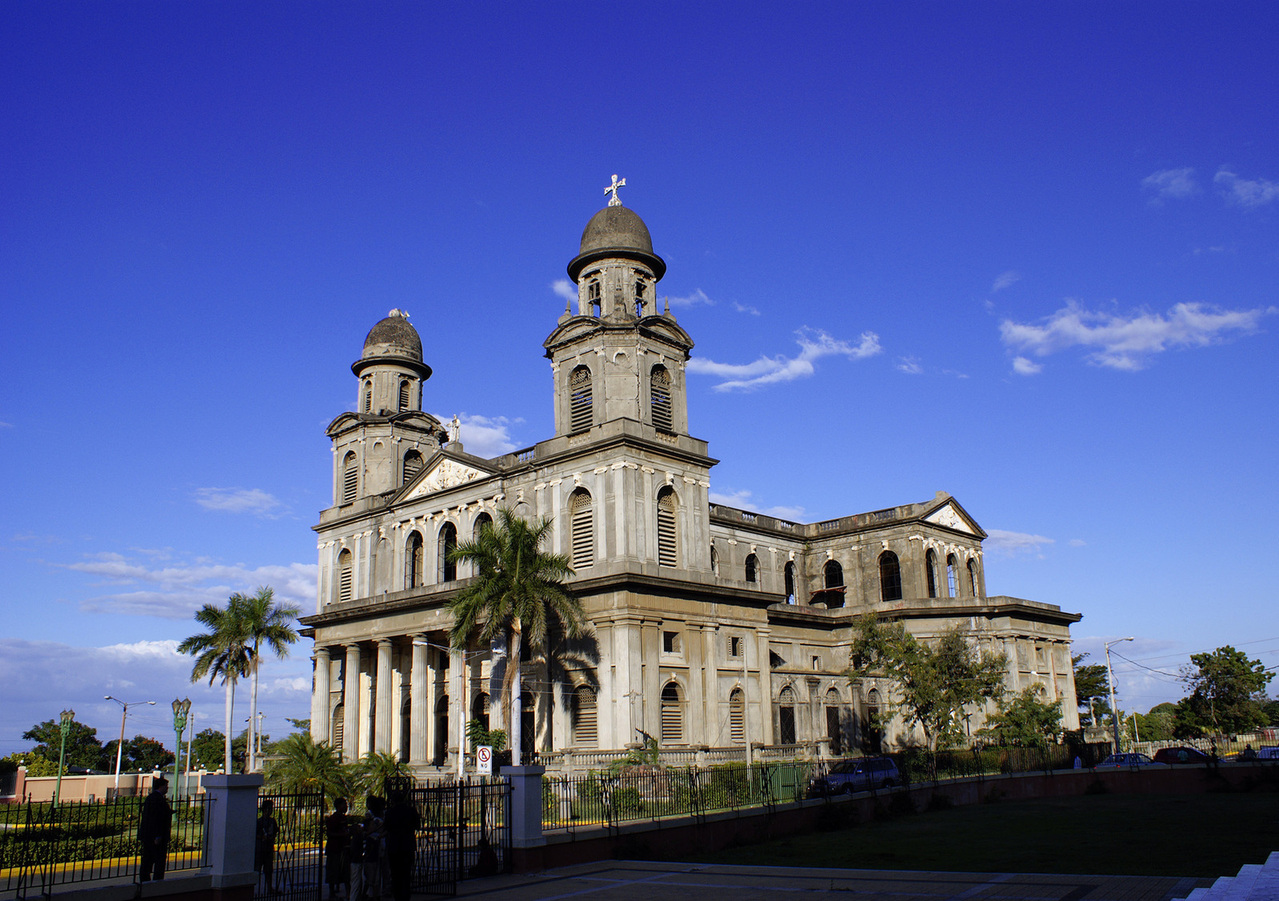
The symbolic heart of Managua and the most historically charged space in Nicaragua — the Plaza de la Revolución (also called the Plaza de la República), on the shore of Lake Managua, is where the political, religious, and civic history of the nation converge in a single powerful urban space. The Catedral Vieja de Managua (Old Cathedral, officially the Catedral de Santiago) — the shell of the 1928 neo-classical cathedral damaged beyond repair in the 1972 earthquake and left deliberately unrestored as a monument to the earthquake and the Somoza dictatorship's failure to rebuild — is one of the most haunting and historically resonant ruins in Central America: its roofless nave, crumbling arches, and the permanently damaged bell tower stand as a silent statement about the fragility of civilisation and the weight of Nicaraguan history. The adjacent Palacio Nacional de la Cultura (National Cultural Palace) houses the Museo Nacional de Nicaragua and the national library.
Historic Heart🌊 Malecón de Managua — Lake Managua Waterfront
Managua's most important public space and the city's finest free outdoor experience — the Malecón de Managua, a recently redeveloped lakefront promenade stretching along the southern shore of Lake Managua (Xolotlán), offers spectacular views of the lake, the surrounding volcanic landscape, and the distant cone of Momotombo volcano rising from the far shore in one of the most dramatic panoramas available from any Central American capital. The malecón's parks, outdoor restaurants, children's play areas, and weekend cultural events make it the social heart of the city on evenings and weekends. The sunsets from the lakefront — the sky turning orange and purple over Momotombo's silhouette — are among the finest in Nicaragua. The lake itself remains heavily polluted from decades of industrial and urban waste discharge, but the view across it is magnificent.
Waterfront Sunset🎨 Palacio Nacional de la Cultura & National Museum
Nicaragua's most important cultural institution and the finest museum in the country — the Palacio Nacional de la Cultura, a magnificent 1930s neo-colonial building on the Plaza de la Revolución, houses the Museo Nacional de Nicaragua: outstanding collections of pre-Columbian indigenous art and archaeology (Nicaragua's indigenous heritage is among the richest and least studied in Central America), colonial-era paintings and religious art, and the comprehensive natural history of one of the most biologically diverse nations in the Americas. The building itself is historically significant — it was here that the FSLN (Sandinista National Liberation Front) staged its dramatic 1978 hostage takeover that accelerated the fall of the Somoza dictatorship. The palace's beautiful courtyard, murals, and public library are open to visitors throughout the day.
Culture & History🌋 Laguna de Tiscapa — Volcanic Crater Lake
One of Managua's most remarkable natural features and finest viewpoints — the Laguna de Tiscapa, a deep volcanic crater lake in the heart of the city, is surrounded by the Parque Histórico Nacional Loma de Tiscapa: the hill above the lake was the site of the infamous Casa de los Plomo, the Somoza dictatorship's most feared detention and torture centre (now a sobering historical monument), and the park contains a large silhouette statue of Augusto César Sandino — the revolutionary leader whose resistance to US military occupation in the 1920s–30s inspired the Sandinista movement — visible from across the city. The zip line over the crater lake is the most unusual tourist activity in Managua: a 180-metre cable descending to the lake surface from the crater rim, with stunning views over the city and the surrounding volcanic landscape.
Volcanic & Historical🛍️ Mercado Roberto Huembes
The finest and most atmospheric market in Managua and the best single destination for Nicaraguan craft, food, and the authentic urban life of the capital — the Mercado Roberto Huembes, a vast covered market in the southeast of the city, is organised into dedicated sections for meat, produce, cooked food, clothing, and the outstanding artesanías section where the finest traditional Nicaraguan crafts are available directly from the artisans who make them: handwoven güipiles (indigenous women's blouses) from the Masaya tradition, rocking chairs (mecedoras) — Nicaragua's most beloved and distinctive furniture tradition, hammocks woven from cotton or nylon in the Masaya style, painted ceramics from San Juan de Oriente, and the finely carved güira gourds decorated with traditional Nicaraguan scenes. The market's food section — offering vigorón, nacatamales, gallo pinto, and quesillo at a few cents each — is the finest and most affordable eating in the city.
Craft Market⛪ Nueva Catedral de Managua
One of the most architecturally controversial and visually striking churches in the Americas — the Catedral de la Inmaculada Concepción de María (Nueva Catedral), designed by the Mexican architect Ricardo Legorreta and completed in 1993, is a post-modernist building of distinctive and polarising character: 63 small domes of varying sizes covering a vast pale exterior of concrete and tile, with the main 30-metre dome at the centre creating a building that resembles — depending on the viewer's perspective — a collection of bubbles, a mosque, or an alien spacecraft. The interior, with its extraordinary filtered light through the dome cluster, the wood-carved stations of the cross by the Nicaraguan sculptor Jorge Navas Cordonero, and the remarkable Shrine to the Blood of Christ, is considerably more beautiful and contemplative than the exterior suggests. The cathedral is the most discussed and debated building in modern Nicaraguan architecture.
Architectural Marvel🎭 Centro Cultural Managua & Arts Scene
Nicaragua's most important performing arts venue and cultural centre — the Centro Cultural Managua, housed in a restored colonial building near the Plaza de la Revolución, is the hub of the capital's active cultural life: theatre performances, contemporary dance, music recitals, poetry readings, and art exhibitions representing the full range of Nicaraguan creative expression. Nicaragua's extraordinary literary and poetic tradition — which produced Rubén Darío (the father of modernismo in Spanish literature), Pablo Antonio Cuadra, Ernesto Cardenal, Gioconda Belli, and Sergio Ramírez (winner of the Cervantes Prize) — is celebrated at the Centro through regular literary events. The adjacent Instituto Nicaragüense de Cultura maintains a programme of free cultural events accessible to all visitors.
Arts & Literature🏖️ Puerto Salvador Allende
Managua's most popular waterfront entertainment complex and the city's finest destination for an evening out — Puerto Salvador Allende, a marina and outdoor restaurant/bar complex on the shore of Lake Managua adjacent to the malecón, offers the most extensive range of restaurants, bars, and outdoor entertainment venues in the capital in a lakeshore setting of genuine atmospheric appeal. The complex — named after the Chilean socialist president killed in the 1973 coup — hosts regular live music, weekend festivals, and the constant social energy of a city that, despite its political complexities, knows how to celebrate. The evening combination of cold Toña beer (Nicaragua's national lager), fresh lake fish, and the spectacular sunset over Momotombo volcano makes Puerto Salvador Allende the finest single evening destination in Managua.
Evening DestinationLocal Food Recommendations
Nicaraguan cuisine is the most distinctive and least internationally known of Central American cooking traditions — a deeply satisfying combination of indigenous, Spanish colonial, and Caribbean influences, built around corn, beans, rice, pork, and the extraordinary variety of tropical fruits available year-round.
🍽️ Must-Try Nicaraguan Dishes
- Gallo pinto — Nicaragua's national dish and the most fundamental expression of Nicaraguan food culture: rice and red beans cooked together with onion, sweet pepper, garlic, and the distinctive seasoning of Salsa Lizano (a Central American condiment), producing a satisfying, savoury combination of complementary textures and flavours that is eaten at breakfast, lunch, and dinner throughout the country. The Nicaraguan gallo pinto uses red beans (distinguishing it from the Costa Rican version which uses black beans) and is considered a point of national culinary pride. Served with cuajada (fresh white cheese), crema (soured cream), and a fried egg, it is one of the finest and most affordable breakfasts in Central America.
- Vigorón — one of Nicaragua's most beloved and distinctive street foods, originating in the city of Granada and now eaten throughout the country: a generous serving of boiled yuca (cassava) topped with a tangy, freshly prepared curtido (pickled cabbage salad with tomato, onion, and chilli) and a pile of crispy chicharrón (fried pork crackling), all served on a banana leaf. The combination of the neutral starchiness of the yuca, the sharp acidity of the curtido, and the fatty crunch of the chicharrón is perfectly calibrated and deeply satisfying. Available at the Mercado Roberto Huembes and street food stalls throughout Managua for a few córdobas.
- Nacatamal — Nicaragua's most important and most ceremonially significant traditional food: a large, elaborate tamale of masa (corn dough) filled with pork, rice, potatoes, tomatoes, mint, and a complex spiced sofrito, wrapped tightly in banana leaves and slow-cooked in a pot for several hours. The nacatamal is the traditional food of Sunday family gatherings, fiestas, and celebrations — it takes an entire day to prepare and is eaten with great ceremony. Available at the market and from street vendors on weekend mornings; a single nacatamal is a complete meal. The Nicaraguan nacatamal is considerably larger and more elaborate than its Mexican or Guatemalan equivalents.
- Quesillo — Nicaragua's most beloved and simplest snack: a long, flat rope of fresh white cheese (queso) rolled around pickled onions and fresh cream, wrapped in a tortilla and tied in a plastic bag for eating on the go. The quesillo is the definitive Nicaraguan roadside snack — sold from small stalls along the highways and at every market, bus station, and roadside stop in the country. The combination of the mild, stretchy fresh cheese with the sharp pickled onion and the rich cream in a simple corn tortilla is one of those food combinations of such perfect simplicity that it seems inevitable rather than invented. The best quesillos in the country come from the town of Nagarote on the Pan-American Highway between Managua and León.
- Sopa de res (beef bone soup) — the great restorative dish of Nicaraguan home cooking: a richly flavoured beef bone broth with chunks of yuca, plantain, corn on the cob, chayote, and whatever vegetables are available, slow-cooked for hours and seasoned with culantro (recao) and fresh lime. Served in enormous bowls with white rice and tortillas, sopa de res is the definitive Nicaraguan family Sunday lunch — comforting, nutritious, and deeply flavoured. Available at traditional restaurants (comedores) throughout Managua for approximately C$80–120 ($2.20–3.30).
- Tres leches cake — arguably the finest dessert in Central America and one of the great contributions of Nicaraguan pastry to the world: a light sponge cake soaked in three types of milk (whole milk, evaporated milk, and sweetened condensed milk), topped with whipped cream and often a sprinkle of cinnamon or fresh fruit. Nicaragua's claim to the invention of tres leches is disputed by Mexico and other Central American countries but the quality of the Nicaraguan version — particularly from the traditional bakeries of Granada and Managua — is consistently outstanding. Available at virtually every restaurant and bakery in the country.
🍺 Drinks & Social Culture
- Toña beer — Nicaragua's national lager and the most consumed beverage in the country: a clean, light, well-balanced cerveza of genuine quality, brewed by Cervecería Nacional since 1926 and served ice-cold at every bar, restaurant, and social gathering in Nicaragua. Cold Toña — the definitive accompaniment to every Nicaraguan meal, sunset, and conversation — is one of the great simple pleasures of Central American life. The companion brand Victoria is slightly lighter and equally well-regarded. Both beers benefit from the extreme cold at which they are served and the tropical heat in which they are consumed.
- Flor de Caña rum — Nicaragua's most internationally celebrated product and one of the finest rums in the world: produced by the Pellas family at the Ingenio San Antonio distillery in Chichigalpa (western Nicaragua) since 1890, Flor de Caña is a slow-aged rum of extraordinary quality, available in expressions from 4 to 25 years old and consistently winning international awards. The Flor de Caña 18-Year Gran Reserva is considered one of the top five rums in the world by serious rum connoisseurs. In Nicaragua it is priced at a fraction of its international export cost — purchasing a bottle of aged Flor de Caña at Managua's duty-free or specialist liquor shops is the finest and most distinguished souvenir of a visit to the country.
- Pinolillo — Nicaragua's most culturally significant traditional drink and the beverage most closely associated with national identity: a thick, slightly gritty drink made from ground toasted corn and cacao (sometimes with spices including cinnamon and clove), mixed with water or milk and served cold or warm. The name pinolero is Nicaraguans' affectionate term for themselves — derived from pinolillo — expressing pride in the country's indigenous culinary heritage. Available at traditional food stalls and comedores throughout the country; an acquired taste for foreign visitors but a deeply authentic expression of Nicaraguan food culture.
- Chicha bruja and corn drinks — Nicaragua's indigenous fermented and non-fermented corn drink tradition is one of the richest in Central America: chicha de maíz (fermented corn), pozol (ground corn with cacao and water), and various regional variations are prepared and sold at traditional markets and fiestas. The corn drink tradition predates the Spanish conquest by millennia and represents one of the most direct surviving connections to the pre-Columbian culinary heritage of the country's indigenous peoples.
🍽️ Where to Eat — Local Tips
- Mercado Roberto Huembes food section — the finest and most authentic eating in Managua and the best introduction to everyday Nicaraguan food culture: the market's comedor section serves gallo pinto, vigorón, nacatamales, sopa de res, and all the classic Nicaraguan dishes at prices of C$50–100 ($1.40–2.75) per full meal. Arrive for breakfast (7–9am) for the freshest nacatamales and the most local atmosphere, or for lunch (11am–1pm) for sopa de res and the full comedor experience.
- La Marseillaise — Managua's most acclaimed fine dining restaurant, serving French cuisine with Nicaraguan ingredients in a beautiful colonial house setting in the Bolonia neighbourhood: a surprising and genuinely excellent French-Nicaraguan fusion that speaks to the city's cosmopolitan side. The lake fish preparations and the local beef dishes are outstanding. Budget approximately $30–50 per person including wine.
- El Muelle restaurant (Puerto Salvador Allende) — the finest lakefront dining in Managua: fresh lake fish (guapote, mojarra) and seafood prepared simply with garlic, lime, and chilli, eaten on an open terrace overlooking Lake Managua with Momotombo volcano in the distance. Cold Toña, fresh ceviche, and the Managua sunset — one of Central America's finest value dining experiences at $8–15 per person.
- Comedores near the Universidad Centroamericana (UCA) — the best-value student eating in the city: a cluster of small, family-run comedores near the university campus serving complete Nicaraguan lunches (sopa, gallo pinto, protein, salad, drink) for C$80–120 ($2.20–3.30). The food is home-cooked, the portions generous, and the clientele a democratic mix of students, office workers, and market vendors that represents the best of everyday Managua eating culture.
- Bar/Restaurant La Cavanga — Managua's most beloved traditional music bar and one of the finest venues for live Nicaraguan music in the capital: marimba, son nica, and the distinctive Nicaraguan folk music tradition performed in a convivial atmosphere that draws a mixed local and tourist crowd. The combination of cold Toña, traditional food, and live music in this unpretentious neighbourhood venue is the most authentically Nicaraguan evening experience available in the city.
🎨 Nicaraguan Crafts & Cultural Heritage
- Nicaragua's most internationally celebrated craft tradition is the hammock weaving of the Masaya region — hand-woven cotton and nylon hammocks of outstanding quality and comfort, available in enormous variety at the Mercado de Artesanías de Masaya (40 minutes from Managua) and at craft stalls throughout the capital. Nicaraguan hammocks are considered the finest in Central America and among the best in the world — a full-size cotton hammock of excellent quality costs $15–40 and is the single most practical and most distinctively Nicaraguan souvenir available.
- The rocking chair (mecedora) is Nicaragua's most beloved piece of furniture and a deeply embedded cultural symbol: the image of a family gathered on a veranda in rocking chairs in the cool of the evening is the quintessential Nicaraguan domestic scene. Hand-carved wooden mecedoras of excellent quality are available at workshops in Masaya and at the Managua craft markets — impractical as airline luggage but available through shipping services for serious collectors.
- Painted ceramics from San Juan de Oriente — a small village near the Masaya Lagoon that has maintained a pre-Columbian pottery tradition for over 3,000 years, now producing hand-painted decorative ceramics of considerable artistic quality. The village's artisan workshops are open to visitors, and the ceramics — decorated with pre-Columbian geometric and animal motifs in earthy colours — are the finest and most culturally specific pottery souvenir available in Nicaragua.
- Flor de Caña rum — as noted above, the finest and most internationally significant Nicaraguan product: a bottle of aged Flor de Caña (18-year or 25-year) purchased at the distillery shop or Managua duty-free is simultaneously the finest drink, the most distinguished gift, and the most compact and travel-practical souvenir available from Nicaragua.
Day Trip Itineraries from Managua
Managua's central position in Nicaragua makes it the ideal base for exploring the country's finest attractions — all within 1–3 hours by road:
🏛️ Day Trip: Granada — Nicaragua's Colonial Jewel
Travel time: 45 minutes by road | Cost: Bus from C$30–50 ($0.85–1.40); taxi/shuttle $20–30 return
Granada — founded in 1524 and one of the oldest continuously inhabited European cities in the Americas — is Nicaragua's most beautiful and visited colonial city: a compact grid of brilliantly coloured colonial mansions, baroque churches, and cobbled streets surrounding the Parque Central, set on the northwestern shore of Lake Nicaragua with the volcanic cone of Mombacho rising dramatically behind. The city's Catedral de Granada, the Iglesia de La Merced (with its rooftop views over the entire city and lake), the Las Isletas archipelago (365 small volcanic islands in the lake, accessible by boat from the Granada marina), and the remarkably well-preserved colonial architecture make Granada one of the finest colonial cities in Central America. A day trip from Managua is very satisfying; an overnight stay is even better.
Colonial Masterpiece🌋 Day Trip: Masaya Volcano National Park
Travel time: 30 minutes by road | Cost: $4 park entry; taxi/shuttle $15–25 return
One of the most accessible and spectacular active volcano experiences in the world — Parque Nacional Volcán Masaya, just 23km southeast of Managua, allows visitors to drive to the rim of the Santiago crater (one of the most active vents in Central America) and peer directly into a boiling, smoking lava lake of extraordinary visual power. The sulphurous gases, the rumbling sounds from deep within the volcano, and the raw geological drama of standing at the edge of an active caldera is an unforgettable experience. Night visits (organised through the park administration) offer the most dramatic views — the lava lake glows vivid orange against the dark sky in one of the finest natural spectacles available in Central America. The adjacent Laguna de Masaya (a flooded crater) and the bat colony in the crater cave add to the experience.
Active Volcano🎨 Day Trip: Masaya Town & Craft Market
Travel time: 30 minutes by road | Cost: Bus from C$20 ($0.55); free entry to main market
The craft capital of Nicaragua and the finest artisan market destination in Central America — Masaya, a city of 140,000 just south of the volcano park, is built around the extraordinary Mercado Nacional de Artesanías (housed in an 1891 neo-colonial market building of considerable grandeur) and the surrounding neighbourhood workshops where Nicaragua's finest artisans produce hammocks, rocking chairs, leather goods, painted ceramics, woodcarvings, and traditional clothing. The market is the single finest destination for purchasing authentic Nicaraguan craft directly from the makers at fair prices — the variety, quality, and accessibility of the Masaya craft market is unmatched anywhere in the country. The nearby Laguna de Masaya and the charming colonial town centre make Masaya a full day's excursion easily combined with the volcano park.
Craft Capital🏖️ Multi-Day: San Juan del Sur & Pacific Coast
Travel time: 2 hours by road | Cost: Bus from C$80–100 ($2.20–2.75); shuttle $25–40
Nicaragua's most celebrated beach destination and the Pacific coast surf town that has become the country's most popular visitor destination — San Juan del Sur, a crescent-shaped bay backed by forested hills on the southwestern Pacific coast, offers an excellent combination of surf breaks (the surrounding beaches — Playa Maderas, Playa Remanso, Playa Hermosa — are rated among the best in Central America), a lively and convivial town atmosphere, and the spectacular sight of the world's largest known nesting site of the olive ridley sea turtle at the nearby La Flor Wildlife Refuge (accessible September–January for the mass nesting events — one of the most extraordinary wildlife spectacles in the Americas). A two to three-day visit is recommended to experience both the beaches and the turtle nesting.
Pacific Surf & TurtlesTourist Tips for Managua
🚌 Getting Around
- Managua is a sprawling, low-density city without a traditional centre — distances between attractions are significant and the city's public bus system, while extensive and very cheap, is complex and often overcrowded. Taxis and rideshare are the most practical option for visitors.
- Taxis — widely available throughout Managua: always agree the fare before departure (typical central city fares C$50–150 / $1.40–4.10). Official yellow taxis are safer than unofficial vehicles — verify the taxi number and driver ID before entering. App-based taxi services (InDriver and Uber operate in Managua) provide safer, metered alternatives and are strongly recommended over street taxis for solo travellers and at night.
- Public buses (buses urbanos) — extremely cheap (C$5–10 / $0.14–0.28 per journey) but very crowded, slow, and without clear route information for visitors. Useful for short, well-known routes but not recommended for navigating the city independently without local guidance. The microbus (minibus) network is slightly more comfortable and faster.
- Car hire — the most practical option for exploring Nicaragua beyond Managua: the country's road network is well-maintained on the main routes, and a rental car gives access to the volcanic parks, colonial cities, and Pacific coast on a flexible itinerary. International hire companies operate at the airport. A regular sedan is adequate for the main tarred routes; 4WD is recommended for rural and northern areas, particularly in the wet season.
- Augusto C. Sandino International Airport (MGA) is just 11km east of the city centre — approximately 20–30 minutes by taxi (C$200–300 / $5.50–8.25). The airport handles regional Central American connections and direct international flights to Miami, Houston, Dallas, New York, Madrid, Panama City, San José, and major Latin American cities.
💡 General Safety & Travel Tips
- Managua requires more caution than many Central American capitals — petty theft, pickpocketing, and occasional more serious crime are risks, particularly in the historic centre, bus terminals, and less affluent neighbourhoods. Use app-based taxis rather than street taxis at all times. Avoid displaying expensive jewellery, phones, or cameras in the street. Keep to the main tourist and commercial areas after dark.
- The Nicaraguan Córdoba (NIO) is the official currency, but US dollars are widely accepted in tourist areas, hotels, and many restaurants. ATMs dispense both NIO and USD at many locations. Credit cards (Visa, Mastercard) are accepted at the larger hotels, restaurants, and shops in the tourist areas but cash is essential for markets, street food, buses, and most everyday transactions. USD in small denominations ($1, $5, $10) is the most universally useful cash to carry.
- Health precautions are important for Nicaragua travel: dengue fever is endemic and mosquito protection (DEET repellent, long sleeves at dusk) is essential year-round. Malaria is present in some rural and Caribbean coast areas — consult your doctor about prophylaxis if travelling beyond Managua and the Pacific highland cities. Drink bottled or filtered water only — tap water is not safe to drink in Managua. Hepatitis A vaccination is recommended for all travellers.
- Nicaragua uses 120V/60Hz electricity with US-standard Type A and B flat-pin plugs — the same as the United States. No adaptor is needed for US/Canadian electrical equipment. European and UK visitors will need an adaptor and possibly a voltage converter for 230V equipment.
- The political and security situation in Nicaragua has been tense since 2018 — check your government's current travel advisory before travel and monitor developments during your visit. Avoid political gatherings and demonstrations. Be cautious when photographing government buildings, military installations, and police officers.
Apply for Tourist Visa
Citizens of most Western countries including the USA, Canada, EU member states, the UK, Australia, and New Zealand can enter Nicaragua visa-free for up to 90 days as tourists (the CA-4 Agreement — a single-entry tourist card valid for 90 days across Nicaragua, Honduras, El Salvador, and Guatemala — is purchased on arrival for approximately $10). Citizens of countries not covered by visa-free entry must obtain a tourist visa in advance through the nearest Nicaraguan embassy or consulate. The situation for some nationalities has changed in recent years due to Nicaragua's political developments — verify current entry requirements for your nationality through your country's embassy or the official Nicaraguan immigration authority (Dirección General de Migración y Extranjería) before travel. Nicaragua Visa Information
Important Emergency Numbers
🇳🇮 Managua Emergency Contacts
- 🚑 Ambulance: 118
- 🔥 Fire Brigade: 118
- 👮 Police: 118
International Emergency Phone Numbers
Find Flights to Managua
Managua Airport Code: MGA — Augusto C. Sandino International Airport, 11km east of the city centre (20–30 minutes by taxi)
Airport Transfer: Taxis from the airport to central Managua cost approximately C$200–300 ($5.50–8.25) — agree the fare before departure or use InDriver/Uber from the arrivals area. International connections include direct flights to Miami (American Airlines), Houston (United), Dallas (American), New York (Copa via Panama City), Madrid (Iberia via various hubs), Panama City (Copa Airlines), San José (multiple carriers), and major Central American and Caribbean destinations. Most European visitors route via Miami, Houston, or Panama City.
International Airport FinderCurrency in Managua
The official currency of Nicaragua is the Nicaraguan Córdoba (NIO), but the US Dollar (USD) is widely accepted — and often preferred — in tourist areas, hotels, and many restaurants. ATMs dispense both NIO and USD at most locations in Managua. Credit cards (Visa, Mastercard) are accepted at larger establishments but cash (in both NIO and small-denomination USD) is essential for markets, street food, public transport, and most everyday transactions. Nicaragua is one of the most affordable countries in Central America — the córdoba's exchange rate makes it excellent value for visitors paying in USD or EUR.