Nairobi Weather
NAIROBI WEATHERTime in Nairobi
Time in Nairobi:About Nairobi
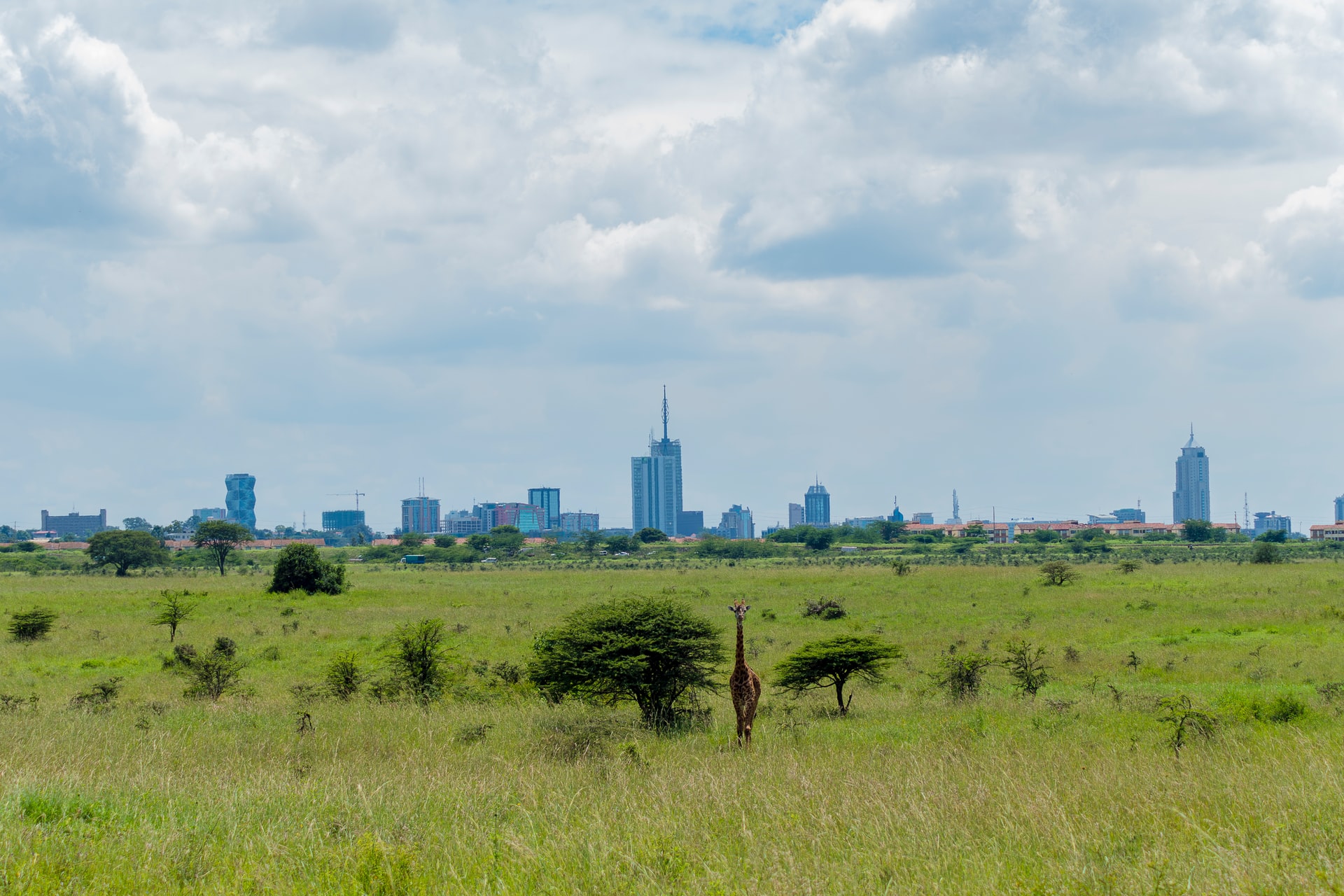
Nairobi is the vibrant, cosmopolitan, and endlessly fascinating capital of Kenya — one of Africa's great cities and the undisputed safari gateway of the continent. Founded in 1899 as a railway camp on the Uganda Railway, Nairobi grew with extraordinary speed from a dusty transit point to become East Africa's largest city, financial hub, and the headquarters of more United Nations agencies than any other city in the developing world. Sitting at 1,795 metres above sea level on the edge of the African Rift Valley, Nairobi enjoys one of the finest climates of any major city in the world — year-round mild temperatures of 15–26°C, clear highland air, and the dramatic backdrop of the Ngong Hills to the west. The city's position as Africa's safari capital is unmatched — Nairobi National Park, the only national park in the world within the boundaries of a capital city, allows visitors to watch lions, rhinos, and giraffes against a skyline of office towers. Beyond the extraordinary wildlife, Nairobi is a city of remarkable energy and diversity: world-class museums, a thriving food and nightlife scene, a booming technology sector (Nairobi's Silicon Savannah is East Africa's tech hub), and the warmth and entrepreneurial spirit of the Kenyan people make it one of Africa's most rewarding urban destinations.
Best Time to Visit Nairobi & Weather Guide
Nairobi's highland altitude (1,795m) gives it a mild, spring-like climate year-round — very different from the hot lowland tropics. The seasonal pattern is defined by two rainy seasons rather than a hot/cold contrast.
☀️ Dry Season — July to October
The best time for wildlife viewing in Kenya — the long dry season concentrates animals around remaining water sources, making game drives in the Masai Mara and Amboseli most productive. July to October is the peak season for the world-famous Great Wildebeest Migration in the Masai Mara — when over 1.5 million wildebeest and zebra cross the Mara River in one of the greatest wildlife spectacles on Earth. Nairobi itself is sunny and clear with temperatures 18–24°C. Book accommodation well in advance for this peak period.
Best Wildlife Season☀️ Short Dry Season — January to February
The second-best time to visit — warm, dry, and clear (20–26°C), with excellent game viewing in all Kenyan parks and fewer tourists than the July–October peak. This is the calving season in the Masai Mara and Amboseli — young wildebeest, zebra, and elephant calves attract predators and make for some of the most dramatic wildlife photography of the year. The short dry season is the best time for climbing Mount Kenya (Africa's second-highest peak) and for visiting the coast. Prices are slightly lower than the main peak season.
Excellent🌧️ Long Rains (March–May)
Kenya's main rainy season — heavy afternoon rains (though mornings are often clear), lower temperatures (15–20°C), and lush green landscapes. Wildlife is more dispersed and harder to spot in the thick vegetation. Safari prices drop significantly — budget travellers can find excellent deals in the long rains. The landscape is spectacularly beautiful: vivid green savannas, full rivers, and dramatic skies. April is the wettest month. Nairobi itself is perfectly functional in the rains; only remote park tracks become difficult.
Budget Season🌦️ Short Rains (November–December)
A shorter, less intense rainy season — typically afternoon showers with clear mornings, and temperatures mild (17–23°C). The short rains green up the landscape beautifully and fill the waterholes — making for good wildlife viewing particularly in the drier parks (Amboseli, Tsavo). Nairobi's cultural and social calendar is active during the short rains — the city's restaurants, galleries, and music venues are at their most vibrant. December is the start of the holiday season and accommodation prices rise sharply around Christmas and New Year.
Shoulder SeasonTop Attractions in Nairobi & Kenya
🦁 Nairobi National Park — Lions & Skyscrapers
The world's only national park within a capital city — Nairobi National Park, just 7km from the CBD, protects 117km² of open savanna, forest, and riverine habitat where lions, leopards, rhinos (Kenya's most important black rhino sanctuary), cheetahs, buffalos, giraffes, zebras, wildebeest, and over 400 bird species roam freely against the backdrop of Nairobi's skyline. A morning game drive here — spotting lions with office towers in the background — is one of the most surreal and extraordinary wildlife experiences on Earth. Accessible independently or with a tour operator from any Nairobi hotel.
World Unique🐘 David Sheldrick Wildlife Trust
One of the world's most celebrated elephant conservation projects — the David Sheldrick Wildlife Trust in Nairobi National Park rescues, rehabilitates, and rewilders orphaned elephant calves (and rhino calves). Daily visitor sessions (11am) allow the public to watch the baby elephants' mud bath and feeding — an experience of extraordinary emotional power. The Trust has rescued and successfully released over 260 orphaned elephants since its founding in 1977. Advance booking essential — the sessions sell out weeks ahead. One of the unmissable experiences of any Nairobi visit.
Unmissable🦒 Giraffe Centre
Kenya's most visited wildlife attraction in Nairobi — the African Fund for Endangered Wildlife Giraffe Centre in the Karen suburb was established in 1979 to protect the critically endangered Rothschild's giraffe (now classified as vulnerable, partly due to the Centre's breeding programme). Visitors can hand-feed adult giraffes from an elevated platform, allowing face-to-face encounters with these extraordinary animals at eye level. The Centre has an excellent education programme and a small boutique giraffe hotel (Giraffe Manor — one of Africa's most famous and expensive hotels, where giraffes poke their heads through the breakfast room windows).
Family Favourite🏛️ Nairobi National Museum
East Africa's finest museum — the Nairobi National Museum on Museum Hill houses the most important collection of natural history, palaeontology, ethnography, and art in the region. The palaeontology collection — featuring fossils discovered by the Leakey family in the Rift Valley and Lake Turkana basin — traces the human evolutionary story with some of the most significant hominin fossils ever discovered, including Homo rudolfensis and early hominid specimens that changed our understanding of human origins. The museum's ethnographic collection covers all 42 Kenyan ethnic groups. The adjacent Snake Park has East Africa's largest collection of living reptiles.
World Class🏠 Karen Blixen Museum
One of East Africa's most evocative heritage sites — the Karen Blixen Museum at the foot of the Ngong Hills is the former home of Danish author Karen Blixen (pen name Isak Dinesen), whose memoir Out of Africa (1937) and the 1985 Oscar-winning film it inspired made this farm one of the world's most recognisable literary landscapes. The beautifully preserved colonial farmhouse — furniture, personal belongings, and the surrounding coffee estate exactly as described in the book — provides an intimate portrait of early 20th-century colonial Kenya and Blixen's complex relationship with the land and its people. The Ngong Hills backdrop is as beautiful as described.
Literary Heritage🌿 Karura Forest
Nairobi's magnificent urban forest escape — Karura Forest, a 1,000-hectare indigenous forest within the northern city limits, is one of the world's largest urban forests and a remarkable conservation success story. The forest was gazetted for development in the 1990s, triggering a famous campaign by Nobel laureate Wangari Maathai (the Green Belt Movement) that ultimately preserved it. Today Karura offers 50km of walking and mountain biking trails through indigenous forest, waterfalls, cave systems, and diverse birdlife (over 200 species). Free entry — an essential Nairobi experience for nature lovers and joggers alike.
Urban Nature🦌 Masai Mara National Reserve
Africa's most famous wildlife destination and one of the world's great natural wonders — the Masai Mara National Reserve, 270km southwest of Nairobi (5–6 hours by road, 45 minutes by charter flight), is home to the highest density of large predators in Africa and the annual Great Wildebeest Migration (July–October) — when 1.5 million wildebeest and 250,000 zebra cross the Mara River in one of the most dramatic wildlife spectacles on Earth. Game drives in the Mara consistently produce Big Five sightings, cheetah hunts, and lion pride interactions of extraordinary quality. A 2–3 day Mara safari is the unmissable centrepiece of any Kenya itinerary.
World's Best Safari🏔️ Mount Kenya & Amboseli
Two of Kenya's other world-class natural destinations within day/overnight reach of Nairobi — Mount Kenya (5,199m, Africa's second-highest peak and a UNESCO World Heritage Site) offers trekking routes for all abilities, from the classic Point Lenana summit hike (3–4 days) to gentle forest walks at lower altitude. Amboseli National Park (4 hours south of Nairobi, near the Tanzanian border) is the finest destination in Africa for elephant photography — enormous herds crossing the open savanna with the snow-capped summit of Kilimanjaro in the background is one of the great photographic images of the natural world.
UNESCO HeritageLocal Food Recommendations
🍲 Must-Try Kenyan Dishes
- Nyama choma (roasted meat) — Kenya's national dish and the centrepiece of Kenyan social life: whole cuts of goat, beef, or chicken slow-roasted over charcoal until perfectly charred on the outside and juicy within. Eaten with bare hands at a communal table, dipped in kachumbari (raw tomato and onion salad with chilli and lime). The ritual of nyama choma — ordering by weight, waiting for the roast, sharing the meat with friends and cold Tusker beer — is the defining Kenyan social experience.
- Ugali — Kenya's staple starch: maize flour cooked with boiling water into a stiff, dense porridge, shaped into blocks and eaten by hand alongside stews, vegetables, and meat. Virtually tasteless on its own but the perfect vehicle for flavourful accompaniments — every Kenyan meal centres on ugali.
- Sukuma wiki (collard greens) — braised collard greens with onion and tomato, sautéed in palm oil — the most common vegetable side dish in Kenya. The name literally means "stretch the week" in Swahili — an economical, nutritious, and delicious staple.
- Githeri — a simple, deeply nourishing stew of boiled maize and beans, slow-cooked with tomatoes, onions, and spices. One of Kenya's most beloved comfort foods — filling, affordable, and eaten at every level of Kenyan society. The Kikuyu dish became a national symbol when a viral photograph in 2017 showed a Kenyan man eating githeri while waiting to vote.
- Pilau — Kenyan spiced rice with meat (beef, chicken, or goat), cooked with cumin, cinnamon, cloves, cardamom, and black pepper in the Swahili coastal tradition. More fragrant and complex than plain rice — a dish with clear Indian Ocean trade route heritage from centuries of Swahili-Arab-Indian culinary exchange.
- Mutura (Kenyan blood sausage) — a traditional Kikuyu dish: goat intestines stuffed with a mixture of minced meat, blood, onions, and spices, then grilled over charcoal. Sold at roadside stalls and butcheries throughout Nairobi — one of the most authentic and adventurous street food experiences in the city.
🍺 Drinks & Street Food
- Tusker beer — Kenya's most iconic brand, brewed by East African Breweries since 1922 and named after an elephant that killed the brewery's co-founder. Cold Tusker lager is the definitive Kenyan social drink — inseparable from nyama choma, football, and the warm sociability of Kenyan bar culture. The elephant logo is one of the most recognisable symbols in East Africa.
- Kenyan coffee — Kenya produces some of the world's finest Arabica coffee, grown in the volcanic soils of the central highlands around Nyeri, Kirinyaga, and the slopes of Mount Kenya. Kenyan AA and AB grades are among the most sought-after in specialty coffee circles worldwide — bright, acidic, with distinctive blackcurrant and citrus notes. Nairobi's growing specialty coffee scene (Java House, Artcaffe, and independent roasters) serves excellent local beans.
- Kenyan tea (chai) — Kenya is the world's largest exporter of black tea (CTC — crush, tear, curl method) and Kenyan chai — brewed strong with milk and generous sugar in a single pot — is the ubiquitous daily drink of the country. The tea estates of Kericho and Nandi Hills produce some of the finest tea in the world. A cup of Kenyan chai at any roadside kiosk is one of the finest small pleasures of a Nairobi visit.
- Mandazi — lightly sweetened, coconut-flavoured fried dough triangles — the standard Kenyan breakfast bread, eaten with chai throughout the country. Crispy outside, soft and slightly sweet within, with a faint cardamom flavour — one of East Africa's finest and most distinctive breads.
- Rolex (Uganda/Nairobi street food) — a rolled chapati filled with a fried egg omelette, tomatoes, onions, and vegetables — the most popular street food in Nairobi among students and young Kenyans. Fast, filling, and delicious — available at street food stalls throughout Nairobi for under $1.
🍽️ Where to Eat — Local Tips
- Carnivore Restaurant (Langata Road) — one of Nairobi's most famous and long-established restaurants: a carnivore's paradise where waiters circulate with skewers of nyama choma including game meats (crocodile, ostrich, camel, and others) alongside the standard beef, goat, and chicken. An extraordinary and quintessentially Kenyan dining experience that has been operating since 1980.
- Nyama choma stalls (Kenyatta Market, Ngong Road) — the most authentic nyama choma experience in Nairobi is found not at restaurants but at the corrugated-iron butcheries and roast meat stalls of Kenyatta Market and similar neighbourhood nyama choma spots throughout the city. Choose your cut by weight, watch it roast over open charcoal, and eat at a wooden bench with kachumbari and ugali.
- Java House (multiple locations) — Nairobi's most beloved café chain, serving excellent Kenyan coffee, freshly squeezed juices, and a comprehensive Kenyan and international menu. The most reliable and comfortable café option across the city for breakfast, working lunches, and afternoon coffee.
- Westlands and Karen restaurant districts — Nairobi has a genuinely world-class restaurant scene concentrated in the Westlands, Kilimani, and Karen suburbs — Indian, Ethiopian, Japanese, Lebanese, Italian, and modern Kenyan cuisine at quality comparable to major international cities. The Westgate and Village Market restaurant precincts offer the widest range.
🌍 Kenya's Culinary Diversity
- Kenya's 42 ethnic groups each bring distinct culinary traditions — the Kikuyu highlands tradition (githeri, irio, mutura) differs markedly from the Luo lakeside tradition of whole tilapia with ugali, the Swahili coastal tradition (pilau, biryani, coconut fish curry), and the Maasai pastoralist tradition centred on meat, milk, and blood.
- The Indian community, present in Kenya since the construction of the Uganda Railway (1895–1901), has profoundly influenced Kenyan urban food culture — Kenyan-Indian fusion dishes like chapati (Kenyan flatbread, distinct from Indian chapati — thicker and chewier), samosas (called sambusa), and bhajia (spiced potato fritters) are now thoroughly Kenyan food rather than Indian.
- Nairobi's food scene reflects the city's status as Africa's most cosmopolitan capital — the city has the finest Ethiopian, Ugandan, Tanzanian, South African, and broader African restaurant options in East Africa, alongside excellent Asian and European cuisine. The annual Nairobi Restaurant Week showcases the breadth of the city's extraordinary culinary diversity.
- The Swahili coast food tradition — accessible from Nairobi via a 45-minute flight to Mombasa, Malindi, or Lamu — is one of the most distinctive and underrated in the Indian Ocean world: coconut-based fish curries, biryani, pilau, grilled whole lobster, and the extraordinary seafood of the Indian Ocean combined with Arab, Persian, and South Asian spice traditions over a thousand years of trade.
Day Trip Itineraries from Nairobi
🦁 Day Trip: Masai Mara (by flight)
Travel time: 45 minutes by charter flight from Wilson Airport | Cost: ~$150–250 return; safari vehicles ~$100–200/half day
Africa's finest wildlife destination is accessible as a same-day flight from Nairobi — depart Wilson Airport at 7am, morning and afternoon game drives in the Mara, return to Nairobi by early evening. The 45-minute flight over the Rift Valley is spectacular in itself. A 2–3 night stay at a Mara camp is far preferable for the full experience, but a day trip is possible and still produces extraordinary wildlife encounters. Book through any Nairobi safari operator.
World's Best🐘 Day Trip: Amboseli & Kilimanjaro View
Travel time: 4 hours by road south or 45 minutes by charter flight | Cost: ~$80–150 by road package or $200–300 by flight day trip
Amboseli National Park — the finest elephant destination in Africa, where enormous herds move across open savanna with the snow-capped summit of Kilimanjaro (5,895m, Africa's highest peak, just across the Tanzanian border) as the backdrop. Dawn at Amboseli — elephants silhouetted against the pink morning light with Kilimanjaro glowing above — is one of the great photographic experiences in natural history. Best by charter flight to maximise time in the park.
Iconic View🦒 Half Day: Giraffe Centre + Karen Blixen Museum
Travel time: 30–40 minutes from central Nairobi | Cost: ~$10–15 entry each; taxi ~$20 round trip
Nairobi's classic half-day cultural and wildlife combination — morning at the Giraffe Centre hand-feeding Rothschild's giraffes, followed by lunch at the adjacent Giraffe Manor café (non-guests can book for lunch) or the Karen Blixen Museum café, then an afternoon at the beautifully preserved Karen Blixen Museum farmhouse at the foot of the Ngong Hills. The combination of extraordinary wildlife encounters and one of Africa's most celebrated literary settings makes this Nairobi's finest half-day excursion.
City Classic🌿 Half Day: Nairobi National Park + Baby Elephants
Travel time: 20 minutes from city centre | Cost: ~$60 park entry; DSWT visit free with advance booking
The world's most extraordinary urban wildlife morning — early game drive in Nairobi National Park (lions, rhinos, and giraffes against the city skyline), followed at 11am by the David Sheldrick Wildlife Trust baby elephant mud bath (book weeks in advance). Together these two experiences — both within 20 minutes of the city centre — make Nairobi unique among the world's capital cities. No other capital offers game drives and elephant orphan encounters before lunch.
UnmissableTourist Tips for Nairobi
🚌 Getting Around
- Nairobi is a large, sprawling city — its major attractions are spread across different suburbs and a car is essential for efficient sightseeing. The city's traffic is notoriously heavy, particularly morning (7–9am) and evening (5–7:30pm) rush hours.
- Uber and Bolt (rideshare apps) operate throughout Nairobi and are the most convenient, transparent, and safe transport option for visitors. Both are widely available and prices are very affordable by international standards. Book through the app — do not hail street taxis which can be unreliable.
- For airport transfers, Nairobi's established taxi companies (Kenatco, Uber) are reliable. The Jomo Kenyatta International Airport (JKIA) is approximately 15km from the CBD — 30–60 minutes by road depending on traffic.
- For safaris, all reputable Nairobi operators provide pickup from your hotel. Wilson Airport (domestic and charter flights, 6km from CBD) is the departure point for Masai Mara, Amboseli, and other park charter flights.
- Matatus (minibus shared taxis) are the primary transport for Nairobi residents — cheap, extensive, and fast, but crowded and confusing for unfamiliar visitors. The Nairobi Expressway (opened 2022) has significantly reduced journey times between the airport and CBD.
💡 General Safety & Travel Tips
- Nairobi has a reputation for urban crime that requires standard metropolitan precautions — avoid carrying valuables visibly, do not walk alone at night in the CBD or unfamiliar areas, and use Uber/Bolt rather than street taxis after dark. The tourist areas (Westlands, Karen, Kilimani, Lavington) are safe by international standards.
- Kenya's e-visa system is well-established — apply online at least 2 weeks before travel. Most nationalities require a visa. The East Africa Tourist Visa covers Kenya, Uganda, and Rwanda in a single application — excellent value for multi-country itineraries.
- The Kenyan Shilling (KES) is the local currency. ATMs are abundant throughout Nairobi. Credit cards are accepted at hotels, larger restaurants, and supermarkets. M-Pesa (mobile money) is ubiquitous — ask your hotel about obtaining a local SIM for M-Pesa access, which is useful for smaller transactions.
- Malaria risk in Nairobi is lower than coastal or lake regions due to the high altitude (1,795m) but not zero — anti-malarial prophylaxis is recommended, particularly for travel outside the city. The malaria risk in the Masai Mara and other lowland parks is higher.
- Kenya's plastic bag ban (2017) is strictly enforced — do not bring plastic carrier bags into the country. Fines for possession can be significant. Bring reusable bags for shopping.
- Swahili greetings open every door in Kenya — Jambo (hello), Asante (thank you), and Karibu (welcome) are the three most important. Kenyans are extraordinarily warm and hospitable — genuine interest in and respect for local culture is always reciprocated generously.
Apply for Tourist Visa
Kenya operates a well-established e-visa system — apply online before travel at the official Kenya e-visa portal. Most nationalities are eligible. The East Africa Tourist Visa covers Kenya, Uganda, and Rwanda on a single application — excellent for multi-country East Africa itineraries. Apply at least 2 weeks before travel. Some nationalities receive visa-on-arrival but pre-applying online is strongly recommended to avoid queues at JKIA. Kenya e-Visa Application
Important Emergency Numbers
🇰🇪 Nairobi Emergency Contacts
- 🚑 Ambulance: 999
- 🔥 Fire Brigade: 999
- 👮 Police: 999
International Emergency Phone Numbers
Find Flights to Nairobi
Nairobi Airport Code: NBO — Jomo Kenyatta International Airport, located approximately 15km southeast of the CBD. The new Nairobi Expressway (opened 2022) has reduced journey times between JKIA and the city centre to 20–30 minutes in non-peak hours.
Airport Transfer: Uber and Bolt operate from JKIA — the most convenient and transparent option (~$10–15 to CBD). Official taxi desks at arrivals are reliable but more expensive (~$25–35). Kenya Airways, the national carrier, operates a comprehensive East African and international network. Direct international connections to London (Kenya Airways, British Airways), Amsterdam (KLM), Paris (Air France), Dubai (Emirates, flydubai), Addis Ababa (Ethiopian Airlines), Johannesburg, and multiple African and Gulf hubs.
International Airport FinderCurrency in Nairobi
The currency of Kenya is the Kenyan Shilling (KES). US dollars are widely accepted in hotels, safari operators, and tourist-facing businesses — Kenya is partly a dollar economy for tourism. ATMs are abundant throughout Nairobi dispensing KES. Credit cards are accepted at hotels, larger restaurants, supermarkets, and tourist shops. M-Pesa (Safaricom's mobile money system) is the dominant payment method for Kenyans — a local SIM card enables M-Pesa access for smaller transactions.