

Country's codes
International phone code for Nauru: +674
3 letters: NRU
2 letters (internet domain): .NR
Digital country code: 520
Standard EAN-13 (country barcode):-
 Olympic country code: NRU
Welcome to Nauru, the world’s smallest island nation, a remote coral island nation located in the vast Pacific Ocean. Known for its unique history, coastal scenery, and tranquil island life, Nauru offers an off-the-beaten-path travel experience.
Nauru Travel Guide
Nauru is the smallest republic in the world, covering just 21 square kilometers. Located northeast of Australia, this island nation is surrounded by coral reefs, turquoise waters, and a laid-back lifestyle. Once enriched by phosphate mining, Nauru today is known for its quiet charm, coastal beauty, and welcoming local community.
📅 Best Time to Visit Nauru
Nauru enjoys a tropical climate year-round. The best time to visit is during the drier months from May to October.
- May – October: Drier, slightly cooler, ideal for travel
- November – April: Hot, humid, with higher rainfall
📍 Top Attractions in Nauru
🏝️ Anibare Bay
The most scenic beach in Nauru, known for white sand, palm trees, and excellent sunrise views.
🪨 Command Ridge
The highest point on the island, offering panoramic views and remnants of World War II installations.
🌊 Buada Lagoon
A freshwater lagoon surrounded by lush vegetation, representing the greener heart of the island.
🏛️ Japanese WWII Relics
Gun emplacements and bunkers scattered across the island, reflecting Nauru’s wartime history.
🐠 Coral Reefs
Excellent snorkeling spots around the island with vibrant marine life and clear waters.
💡 Travel Tips
- Respect local customs and community privacy.
- Cash is widely used — banking services are limited.
- Driving around the island is easy and takes under an hour.
- Plan ahead, as accommodation and dining options are limited.
🍽️ What to Eat in Nauru
Nauruan cuisine is simple and influenced by Pacific and Australian foods. Common dishes include:
- Freshly grilled fish (especially tuna)
- Coconut-based dishes
- Rice and imported meats
- Tropical fruits when available
🚗 Getting Around
There is a single paved road circling the island. Renting a car or scooter is the easiest way to get around. Public transport is very limited.
Important Emergency Numbers
🇳🇷 Nauru Emergency Contacts
- 🚑 Ambulance: 111
- 🔥 Fire Services: 112
- 👮 Police: 110
Note: Emergency numbers may change — confirm locally if possible.
Useful Country Information
Total area: 8.1 sq mi (21 sq km)
Population (2025 est.): approximately 12,000 people
Capital: Nauru has no official capital city. The Yaren District serves as the de facto seat of government and hosts most government offices.
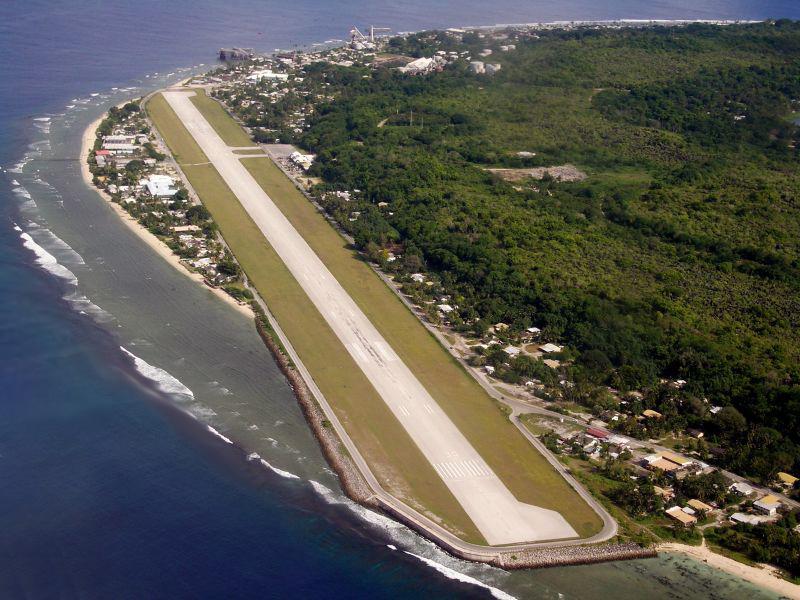
Yaren: Capital City Profile
Monetary unit: Australian Dollar (AUD)
Languages: Nauruan and English are the official languages. Nauruan is the indigenous Micronesian language spoken by most citizens, while English is widely used in government, education, business, and international communication.
Ethnicity/race: Predominantly Nauruan (about 58%), with significant Pacific Island communities, as well as Chinese and European minorities.
Religions: Christianity is the dominant religion. Major denominations include the Nauru Congregational Church, Roman Catholic Church, Assemblies of God, Nauru Independent Church, and other Protestant groups.
National Holiday: Independence Day, celebrated annually on 31 January, commemorating Nauru's independence in 1968.
Time Zone: Nauru Time (NRT), UTC+12
Calling Code: +674
Internet Domain: .nr

Background
Nauru is a tiny island nation in the central Pacific Ocean and is widely recognized as the world's smallest independent republic. Covering just 21 square kilometres (8.1 square miles), it is also one of the smallest sovereign states on Earth.
The island was first settled by Micronesian and Polynesian peoples more than 3,000 years ago. During the late nineteenth century, Nauru became part of the German colonial empire before coming under Australian administration following World War I. It was occupied by Japan during World War II and later administered as a United Nations Trust Territory before achieving full independence on 31 January 1968.
For much of the twentieth century, Nauru's economy was heavily dependent on rich phosphate deposits formed from centuries of seabird guano accumulation. Phosphate exports once made Nauru one of the wealthiest countries in the world on a per-capita basis. However, extensive mining greatly altered the island's interior landscape and the phosphate reserves have largely been depleted.
Today, Nauru's economy relies on a combination of fisheries, government services, regional partnerships, and foreign assistance. Environmental rehabilitation and sustainable economic development remain among the country's major long-term challenges.
Geographically, Nauru belongs to the Micronesia region of Oceania. Other Micronesian islands and territories include Guam, Kiribati, the Marshall Islands, the Federated States of Micronesia, the Northern Mariana Islands, and Palau.
Nauru is an island country and microstate in Micronesia, in the Pacific Ocean.

COUNTRIES OF THE WORLD
Read more!
Source of Information:


